
This post may contain affiliate links. Please read our disclosure policy.
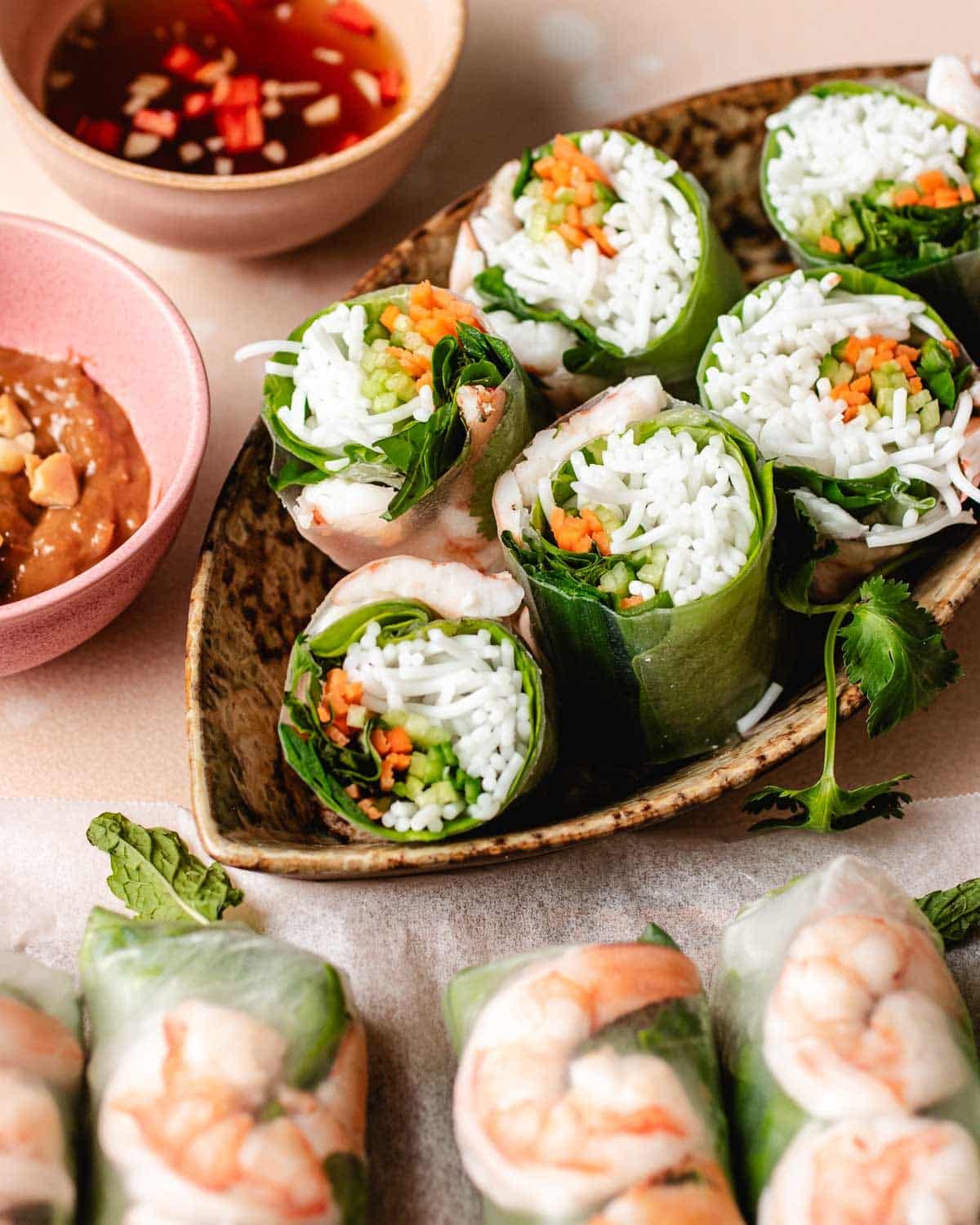
These shrimp summer rolls are fresh, light, and packed with crisp vegetables, herbs, and tender shrimp wrapped in soft rice paper. Serve them with creamy Vietnamese peanut sauce or tangy nuoc cham for a simple, refreshing meal.
If you’ve ever struggled with rice paper tearing, sticking, or turning too soft, this recipe walks you through exactly how to handle it—from how long to dip the wrapper to how to layer the fillings so the rolls stay tight, neat, and easy to wrap.
Main Ingredient Notes
For the shrimp summer rolls
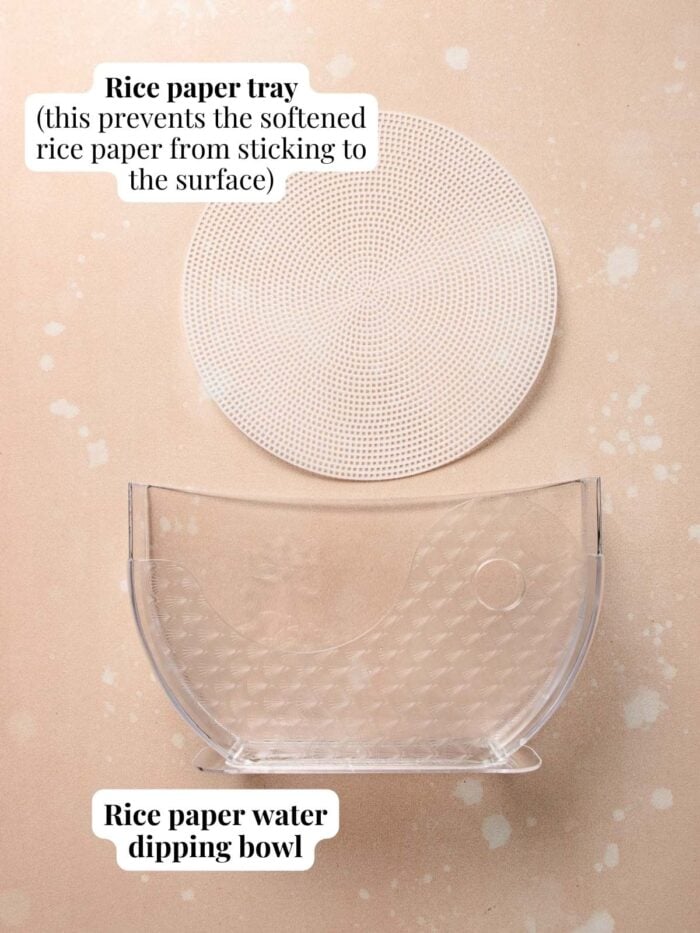
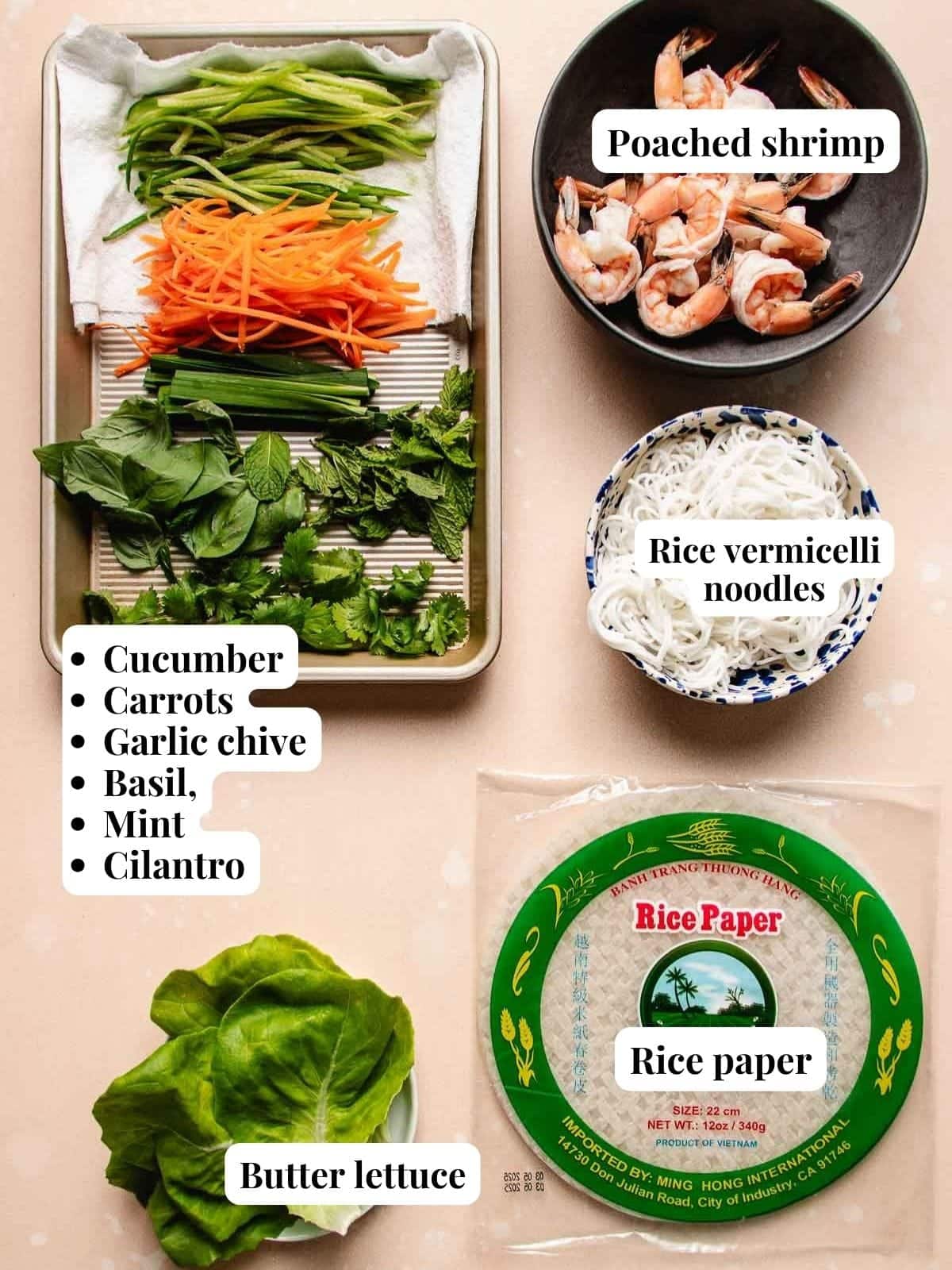
- Rice paper: Use 9-inch round rice paper sheets (for Vietnamese rice paper rolls). Look for ones that are thin but sturdy—these soften quickly and are easier to roll without tearing. If you’re new to working with rice paper, see my guide on How to Use Rice Paper.
- Shrimp: Medium shrimp (about 26–30 per pound), peeled and deveined, works best. They’re easy to slice in half and fit neatly into the rolls for that classic look.
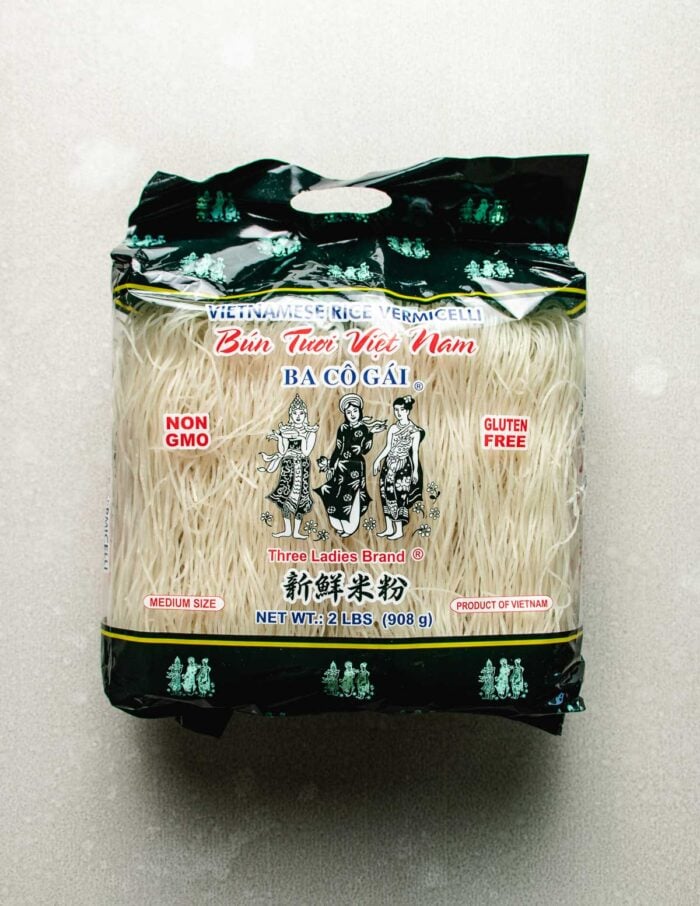
- Rice vermicelli noodles (bun noodles): These soft, round rice noodles are commonly labeled “bun.” Rinse well after cooking to remove excess starch so they don’t become overly sticky.
- Vegetables: Cucumber and carrot add crunch and freshness. Slice them thin and evenly so they don’t poke through the wrapper.
- Garlic chives: A traditional ingredient that adds aroma and structure. You can substitute with regular chives if needed.
- Fresh herbs: Thai basil, mint, and cilantro give the rolls their signature flavor. Use tender leaves only and remove tough stems.
- Butter lettuce: Acts as a soft inner layer to hold everything together and help manage moisture inside the roll.
Dipping sauces
- Vietnamese peanut sauce: Creamy, savory, and slightly sweet—perfect for a richer dip.
- Nuoc cham (Vietnamese dipping sauce): Light, tangy, sweet, and salty with a bit of heat.
How to Make Shrimp Summer Rolls (without tearing or sticking)
Step 1 — Prep all ingredients first
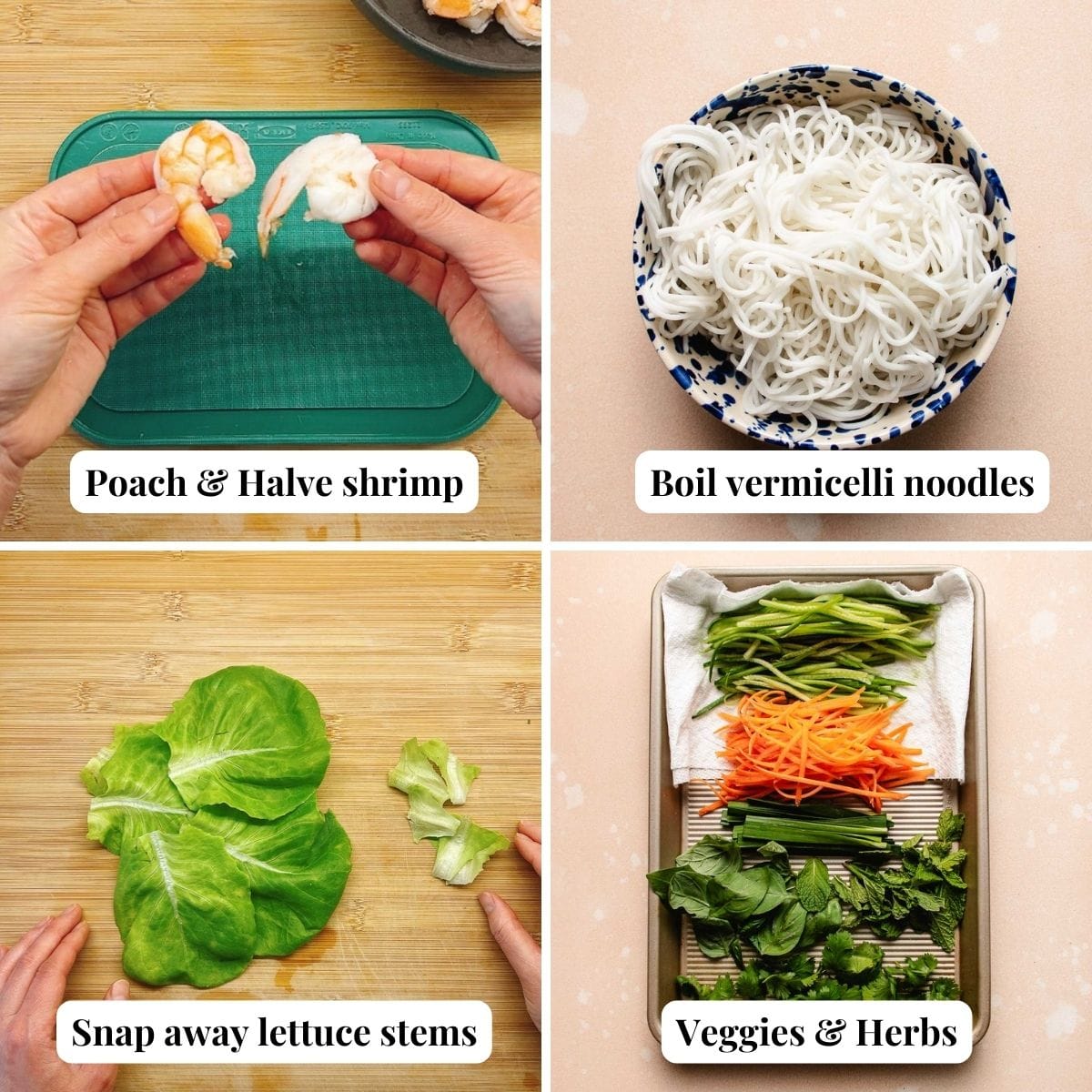
Before you start wrapping, get everything prepped and ready to go. This keeps the process smooth and prevents the rice paper from drying out while you work.
- Poach the shrimp: Bring a pot of water to a boil, then turn off the heat. Add the shrimp right away, making sure the water is about 2 inches above them. Let them sit for about 5 minutes, until just cooked through with a pale white center. I find this is the best method—it keeps the shrimp tender without turning rubbery.
- Slice the shrimp: Once cool, slice each shrimp in half lengthwise to create thin, flat pieces. Keeping them flat helps the rolls stay compact and prevents tearing. This is how traditional Vietnamese rolls are prepared—it’s about structure, not cutting corners.
- Cook the noodles: Prepare the rice vermicelli according to the package instructions. Drain, rinse under cold water, and shake off excess moisture. Lightly toss with a bit of oil to reduce sticking. They may still clump—that’s normal. If they feel too long, you can snip them once or twice with kitchen shears.
- Prep the vegetables: Julienne the cucumbers and carrots into thin, even matchsticks, keeping them roughly the same length. A julienne peeler works best. If cutting by hand, avoid thick or sharp edges—they can poke through and tear the wrapper.
- Prep the herbs and lettuce: Remove tough stems and keep only the tender leafy parts. For lettuce, snap off thicker stem sections. Soft, flexible leaves make wrapping easier and help prevent tearing.
Step 2 — Set up your rolling station
Before dipping the rice paper, set up everything within reach. Once the wrappers are softened, you’ll need to move quickly.
- Prepare your setup: You’ll need a large bowl of room temperature water, rice paper sheets, all your prepped ingredients, a large plate for finished rolls, and a clean work surface—like a silicone mat to prevent sticking.
- Organize ingredients in order: Arrange everything in the order you’ll use—lettuce, noodles, vegetables, herbs, then shrimp. I like to line them up so I don’t have to stop and think while assembling.
- Keep a damp towel ready: Have a lightly moistened paper towel nearby to cover finished rolls. This keeps them from drying out and sticking together as you continue rolling.
Step 3 — Dip the rice paper (how to soften rice paper correctly)
Fill a large bowl with room temperature water. Working with one sheet at a time, slide the rice paper into the water and gently rotate it for about 5–6 seconds.
- Don’t over-soak: The wrapper should still feel slightly firm when you take it out. It will continue to soften as you build the roll.
- Look for this texture: It should be flexible but not floppy. If it already feels very soft in the water, it’s likely over-soaked and will tear more easily.
- Work quickly: Transfer the wrapper to your work surface right away after dipping. Letting it sit too long before filling can make it sticky and harder to handle.
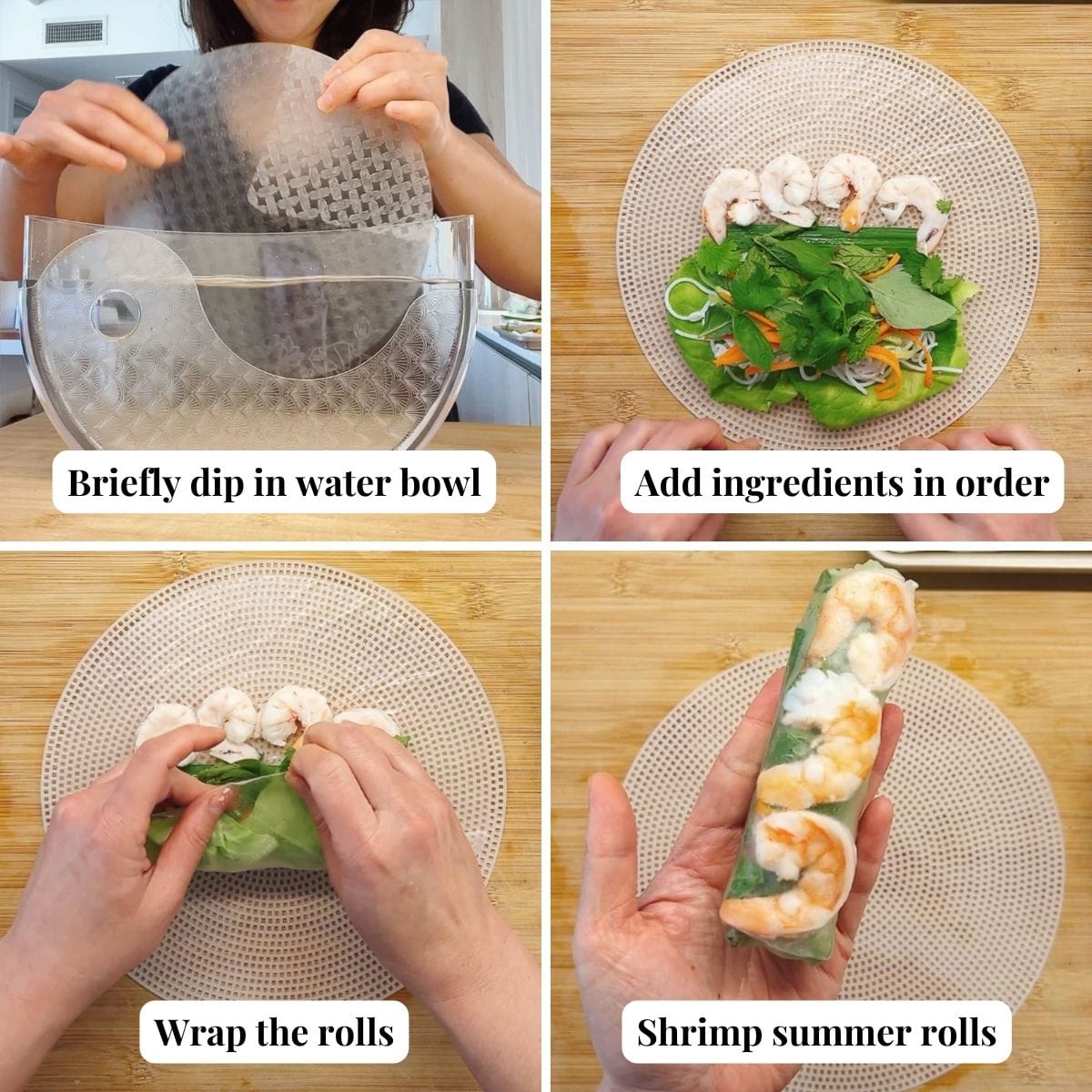
Step 4 — Layer the fillings (order + placement matters)
Place the softened rice paper on your work surface, smooth side down, and build the roll from the bottom up, keeping everything flat and in the right zones.
- Start with lettuce: Place a piece of butter lettuce on the lower half of the wrapper. It acts as a barrier to hold the noodles and vegetables together and helps absorb excess moisture so the rice paper doesn’t get soggy or tear.
- Add noodles, vegetables, and herbs (inside the lettuce): Layer a small amount of noodles, then cucumbers and carrots, followed by basil, mint, and cilantro—all tucked neatly inside the lettuce. Keep everything aligned and not poking out so the roll stays compact and easier to wrap.
- Place garlic chives (outside the lettuce): Lay a few garlic chives horizontally on top of the lettuce bundle. This placement helps keep the structure tight and gives the roll a clean, traditional look.
- Finish with shrimp: Place 3 shrimp halves (pink side down) above the chives, closer to the top third of the wrapper so they show on the outside once rolled.
Step 5 — Roll and seal
Once everything is layered, roll the wrapper gently but firmly to seal it into a compact roll.
- Fold from the bottom up: Lift the bottom edge of the rice paper up and over the filling to cover the lettuce, noodles, and herbs—stopping around the chive area (before reaching the shrimp). This first fold tucks the base tightly without disturbing the top layer.
- Fold in the sides: Bring the left and right sides inward to enclose the filling. Keep the sides straight and snug so the roll holds its shape.
- Roll forward to seal: Continue rolling away from you until you reach and pass the shrimp layer, keeping gentle tension as you go. The rice paper will stick to itself and seal the roll.
Step 6 — Keep the rolls fresh
As you finish rolling, place the rolls on a large plate with a little space between each one so they don’t stick together. If needed, you can lightly grease the plate or tray to prevent sticking on the bottom.
- Cover with a damp towel: Lightly cover the rolls with a moistened paper towel as you work. This keeps the rice paper soft and prevents it from drying out.
- Use multiple trays instead of stacking: If you’re making a large batch, use a second plate or sheet pan instead of stacking the rolls on top of each other. Stacking can easily cause sticking and tearing, so it’s safer to keep them in a single layer.
Why your shrimp summer rolls tear or fall apart (and how to fix it)
If your fresh spring rolls are tearing, sticking, or falling apart, don’t worry—it usually comes down to a few small details. Once you know what to look for, they become much easier to handle.
Rice paper problems
- Too soft → tears easily: This usually means the wrapper was soaked too long or in water that’s too hot. Always use room temperature water and dip for just 5–6 seconds—it should still feel slightly firm when you take it out.
- Too stiff → cracks or won’t roll: If the wrapper hasn’t softened enough, it can break when folding. Give it a second or two more in the water.
- Too sticky → hard to handle: If the wrapper sits too long before filling, it can become overly sticky. Dip and use it right away.
Overfilling or uneven rolls
- Too much filling → hard to close: Keep the portions light. Overfilling makes it difficult to fold and seal properly.
- Bulky center → uneven shape: Spread the filling evenly and keep everything flat so the roll stays compact.
- Loose rolls → fall apart: Roll with gentle tension so everything holds together without squeezing too hard.
Wrong ingredient prep
- Thick or sharp cuts → poke through the wrapper: Slice vegetables into thin, even matchsticks and avoid thick or rigid pieces.
- Stiff stems → cause tearing: Remove tough stems from herbs and lettuce so only soft, flexible leaves are used.
- Bulky shrimp → uneven rolls: Slice the shrimp in half lengthwise so they lay flat and wrap cleanly.
Too wet or too dry
- Too wet → soggy, weak rolls: Pat vegetables dry and shake excess water off the noodles so the wrapper doesn’t weaken.
- Too dry → wrapper cracks or stiffens: Keep finished rolls covered with a damp towel so they stay soft and flexible.
Make ahead and storage
- Make ahead: You can poach the shrimp up to 2 days in advance and prepare the dipping sauces 3–4 days ahead. Store everything separately and assemble the rolls fresh for the best texture.
- Storage: If you have leftover rolls, place them in an airtight container with lightly moistened paper towels between layers to prevent sticking and drying out.
- To soften after refrigeration: If the rolls firm up in the fridge, cover them with a lightly moistened paper towel and microwave on medium for 20–30 seconds until softened.
Shrimp summer rolls recipe
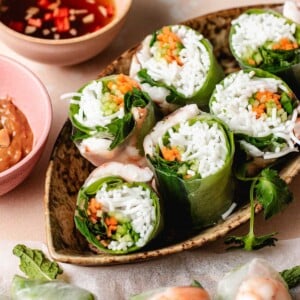
Video
Ingredients
For the shrimp summer rolls:
- 0.5 lb white shrimp 26-30 counts per pound, peeled and deveined
- 4 oz dried Vietnamese rice stick vermicelli noodles (viet bun noodles)
- 2 whole persian cucumber julienned using a julienne peeler
- 1 medium carrot julienned using a julienne peeler
- 6 Garlic chive
- 1 small head butter lettuce
- Thai basil leaves or Italian basil
- Mint leaves
- Cilantro optional
- 8 sheets Rice paper 9-inch (22 cm) round
Dipping sauces:
Equipment
- 1 Rice paper water dipping bowl or a large bowl (for dipping rice paper)
- 2 large plates (to hold the vegetables and the rolls)
- 1 Rice paper rolling tray or a silicone baking mat
- Paper towels (to keep the rolls moist)
Instructions
Preparations:
- To poach shrimp, bring a medium pot of water to boil. Add the shrimp and give it a quick stir to fully submerge. Turn off the stove and immediately cover the pot. Let the shrimp soak in hot water for 5 minutes. After soaking, check one shrimp to see if it’s cooked through. It should be pale in the center and taste snappy and juicy. If not, cover the pot for 2 more minutes. Drain and set the shrimp aside to cool.
- Once cool to the touch, use a small paring knife to slice the shrimp in half lengthwise so they lay flat.
- Rice vermicelli noodles: Follow the package instructions to cook the noodles. Some require boiling and others only need hot water soaking. Drain the noodles and rinse under cold water to remove excess starch. Shake off excess water and spread them out in a large bowl. You can drizzle a small amount of avocado oil and toss the noodles to prevent them from sticking. Set aside ready to use.
- Cucumber and carrots: Trim both tip ends and julienne the cucumber using a julienne peeler. If you don’t have one, thinly slice it into matchsticks. Trim the carrot and slice into matchsticks about 4–5 inches (10–12 cm) long to match the cucumber. Julienne it as well. Set them aside over a small sheet pan. You can line the sheet pan with paper towels to help absorb excess moisture from the cucumber.
- Garlic chive: Rinse and pat dry the garlic chive. Trim away both tip ends and slice into 4–5 inch (10–12 cm) sections to match the other vegetables.
- Butter lettuce, mint, basil, and cilantro: Remove the stems and use only the tender leaves for the lettuce and herbs.
To start wrapping:
- Set up your workstation with rice paper, a large bowl of room temperature water, shrimp, vegetables, herbs, and a large plate for the finished rolls. Use a silicone mat (or clean surface) for rolling. Also prepare a few clean paper towels.
- Moistening: Take one piece of rice paper and slide it into the water bowl and quickly rotate the rice paper for about 5-6 seconds only. The sheet should be fully moistened but still feel slightly firm—it will continue to soften as you assemble.
- Assemble: Immediately transfer the sheet to your work surface – place smooth side down and rough side facing you.
- Place a layer of butter lettuce at the bottom of the rice paper. Add a small amount of noodles, then carrots and cucumber, keeping everything aligned and tucked in.
- Take 2-3 slices of garlic chives and place them right next to (above) the vegetables, then add a few leaves of basil, mint, and cilantro. Finally, place 3 pieces of shrimp, pink side down, right above the herbs.
- To wrap: Gently lift the bottom edge and roll it over the filling to cover the noodles and the herbs. Fold the left and right sides then keep rolling away from you to seal the roll. Repeat the steps until you finish all the ingredients.
- As you work through the ingredients, rest the rolls on a large plate with some space between them. Lightly moisten the paper towel to cover the rolls. This prevents the rice paper from getting dry and maintains the perfect moisture level.
To serve:
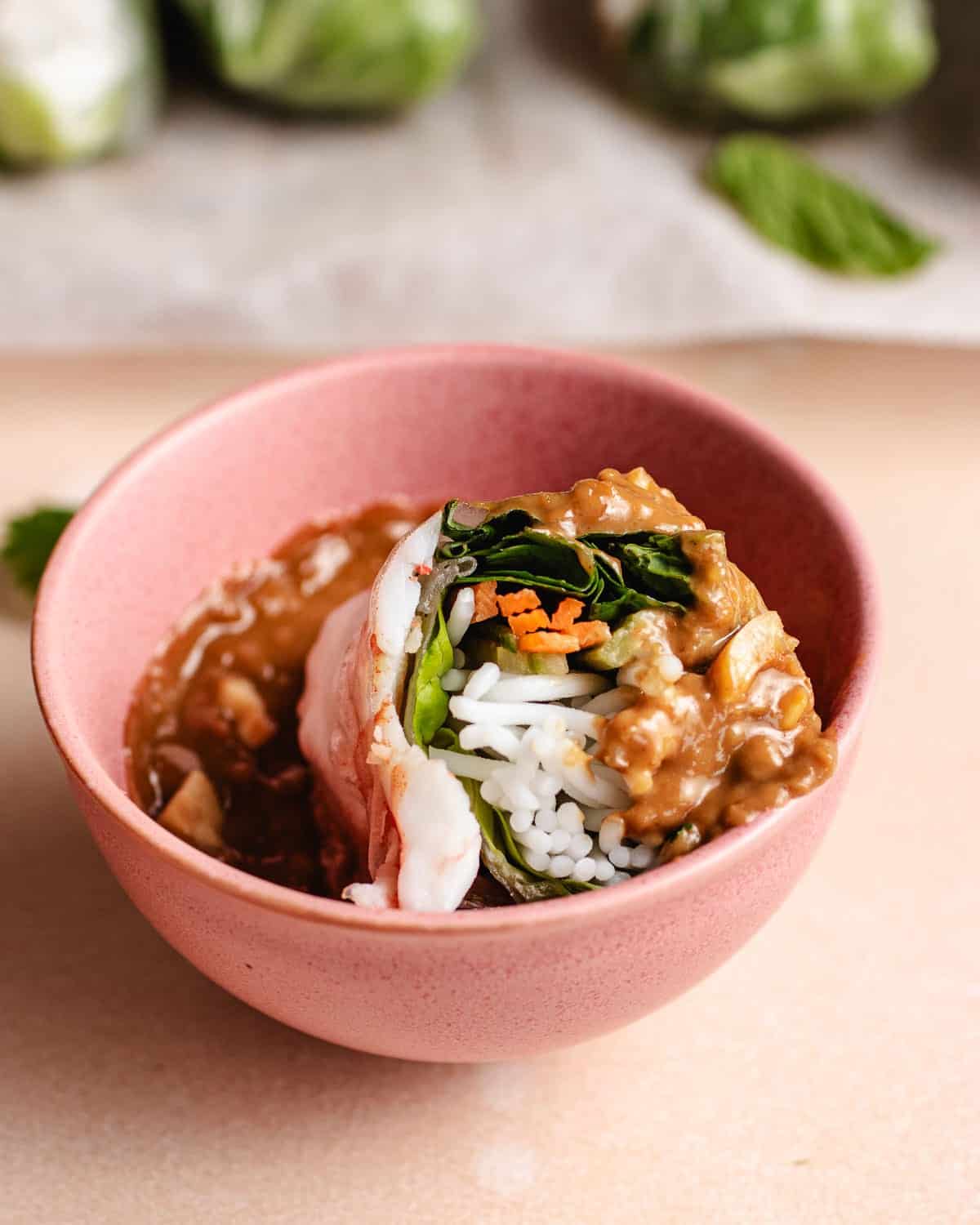
- Soft summer rolls taste best when they are freshly made. I recommend serving them immediately after rolling with either Vietnamese peanut sauce (creamy, nutty) or Nuoc cham sauce (salty, sweet, funky) on the side. You can also slice it into half for easy serving.
Notes
- Low Carb option: You can skip the vermicelli noodles to reduce the total carb count or use kelp noodles.
- Make-ahead: This dish is all about preparing in advance! You can poach the shrimp up to 2 days ahead, and make the dipping sauces 3-4 days ahead.
- Storage: Once they are made into rolls, store them in a large airtight container, lined with slightly moistened paper towels between each layer.
- To soften the summer rolls after refrigeration: Cover the summer roll with a lightly moistened paper towel and microwave on medium for 20-30 seconds until soft again.
- It’s best to only make the number of rolls you need on the day of serving. Pack all the ingredients separately and assemble the rolls right before serving.
Nutrition
Nutrition information is automatically calculated, so should only be used as an approximation.
What to serve with Vietnamese summer rolls
These Vietnamese fresh spring rolls pair well with light, flavorful dishes for a balanced meal or party spread.
- Add a protein: Serve with crispy Vietnamese fish sauce wings, Vietnamese grilled chicken drumsticks, or a bowl of brisket pho for something more filling.
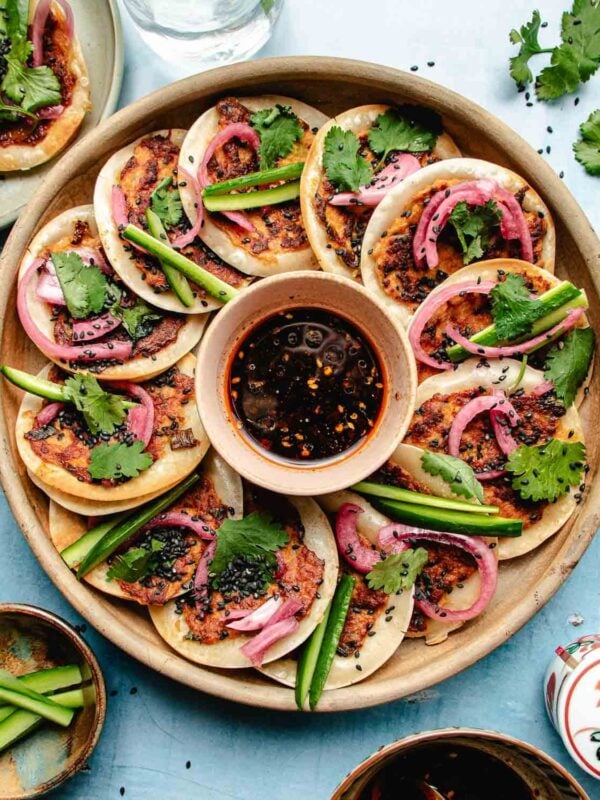
- Make it a Vietnamese-style spread: Pair with banh xeo or Vietnamese pizza on rice paper for a fun mix of textures.
- Finish with something sweet: Mango sago or Vietnamese iced coffee with coconut milk are perfect to round out the meal.
FAQs
Summer rolls are fresh and not fried, wrapped in softened rice paper with herbs, vegetables, and protein. In many recipes, summer rolls are also called fresh Vietnamese spring rolls. Spring rolls are typically wrapped in wheat-based wrappers and fried until crispy.
Place the rolls on a plate with space between each one and cover them with a lightly moistened paper towel. If needed, you can lightly grease the plate to prevent sticking on the bottom. Avoid stacking—use multiple plates or trays instead.
For the best texture, it’s best to assemble them right before serving. You can prep the ingredients ahead—cook the shrimp up to 2 days in advance and make the dipping sauces 3–4 days ahead—then roll everything fresh.
The rice paper should still feel fairly firm after dipping, not soft or floppy. You’re only briefly moistening it—about 5–6 seconds in room temperature water—so it may still hold its shape and even feel slightly stiff.
As you add the filling, it will continue to soften on its own. If the wrapper already feels very soft, limp, or won’t hold its round shape when you lift it out of the water, it’s likely over-soaked and more prone to tearing.
More rice paper recipes to try next
If you enjoy using rice paper, here are a few more easy and delicious rice paper recipes to try:
- Rice Paper Dumplings – pan-seared or air fried until crispy with a juicy center. This is one of the most popular recipes on the blog for a reason.
- Rice Paper Egg Rolls – a lighter take on egg rolls with a crisp bite and a simple egg roll dipping sauce on the side.
- Rice Paper Noodles – soft, chewy noodles tossed in a savory garlic sauce.
- Crispy Spring Roll in a Bowl – all the fresh, crunchy flavors you love, plus crispy rice paper bits, no wrapping needed.
Made a dish and loved it? Please rate the recipe and leave a comment in the section below! It helps my blog grow organically, allowing me to continue sharing free and awesome content with you. Thank you!








We made these soft spring rolls for a family visit and we did a few variety – with shrimp, cooked chicken, and some vegetarian options. The rolls are delicious and the dipping sauces are a must! They are light, fresh, and great finger food. Highly recommend it!
Thank you!