
This post may contain affiliate links. Please read our disclosure policy.
Chinese chicken soup has tender chicken in a light, fragrant broth with deep savory flavor and a gentle sweetness. Made with a whole chicken and a premeasured herbal packet, this easy recipe tastes just like the winter soups my family makes in Taiwan.
You can make it in an Instant Pot, slow cooker, or on the stovetop. There’s very little hands-on work, and the broth turns even more flavorful the next day.
This post is not sponsored. I’ve been using Root & Spring soup mixes for years. I earn a commission if you order through my links. Use IHeartUmami for 10% off.

Chinese chicken soup made simple

This is the kind of soup we make throughout the cooler months in Taiwan. It’s familiar home cooking: add the chicken, open the herbal packet, add water, and let it cook. The flavor is clean and mellow, with no bitterness from the herbs.
I use a premeasured mix from my friends at Root & Spring, a U.S.-based company. I’ve included the shopping link below so you can easily order the packet online and have it shipped to your home.
The herbal packet I use
Growing up, my mom and grandmothers would get their soup herbs from a Chinese herbal shop, where a qualified practitioner would put together the blend for them. Choosing the ingredients is only part of it—the quantities and proportions matter, too, so the finished soup tastes balanced and pleasant.
A friend introduced me to Root & Spring while I was working on my cookbook, Asian Paleo. I loved the quality and fragrance of the ingredients, and the soup tasted like what my family made. Having everything selected and measured made it much easier to recreate that flavor in my kitchen.
For this recipe, I use their Chinese Herbal Broth and Soup Mix for Revitalization. You can order it directly through my affiliate link. The packet includes cooking instructions for a pressure cooker, slow cooker, and stovetop.
This particular blend makes a light golden broth with a mild herbal flavor. The Asian pear, goji berries, and honey dates bring a gentle sweetness that rounds out the savory chicken broth.
Here’s what’s inside:
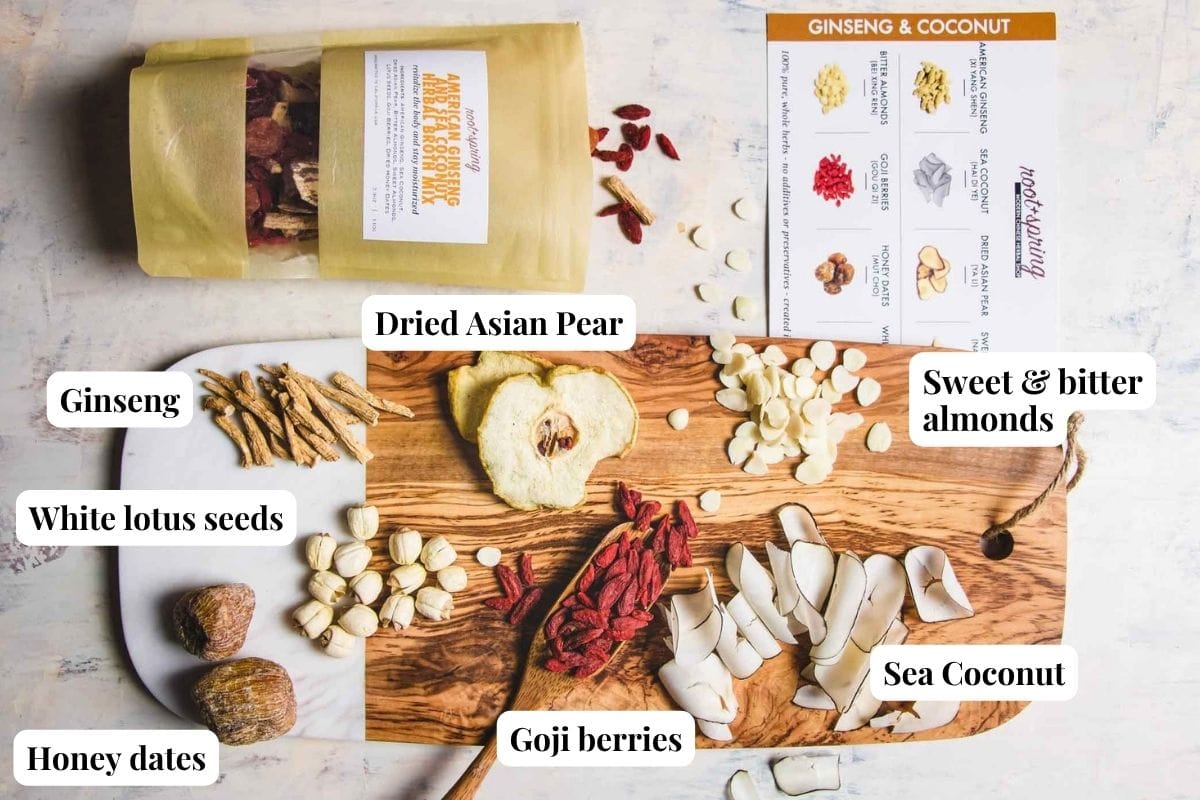
- American ginseng, or xi yang shen: A root used to flavor the broth.
- Sea coconut, or hai di ye: A firm ingredient that keeps its texture through long cooking.
- Dried Asian pear, or ya li: Dried fruit that contributes to the mix’s gentle sweetness.
- Sweet and bitter almonds, or nan xing ren and bei xing ren: Ingredients in the soup blend that should be prepared and cooked according to the packet instructions.
- White lotus seeds, or lian zi: Seeds that soften as the soup cooks.
- Goji berries: Small red berries that soften in the broth.
- Honey dates: Larger and sweeter than dried red dates, these help round out the broth’s flavor.
Chinese chicken soup can be made with different herbal blends. Some packets produce a deeper amber broth with a stronger herbal flavor. This is the particular mix I use here, and the premeasured packet saves me from buying each ingredient separately and working out the proportions myself.
Which herbs can you eat?
If this is your first time making Chinese herbal chicken soup, the pieces floating in the broth can be unfamiliar. Some are enjoyable to eat with the chicken; others are there to flavor the soup.
For this Root & Spring packet, you can eat the goji berries, lotus seeds, honey dates, and sweet and bitter almonds once prepared and cooked according to the packet instructions. Check the dates for pits and remove any before eating.
I leave the ginseng, sea coconut, and dried Asian pear in the broth. I find these pieces more fibrous and less pleasant to chew, so I leave them out of the serving bowls.
Other soup packets may contain different ingredients, so this guide is specific to the blend used in this recipe.
How to make Chinese chicken soup
The full measurements and instructions for all three methods are in the recipe card below. Here’s a quick overview.

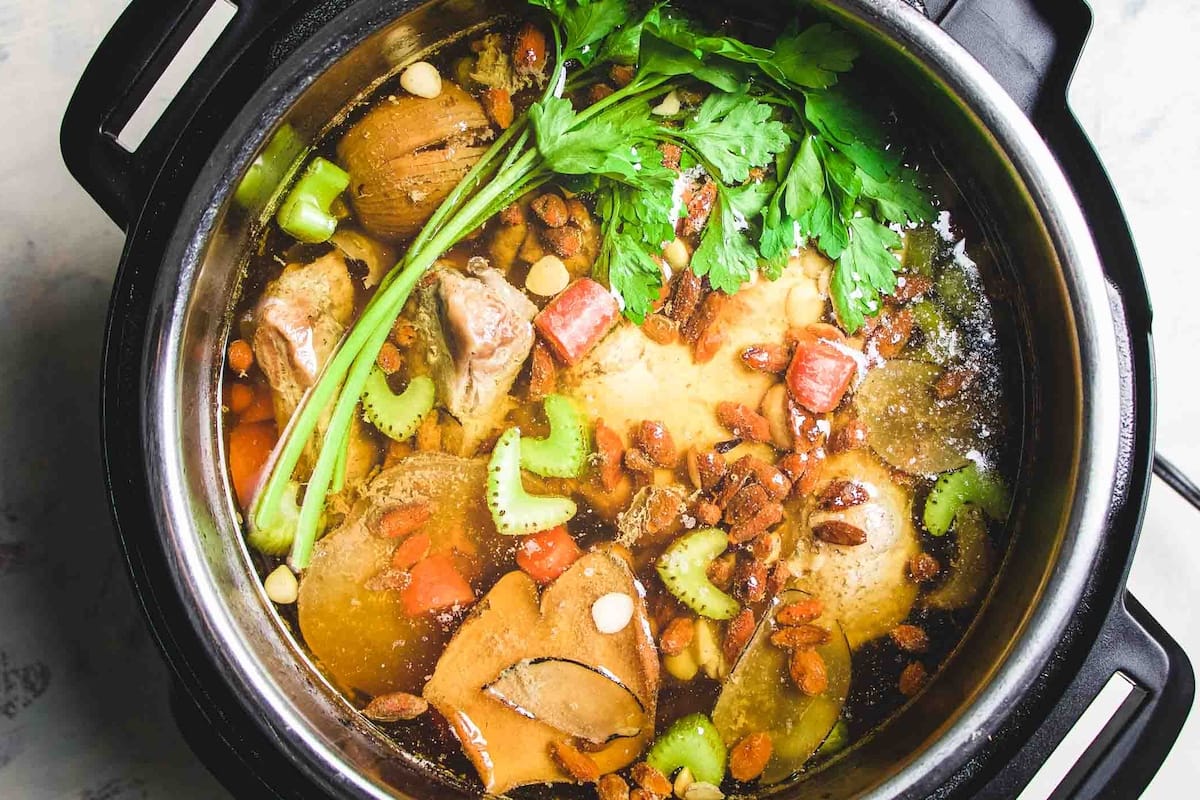
- Prepare the ingredients. Remove the chicken’s giblets and rinse the herbs according to the package instructions. Carrots, celery, and pork riblets are optional—the chicken and herbal packet are the foundation of the soup.
- Add everything to the pot. If using vegetables, place them on the bottom, followed by the chicken, optional riblets, and herbs. Add water to just cover the chicken while staying within your cooker’s recommended fill level. Leave out optional add-ons if you need more room.
- Let it cook. Make Instant Pot Chinese chicken soup with a natural pressure release, let the slow cooker do the work, or gently simmer it on the stovetop.
- Season and serve. Finish with an optional splash of rice wine, then season with salt. Debone the chicken and return the shredded meat to the broth before serving.
Can you leave the herbs in the soup overnight?
Yes—I leave the herbs in the refrigerated leftovers because I enjoy the deeper flavor the next day. The broth turns a darker golden-amber color, and the herbal flavor becomes stronger.
When I reheat the remaining pot, I add about a cup of water, or more as needed, then taste and adjust the salt. There’s still plenty of flavor in the herbs, so that extra water helps stretch the soup into another meal.
You can leave the herbs in for the remaining 3–4-day refrigerator storage period, or remove them earlier if you prefer a lighter herbal flavor. The recipe card includes storage, reheating, and freezing directions.
What to serve with it
Serve this whole chicken soup with steamed rice and a vegetable side for a simple dinner. You can also boil noodles separately, divide them among serving bowls, and ladle the chicken and broth over them.
I also love pairing the soup with fried rice and vegetables:
- Chinese broccoli with garlic sauce: Tender-crisp greens and fresh garlic pair well with the fragrant broth.
- Chinese cabbage stir-fry: A light vegetable side that adds a little crunch to the meal.
- Din Tai Fung shrimp fried rice: Savory fried rice with shrimp and eggs makes a satisfying meal alongside the soup and greens.
Chinese Chicken Soup Recipe
Video
Ingredients
- 1 whole chicken 3½–4½ pounds, giblets removed
- 1 packet Root & Spring Chinese Herbal Broth and Soup Mix for Revitalization with American ginseng and sea coconut
- Water enough to just cover the chicken without exceeding your cooker’s recommended fill level
- A small splash Chinese Shaoxing wine or Taiwanese michiu (optional)
- Coarse salt to taste, added after cooking
- Chopped cilantro or scallions optional garnish
Optional add-ons
- 1½ cups carrots cut into large bite-sized pieces
- 1½ cups celery cut into large bite-sized pieces
- 1 pound pork spareribs cut into individual riblets
Instructions
Prepare the ingredients
- Prepare the chicken: Check the cavity and remove any giblets.
- Prepare the herbs: Open the herbal packet. Follow the package instructions to briefly rinse the herbs, then drain well.
- Prepare the optional add-ons: Cut the carrots and celery into large bite-sized pieces. If adding spareribs, cut them into individual riblets, then rinse under room-temperature water to remove any bone fragments.
Instant Pot method
- Place the chicken in a 6-quart Instant Pot and sprinkle in the prepared herbs. If using carrots and celery, place them on the bottom first, followed by the chicken, optional riblets, and herbs.
- Add enough water to just cover the chicken, keeping the combined ingredients and water within your cooker’s recommended fill limit for pressure-cooking soup. If the pot is too full, leave out the optional carrots, celery, or riblets to make room.
- Secure the lid and set the valve to the sealing position. Cook on High Pressure for 30 minutes.
- Allow the pressure to release naturally until the float valve drops. Do not use quick release.
- Continue with the finishing and serving instructions below.
Slow cooker method
- If using carrots and celery, place them on the bottom of the slow cooker. Add the chicken, optional riblets, and prepared herbs.
- Add enough water to just cover the chicken while keeping the combined ingredients and water within the manufacturer’s recommended fill level.
- Cover and cook on Low for 8–10 hours, or up to 24 hours.
- Continue with the finishing and serving instructions below.
Stovetop method
- Place the chicken, prepared herbs, and any optional add-ons in a large soup pot. Add enough water to cover the chicken.
- Bring to a boil, then lower the heat to maintain a gentle simmer. Leave the lid slightly ajar to help prevent the soup from boiling over.
- Simmer for 1½–2 hours, until the chicken is tender. Top up with hot water as needed to replace water lost during cooking.
- Continue with the finishing and serving instructions below.
Finish and serve
- Add the optional wine: Once the soup is done, add a small splash of Shaoxing wine or Taiwanese michiu and simmer for about 30 seconds. For the Instant Pot, use the Sauté setting.
- Season: Add salt to taste.
- Debone the chicken: Carefully lift the chicken from the pot and let it cool just enough to handle. Remove the bones, shred the meat, and return it to the broth. Leave the herbs in the pot.
- Serve: Divide the chicken and any herbs you want to eat among individual bowls, then ladle the hot broth over them. Garnish with cilantro or scallions, if desired.
Which cooked herbs can you eat?
- For this Root & Spring packet, you can eat the goji berries, lotus seeds, honey dates, and sweet and bitter almonds once prepared and cooked according to the packet instructions. Remove any pits from the dates before eating.
- I leave the ginseng, sea coconut, and dried Asian pear in the broth to continue flavoring it. I find these pieces more fibrous and less pleasant to chew, so I leave them out of the serving bowls.
Notes
- Using chicken pieces: You can also use whole chicken legs or drumsticks instead of a whole chicken. Be sure to use bone-in pieces.
- Leaving the herbs in overnight: I leave the herbs in the refrigerated leftovers because I enjoy the deeper herbal flavor the next day. The broth turns a darker golden-amber color, and the herbal flavor becomes stronger. When reheating the remaining pot the next day, add about 1 cup of water, or more as needed. Taste and adjust the salt afterward. You can remove the herbs earlier if you prefer a lighter herbal flavor.
- Storing the cooked chicken: I usually store the shredded chicken in the broth. The breast meat can become drier with reheating, so you can store it separately if you prefer and add it back when reheating the soup.
- To store; Divide the soup into smaller containers so it cools quickly, then refrigerate while still warm. Leave the herbs in the broth for a deeper flavor the next day. Use within 3–4 days.
- To reheat; Reheat the soup on the stovetop, stirring occasionally, until warmed through. Add a little water as needed, then taste and adjust the salt.
- To freeze; Remove the fibrous herbs you don’t plan to eat, along with any bones or date pits. Divide the cooled soup into individual portions and freeze for up to 3 months.
- To reheat from frozen; Place the frozen soup in a saucepan with a little water. Reheat over low heat, stirring occasionally, until warmed through.
Nutrition
Nutrition information is automatically calculated, so should only be used as an approximation.
More Chinese chicken soups
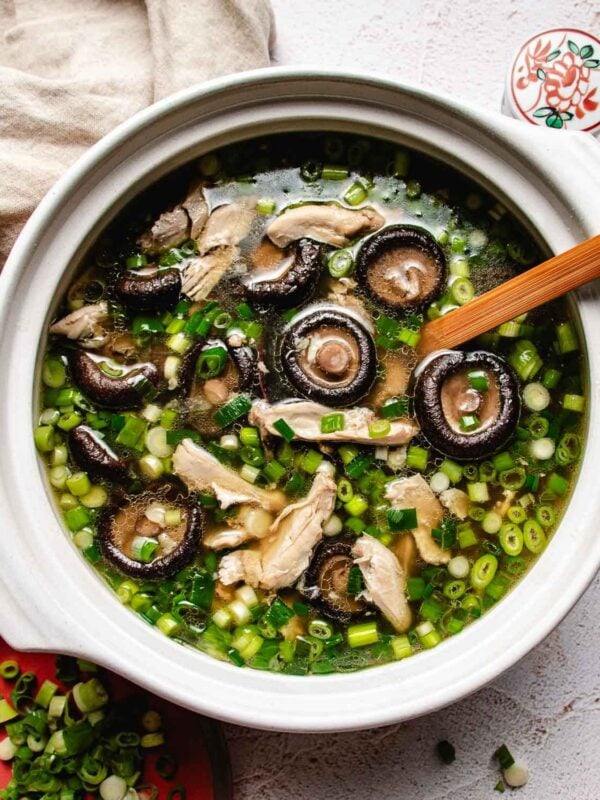
- Chicken shiitake mushroom soup: Try this when you want a savory broth built around dried shiitake mushrooms.
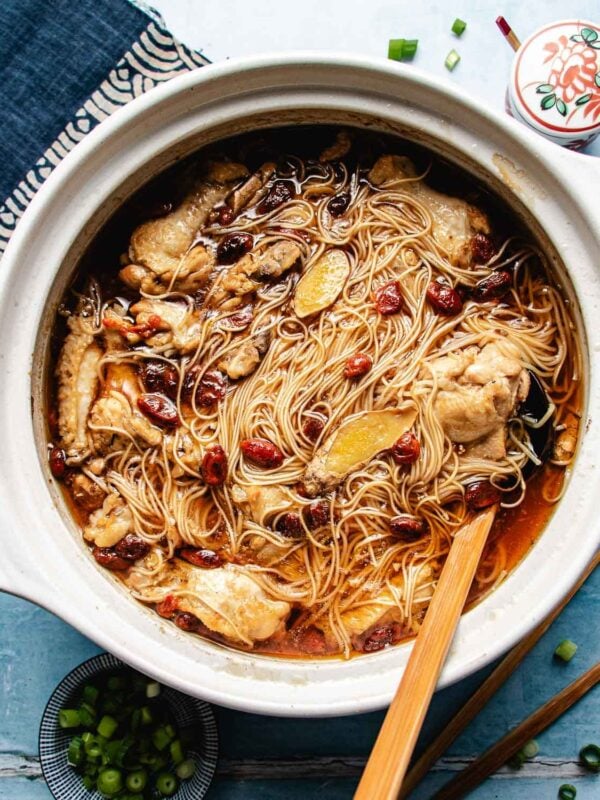
- Sesame oil chicken soup: Another Taiwanese winter favorite, with ginger, rice wine, and sesame oil.
- Cornish hen soup: A slow cooker soup with whole Cornish hens, shiitake, and a light, clear broth.
Made a dish and loved it? Please rate the recipe and leave a comment in the section below! It helps my blog grow organically, allowing me to continue sharing free and awesome content with you. Thank you!








This is such a great big bowl of comfort. And I love that you use both chicken and spareribs. I never would’ve thought of that but I love it!
High quality herbs make such a huge difference!
I love ginseng in chicken soup! There’s actually a similar Korean soup like this and I love it. Can’t wait to try your version.
Yummy! This very much reminds me of some of the Chinese soups my mom makes – so nourishing!
Wow! the soup ingredients sound amazing!
I love chicken soup made from scratch. The premixed packet of good herbs makes it so easy!
I love Root & Spring! You turned us on to it last winter and it didn’t come at a better time. I had pneumonia and it felt like I was drinking medicine that tasted delicious! Two questions… Which wine do you prefer when you make it? And how do you prevent your veggies from getting so soft in the instant pot? Thanks for all the delicious things you add to our life!
Diane Narkawicz
Thank you, Diane! So appreciate it! I’m from Taiwan so I prefer to use Taiwanese michiu. About the veggies. dice them to slightly larger chunks so this way they will maintain the texture better. Personally I like them slightly softer in texture, especially in soup/stews. :))
Do you use the entire packet of soup mix per whole chicken? That’s an expensive pot of soup.
Hi Sharon, yes to make a whole pot of Chinese traditional chicken soup I use one packet of Root and Spring. The quantity is pre-measured for one whole chicken so it’s perfect. The first cook (also the next day reheat) the broth is most concentrated so we dilute the broth with more water (i.e. you’ll get even more soup and can store the extra in the freezer for later use).
We keep the soup mix in the pot and add more water during reheat. Usually a pot of chicken soup will last my family 4-5 days and the broth is amazingly delicious.
Use my discount code “iheartumami” to get 10% off from Root and Spring. The price per packet is very reasonable consider how convenient they have made it possible without feeling intimidated walking into a traditional herbal store and don’t know what to buy, how to select, or which dry ingredient goes with what.
Chinese herbs have medicinal effects so you want a professional to help you balance the flavor and the yin and yan well so your bodies will get the most benefits from the herbal packet. A good quality of Chinese herbs aren’t easy to find and you want the best ingredient to make chicken bone broth.
Hope this helps:)
Hi Chihyu! Thanks for the lovely recipe and tip on Root & Spring. I too grew up with Chinese soup but have never made it before as buying the herbs was intimidating so I’m excited to try. Do you eat the meat after it’s cooked? Traditionally when my mom made chicken soup, the meat tended to be tough but wondering if this recipe with instant pot will render a more tender chicken. Would love to not waste the meat and can repurpose into another dish!
Hi Elsa! Thank you for your message. Yes we eat the whole chicken after it’s cooked. The thigh meats are naturally more moist and soft than breasts but we eat the entire chicken with no waste. What I usually do is to shred the chicken breast after it’s cooked. Depends on your personal preference and if you worry that the breast will turn dry after reheat…you can take the breast out and shred it and store it separately from the soup. When you reheat the soup add the shredded chicken breast to the hot soup (like a topping) so this way they are more similar to poached chicken and only cooked once. It should be more tender. Hope this helps!
Can you please add instructions about what to do with the whole chicken after soup is finished cooking?
Thanks, Tracy. Just updated the recipe with chicken instructions. Appreciate it!
Hi. I just got the Chinese herbs. The packet they sent is a little different from the one you named. I got Revitalization Herbal Broth Mix. It looks like it has some of the same things with a few extras. Also, I am confused about whether the herbs can be eaten or removed from the broth before eating. Thank you! I’m looking forward to making the recipe.
Hi Liz, the revitalization herbal packet is very good, too! I actually have a recipe on my blog using that packet – https://iheartumami.com/instant-pot-bone-broth/
In the recipe note section I mentioned that the best way to tell if you can eat an ingredient from the packet is to take a small bite and see if it’s edible after the soup is done cooking.
Some are for flavor to season the soup and some are edible.
There should be a card that comes with your packet from the shipper which explains each ingredient and what goes into the packet more specifically.
Thank you, hope this helps!