
This post may contain affiliate links. Please read our disclosure policy.
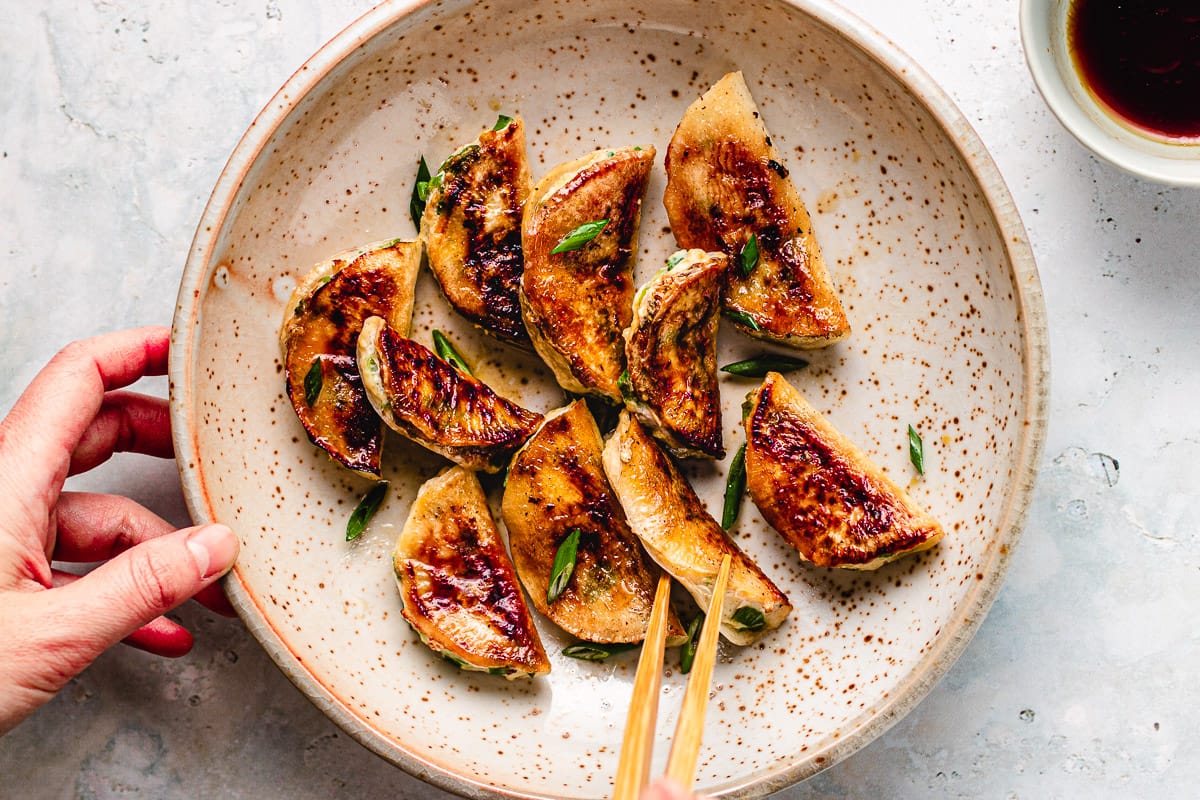
Jiaozi, also known as Potstickers or pan-fried dumplings, have a golden, crispy skin outside, and a soft juicy filling inside. This Chinese potstickers are much easier to make than the traditional Chinese dumplings and are low carb, paleo, and whole30. They freeze well and are perfect for quick lunches or dinners whenever you need a quick potsticker fix!
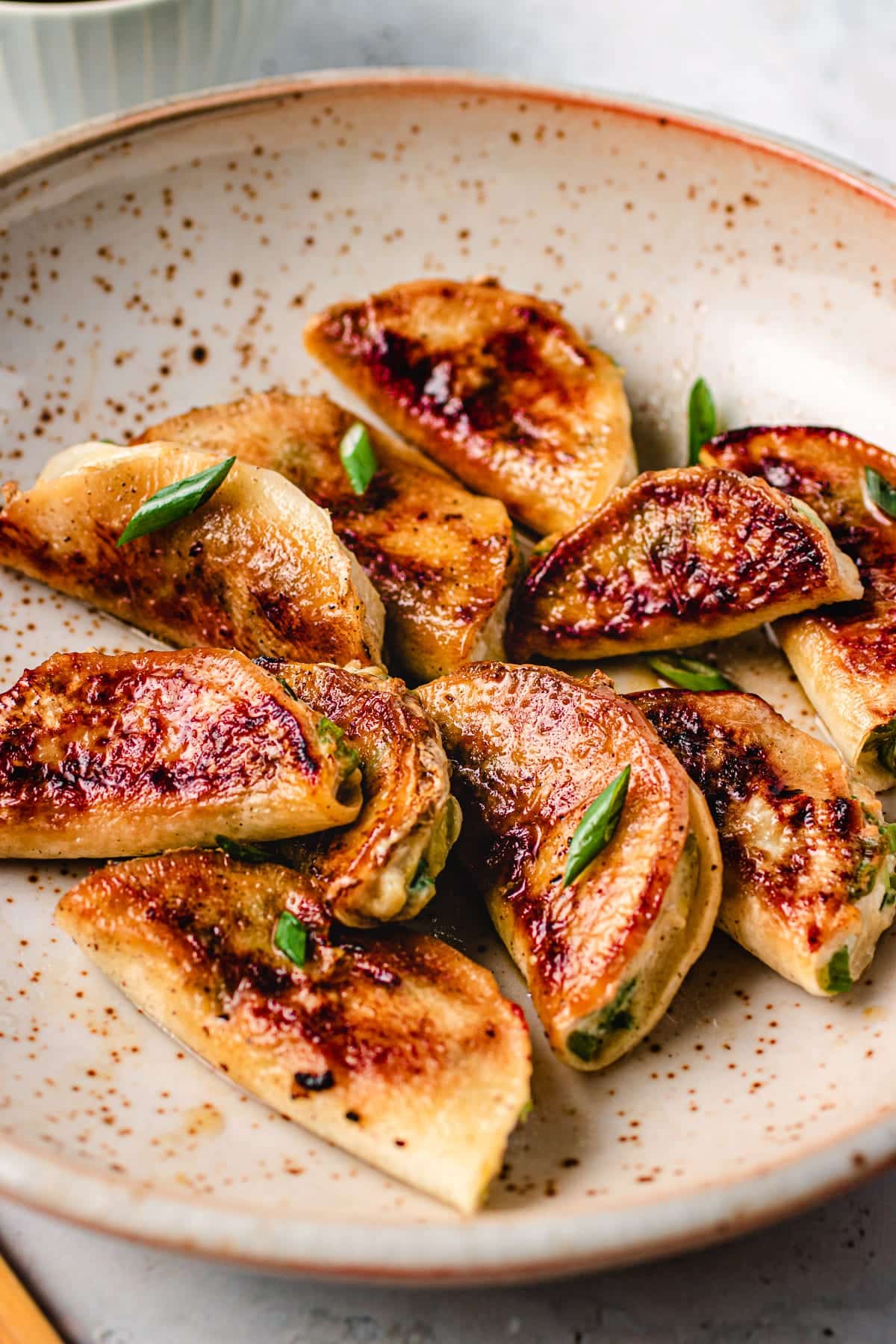
Table of Contents
- What are Jiaozi (Chinese potstickers)?
- My Family Chinese Dumpling Story
- How to make low-carb jiaozi – Chinese potstickers/dumplings
- Easy Potsticker Chinese dumpling fillings
- How to pan-fry Chinese dumplings without sticking?
- How to keep low carb potstickers from tearing/opening up?
- Make ahead and Freeze!
- Jiaozi (Pot Sticker) Dipping Sauce
- Pair the low-carb potstickers with
- Daikon potstickers recipe
What are Jiaozi (Chinese potstickers)?
Jiaozi (餃子 jiǎozi) are a kind of Chinese dumplings, filled with ground meat and shredded vegetables and wrapped with a thin dough. There are three major types of Jiaozi – boiled (shuǐ jiǎo), steamed (zhēng jiǎo) and pan-fried (jiān jiǎo or Potstickers or guo tie).
Today’s recipe is more closely related to potstickers (pan fried dumplings) and I made them low carb, Keto, Gluten-free, Grain-free, and Whole30.
Growing up in a Chinese household, we ate jiaozi on almost a weekly basis. You can buy freshly made jiaozi in local farmers’ markets and my mom always comes back with two dozen dumplings and store them in the freezer for emergency meals.
My Family Chinese Dumpling Story
During Chinese New Years, jiaozi is a must have food in my grandma’s house. The two most common ways of enjoying jiaozi are water boiled (shuǐ jiǎo) or pan-fried (potstickers or jiān jiǎo). My grandma (from my mother side’s) is from Northern China and she makes the best homemade Chinese dumplings and dumpling wrappers from scratch.
She would make hundreds of them in one setting and the dough is soft yet chewy and pillowy at the same time. She would stuff the jiaozi with very finely minced ground pork that has the perfect fat and lean ratios with shrimp, Chinese green and yellow chives, and shiitake, and only one of the hundreds she makes has a small date inside. Whoever gets that special lucky one dumpling will receive the biggest red envelope from her (i.e. cash) 😀
How to make low-carb jiaozi – Chinese potstickers/dumplings
Today’s jiaozi (Chinese potstickers) are inspired by our recent trip to Asia where people use daikon radish as wrappers to make low-carb dumplings and they taste surprisingly light and absolutely AMAZING!
After I returned to the States, I had a hard time finding large size daikon – you’ll need about 3-inch in diameter or even larger to wrap the dumpling fillings – so I tried using turnip, which is naturally larger and rounder in shape. I was so glad that turnip works just as well as daikon without sacrificing the taste!
In a way, turnip or daikon helps cut down the grease and keeps the potstickers light, and refreshing, yet still satisfy your dumpling cravings!
Easy Potsticker Chinese dumpling fillings
There are various Chinese dumpling fillings and you can basically stuff anything you like from meat-based to plant-based. For my low-carb potstickers, I use ground chicken with very finely minced ginger and scallions to keep the fillings simple and easy. You can also use ground turkey or pork or even ground lamb will be a fantastic choice.
Traditionally people might add shredded cabbage to the dumpling fillings but I skip it because 1) this is not a traditional jiaozi recipe that the fillings are concealed in a dough. The shredded cabbage will not stick to the daikon or turnip dumpling wrappers and might fall out the shield easily, 2) In order to add the shredded cabbage the right way to do is to salt it first and then squeeze out as much water content as possible. This process will add time and more ingredients to prepare.
My paleo potstickers are light and very healthy because less is more and simple is the best!
How to pan-fry Chinese dumplings without sticking?
You can use a non-stick skillet or a well-seasoned cast iron skillet. I found that a cast iron skillet creates a more golden beautiful potsticker sear than a non-stick.
*Note: For our potstickers, please remember that these low carb jiaozi are more fragile than the traditional Chinese pan-fried dumplings. You can’t really flip them back and forth because the fillings might fall out of the shield. So here’s the best way to pan fry them without sticking –
- Place the dumplings in a well-heated skillet and pan-fry them with a neutral flavor oil, such as avocado oil. Try not to overcrowd the skillet.
- Once the bottom side gets seared and in light golden brown add about ½ tbsp water to the skillet and cover it with a lid to steam.
- When the dumpling fillings are cooked through. Open the lid to fry the dumplings for a few additional seconds to evaporate the water.
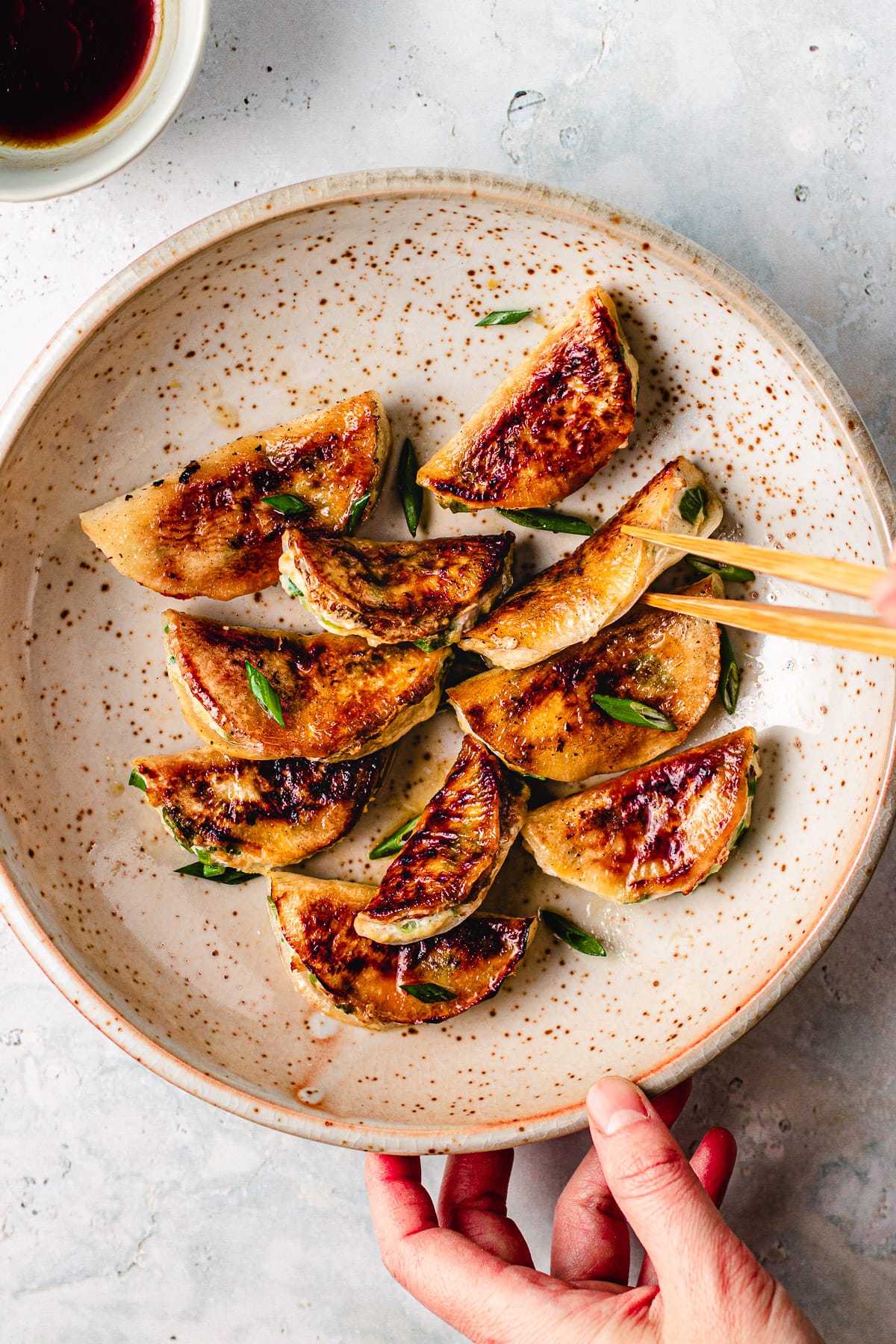
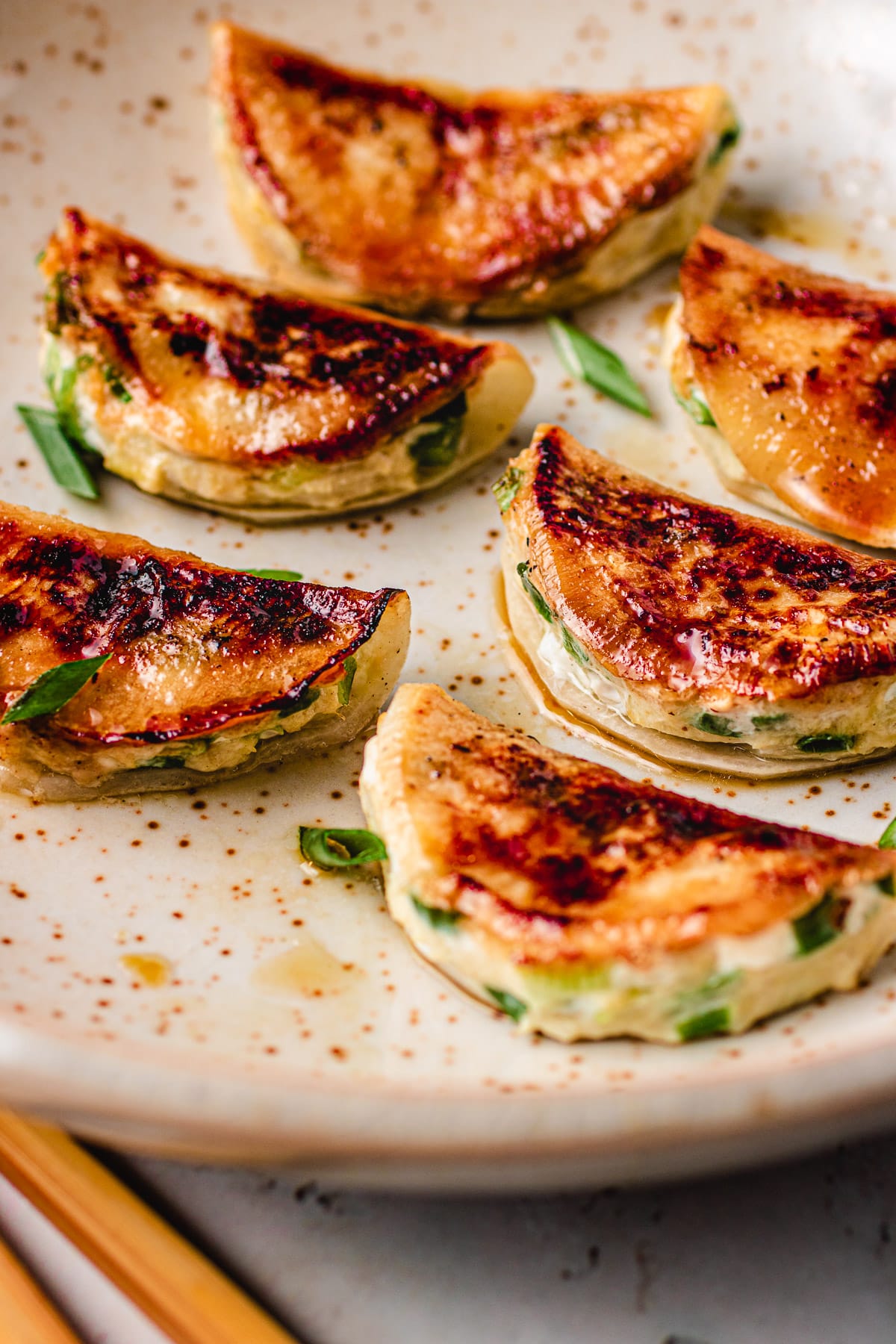
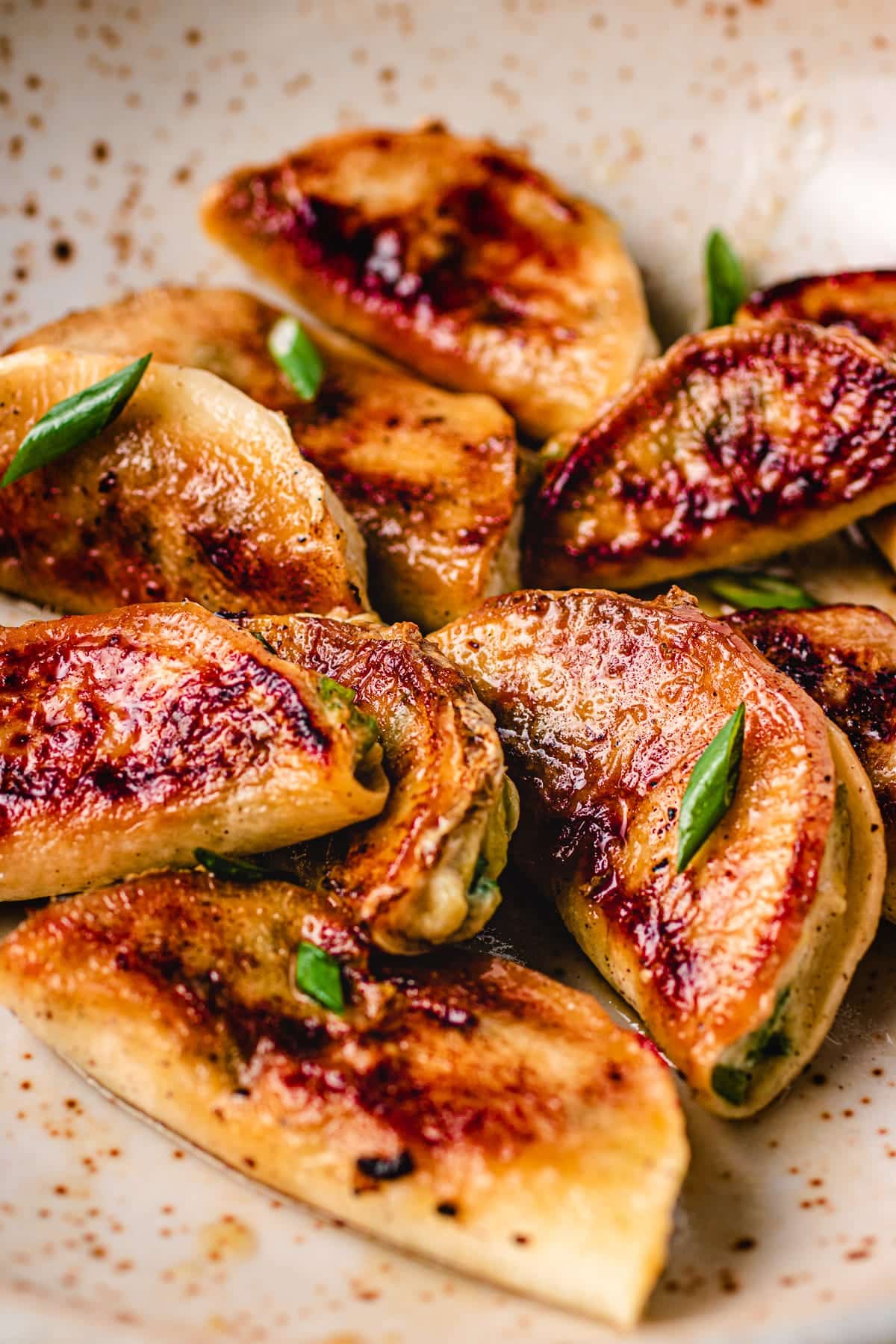
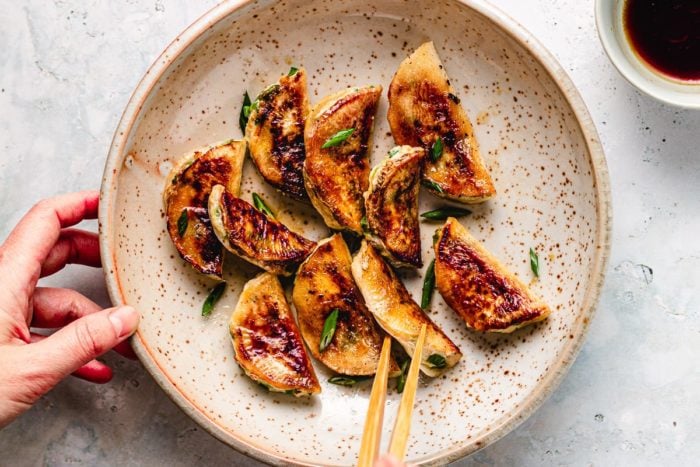
- Carefully remove the dumplings one by one with a small spatula and serve with the golden seared side up.
When you remove them from the skillet, some dumpling fillings might separate from the turnip/daikon shield. No worry. Simply place them back and once they become cooler the fillings will stick back to the wrappers. 🙂
How to keep low carb potstickers from tearing/opening up?
This is the method for low-carb potstickers that use turnip or daikon as dumpling wrappers.
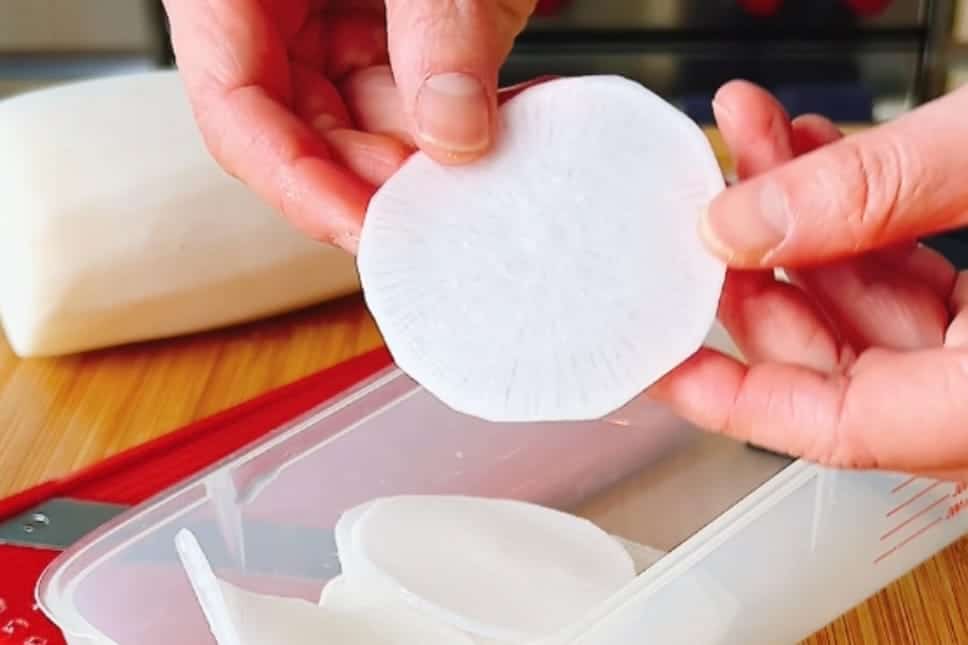
- Slice the daikon or turnip as thin as possible, using a mandolin slicer.
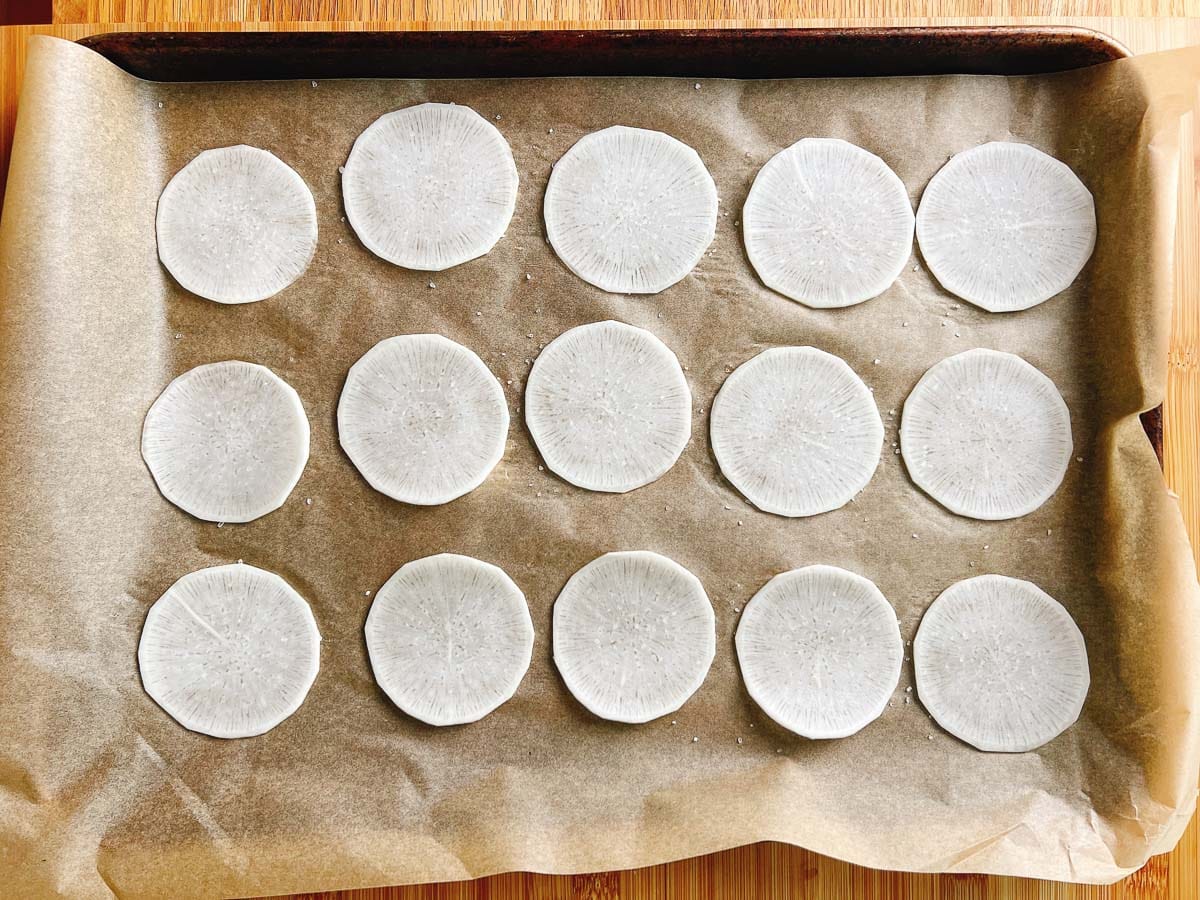
- Lightly salt both sides and let them sit for 15 minutes. This will draw water content from the radish.
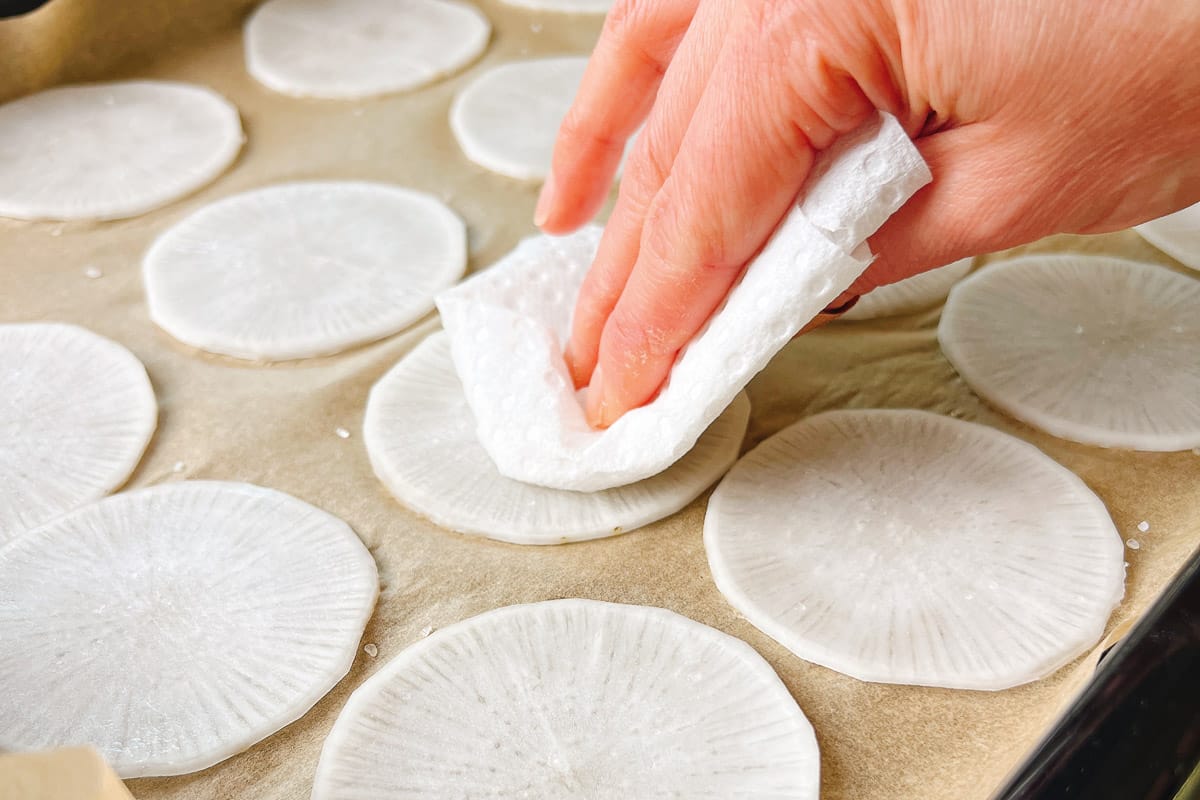
- Pat them dry. The radish slices should be fairly soft and flexible at this point.
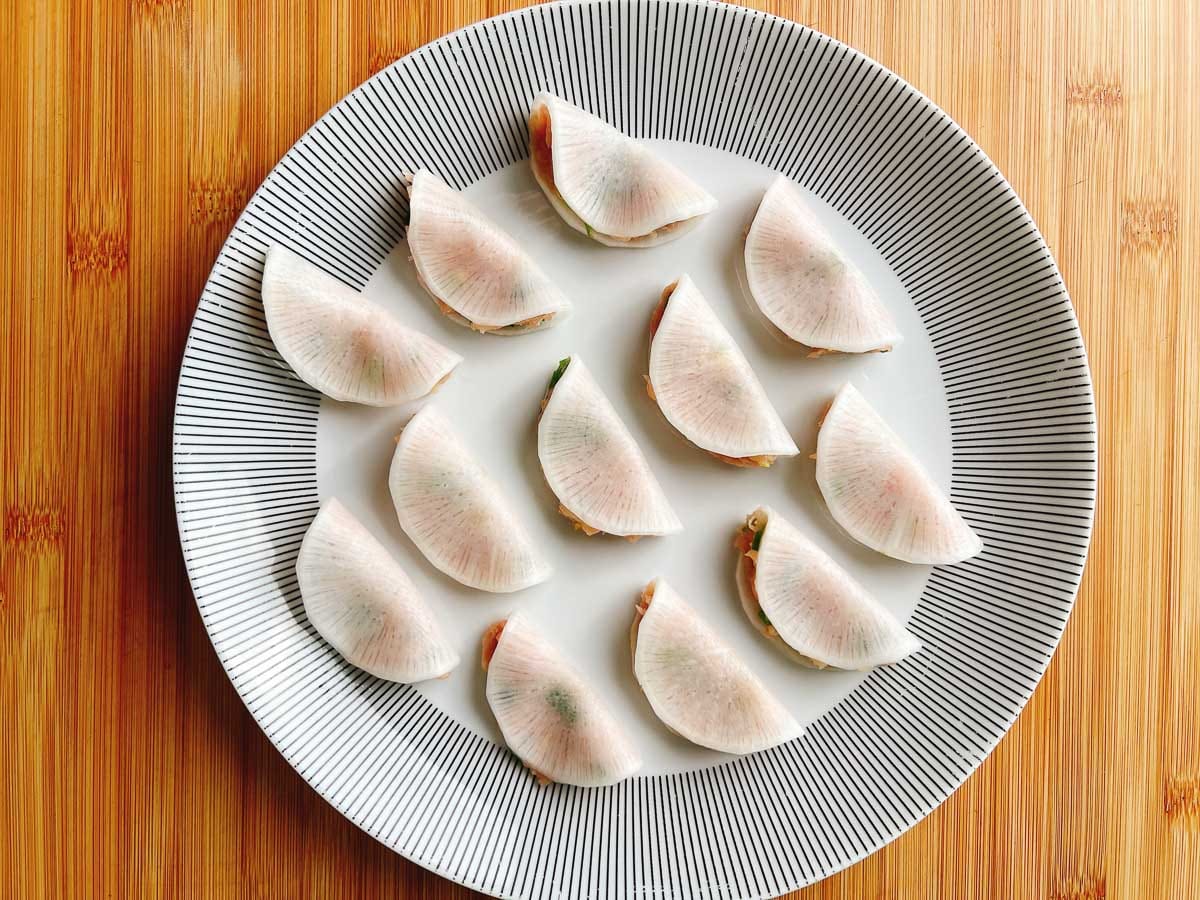
- Add a small amount of dumpling fillings to the center and use the back of a small teaspoon to smooth the filling. Apply a small amount of pressure to press the filling/paste onto the radish slices. This will help them stick together better.
- Gently fold it in half to create a half-moon shape and press the center edge to seal.
Make ahead and Freeze!
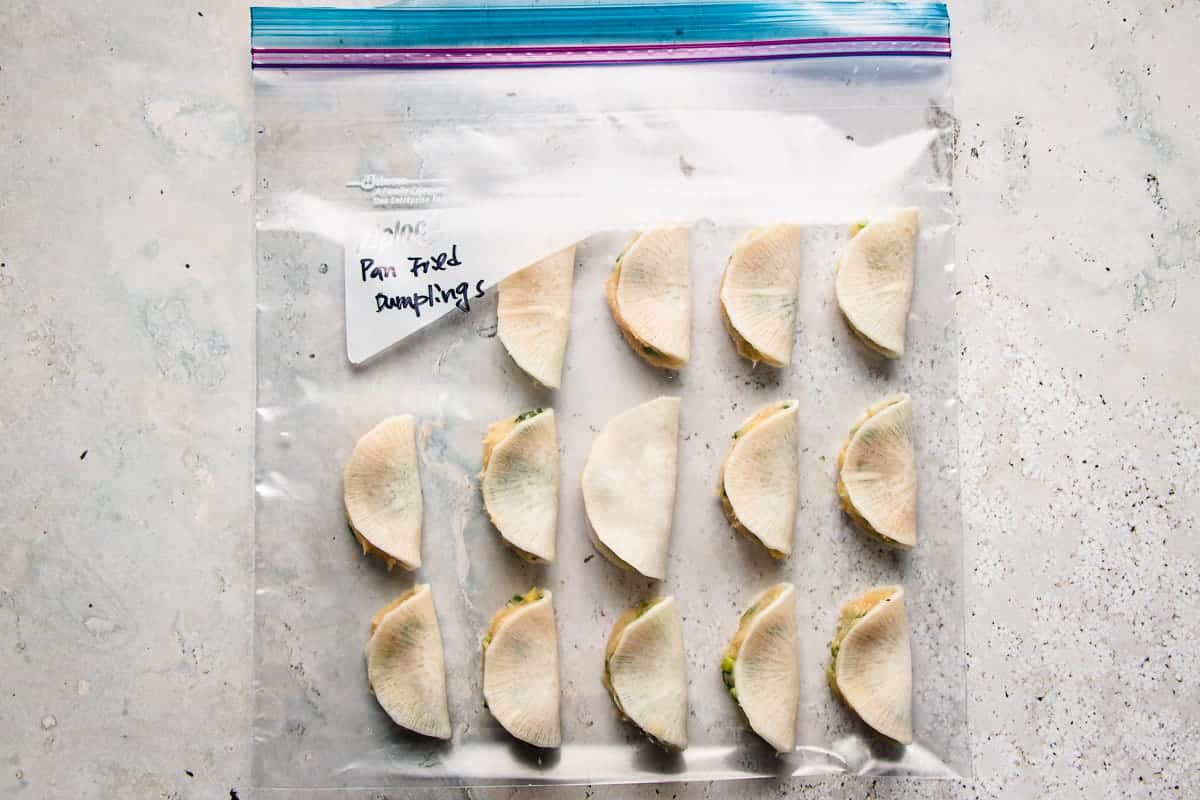
These low-carb potstickers are absolutely freezer-friendly! Simply store the uncooked dumplings in the freezer over a sheet pan. Once they become solid (overnight is the best), you can store them in freezer-friendly bags or containers.
Whenever you crave dumplings, simply pan-fry them directly from the freezer. Please do not defrost them in advance because the daikon or turnip wrappers will turn soft and watery. Add an additional 1 minute to the cooking time and enjoy!
Jiaozi (Pot Sticker) Dipping Sauce
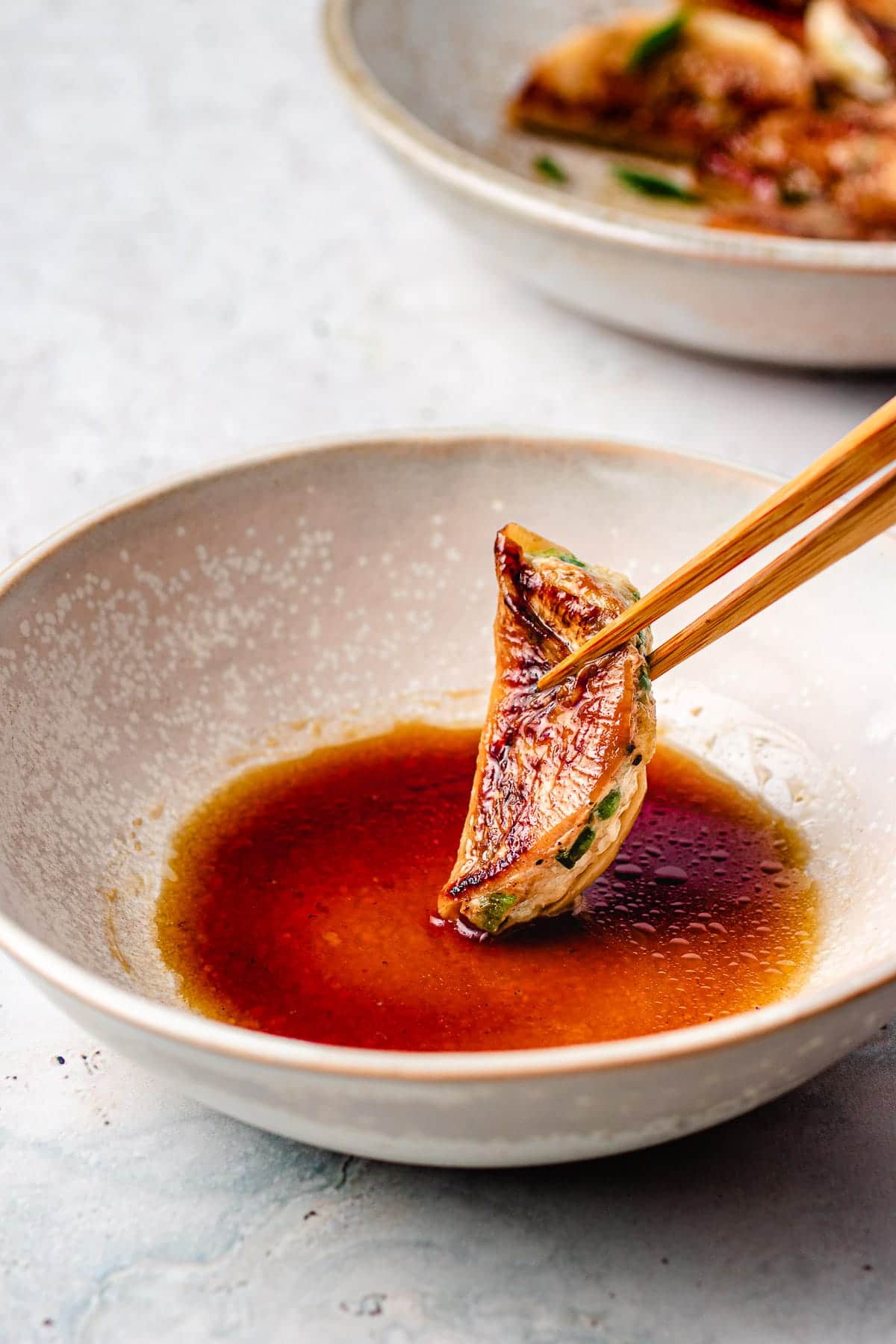
There are many dumpling dipping sauces for example my Keto shumai dipping sauce. I keep it simple and only use coconut aminos, rice vinegar, and with little toasted sesame oil. Feel free to add hot sauce and/or aged balsamic vinegar.
For a sweet sauce, try my egg roll sauce made with apricot jam. It’s naturally sweet and tart and pairs well with the savory potstickers.
Pair the low-carb potstickers with
- Paleo Beef and Broccoli
- Paleo Sweet and Sour Chicken
- Creamed Napa Cabbage
- Steamed Seafood Dim Sum
- Air fryer Chicken Wings (Thai style!)
- Instant pot Chinese Chicken Soup
Jiaozi (Chinese dumplings) symbolize fortune and longevity. Making potstickers is a fun family event that everyone can participate. This low-carb version of your favorite potstickers is the perfect appetizer for the upcoming New Year’s, or for everyday healthy indulgence. Get ready for an uber-umami whirlwind of deliciousness!
Got extra Daikon? Make my simmered daikon with chicken or Shaved daikon salad.
Daikon potstickers recipe
Video
Ingredients
Daikon wrappers
- 20 oz daikon radish or turnip at least 3-inch / 7.5 cm diameter
Potsticker Filling
- 3 scallions finely chopped
- 0.3 oz ginger finely chopped (about 1 tbsp)
- ⅔ lb ground chicken turkey, or pork
- 1 tsp toasted sesame oil
- ¼ tsp coarse sea salt plus more for sprinkling
- ⅛ tsp ground white pepper
- 2 tsp starch such as tapioca starch
For pan-frying
- Avocado oil or any neutral flavored oil
Dumpling dipping sauce
- 1 tbsp light soy sauce or 1½–2 tbsp coconut aminos, omit sugar below
- ½ tsp sugar
- ¼ tsp toasted sesame oil
- 1–1½ tsp rice vinegar or Chinese black vinegar
Instructions
Daikon prep:
- Lightly scrub the daikon and pat dry. Slice away the tip end, then use a vegetable peeler to remove the outer skin.

- Using a mandolin slicer, slice the daikon into thin rounds, about 1/16-inch (1.5 mm) thick.
- Arrange the slices in a single layer over two large sheet pans. Lightly sprinkle coarse sea salt over the top. Let them sit at room temperature for about 15 minutes. The daikon will release some moisture and become more pliable for folding.


Potsticker filling:
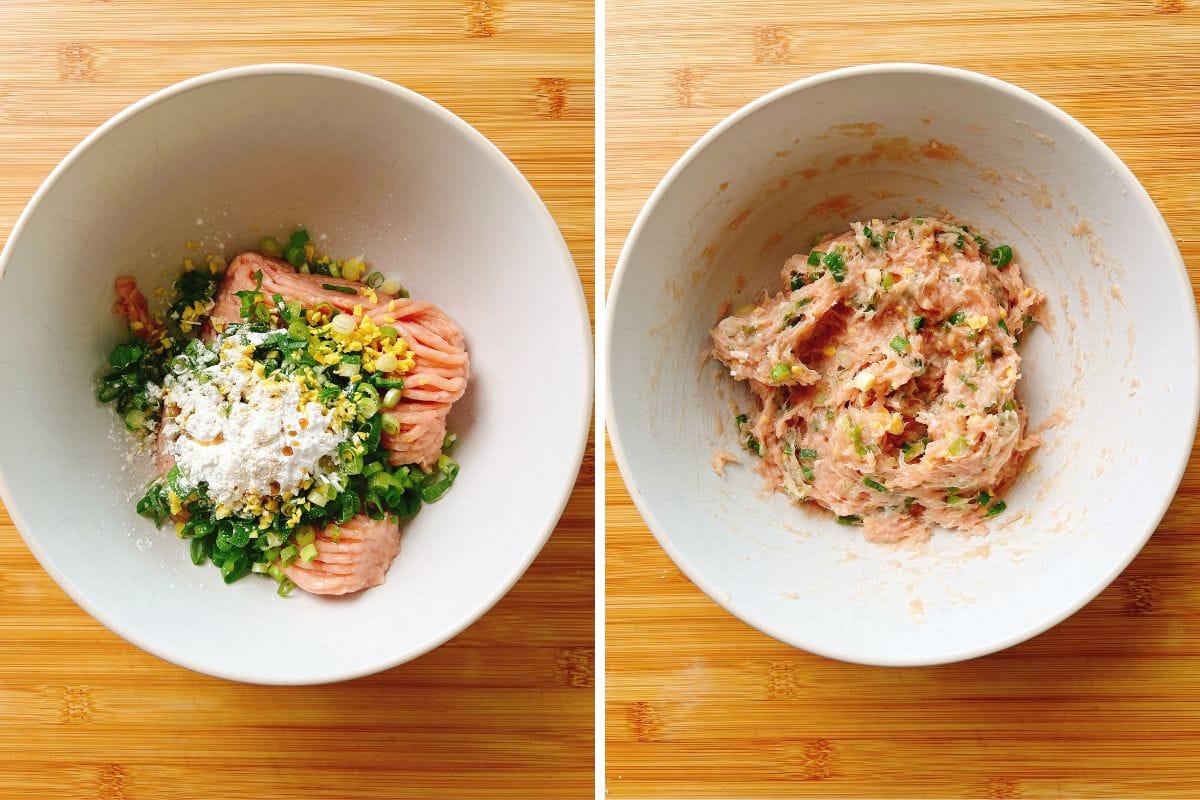
- In a large mixing bowl, combine everything from the scallions through the starch.
- Stir the mixture in one direction until it turns into a sticky paste, about 1–2 minutes. Cover and refrigerate until ready to use.
To shape the potstickers:
- Pat the daikon slices dry with paper towels. There should be no visible water droplets on the surface.
- Place one daikon slice on your work surface. Add about 1 teaspoon of filling to the center.
- Use the back of the spoon to gently spread the filling, leaving a clean border around the edge so it seals easily.
- Fold the wrapper in half into a half-moon shape. Press the center edge to seal using your thumb and index finger.

- If needed, use the spoon to gently tuck the filling inward and refine the shape.
- Place the finished potsticker on a large plate and repeat until all the daikon slices are used.


Pan fry the potstickers:
- Heat a non-stick skillet or well-seasoned cast-iron pan over medium heat until hot. Add 1 tbsp oil.
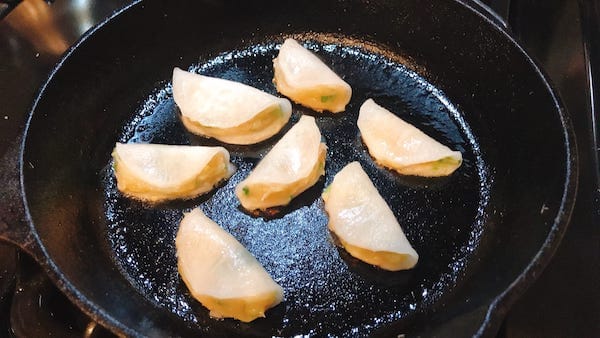
- Arrange the potstickers in a single layer with a little space between each one. Pan-fry for 2 minutes, untouched. Do not flip.
- Carefully add ½ tablespoon water, cover the pan, and reduce the heat to medium-low. Steam for 2–2½ minutes, until the filling is cooked through.
- Uncover the pan and cook for 1 more minute to evaporate excess moisture. For a deeper golden crust, cook slightly longer if desired.
- Turn off the heat. Carefully transfer the potstickers to a serving plate, seared side up.
- If any filling separates from the daikon wrapper while removing them, simply place it back — once cooled slightly, they will stick together again.

How to serve:
- These dumplings taste best while still warm. Serve right away with dumpling dipping sauce on the side.

Notes
- To freeze: Arrange uncooked dumplings in a single layer on a sheet pan. Flash freeze until solid, then transfer to freezer-safe bags or containers.
- To cook from frozen: Pan-fry directly from frozen. Do not thaw in advance — thawing will cause the daikon or turnip to turn soft and watery.
- Use ¼ tablespoon water for steaming (instead of ½ tablespoon)
- Add 1 extra minute to the cooking time
- If cooking in batches, keep unused dumplings in the freezer until ready to cook. They soften quickly at room temperature.
- Cookware and temperature: In my recipe testing, a well-seasoned cast iron skillet gives the best golden sear because it retains heat well. Daikon has a higher water content than regular dumpling wrappers, so a hot pan with a quick sear (rather than prolonged cooking) gives you the best texture and prevents the wrappers from turning watery.
- What not to use: I don’t recommend using a stainless steel skillet or a wok to pan-fry these dumplings. The daikon wrappers are more delicate and tend to stick to these surfaces, which makes the dumplings harder to manage and more likely to tear.
Nutrition
Nutrition information is automatically calculated, so should only be used as an approximation.
Made a dish and loved it? Please rate the recipe and leave a comment in the section below! It helps my blog grow organically, allowing me to continue sharing free and awesome content with you. Thank you!








As with everything from I Heart Umami, the flavors are delicious!
It turns out that I don’t, however, have the patience or finesse to fill, close and cook these. I did one batch, and they are yummy, but with the rest of the filling, I shaped meatballs using a cookie scoop, put a slice of daikon on top, and steamed them. Delish and easy.
Perfect work around! You are so cute. Thanks for making the dish. :))
Made these after a friend recommended them; they are super easy to make and super tasty!
Thank you so much!
This recipe is so simple, so quick, and so delicious! You can also prep a ton ahead of time and freeze them for quick meals in the future! I’ve made this so many times and shared this so many times- everyone loves it! 10/10 recommend!
Thank you so much!
Korean radish is nice and girthy, I was able to use that easier than daikon for the skins. I didn’t notice a taste difference at all.
Also this recipe is delicious!
So happy to hear!