
This post may contain affiliate links. Please read our disclosure policy.
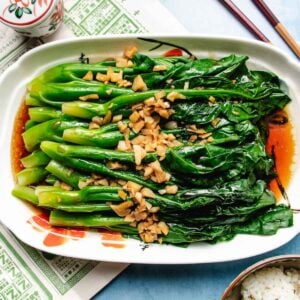
Chinese broccoli with oyster sauce is a classic Cantonese vegetable side dish often served at dim sum restaurants and family-style Chinese meals. With crisp-tender gai lan and a savory garlic ginger oyster sauce, it’s a simple dish to recreate at home. Once you learn the method, it’s an easy side dish to make again and again.
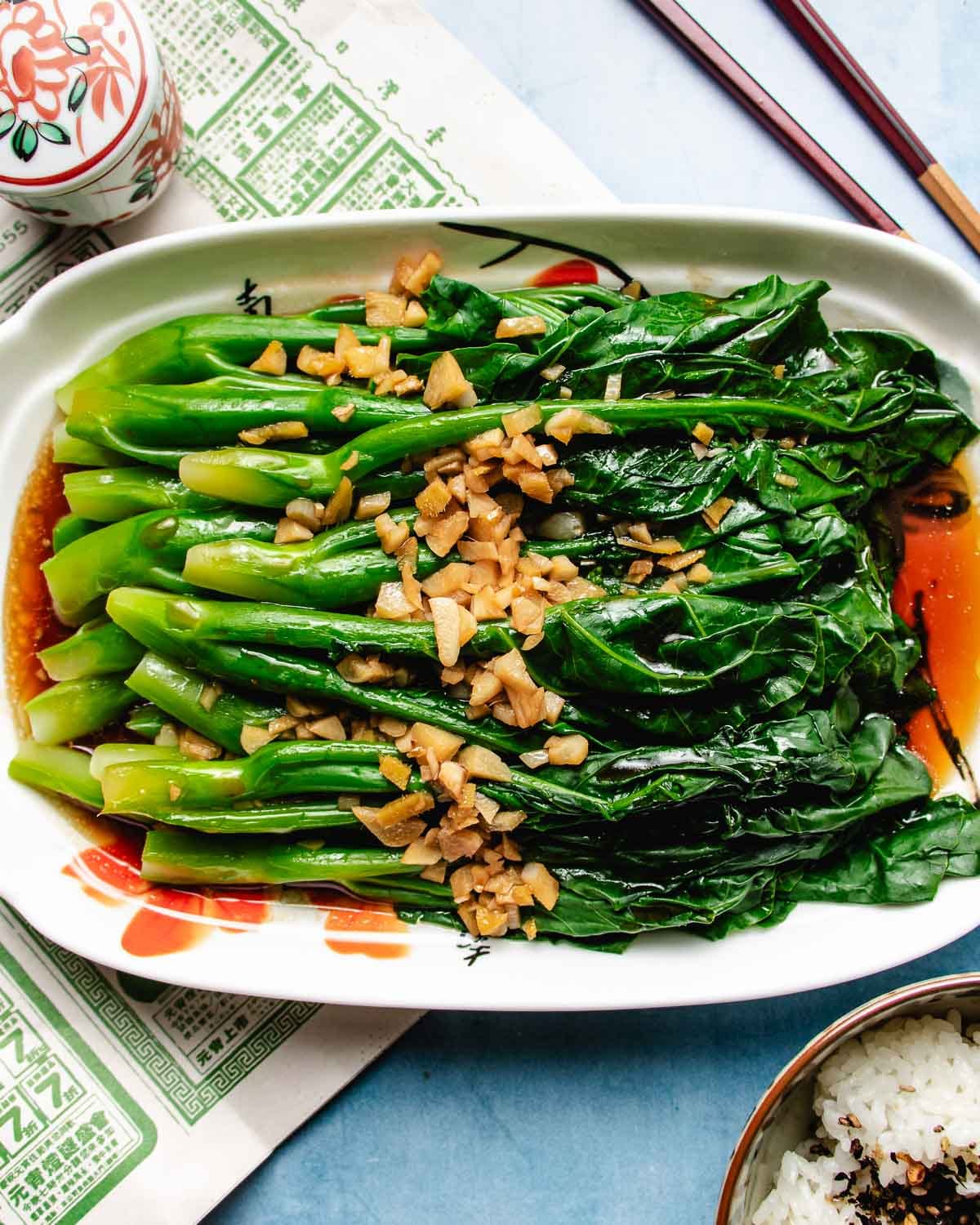
Why this recipe works

- Works with regular or baby gai lan: This recipe works with both regular and baby Chinese broccoli, with prep notes for each so you can get the texture right.
- The stems and leaves cook more evenly: Instead of blanching the whole bundle all at once, I use a simple two-step blanching method. It helps the stems turn crisp-tender without overcooking the leafy tops.
- The sauce has a more layered flavor: Garlic and ginger give the sauce more depth, so it tastes closer to the flavor you’d get at a Cantonese restaurant.
- The sauce stays pourable: I keep the sauce light and pourable instead of thick and heavy. That also gives you extra sauce to spoon over rice.
Ingredient Notes
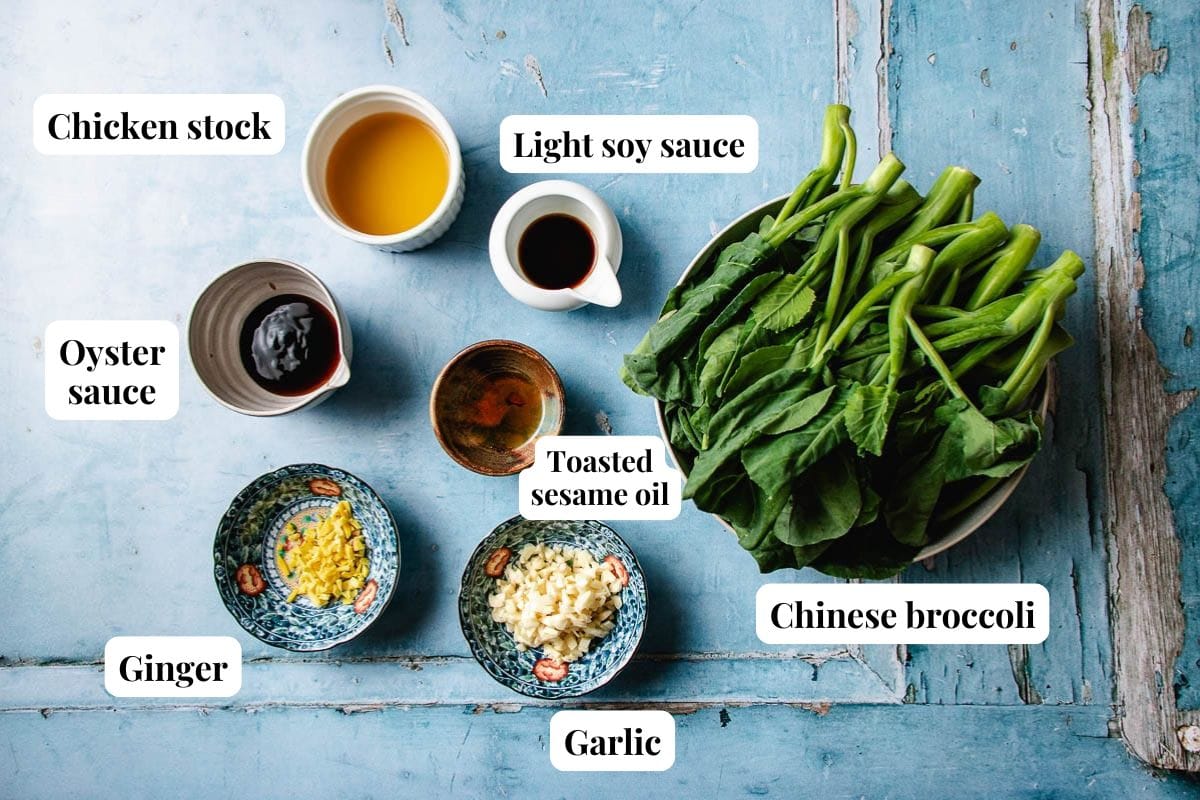
- Chinese broccoli / gai lan: Chinese broccoli, also called gai lan or jie lan, is a Chinese leafy green with thick stems, broad leaves, and small flower buds. It’s more robust than Western broccoli and has a slightly stronger green flavor.
- Oyster sauce: Oyster sauce is the key flavor base in this dish. If you want that classic Cantonese flavor, this is a must-have. My favorite is the Thai brand Mega Chef. It tastes great and is naturally gluten-free.
- Garlic and ginger: These two aromatics give the sauce a more layered flavor.
- Stock and sesame oil: These round out the sauce. The stock loosens the sauce so it coats the broccoli better and gives you extra sauce to spoon over rice. Toasted sesame oil adds a light nutty finish.
Shopping and Substitution Tips
- How to choose Chinese broccoli: Look for stems that feel firm and look fresh. The cut ends may look a little dry, which is normal, but they shouldn’t look heavily split or crackly. The leaves should be dark green and not wilted, limp, or shriveled. If the bunch has flower buds, they should still be tight and green. Avoid bunches with yellow or white blooms, which usually means they’re older.
- Regular vs baby Chinese broccoli: Both are Chinese broccoli. Regular Chinese broccoli usually has thicker stems and larger leaves, and it’s the type you’ll often see at Chinese grocery stores. Baby Chinese broccoli is harvested earlier, so the stems are thinner and more tender. You may also see it labeled as Chinese broccoli tips. This recipe works for both, and I’ll show you how to prep each one below.
- If you can’t find gai lan: The closest substitute for texture is broccolini, especially for the stem. It doesn’t have the same long leafy tops, but it gives you a similar bite. If you want a softer, more delicate leafy green, you can also use this same sauce for my yu choy with garlic sauce.
- If you don’t use oyster sauce: A store-bought vegetarian oyster sauce is the easiest swap. You can also use my homemade vegetarian oyster sauce if you want a homemade option.
How to Prepare Chinese Broccoli
For regular Chinese broccoli, trim 1 to 1.5 inches from the bottom of the stems, or until the cut center looks fresh and bright green, not dry. If the stems are especially thick, fibrous, or woody near the base, use a knife to shave away the outer layer around the bottom part of the stem. A knife works better than a vegetable peeler here because the fibrous layer is often too thick and tough for a peeler to remove properly.
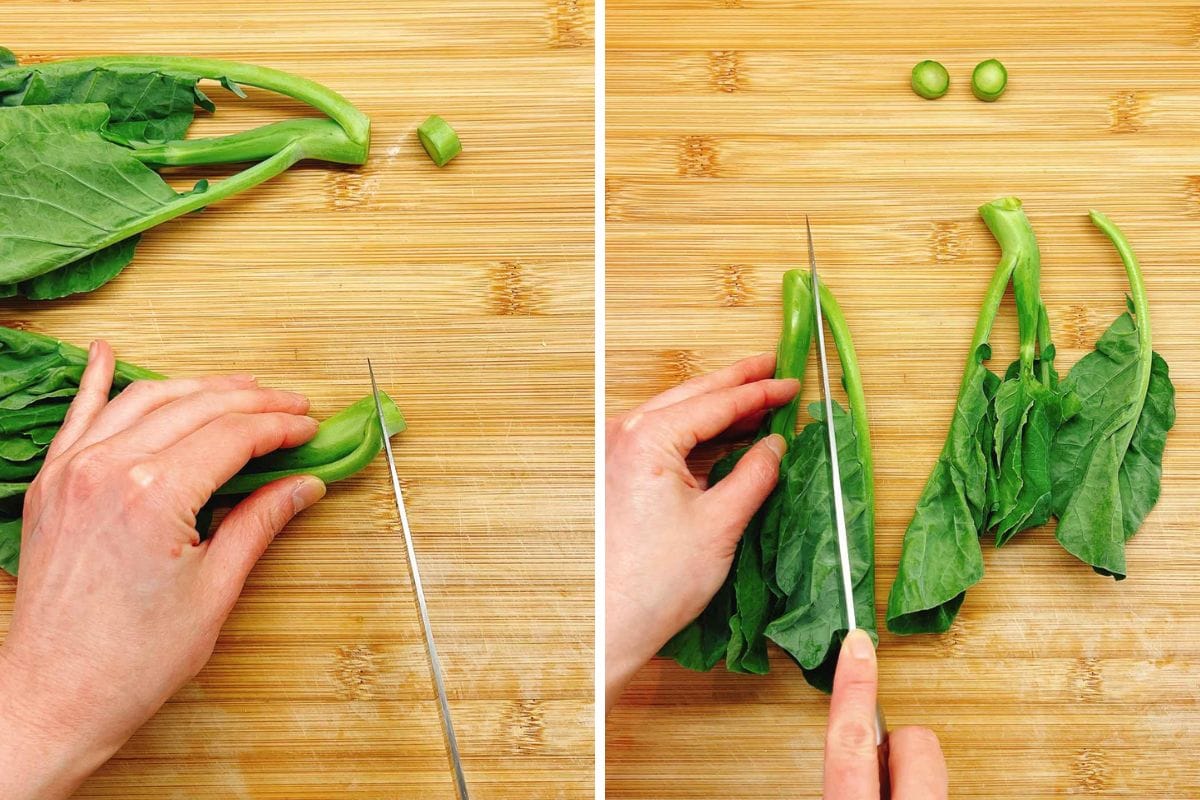
If one stalk has a very thick main stem with smaller branches attached, you can separate the smaller branches. For extra thick stems, score or split them lengthwise near the bottom so they cook more evenly.
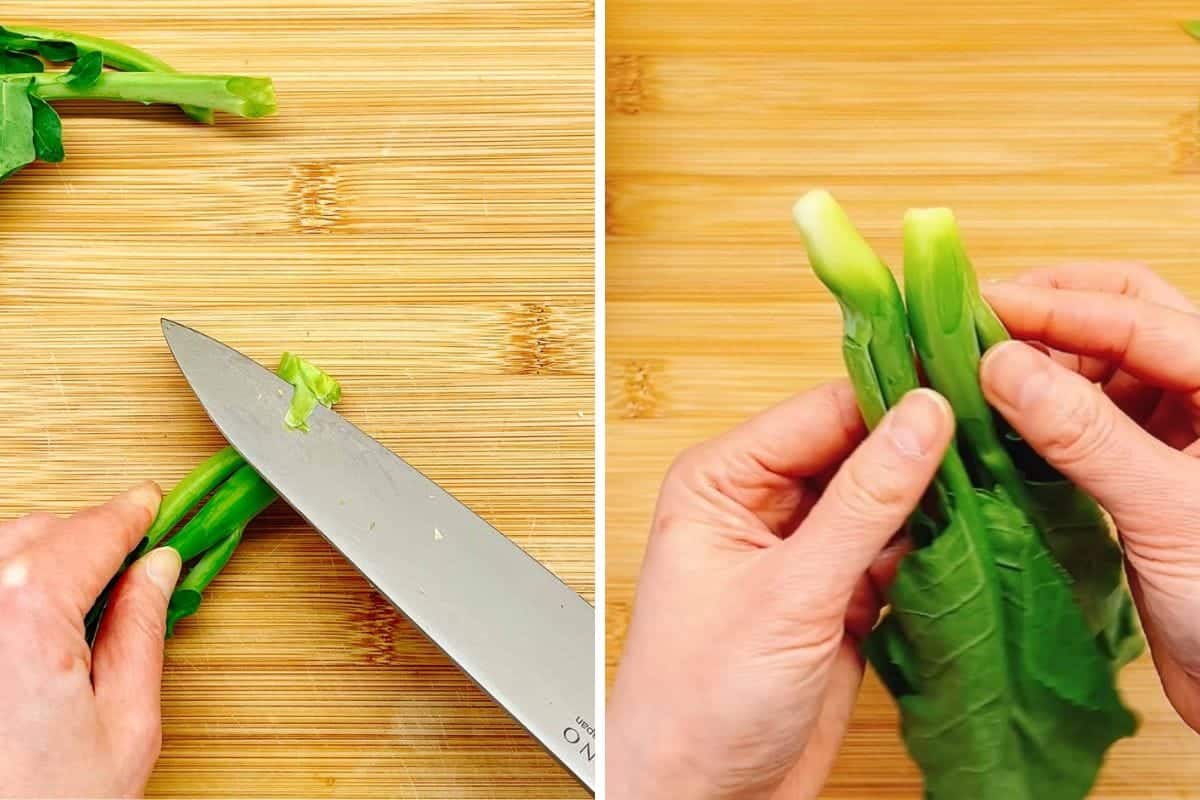
There’s no need to remove the leaves or flower buds unless they look yellow, wilted, or damaged.
For baby Chinese broccoli, the prep is simpler. Since the stems are thinner and more tender, you usually only need to trim off about ¼ inch, or just enough to remove the dry tip.
Once trimmed, rinse the Chinese broccoli well under cold water, especially around the leaves and flower buds where dirt can hide. Then set it aside to drain well.
Keep the stalks whole. It gives you the classic restaurant-style presentation and makes it easier to blanch the stems and leaves in stages.
How to make Chinese broccoli with oyster sauce
After you trim and wash the Chinese broccoli, the next step is to blanch it. Gai lan has thick stems and tender leaves, so here’s the simple two-step method I use to keep the stems crisp-tender without overcooking the leaves.
Step 1: Choose a pot that fits the bundle well: Use a pot that’s just big enough to hold the whole bundle of Chinese broccoli. If the pot is too wide, the bundle won’t stay upright easily when you blanch the stems first. If it’s too narrow, the broccoli will be too cramped and won’t blanch evenly. A medium soup pot, about 4 quarts, usually works well.
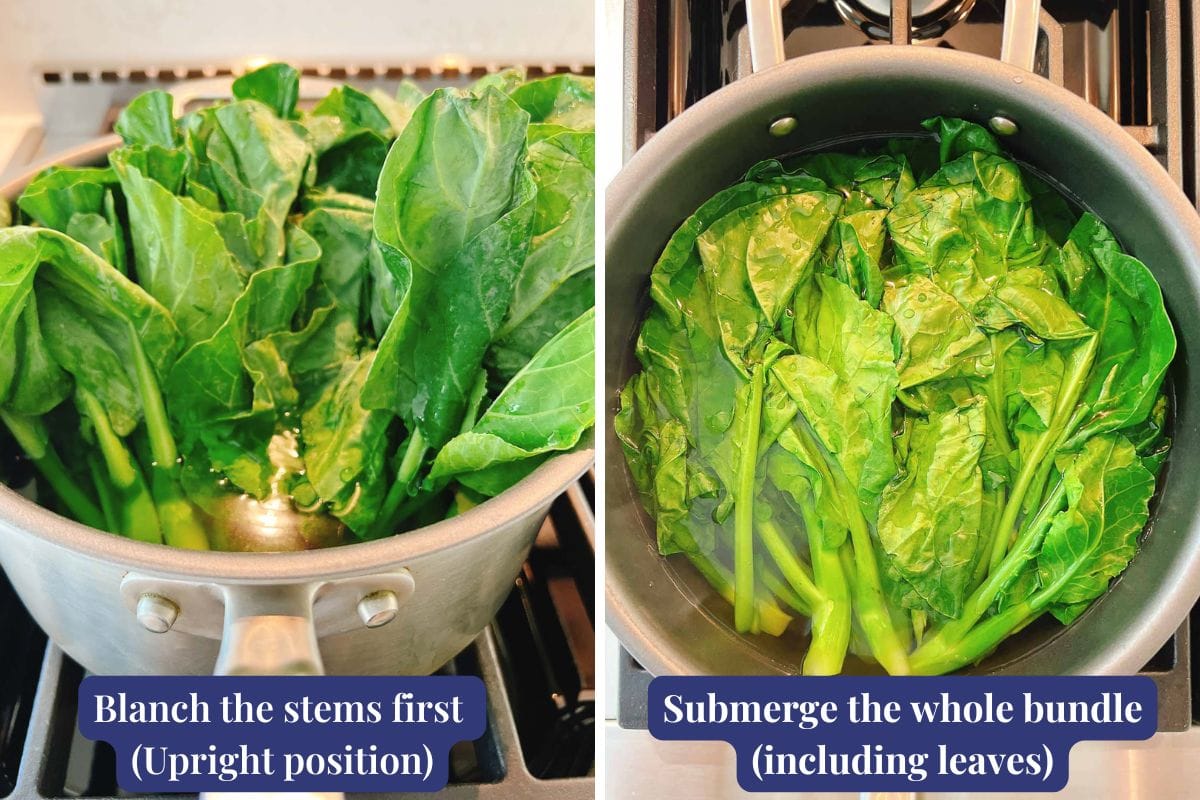
Step 2: Blanch the stems first: Bring the water to a boil, then lower the heat slightly to medium so the water stays steady. Gather the Chinese broccoli into a bundle with the stems facing downward. Place the bundle into the pot in a standing position, with the stems in the water and the leafy tops above the water. Blanch for about 1 minute. If the stems are especially thick, give them another 30 seconds. This gives the thick stems a head start before the leaves go in.
Step 3: Submerge the leaves and finish blanching: Once the stems have had a head start, push the whole bundle under the water so the leaves blanch too. Cook for about 1 minute more, or until the leaves are softened and the stems are tender. Chinese broccoli is supposed to have a slight bitterness — that’s part of its character. Blanching helps mellow it without taking away what makes gai lan so tasty.
Step 4: Check for crisp-tender doneness: Pick out one of the thicker stems and carefully take a small bite. It should feel crisp-tender — cooked through with a little bite, but not tough or raw in the center. If it still tastes too firm, blanch for another 30 seconds and check again.
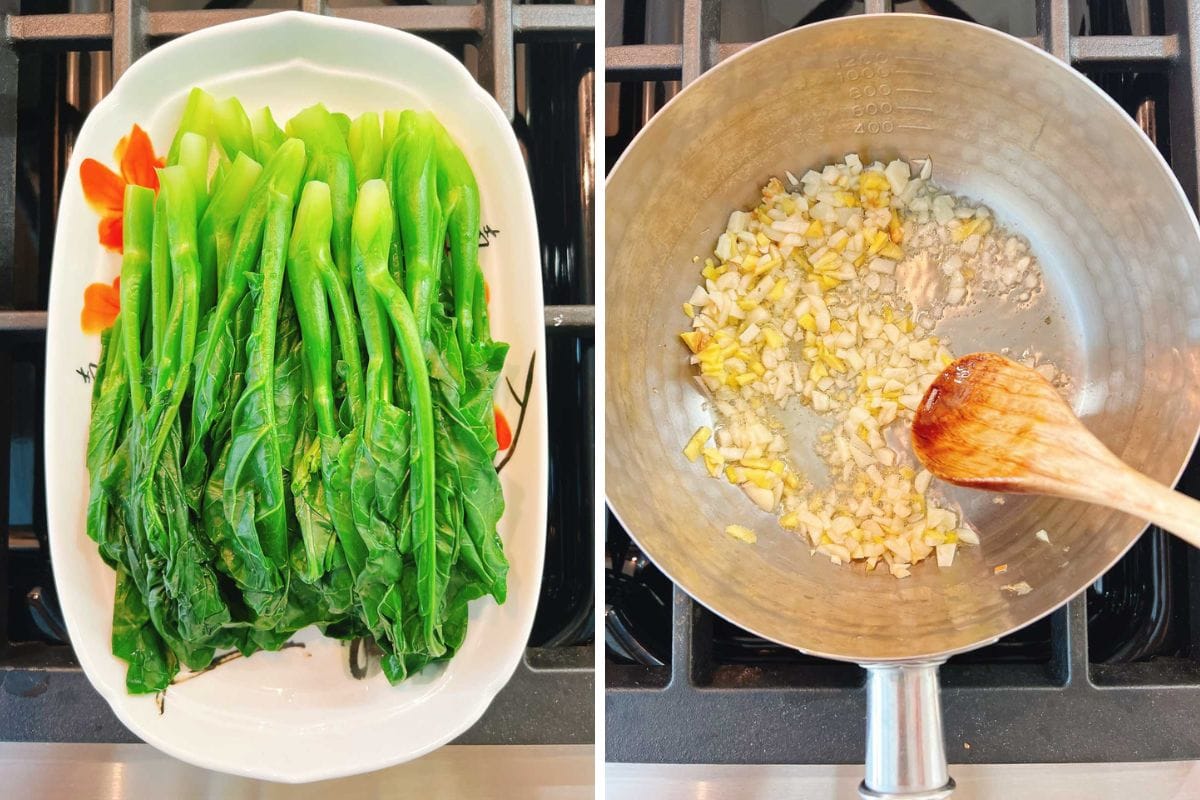
Step 5: Drain and plate the broccoli: Once the Chinese broccoli is cooked to your liking, transfer it to a serving plate and let it drain briefly. Arrange the stems in one direction and the leafy tops in the other for a clean presentation.
Step 6: Make the garlic ginger oyster sauce: While the broccoli drains, make the sauce. The sauce itself is simple, but the garlic and ginger add depth to the flavor. I also like to make the sauce a little extra so it coats the vegetables well and gives you enough to spoon over rice.
The texture should stay loose and pourable, not thick like a stir-fry sauce. That’s the style I’m following here — flavorful and glossy, but still light enough to drizzle over the greens.
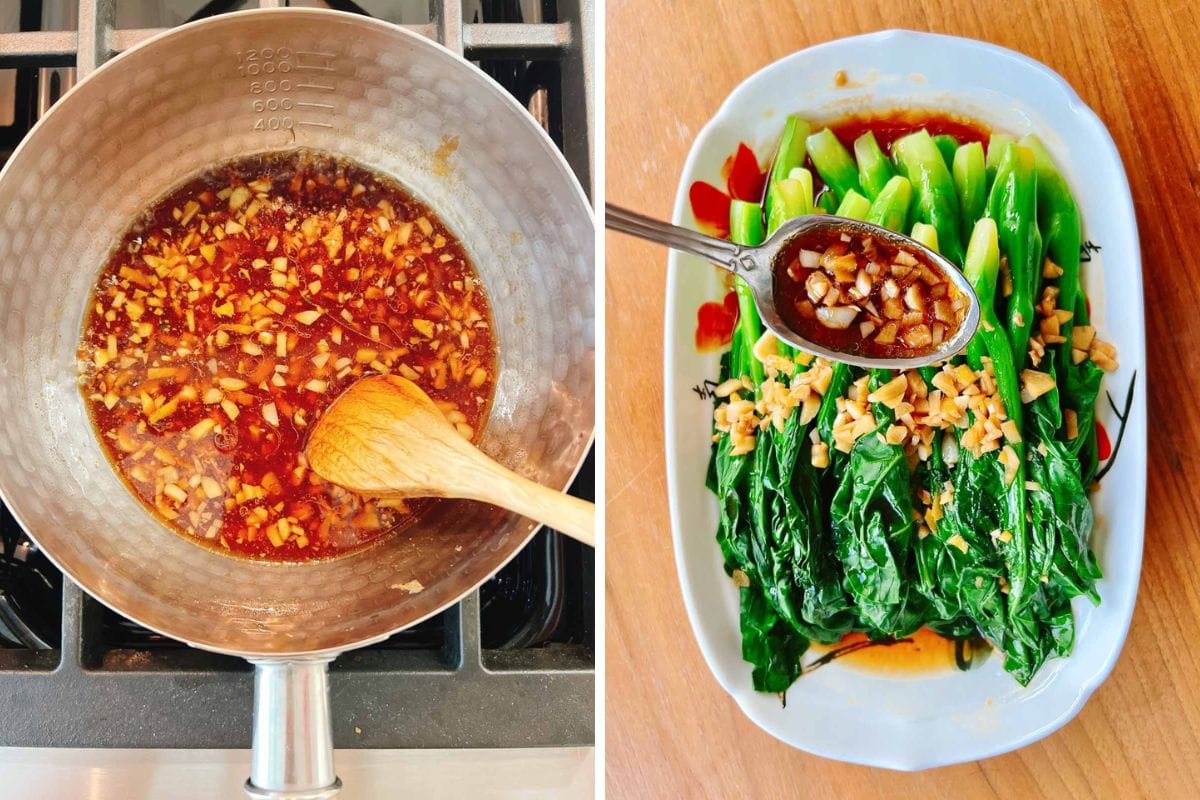
Step 7: Drain away the water on the plate: Because the Chinese broccoli is blanched, there will almost always be some water collecting on the serving plate as it sits. Before you add the sauce, gently tilt the plate and drain away that liquid so it doesn’t water down the oyster sauce. If you want to remove a little more moisture, you can also gently squeeze the broccoli before plating.
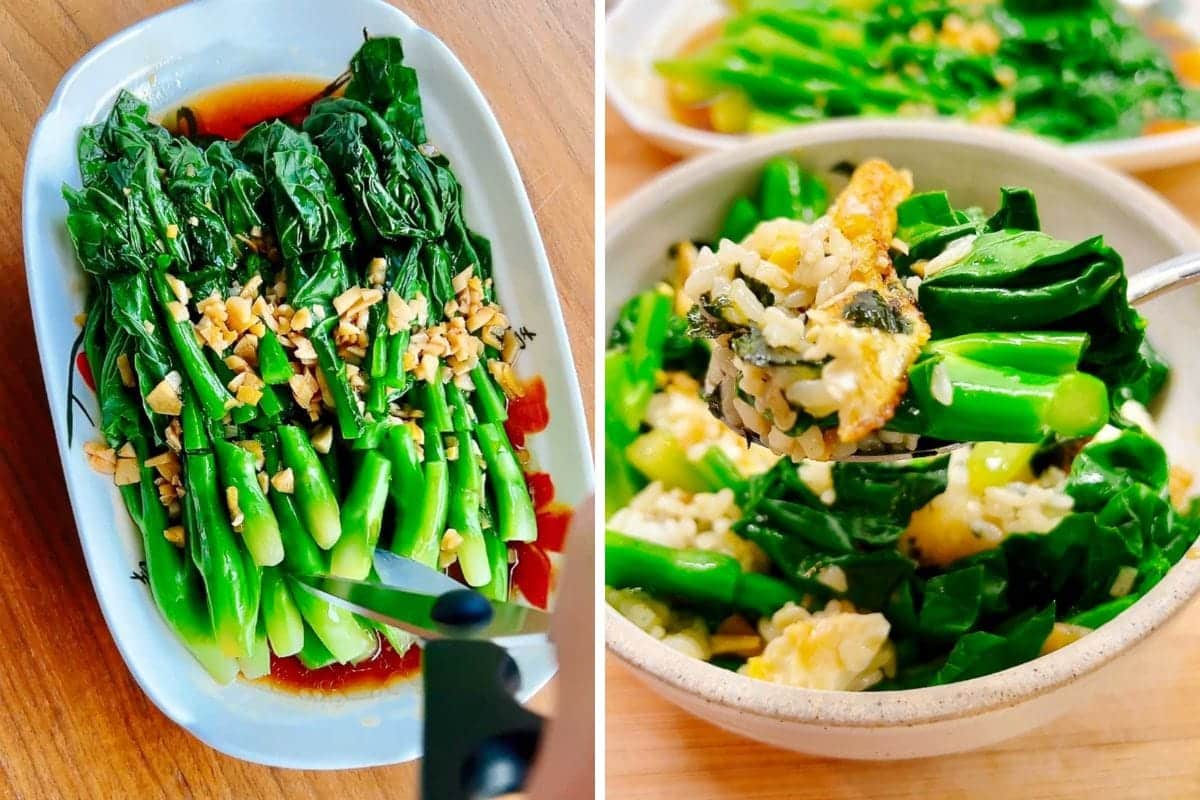
Step 8: Pour over the sauce and serve: Pour the warm sauce, along with the garlic and ginger bits, directly over the Chinese broccoli and serve right away. For easier serving, you can use kitchen shears to snip the broccoli into shorter sections.
What to serve with gai lan with oyster sauce
This Chinese broccoli with oyster sauce is a simple vegetable side that pairs well with everything from rice and eggs to savory Chinese mains and dim sum-style dishes.
- For a simple rice-based meal: Serve it with rice cooker white rice for an easy everyday pairing. If you want to turn it into more of a complete meal, add an air fryer fried egg and spoon that extra oyster sauce over the rice.
- Alongside savory Chinese mains: This gai lan side dish goes especially well with savory mains such as beef with garlic sauce, scallion chicken, or Chinese steamed chicken.
- As part of a dim sum-style spread: If you want more of a dim sum-style meal at home, serve it with shrimp wontons or seafood dim sum. The oyster sauce greens add a classic vegetable side that rounds out the table nicely.
Chinese Broccoli with Oyster Sauce Recipe
Ingredients
- 1 lb Chinese broccoli (Gai lan)
- 1 oz garlic finely minced (6 large cloves)
- 0.35 oz ginger finely minced
- 2 tbsp oyster sauce
- 1 tbsp light soy sauce
- ¼ cup chicken stock or vegetable stock
- 2 tsp toasted sesame oil
- 1 tbsp avocado oil or any neutral flavored oil
Instructions
Bring water to a boil:
- In a 4-quart soup pot, fill it with water and bring it to a boil. I recommend using a pot that’s just big enough to submerge the entire bundle of broccoli—not too big and not too small.
Prepare Chinese broccoli:
- We are leaving the broccoli whole so the leaves and stems stay in one piece (not diced).
- For mature Chinese broccoli (larger, regular-sized), make a small slice to trim away the bottom tip end (about ¼ inch), or until you see the center core turn fresh bright green instead of dry. For large thick stems, which often have one main stem connected to 1–2 smaller branches, you can separate the smaller branches from the thick stem.
- To trim away the thick outer fibrous layer of the stem, hold the knife at a 45-degree angle and trim the stem (about 1 to 1.5 inch up from the bottom) to remove the outer layer and expose the center core. Repeat until all the broccoli is trimmed.
- If using baby Chinese broccoli (broccoli tips), they are smaller and more tender. Simply trim away the bottom tip end (about ¼ inch). You should see that the center core of the broccoli stem is fresh bright green, not dry.
Clean the broccoli:
- Plunge the broccoli into cold water a few times until the water runs clean, then set aside to drain.
Aromatics and sauce:
- Finely mince the garlic and ginger. In a small bowl, combine everything from the oyster sauce to the sesame oil. Stir well.
Blanch Chinese broccoli:
- Once the water comes to a boil, lower the heat to medium. Gather the Chinese broccoli into a large bundle with the stems facing downward.
- Place the bundle into the water, stem side down in a standing position, with the leafy parts above the water, and blanch for 1 minute. If the stems are thicker than ½ inch, blanch for 30 seconds longer.
- After that, submerge the entire bundle, including the leafy parts, under the water and blanch for 1 more minute.
- Pick a thick stem and carefully take a small bite (careful, it’ll be hot) to see if it’s cooked to your liking. It should be crisp-tender. If not, blanch for 30 seconds more and taste again.
- Remove the Chinese broccoli, drain, and transfer to a large serving plate. Arrange the broccoli with the stems gathered on one end and the leafy parts on the other. There’s no need to rinse the broccoli.
Make garlic sauce:
- In a saucepan, preheat it over medium heat until it feels warm. Add the oil and swirl it around, then add the garlic and ginger. Reduce the heat to medium-low and cook for 20–30 seconds. Take care not to burn them.
- Pour in the sauce. Gently stir with a wooden spoon for 1 minute to warm it through. Don’t cook the sauce down. It should stay on the looser side so you can drizzle the extra sauce over rice when serving. Turn off the heat.
Combine sauce and broccoli:
- Before pouring the garlic sauce over the broccoli, check whether there’s a pool of water on the serving plate. If so, gently tilt the plate while holding the broccoli in place to drain away the water. Then pour the sauce over the Chinese broccoli.
How to serve it:
- Serve immediately, warm, or at room temperature. For easier serving, use a pair of kitchen shears to make a few cuts and separate the broccoli into sections, if you like.
Notes
- For a meal prep version, blanch the broccoli and shock it in cold water to stop the cooking and preserve the bright green color. Gently squeeze out the excess liquid and store it in a container in the refrigerator. Best use within 3-4 days. The sauce is best made fresh when ready to serve.
- Do not use a vegetable peeler to peel away the broccoli stem. It won’t remove enough of the tough fibrous outer layer. You’ll need a knife for this.
- My personal serving preference: I love serving this oyster sauce garlic broccoli with steamed white rice, a crispy fried egg, and a few crushed seaweed nori snacks to make a rice bowl. Mix everything together, then drizzle that extra oyster garlic sauce over the top—almost like a Chinese broccoli-style bibimbap. 🙂
Nutrition
Nutrition information is automatically calculated, so should only be used as an approximation.
More Chinese Broccoli Recipes to Try
If you have extra gai lan or just want more ways to cook it, I also have a couple of other Chinese broccoli recipes on the blog. For a heartier main dish, try my beef with Chinese broccoli. If you want another simple way to cook this vegetable, my Chinese broccoli stir-fry is a great one to keep on repeat.
Made a dish and loved it? Please rate the recipe and leave a comment in the section below! It helps my blog grow organically, allowing me to continue sharing free and awesome content with you. Thank you!








I am going on the hunt for this Chinese broccoli. If I don’t find it, thinking to make with bok choy until I can find it. I want to make the vegetarian oyster sauce — that’s why I am asking re a substitute so I can make it right away!
Love how making this dish brings back family memories for you! I made it to pair with salmon the other night and it was so delish!
I need that oyster sauce in my life. And Chinese broccoli seems like the perfect way to enjoy it!
Thanks, Don!
It’s wonderful to have a gluten free version of this delicious dish! The vegetarian oyster sauce is a valuable resource for me, too, since my grandson has a shellfish allergy.
You know this is what I love so much about your blog, always amazing surprises! This looks so good and creative dressing of vegetables is something I am always looking for!
Chinese broccoli was my favorite thing to get for dim sum! This looks fantastic.
I’m always on the lookout for soy-free and gluten-free remakes of my favorite Chinese foods. This hits the spot!
My mouth is literally watering, this looks amazing! The oyster sauce sounds delicious, I’ve never tried chinese broccoli, must try and find some!
Thank you so much, Carina!
Chihyu, we made your vegetarian oyster sauce recipe and had a big bottle left. We tried your oyster sauce beef stir-fry and everyone in the family loves it. We then use the same sauce to make this broccoli recipe – absolutely delicious. Thank you so much for making yummy gluten-free delicious food with us!
Thank you so much, Jennifer!
I had a bottle of Chihyu’s shiitake made oyster sauce and this recipe came at the perfect timing! I blanch the broccoli quickly like the recipe instructed and rinse in cold water before adding the sauce. It was quick, easy, and super delicious. I also love that this recipe is very versatile as I can use the same sauce and cooking method for any vegetables – bok choy, broccolini, or broccoli. Thank you for this wonderful recipe. Simple and delicious!
Thanks so much!