
This post may contain affiliate links. Please read our disclosure policy.
Steamed napa cabbage with glass noodles is a cozy, home-style Asian vegetable dish with tender cabbage, chewy noodles, fresh shiitake mushrooms, and crispy pancetta on top. Everything is finished with a savory oyster-soy sesame sauce that makes the whole dish taste rich, glossy, and full of flavor.
It’s simple enough for a weeknight, but more substantial than plain steamed cabbage. With little hands-on time and everything steamed in one pan, it’s a light yet filling dish the whole family can enjoy.
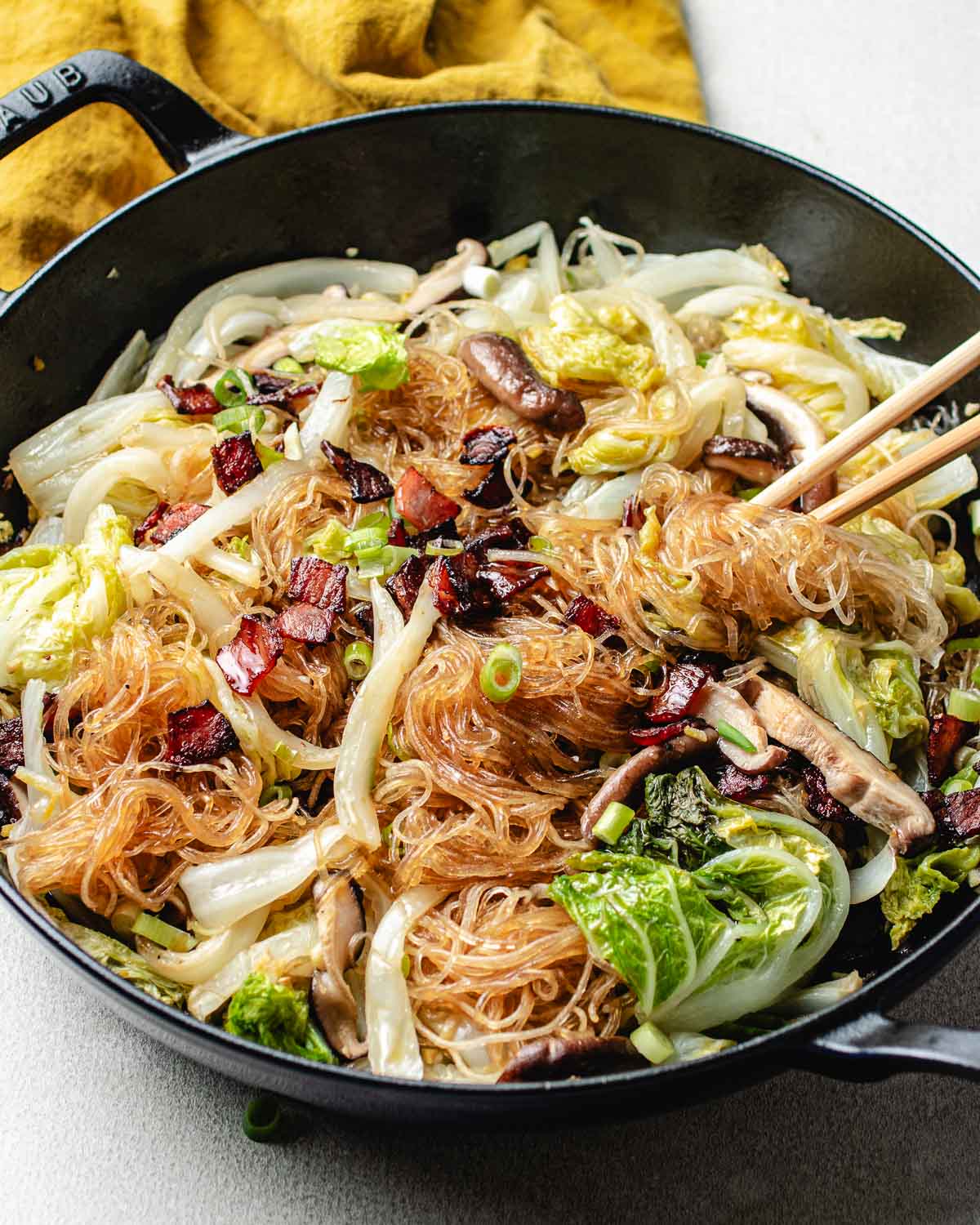
What makes this steamed napa cabbage different

I designed this dish to be easy and weeknight-friendly, with less hands-on time. Napa cabbage, glass noodles, shiitake mushrooms, garlic, and ginger steam together in one pan, then get tossed with a savory oyster-soy sesame sauce at the end.
- More texture: Napa cabbage gives you juicy stems and soft leaves. Glass noodles add a chewy, slippery bite.
- More flavor: Shiitake, garlic, ginger, chicken stock, and crispy pancetta build a savory base. The sauce ties everything together.
- More filling: The glass noodles soak up the stock, cabbage juices, and sauce. They turn this from a simple steamed vegetable side into a heartier dish.
- Still easy: No need to cook every ingredient separately. Add everything in the right order, steam, toss, and serve.
Ingredient Notes
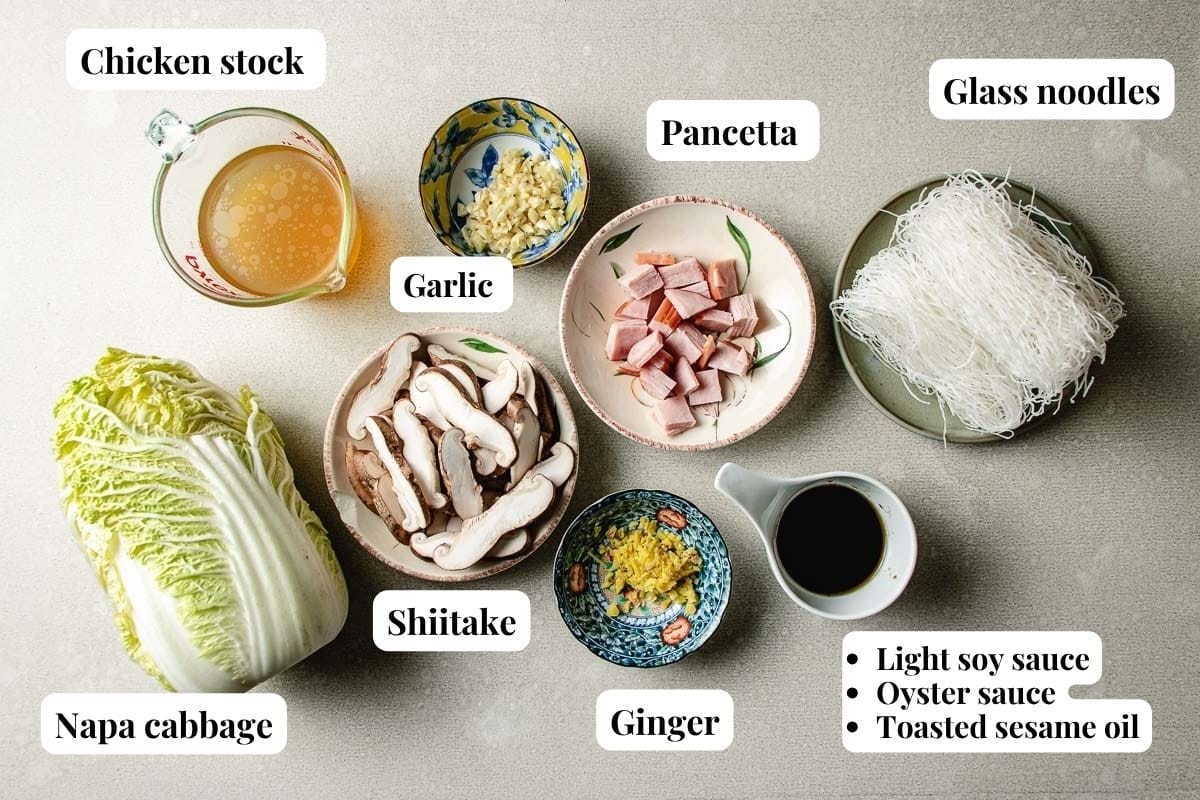
- Napa cabbage: Choose a napa cabbage that feels heavy for its size, with smooth, plump, juicy-looking stems. The leafy top should look more closed and bundled together, not loose or wide open. Avoid napa cabbage with soft spots, mushy areas, dry-looking stems, or leaves that look too open and wilted — those heads are usually older and less juicy.
- Glass noodles: Use dry mung bean glass noodles, also called cellophane noodles. They are usually made from mung bean starch and turn clear, chewy, and slippery once cooked. Most grocery stores sell them in small bundles, so this recipe is written with bundled noodles in mind. If you find the thinner, separated noodle strands at an Asian or Japanese market, those work too. These are different from Korean sweet potato noodles, which are thicker and chewier.
- Shiitake mushrooms, garlic, and ginger: These three build the main flavor base of the dish. Fresh shiitake mushrooms add deep savory flavor, while garlic and ginger make the cabbage taste warmer and more fragrant.
- Pancetta, Canadian bacon, or bacon: Pancetta adds a crisp, savory topping and a little richness. Bacon works too, but the final dish will taste a little smokier. Canadian bacon is leaner, so the flavor will be lighter.
- Sauce: The sauce is a simple mix of light soy sauce, oyster sauce, and toasted sesame oil. It gives the dish a savory, lightly rich flavor that pairs really well with the sweet napa cabbage and chewy noodles. For gluten-free options, see my gluten-free Asian pantry guide.
- Chicken stock: Chicken stock helps steam the cabbage and noodles while adding more flavor than plain water.
How to make steamed napa cabbage with glass noodles
Step 1: Separate the cabbage stems from the leaves. Napa cabbage stems are thicker and juicier, while the leaves are softer and cook faster. Separating them gives you better control over the final texture. Slice the stems into long, thin strips so they soften faster and are easier to eat. The leafy parts can be cut larger because they wilt down quickly. For a full visual guide, see my how to cut napa cabbage tutorial.
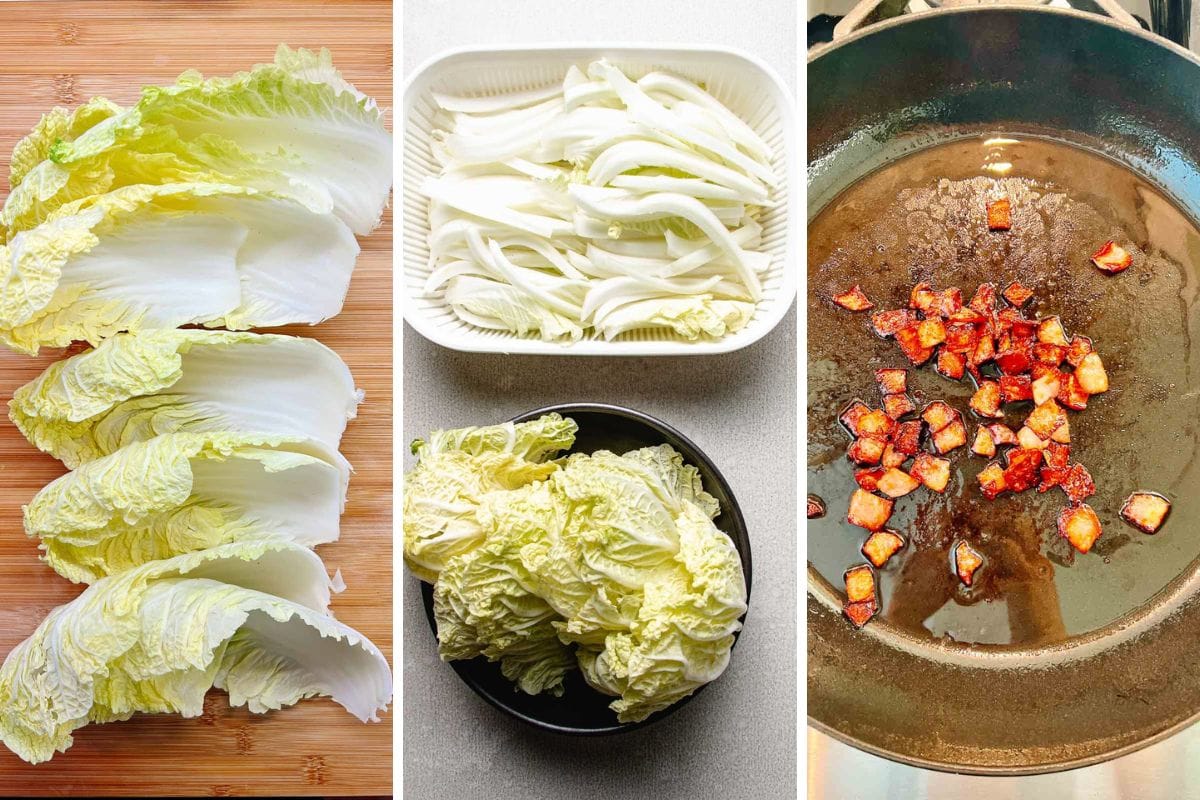
Step 2: Crisp the pancetta first. This gives you a savory topping for the finished dish and leaves flavorful oil in the pan. That oil becomes the flavor base for the cabbage, mushrooms, garlic, and ginger. If you use Canadian bacon, it is leaner, so you may need to add a little more oil before layering in the vegetables.
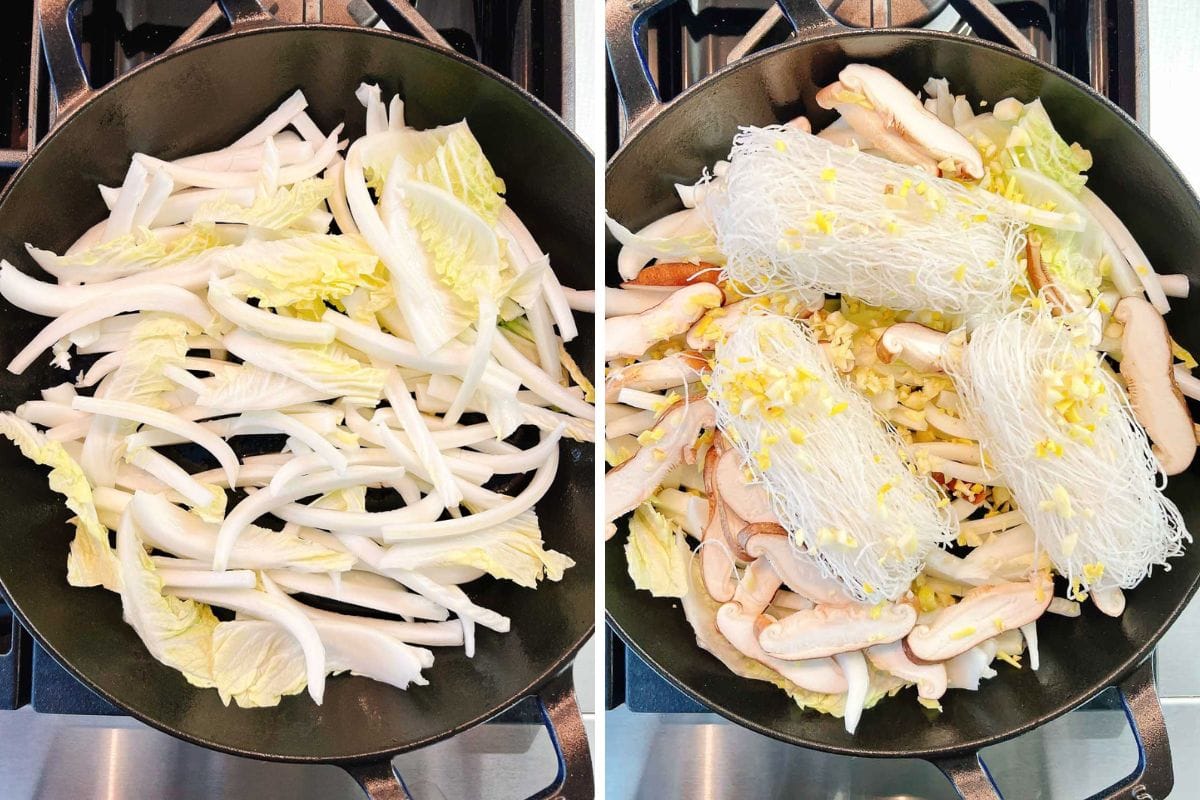
Step 3: Layer the pan in the right order. Add the cabbage stems first because they need the most heat. Then add the mushrooms, aromatics, and glass noodles. The noodles should sit closer to the bottom of the pan so they can touch the stock and soften as the dish steams. Add the cabbage leaves on top, where they can gently steam without overcooking too quickly.
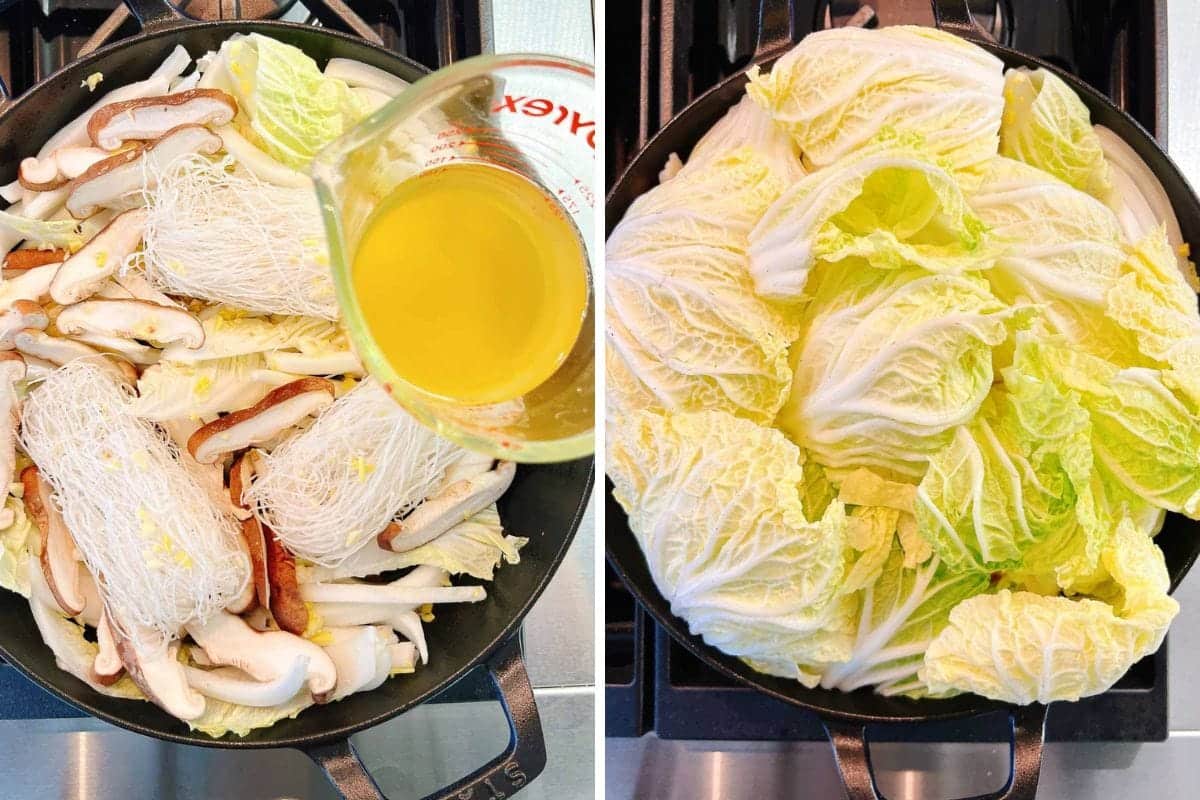
Step 4: Steam over medium heat. Cover the pan and steam over medium heat for 10 minutes. This timing is for the whole pan, not just the napa cabbage. The pan has cabbage stems, leaves, shiitake mushrooms, and dry glass noodles, so 10 minutes gives everything time to soften together.
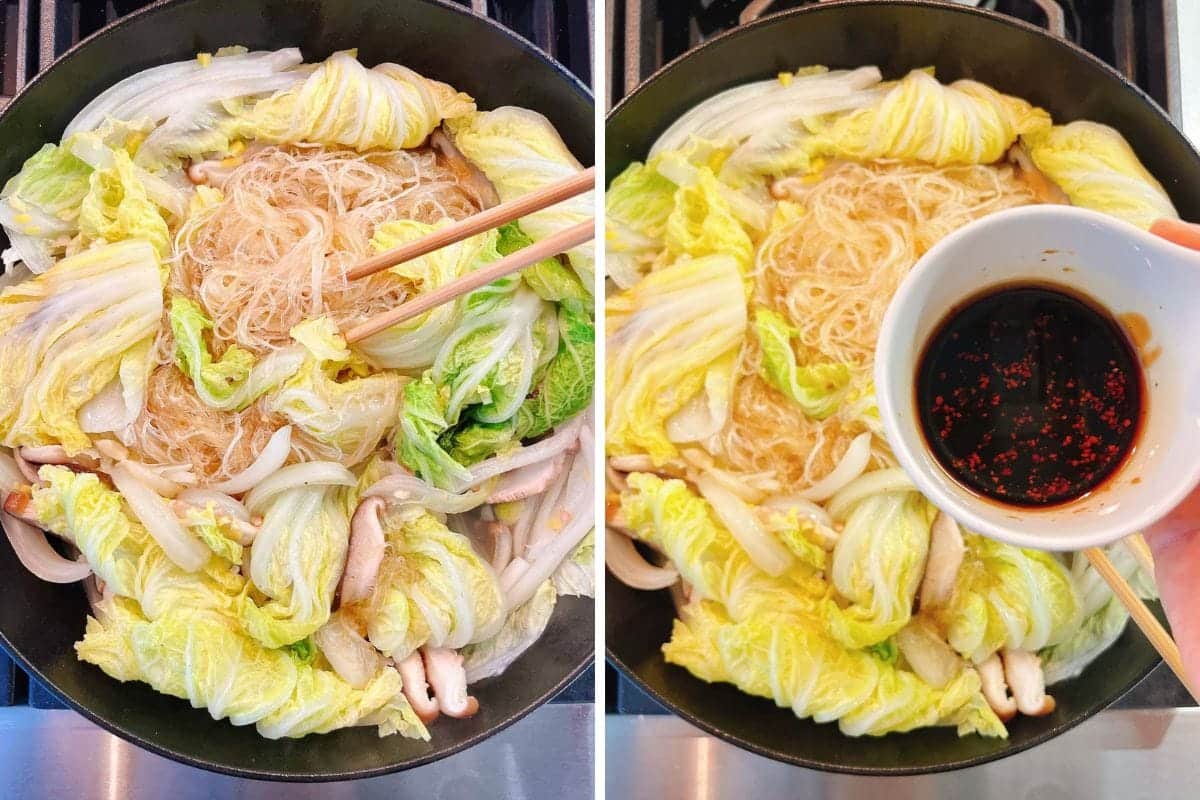
Step 5: Flip and toss the noodles. After steaming, the bottom side of the glass noodles will be softer because it has been closer to the liquid. The top side may still look firmer. This is normal. Flip and toss the noodles with a little more stock until the strands loosen and soften evenly.
Step 6: Add the sauce and keep tossing. Once the noodles have softened, add the soy sauce, oyster sauce, and sesame oil mixture. Keep tossing so the sauce and moisture distribute evenly through the cabbage and noodles. This helps the noodles finish softening and coats everything with flavor. The finished texture should be tender cabbage stems, soft juicy leaves, and chewy glass noodles.
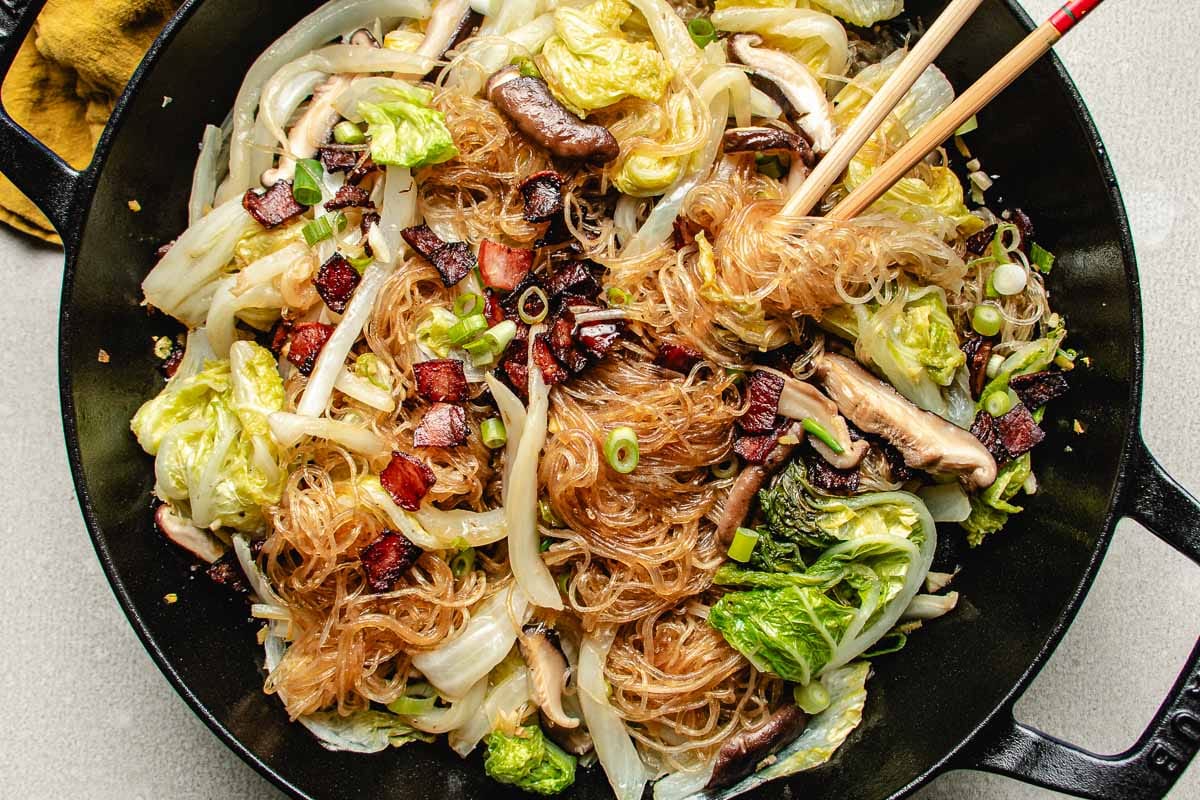
Step 7: Finish with crispy pancetta and green onion. The crispy pancetta adds a salty, savory bite on top, and the green onion brings freshness. Serve the dish warm, while the noodles are soft and glossy.
What to serve with steamed Napa cabbage
This steamed napa cabbage with glass noodles works well as a vegetable side dish or a light noodle-style dish. To make it a full meal, pair it with a protein-rich main dish.
- Chinese steamed chicken: A simple, home-style pairing. The tender chicken tastes great with the savory cabbage and glass noodles.
- Taiwanese pork chop: Perfect if you want something crispy and satisfying on the side. The pork chop adds a nice contrast to the soft cabbage and chewy noodles.
- Taiwanese braised beef shank: A chilled or room-temperature make-ahead protein that pairs well with warm napa cabbage and noodles.
- Shrimp with tofu bowl: A lighter pairing with plenty of protein. The soft tofu and shrimp go well with the tender napa cabbage.
Steamed napa cabbage with glass noodles recipe
Video
Ingredients
- 21 oz Napa cabbage 10-12 medium leaves and stems
- 4 oz Fresh shiitake mushroom caps 3 large and thick caps
- 0.7 oz garlic cloves finely minced (3-4 large)
- 0.4 oz ginger finely minced (1.5-inch small knob)
- 3 oz diced pancetta Canadian bacon, or bacon
- 2.5 tbsp oil divided, or more
- ⅛ tsp coarse sea salt or more to taste
- A few rounds ground black pepper
- 1.5 tbsp light soy sauce
- 1.5 tbsp oyster sauce
- 1 tbsp toasted sesame oil plus more for garnish
- 3.6 oz dry mung bean glass noodles cellophane noodles (3 bundles)
- 1 cup + 4 to 5 tbsp chicken stock divided
- 1-2 Green onion sliced to small rounds
Instructions
PREP:
Napa cabbage
- Trim about ½ inch (1.3 cm) from the bottom of the cabbage to remove the tough base. Peel away any outer leaves that look bruised or dirty. Separate the cabbage into individual leaves.
- Stack a few leaves together, then slice to separate the stems from the leafy parts. Slice the stems into long, thin strips. I like to follow the natural “grain” of the stem so the pieces stay long and neat. For large leaves, cut them in half. Smaller leaves can be left whole.
- Wash the chopped cabbage by dunking it in a large bowl of water a few times. Keep the stem pile separate from the leafy pieces. Rinse and drain well.
Shiitake, garlic, ginger, pancetta:
- Slice the shiitake mushrooms into strips. Finely mince the garlic and ginger. Dice the pancetta. Set everything aside so it’s ready to cook.
Sauce:
- In a bowl, combine the soy sauce, oyster sauce, and sesame oil. Stir well.
COOK:
Crisp the pancetta:
- In a 12- to 14-inch (30 to 35 cm) braiser or deep sauté pan with a lid, preheat the pan over medium-low heat until it feels warm.
- Add 1 tablespoon of oil and the pancetta. Stir occasionally and cook over medium heat until the pancetta is crisp, about 8 minutes. Transfer the pancetta out and leave the oil behind in the pan.
- Depending on the type of pancetta or bacon you use, there should be at least 1 to 1.5 tablespoons of oil left in the pan. If not, add a little more oil before adding the vegetables so they don’t stick.
ADD and STEAM:
- Add the cabbage stems first, followed by the shiitake mushrooms, garlic, ginger, glass noodles, salt, and pepper. Wiggle the noodles into the pan so the bottom side touches the pan and the liquid once added.
- Pour in 1 cup chicken stock, circling around the edge of the pan. Add the cabbage leaves on top to cover the whole pan, then drizzle another ½ tablespoon oil over the top.
- Close the lid. Set the heat to medium and steam for 10 minutes.
TOSS and SEASON:
- After 10 minutes, open the lid. Flip the noodles so the bottom side is now facing up. The top side of the noodles will not be as soft yet because it hasn’t touched as much liquid. Flipping and tossing helps loosen and soften the strands.
- Add 4 to 5 tablespoons of stock, about 2 tablespoons at a time, directly over the noodles. Keep tossing until the noodle strands loosen and soften, about 2 to 3 minutes.
- Once the noodles are softer, pour in the sauce. Toss for another minute to distribute the sauce evenly. Turn off the heat.
GARNISH:
- Drizzle with a little more sesame oil. Garnish with the crispy pancetta and chopped green onions. Serve right away or while still warm.
Notes
- This recipe is designed to be easy with less hands-on cooking time. Because of that, slicing the vegetables to the right size is important. The cabbage stems should turn tender, while the leafy parts stay juicy and soft.
- Layering order and pan size: Please follow the layering order when making this dish. Use a deep sauté pan or braiser with a lid so there is enough room to hold all the ingredients.
- Glass noodles: Mung bean glass noodles often come in small bundles, where the noodles are nested together. Sometimes they are sold as loose, thin strands, but those are less common in the U.S. This recipe is written with bundled noodles in mind. After steaming, they need a few extra tosses to soften evenly and loosen the strands.
- Storage and reheating: Store leftovers in the fridge for 4 to 5 days, but for the best texture, finish them within 3 days. Reheat on the stovetop over medium heat with a little oil, or microwave on medium for 1 minute, or until warmed through.
Nutrition
Nutrition information is automatically calculated, so should only be used as an approximation.
FAQs
No, not for this recipe. This dish is designed to be easy with less hands-on time, so the dry glass noodles cook directly in the pan with the napa cabbage and chicken stock. After steaming, toss the noodles with a little extra stock to help the strands loosen and soften evenly.
I recommend using napa cabbage for this recipe. Napa cabbage has juicy stems and soft leaves that work well with this steaming method. Green cabbage is firmer, denser, and takes longer to cook, so the timing and texture will be different.
I don’t recommend Korean sweet potato noodles for this dish. They are thicker and chewier than mung bean glass noodles and need to be boiled separately first. Since this recipe is designed for dry mung bean glass noodles to soften directly in the pan, Korean sweet potato noodles don’t work well with this method.
More napa cabbage recipes
If you love cooking with napa cabbage, here are more easy ways to use it:
- Napa cabbage soup: A cozy, nourishing soup with tender napa cabbage in a light, flavorful broth.
- Sautéed napa cabbage: A quick stovetop side dish when you want something simple, juicy, and garlicky.
- Napa cabbage salad: Fresh, crisp, and great when you want a lighter napa cabbage dish.
- Roasted napa cabbage: A different way to cook napa cabbage in wedges, with tender leaves, lightly browned edges, and a crisp panko topping.
Made a dish and loved it? Please rate the recipe and leave a comment in the section below! It helps my blog grow organically, allowing me to continue sharing free and awesome content with you. Thank you!









Amazing recipe, would it be ok to add Chinese broccoli to the dish also? Would you include it during the seaming, or steam it separate? Thank you for your amazing recipes
Thank you, Jason! Chinese broccoli sounds great here.
Since the stems are thicker and tougher than the leafy parts, I recommend slicing the stems into thin rounds or cutting them on a diagonal so the pieces are thin and even. This will help them steam faster. For the leafy tops, slice them into thin strips.
If you’re steaming Chinese broccoli with napa cabbage, give the Chinese broccoli a head start since napa cooks much faster. Steam the Chinese broccoli stems first for about 2 minutes, then add the glass noodles, napa cabbage, aromatics, and the rest of the ingredients.
I think this should work well. Let me know how it goes!
I made this – it’s delish. I happened to have marinated tofu on hand, so I used that in place of the bacon. Incredible!
Wonderful. Thanks for sharing. Tofu is great! :))
Great addition to weekly rotation. May add tofu or eggs for more substantial protein as a one dish meal
That sounds wonderful. Thank you for making the dish. :))