
This post may contain affiliate links. Please read our disclosure policy.
This cauliflower mashed potatoes recipe is creamy, cheesy, and every bit as comforting as the classic — just lighter and easier on the carbs. It’s the perfect side for your holiday table when you want that same cozy mashed potato feeling without the heaviness.
After many tests, I finally found what actually works — a silky, rich mash that’s never watery or too “cauliflower.” It’s a healthier take that still feels indulgent — a dish everyone at the table will go back for seconds.

Why this recipe works
- Use fresh cauliflower. Fresh florets have better flavor and texture — they stay creamy instead of turning watery like frozen ones.
- Boil just until fork-tender. Stop before it gets too soft or translucent so you can control the texture later while blending.
- Pulse in short bursts. Avoid continuous blending — quick pulses keep the mash fluffy and prevent it from becoming a purée.
- Make-ahead friendly. This dish keeps well for up to three days and even freezes beautifully, making it perfect for holiday prep.
Main Ingredient Notes
You only need a few simple ingredients to get cauliflower mash that actually tastes creamy and comforting — not bland or watery. These are the ones that really matter.
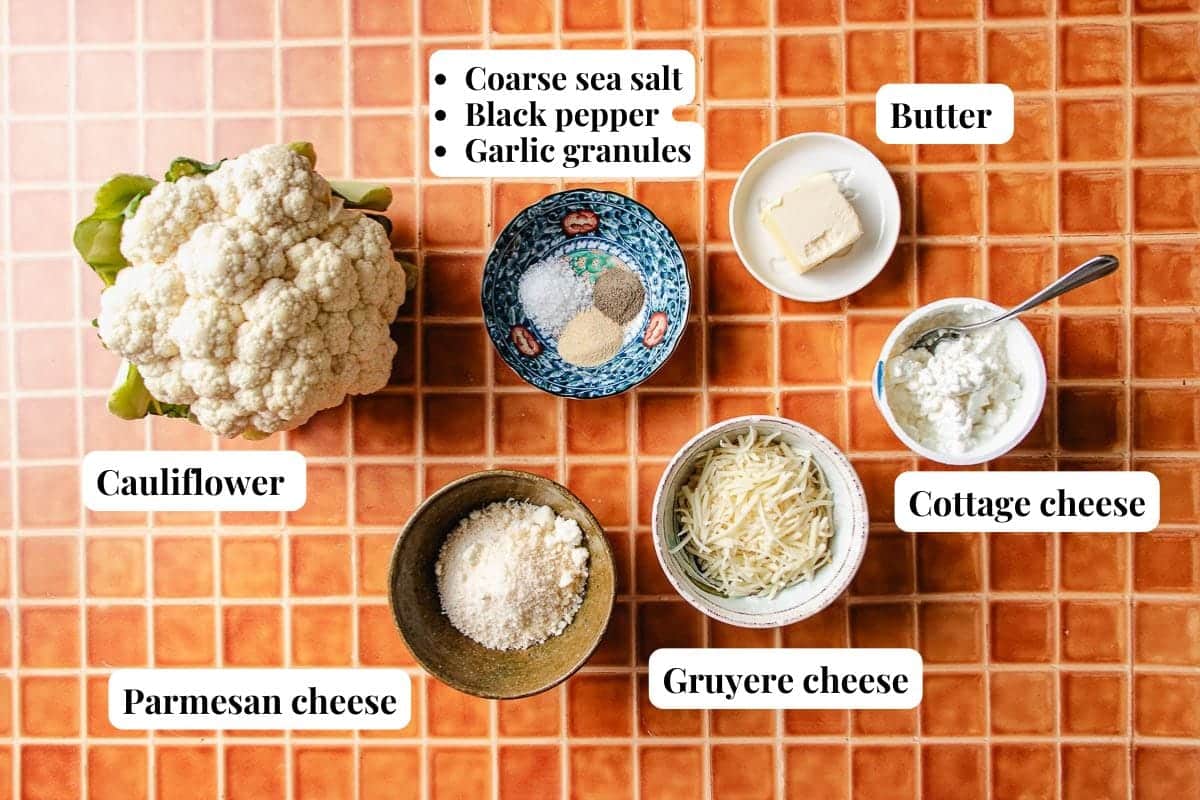
- Cauliflower: Go for fresh cauliflower, not frozen. Fresh gives a richer flavor and a cleaner texture that holds up better when blended. Look for a firm, heavy head with tight florets and no brown spots. Soft or limp stems usually mean too much moisture — and that’s what makes the mash watery.
- Butter or ghee: Adds that rich, savory base and helps the mash stay silky instead of pasty. It also ties all the flavors together, so don’t skip it or cut it too short.
- Parmesan + Gruyère: These two cheeses are what make the mash taste closer to real potatoes. Parmesan brings saltiness and depth; Gruyère melts right into the cauliflower and gives it that creamy, slightly stretchy texture. Together, they make the mash feel smooth and full-bodied instead of thin.
- Cottage Cheese (whole milk): I tried cream cheese and sour cream, but both made the mash too heavy. Whole-milk cottage cheese was the winner — it’s lighter, still creamy, and gives a little tang, kind of like what you get from mashed potatoes made with sour cream.
Fresh vs. frozen cauliflower
Frozen cauliflower works in a pinch, but I prefer fresh. The frozen kind is partially cooked before freezing, so when it thaws, it releases more water and turns softer. Fresh cauliflower keeps its texture better, which means your mash comes out creamier and less watery.
How to make cauliflower mashed potatoes (overview)
Here’s the big picture:
- Prep smart. Cut the florets into even sizes so they cook evenly. Smaller, uniform pieces mean no half-raw stems or mushy bits.
- Cook uncovered. Boil on medium heat until the stems (not just the florets) are fork-tender. Once they turn translucent, you’ve gone too far. Slight firmness is good — it finishes softening while blending.
- Keep it hot. Drain well and move quickly to the food processor while the florets are still warm. Heat helps the butter and cheese melt smoothly and keeps the texture creamy instead of grainy.
- Blend in stages. Add the fats first — butter, Parmesan, Gruyère — pulse in short bursts, then add cottage cheese at the end. Over-blending can release water and turn the mash into puree.
- Adjust lightly. A tablespoon of cooking water can loosen the mash if it’s thick, but start small. It’s easier to thin than to fix watery mash.
That’s the overall flow. You can find the full step-by-step in the recipe card below, but here I want to talk about the parts where most people get stuck — the small details that make or break this dish. After many test runs (and a few flops), I finally landed on what’s easiest and works best every time.
Cauliflower mash troubleshooting
If you’ve ever ended up with cauliflower mashed potatoes that’s watery, lumpy, or just tastes a little “off,” you’re not alone. When I first started testing this recipe, I made every mistake in the book — from overcooking it into soup to undercooking the stems so they turned stringy. Here’s what actually matters and how to fix it.
Watery or Soupy Texture
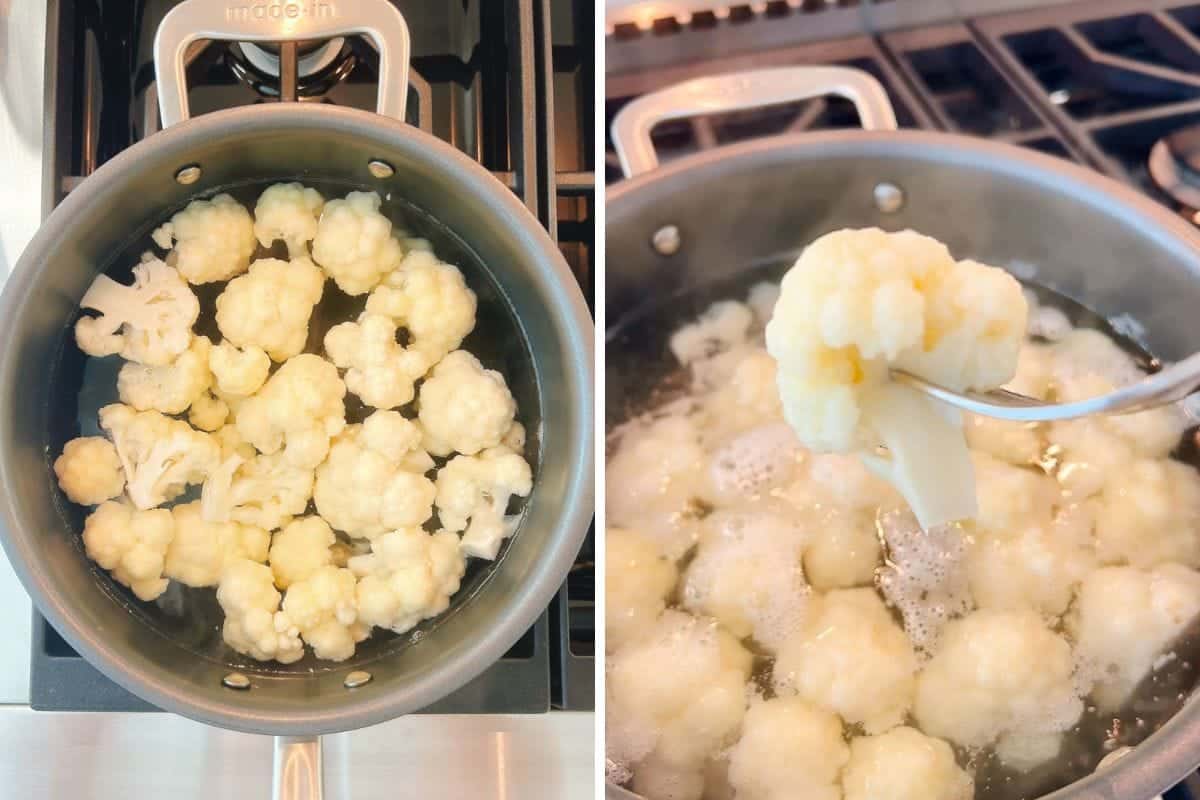
My first few tests were a complete flop. I thought cauliflower needed to be boiled into a soft mush, like mashed potatoes, but that’s exactly what makes it watery. Once it gets that soft, it holds onto too much moisture, and no amount of draining or towel squeezing will bring it back.
What works instead: boil uncovered, stir occasionally, and stop when the stems — not the florets — are fork-tender. You should be able to poke through easily but still feel a bit of resistance. That’s your cue. Drain it well, then blend while it’s still hot. The heat helps the butter and cheese melt evenly so the mash comes together smooth and creamy, not loose and watery.
Grainy, Lumpy, or Stringy Mash
If your mash turns out grainy or has thin, stringy bits, it usually starts before you even cook — with how you prep and the quality of your cauliflower. Pick a fresh, firm head with tight florets and pale stems. If the base of the stems looks dry or woody when you trim it, slice those parts away. Older cauliflower tends to have tougher fibers that won’t break down even when boiled perfectly.
Cut the florets into even sizes so they cook at the same rate. Uneven pieces mean some parts overcook while others stay slightly raw inside — that’s what creates the rough, stringy texture when you blend. Once you start with good cauliflower and consistent cuts, it’s much easier to get that smooth, creamy mash.
How should you blend it?
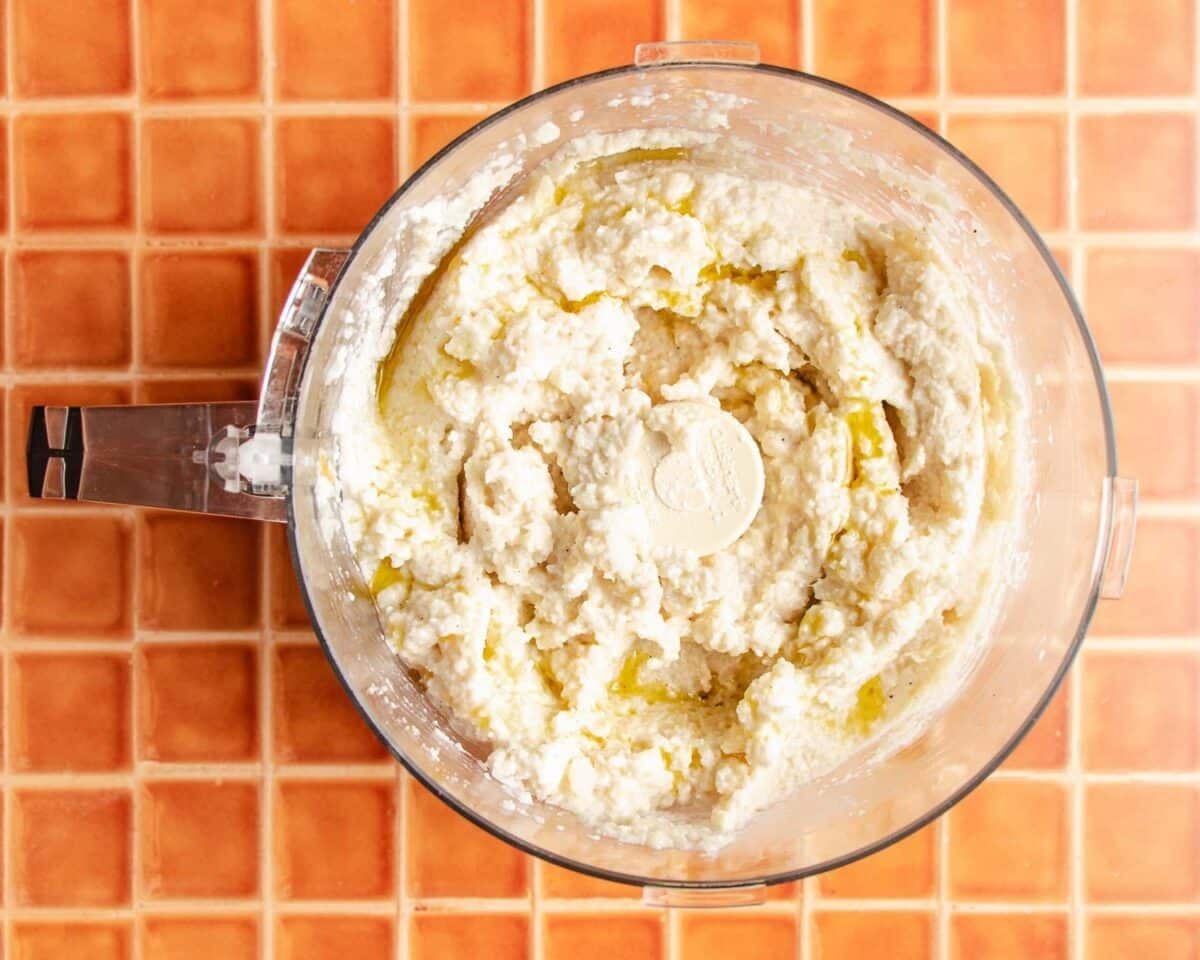
This one tripped me up at first. I used to hold down the button and let the food processor run continuously, thinking I needed to puree it smooth like mousse — and it turned into cauliflower soup. Cauliflower isn’t like potatoes; it breaks down fast.
Here’s what actually works: pulse in short bursts, not continuously. About 6–10 quick pulses are enough, scraping the bowl between rounds because the bottom blends faster than the top. Watch the texture as you go — once the pieces look small and creamy, stop. It’s always easier to pulse a few more times later than to rescue a mash that’s turned into puree.
How to Get That Potato-Like Creaminess
Boiling actually helps remove the sulfur smell that some people notice in cauliflower, but the real trick to making it taste good — and closer to mashed potatoes — comes down to fat and cheese.
I’ve tested so many combos, and the one that really works is Parmesan + Gruyère + cottage cheese. Parmesan gives a salty, nutty flavor; Gruyère melts beautifully and gives the mash body; and cottage cheese adds light creaminess with just a hint of tang, like what sour cream does in mashed potatoes. Together, they make the mash taste rich and balanced without being heavy.
You can experiment with Monterey Jack and cheddar if that’s what you have, but I’d keep at least these two — Parmesan and Gruyère — in the mix. They’re what make this mash feel like mashed potatoes, not steamed cauliflower.
Cauliflower mashed potatoes recipe

Video
Ingredients
- 2 lb whole head cauliflower 1 medium head (or ~24 oz frozen cauliflower florets)
- 1 tsp coarse sea salt
- ¼ tsp ground black pepper or more to taste
- ½ tsp garlic granules
- 2 tbsp butter or ghee unsalted
- 1.5 oz grated parmesan cheese ~ 6-7 tbsp
- 1.5 oz shredded gruyere cheese ~ 6-7 tbsp
- 5 oz Whole milk cottage cheese
- 2 scallion slice to small rounds
- Drizzle Extra virgin olive oil serving
Equipment
- 1 7-cup food processor or an immersion stick blender
Instructions
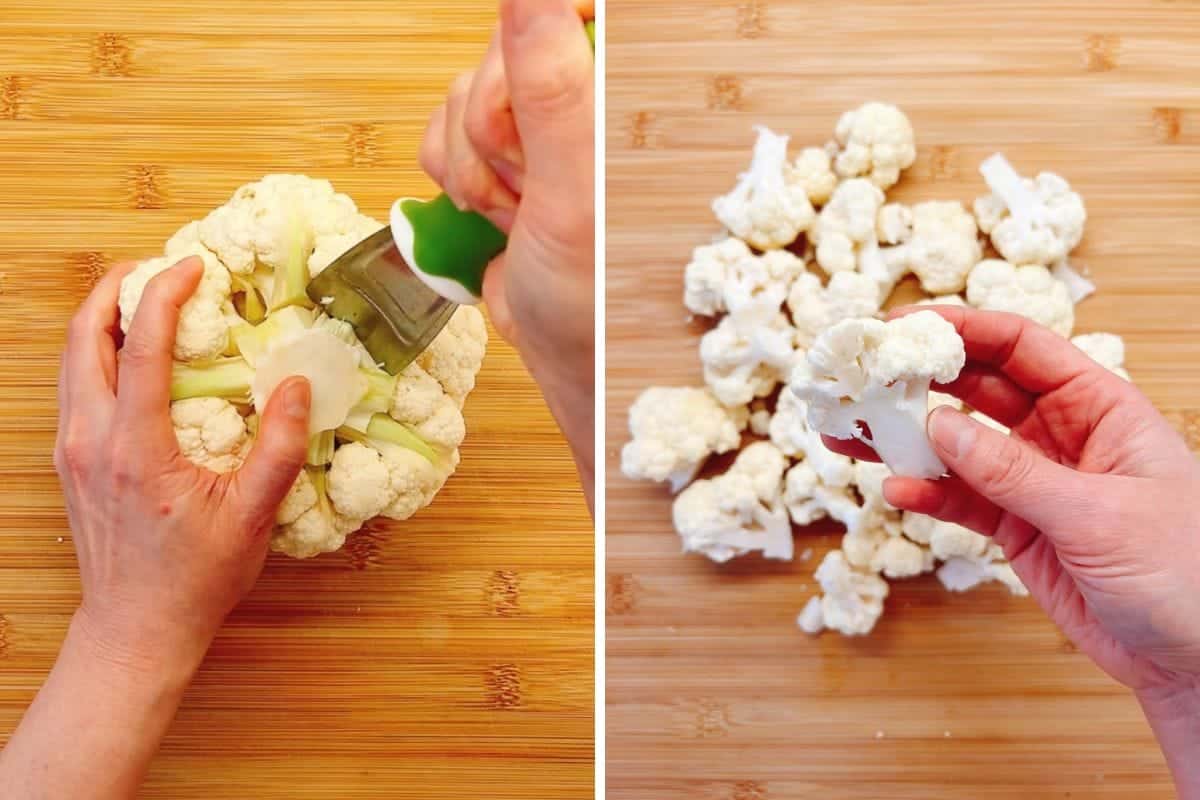
- Trim, cut, and prep. Remove the core and cut the cauliflower into even-sized florets so they cook at the same rate. Halve or quarter any larger pieces — aim for similar sizes throughout.

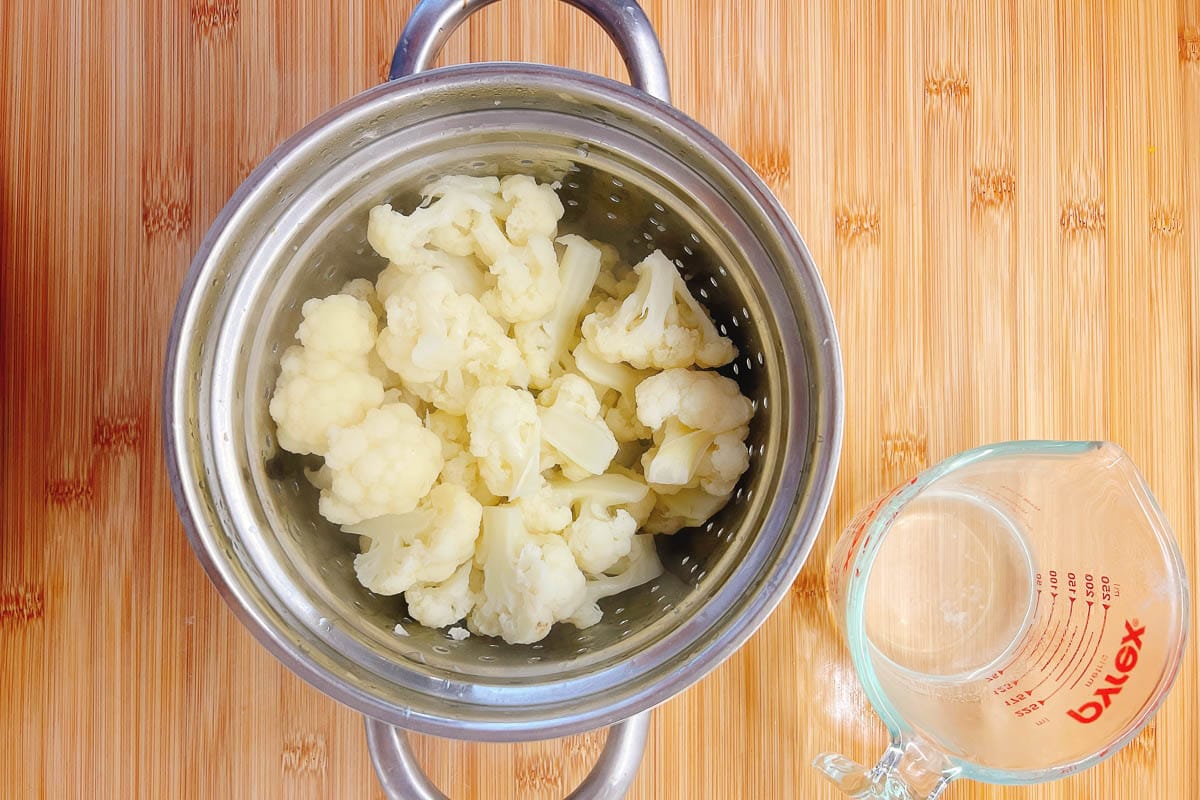
- Cook cauliflower. Bring a large pot of water to a boil, then reduce to medium heat and add the cauliflower florets. Leave the pot uncovered and stir occasionally to help the florets cook evenly.
- Cook until fork-tender through the stems but not falling apart — about 8–10 minutes for a medium head. You should be able to pierce the stem easily with a fork, but the florets should still hold their shape.
- Avoid overboiling — once the stems start to look translucent or the florets break apart, the cauliflower will become mushy and harder to drain properly. Slightly firm is fine; it’ll continue to soften a bit from residual heat while blending.
- Reserve cooking water. Before draining, reserve ~¼ cup of the cooking water (useful to adjust consistency later).
- Drain thoroughly. Use a colander and shake off excess water. If the florets feel too soft or watery (especially when using frozen cauliflower), transfer them to a clean kitchen towel or cheesecloth and gently wring out a bit of liquid. Don’t squeeze until bone-dry — just enough to remove the extra moisture so your mash stays creamy, not watery.
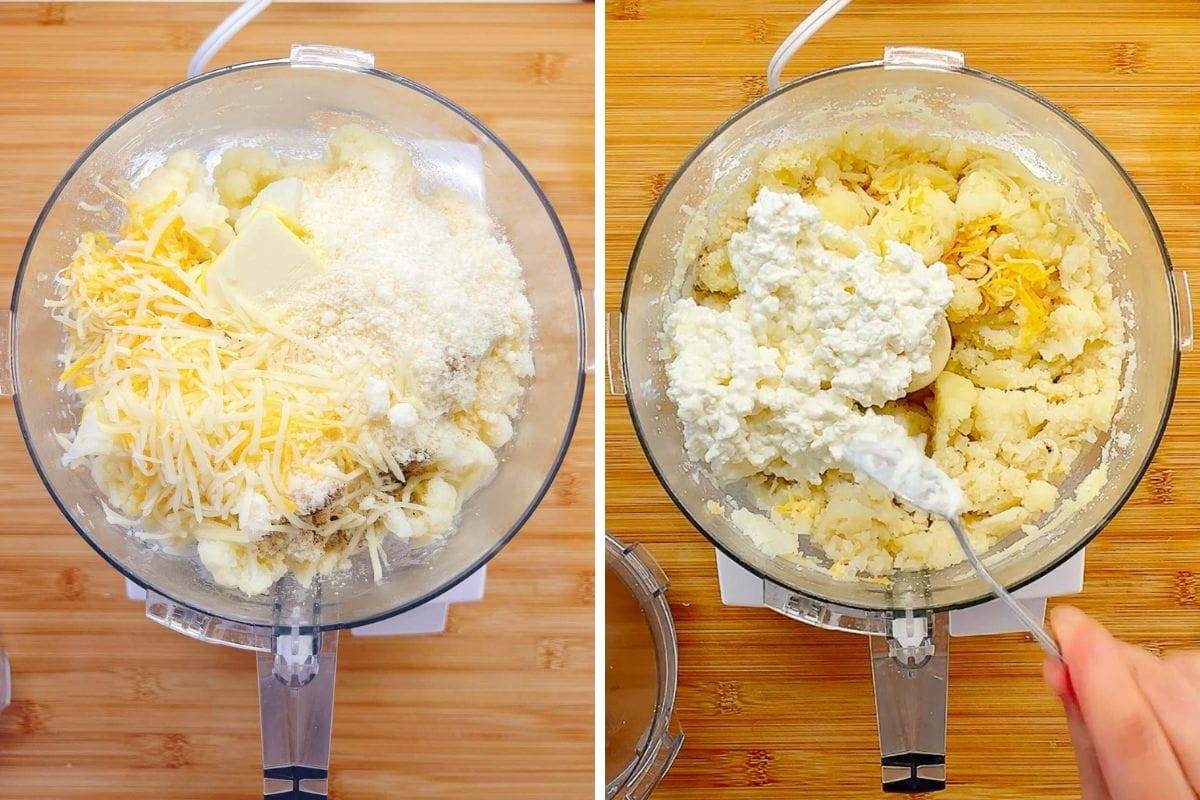
- Process while still hot. Transfer the hot cauliflower into your 7-cup food processor.
- Add dry seasonings & fats. Add salt, pepper, garlic granules, butter, Parmesan, and Gruyère. Pulse in short increments (short bursts; not continuous blend) about 8–10 times. Scrape the bowl, then another 8–10 short pulses.
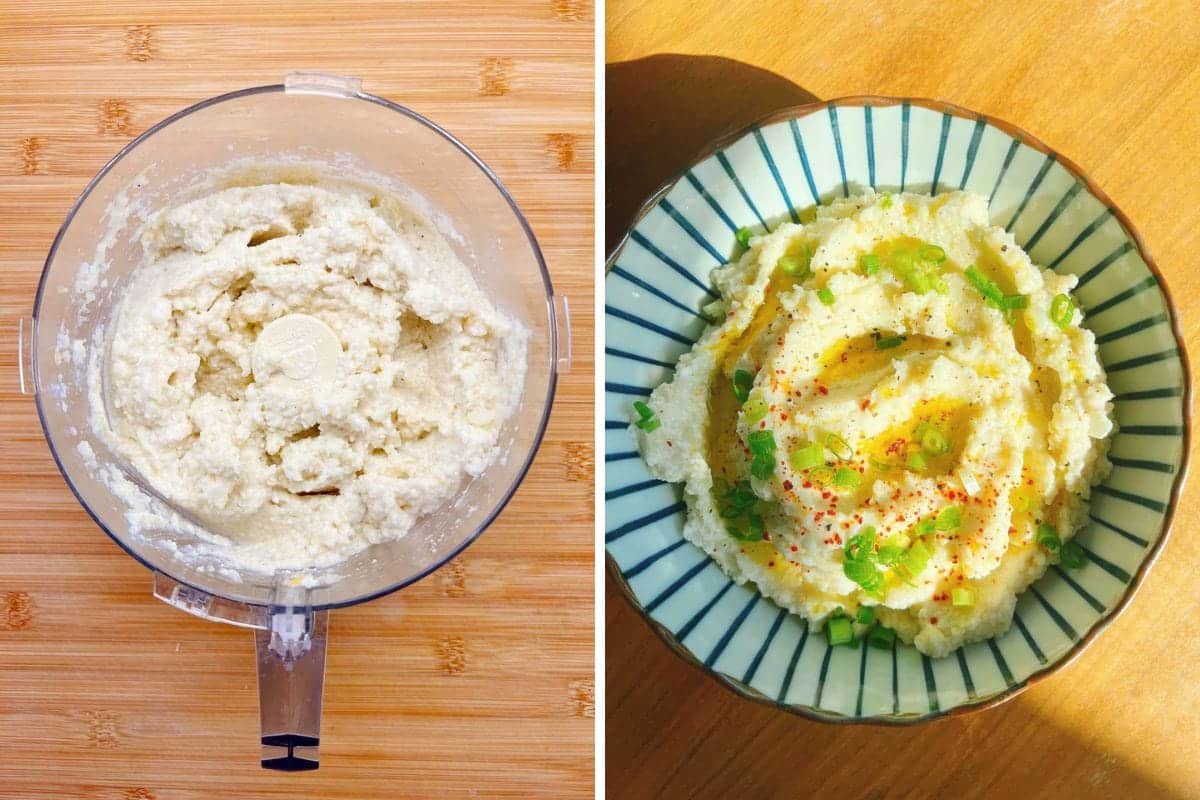
- Add cottage cheese and blend. Short pulses 8–10 times, scraping as needed, until you reach your desired consistency. Avoid over-pulsing or it will release more moisture and turn into cauliflower puree.
- Adjust texture. If too thick or dry, add a tablespoon (or two) of the reserved cooking water and pulse briefly. For reference, I didn’t need to add any water. If too wet, add a bit more Parmesan cheese and pulse again until creamy.
- Taste and adjust seasonings. Add more salt, pepper, or garlic if needed.
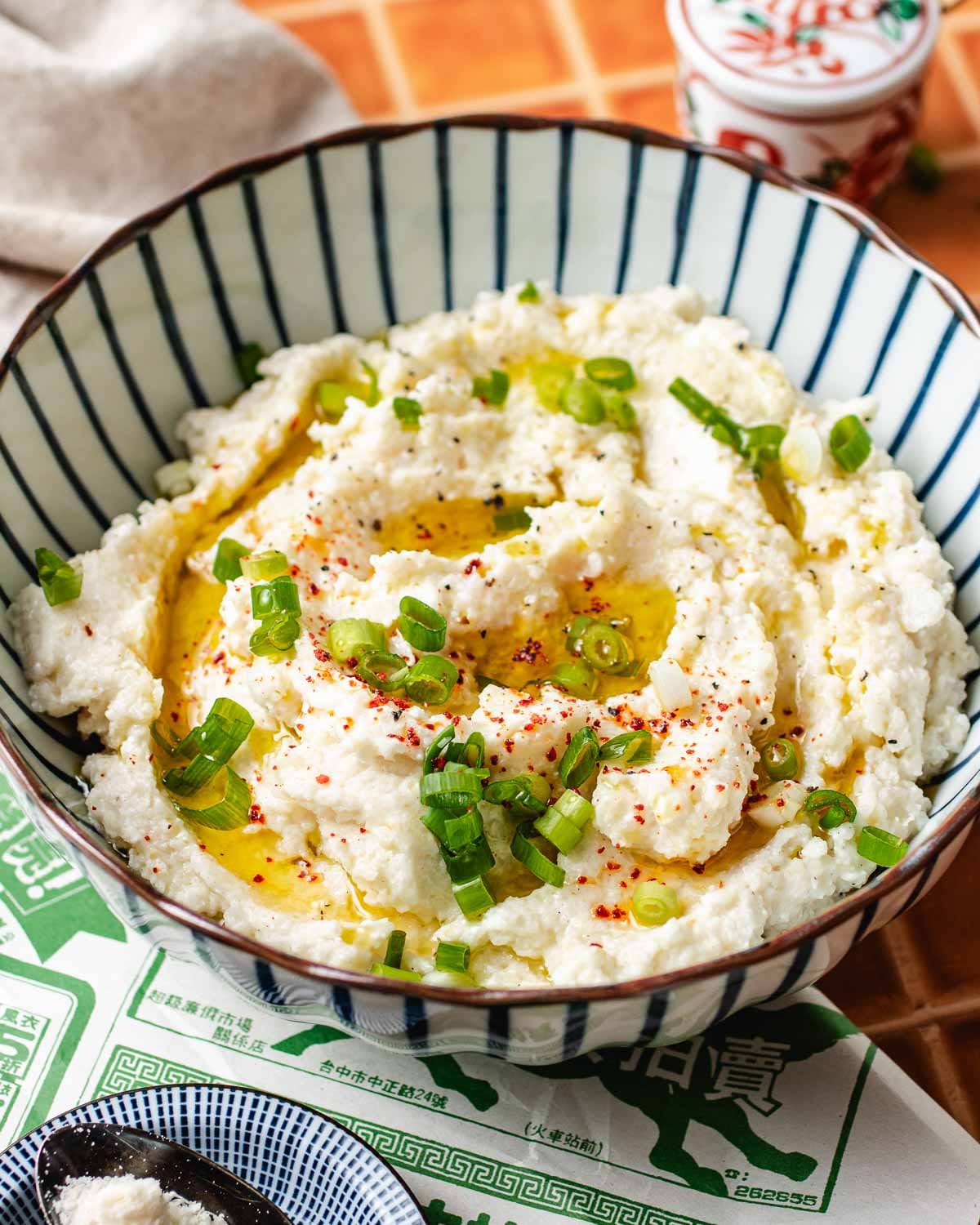
- Serve warm. Transfer to a serving bowl, garnish with scallions, and drizzle good olive oil. Serve immediately (or keep warm).
Notes
- Use reserved cooking water sparingly. Add only small amounts to correct dryness — avoid flooding the mash.
- Rescue plan for watery mash. If your mash is too wet, pulse in extra grated Parmesan (it helps absorb moisture). Or mix 2 teaspoons of starch with 1 tablespoon cold water to form a slurry, then pulse that in. It thickens slightly without affecting flavor.
- Storage & reheat. Store in the fridge and use within 3 days. Reheat on medium in the microwave until warmed through.
- Freeze: This mashed cauliflower freezes well for up to 1 month. Thaw in the fridge overnight (loosely covered), then reheat in the microwave on medium power, stirring halfway through. I didn’t notice any change in flavor or texture — maybe just a slightly softer feel after thawing, but barely noticeable.
- Cheese choices. In place of Gruyère, try a blend of Monterrey Jack + cheddar for another flavor profile.
- Cottage cheese note. The tang from cottage cheese gives a sour-cream-like nuance with fewer calories — it’s a worthwhile ingredient.
- If using frozen cauliflower:
- Frozen florets: Boil for 6–8 minutes (or follow package directions) until tender.
- Frozen riced cauliflower: Cook until tender —start checking at 4–5 minutes.
Nutrition
Nutrition information is automatically calculated, so should only be used as an approximation.
Housekeeping FAQs
Technically, yes — but I don’t recommend it. Frozen cauliflower holds more water, which makes it harder to control the texture. Even if you drain and pat it dry, the mash will end up looser and the flavor a bit muted. Fresh cauliflower just tastes cleaner and gives a creamier, fuller texture that holds up better when blended.
The food processor (I use a 7-cup) gives the best texture and control. It’s wide enough to see what’s happening and easy to scrape the sides so you know when to stop.
An immersion blender also works if your bowl is large and shallow. You need space to move it around for an even blend — not a narrow cup where everything gets overworked at the bottom.
Skip the high-speed blender. I’ve tried it, and it turns the mash into puree. The tall shape funnels everything down, so the bottom over-blends while the top just sits there.
Yes, you can make it ahead — just finish it within three days since there’s cheese in it. The best way to reheat is in the microwave on medium power, stirring halfway through until it’s warmed through. I don’t find it gets too thick or watery after storing, but if you want it a bit looser, add a small splash of milk before reheating.
What to serve it with
This creamy cauliflower mash goes with just about everything — it’s rich, cozy, and light enough to serve any time of year.
- Savory mains: Try it with Braised Short Ribs with Miso Ginger for something hearty, or Baked Trout with Miso Butter for a lighter pairing. It also makes a great side for Roasted Cornish Hens or Herb-Roasted Spatchcock Chicken.
- Fall sides: For a full Thanksgiving or fall spread, try it with Asian Brussels Sprouts, Steakhouse Mushrooms, Roasted Carrots with Beets, or Bacon-Wrapped Green Beans — everything complements the mash’s creamy, cheesy flavor beautifully.
Try these cauliflower favorites next!
Love cauliflower? Here are more reader favorites packed with flavor and cozy comfort.
- Roasted Cauliflower with Lemon Tahini Cream Sauce – A bright and nutty side dish with creamy tahini and a hint of citrus.
- Cauliflower Shrimp Fried Rice – Light, satisfying, and packed with flavor — a weeknight go-to that tastes like takeout.
- Chicken Cauliflower Casserole – Creamy, cheesy, and baked until bubbly — the perfect all-in-one comfort meal.
Made a dish and loved it? Please rate the recipe and leave a comment in the section below! It helps my blog grow organically, allowing me to continue sharing free and awesome content with you. Thank you!










The pork rinds used like this is such a fun idea. My boys will love this dish. I pinned it to a few boards, so beautiful and appealing!
What a gorgeous dish that’s full of so many nourishing foods! Love foods that you can feel good about eating, like this one.
This looks so amazingly creamy and delicious! Love this low carb holiday side option.
Wow this looks delicious! I would love this on my Thanksgiving table!
This looks so creamy and simply delicious! Love it! That cauliflower puree really does look silky smooth 🙂
Mmm mmm 🙂 This sounds so tasty! I’m definitely going to have to try this with sweet potato chips on top.
So beautiful and comforting! I would definitely eat this! And it is so healthy it could be on the table routinely for the menu plan!
Sounds delicious! Could this be prepared ahead and frozen?