
Cauliflower mashed potatoes recipe
Creamy, cheesy cauliflower mashed potatoes that taste like the real thing—light, low-carb, and perfect for your holiday table or make-ahead prep.
Servings: 4 servings
Equipment
- 1 7-cup food processor or an immersion stick blender
Ingredients
- 2 lb whole head cauliflower 1 medium head (or ~24 oz frozen cauliflower florets)
- 1 tsp coarse sea salt
- ¼ tsp ground black pepper or more to taste
- ½ tsp garlic granules
- 2 tbsp butter or ghee unsalted
- 1.5 oz grated parmesan cheese ~ 6-7 tbsp
- 1.5 oz shredded gruyere cheese ~ 6-7 tbsp
- 5 oz Whole milk cottage cheese
- 2 scallion slice to small rounds
- Drizzle Extra virgin olive oil serving
Instructions
- Trim, cut, and prep. Remove the core and cut the cauliflower into even-sized florets so they cook at the same rate. Halve or quarter any larger pieces — aim for similar sizes throughout.
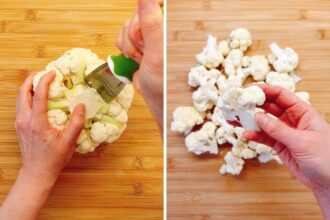
- Cook cauliflower. Bring a large pot of water to a boil, then reduce to medium heat and add the cauliflower florets. Leave the pot uncovered and stir occasionally to help the florets cook evenly.
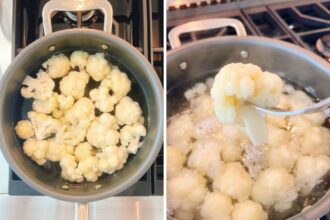
- Cook until fork-tender through the stems but not falling apart — about 8–10 minutes for a medium head. You should be able to pierce the stem easily with a fork, but the florets should still hold their shape.
- Avoid overboiling — once the stems start to look translucent or the florets break apart, the cauliflower will become mushy and harder to drain properly. Slightly firm is fine; it’ll continue to soften a bit from residual heat while blending.
- Reserve cooking water. Before draining, reserve ~¼ cup of the cooking water (useful to adjust consistency later).
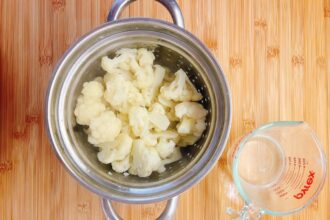
- Drain thoroughly. Use a colander and shake off excess water. If the florets feel too soft or watery (especially when using frozen cauliflower), transfer them to a clean kitchen towel or cheesecloth and gently wring out a bit of liquid. Don’t squeeze until bone-dry — just enough to remove the extra moisture so your mash stays creamy, not watery.
- Process while still hot. Transfer the hot cauliflower into your 7-cup food processor.
- Add dry seasonings & fats. Add salt, pepper, garlic granules, butter, Parmesan, and Gruyère. Pulse in short increments (short bursts; not continuous blend) about 8–10 times. Scrape the bowl, then another 8–10 short pulses.
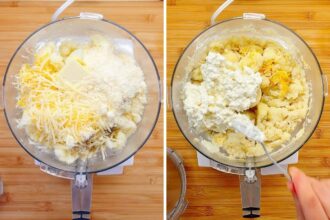
- Add cottage cheese and blend. Short pulses 8–10 times, scraping as needed, until you reach your desired consistency. Avoid over-pulsing or it will release more moisture and turn into cauliflower puree.
- Adjust texture. If too thick or dry, add a tablespoon (or two) of the reserved cooking water and pulse briefly. For reference, I didn’t need to add any water. If too wet, add a bit more Parmesan cheese and pulse again until creamy.
- Taste and adjust seasonings. Add more salt, pepper, or garlic if needed.
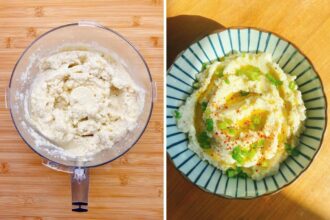
- Serve warm. Transfer to a serving bowl, garnish with scallions, and drizzle good olive oil. Serve immediately (or keep warm).
Video
Notes
- Use reserved cooking water sparingly. Add only small amounts to correct dryness — avoid flooding the mash.
- Rescue plan for watery mash. If your mash is too wet, pulse in extra grated Parmesan (it helps absorb moisture). Or mix 2 teaspoons of starch with 1 tablespoon cold water to form a slurry, then pulse that in. It thickens slightly without affecting flavor.
- Storage & reheat. Store in the fridge and use within 3 days. Reheat on medium in the microwave until warmed through.
- Freeze: This mashed cauliflower freezes well for up to 1 month. Thaw in the fridge overnight (loosely covered), then reheat in the microwave on medium power, stirring halfway through. I didn’t notice any change in flavor or texture — maybe just a slightly softer feel after thawing, but barely noticeable.
- Cheese choices. In place of Gruyère, try a blend of Monterrey Jack + cheddar for another flavor profile.
- Cottage cheese note. The tang from cottage cheese gives a sour-cream-like nuance with fewer calories — it’s a worthwhile ingredient.
- If using frozen cauliflower:
- Frozen florets: Boil for 6–8 minutes (or follow package directions) until tender.
- Frozen riced cauliflower: Cook until tender —start checking at 4–5 minutes.
Nutrition
Serving: 1serving | Calories: 234kcal | Carbohydrates: 15g | Protein: 15g | Fat: 14g | Saturated Fat: 8g | Polyunsaturated Fat: 1g | Monounsaturated Fat: 4g | Trans Fat: 0.2g | Cholesterol: 42mg | Sodium: 1069mg | Potassium: 768mg | Fiber: 5g | Sugar: 5g | Vitamin A: 478IU | Vitamin C: 110mg | Calcium: 288mg | Iron: 1mg
