This post may contain affiliate links. Please read our disclosure policy.
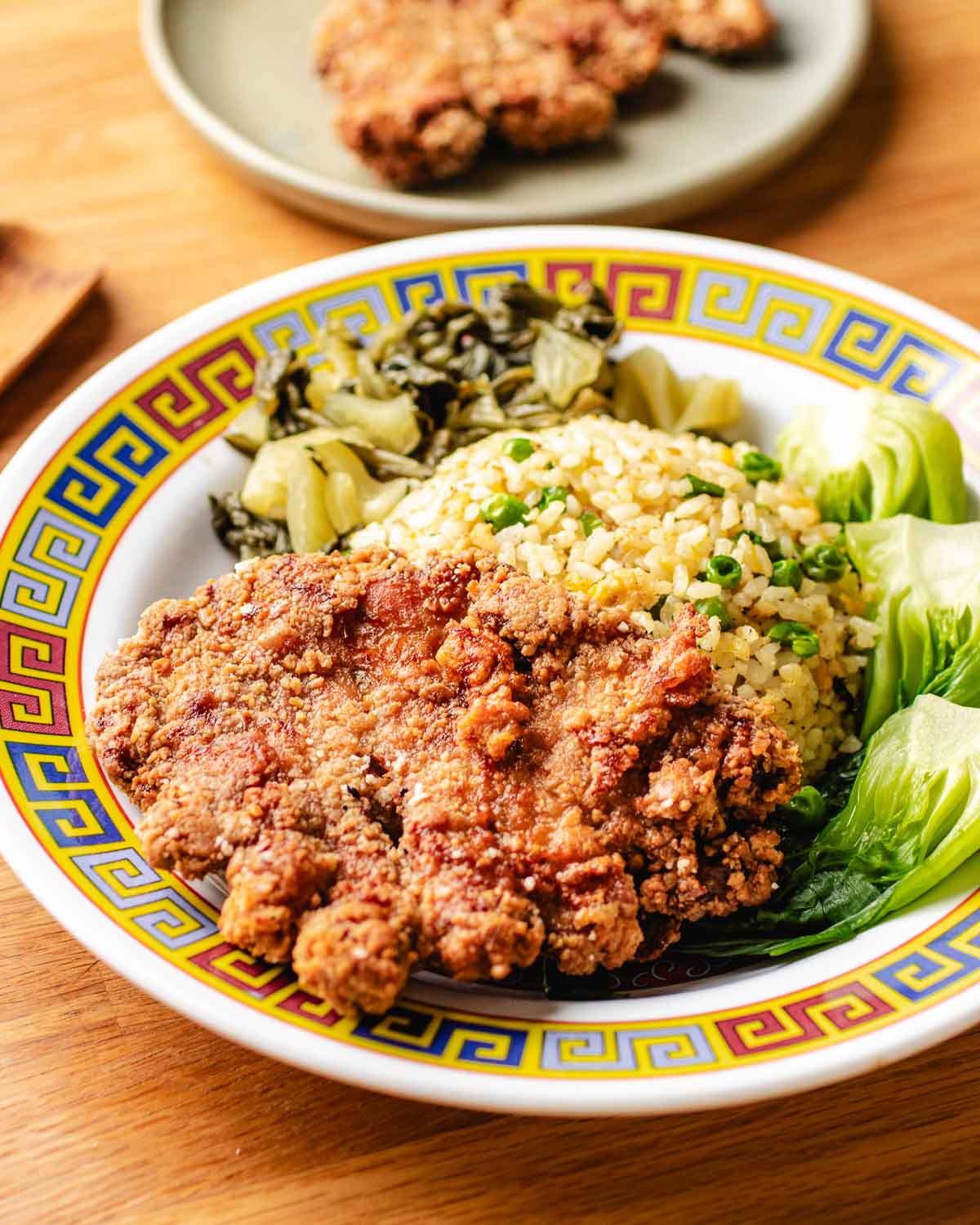
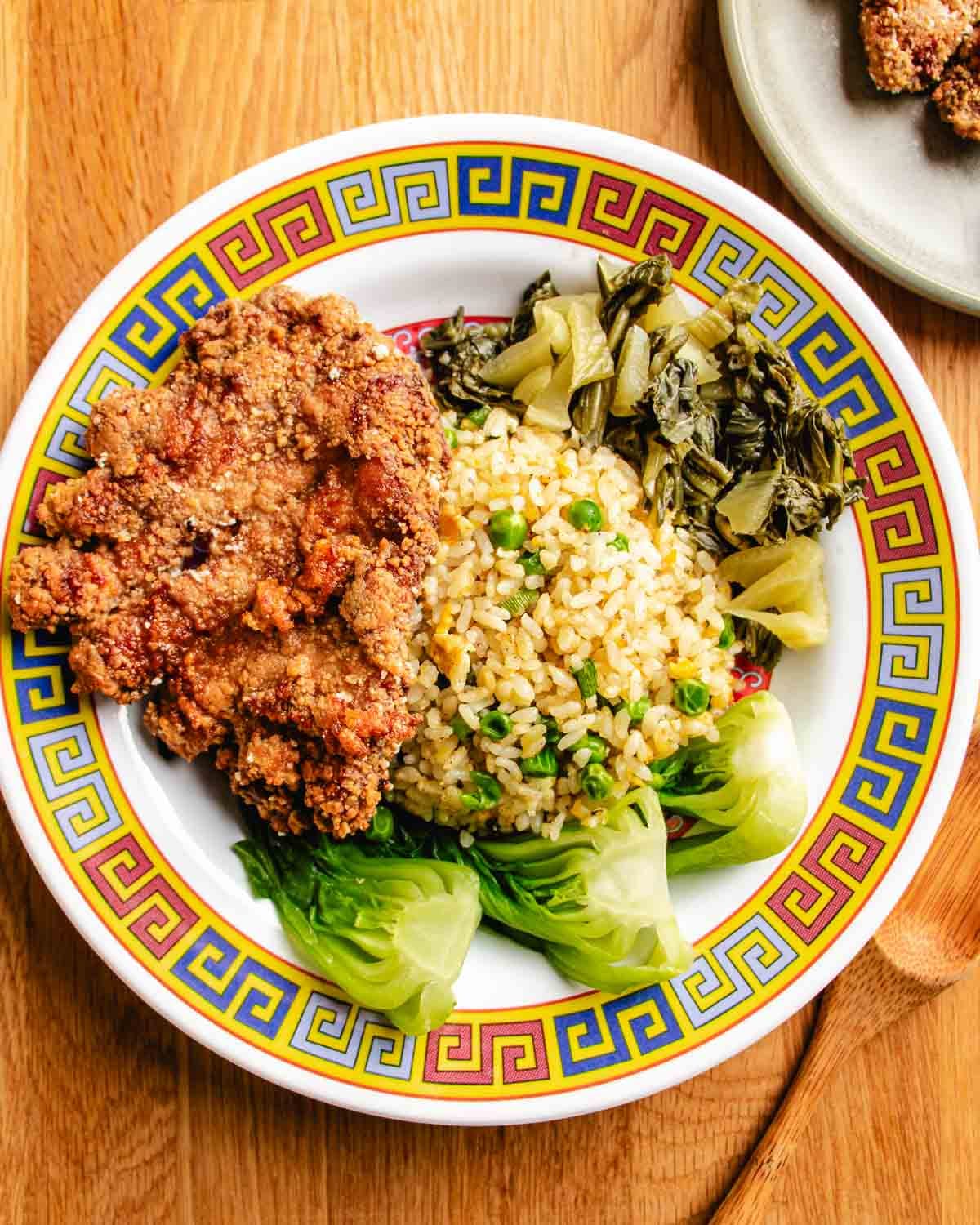
Taiwanese pork chop (pai gu) is known for its crispy coating and juicy meat. It’s a classic you’ll often see in Taiwanese bento boxes or street-style meals, usually served over rice with simple sides.
This version keeps the traditional flavors while making it easy to prepare at home. The pork is marinated ahead of time, so you can cook it fresh when ready.
Why this recipe works

I grew up eating Taiwanese pork chops in all kinds of settings, from street food stalls to railway bento boxes and casual restaurants. This recipe stays true to the flavors I know while keeping the process simple for home cooking.
- Authentic Taiwanese flavor: Uses a classic soy-based Taiwanese pork chop marinade with garlic, ginger, and five-spice powder to give you that traditional, well-balanced flavor.
- Simple techniques for home cooks: Clear, straightforward steps that are easy to follow. The method helps the coating stay crisp and craggy while keeping the pork juicy and flavorful.
- Flexible cooking options: You can cook it on the stovetop, in the air fryer, or in the oven depending on what you have at home.
- Consistent results: A reliable method that gives you a crispy outside and juicy inside every time.
Main Ingredients
I like to break the ingredients into three parts so it’s easier to see what each one does: the pork, the marinade, and the coating.
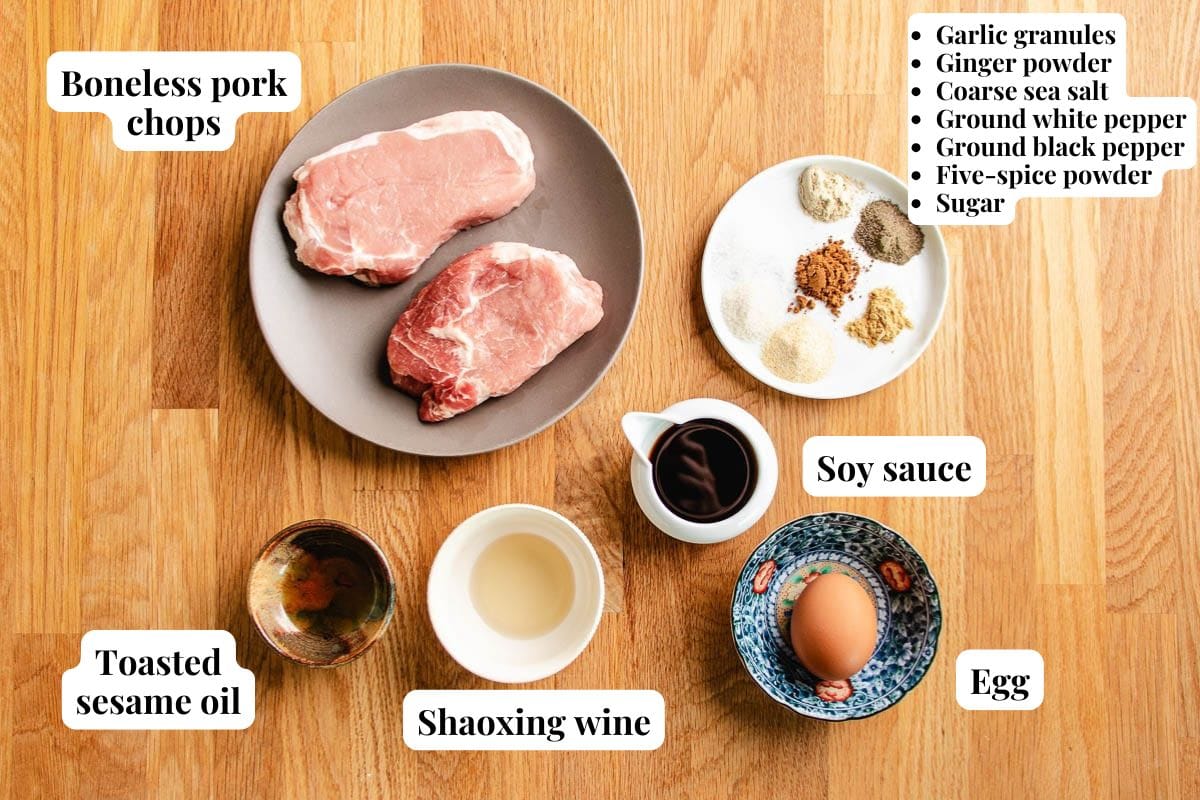
- Pork: Authentic Taiwanese pork chops use either bone-in or boneless pork chops. For this recipe, I use boneless pork chops from pork tenderloin—they are lean, tender, and easy to slice thinner. This gives you the same flavor and texture of the classic dish while keeping the prep simple.
- Marinade: The authentic Taiwanese pork chop marinade uses soy sauce, garlic, ginger, and five-spice powder. White pepper is also common and gives the pork that familiar savory warmth. I also add a little black pepper, sesame oil, and michiu (a clear rice cooking wine) to round out the flavor and help remove any raw meat smell—Shaoxing wine works as a substitute. The egg adds moisture and works with the starch coating later.
- Pork chop coating: Taiwanese pork chops use thick sweet potato starch for the coating. It looks coarse and pebbly, not fine and powdery like regular starch. This is what gives the pork chop its signature light, craggy, crisp texture. You can usually find it on Amazon or at most Chinese grocery stores. If you can’t find it, don’t worry—I’ll share a quick workaround in the how-to section.
How to make Taiwanese pork chop
This is a great make-ahead dish. You can marinate the pork in advance and cook it fresh when ready, which makes it perfect for weeknight dinners or meal prep.
Step 1: Prep the pork:
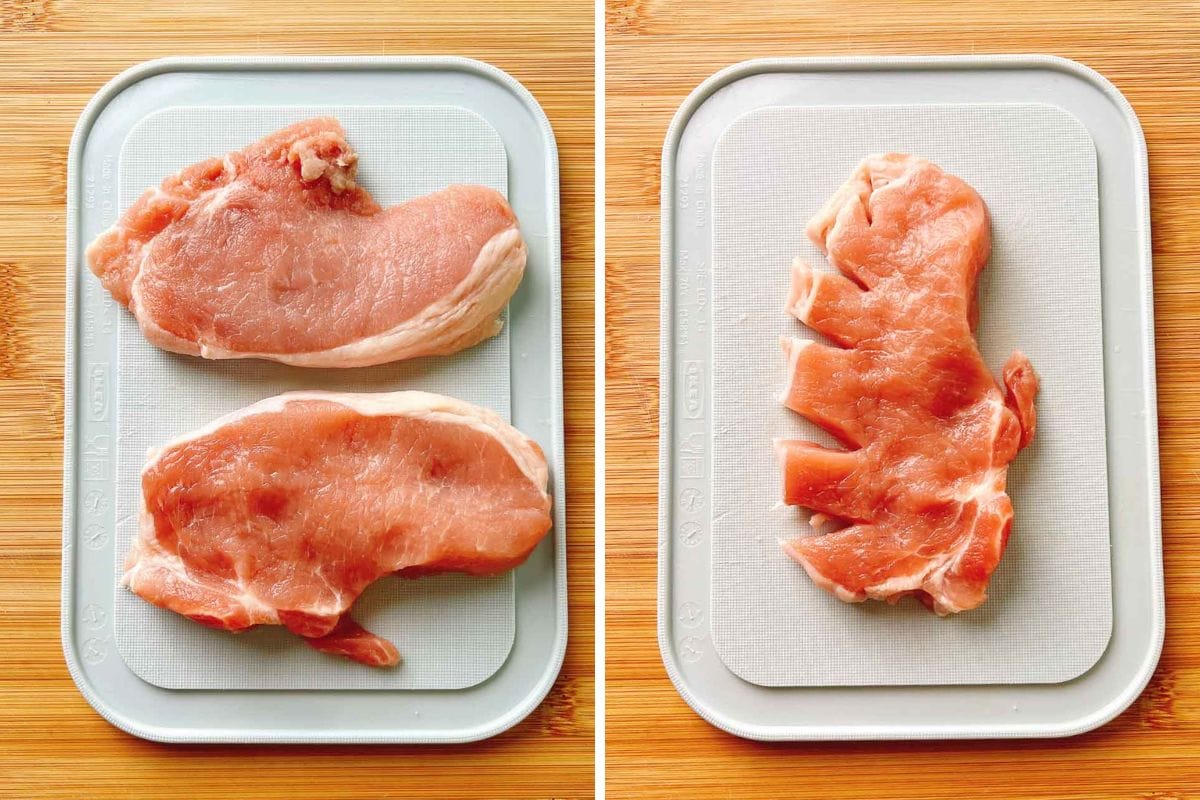
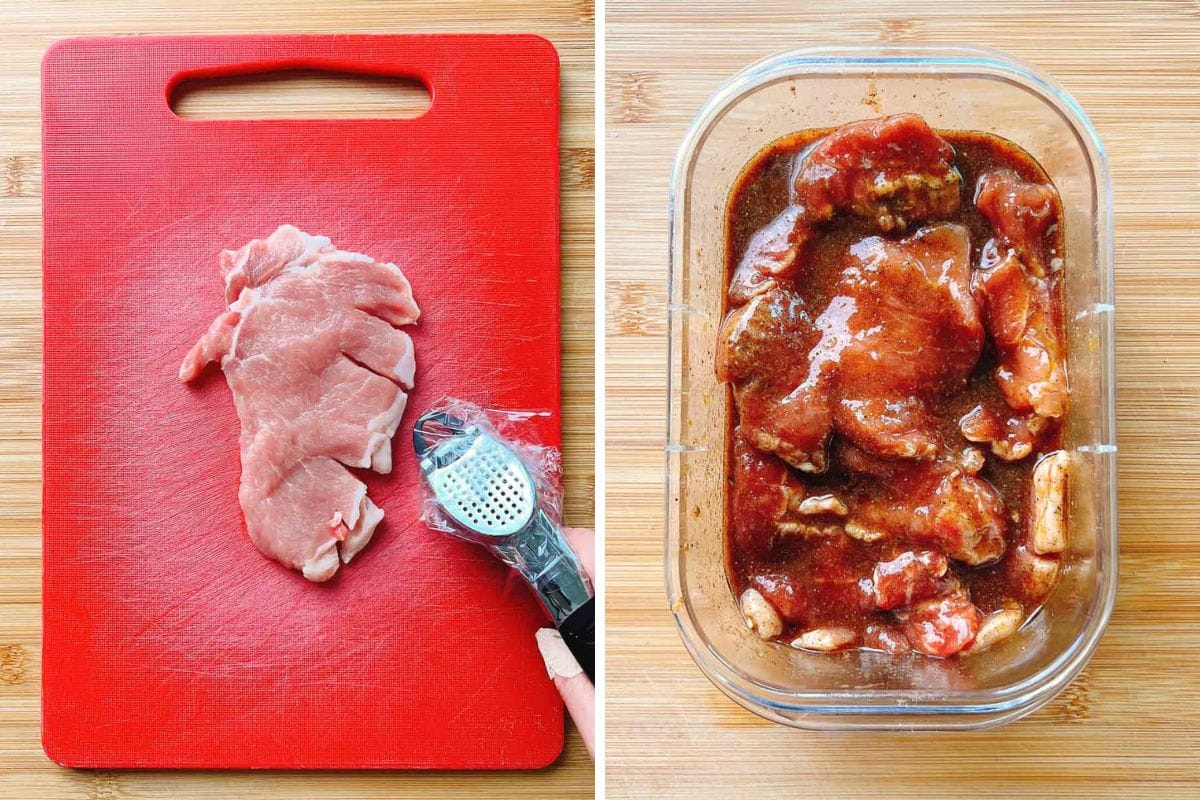
Slice each pork chop in half horizontally to create thinner pieces, about ½-inch thick. Look for the side with the silver skin (the thin white strip) and make a few shallow cross-cuts across it.
This slightly opens up the surface of the pork instead of leaving it as one flat piece. It helps break up the tough connective tissue so the pork stays tender, and it also prevents the meat from curling during cooking.
Gently pound the pork to about ¼-inch thick so it cooks evenly. Don’t pound it too thin or the meat can turn dry.
Step 2: Marinate:
Add the pork to a container and mix with the marinade ingredients. The marinade should feel wet and slightly thick, not watery. The egg adds moisture and also helps the coating stick later. Because the pork is thin, marinate for at least 4 hours, or overnight for best flavor.
Step 3: Coat with starch:
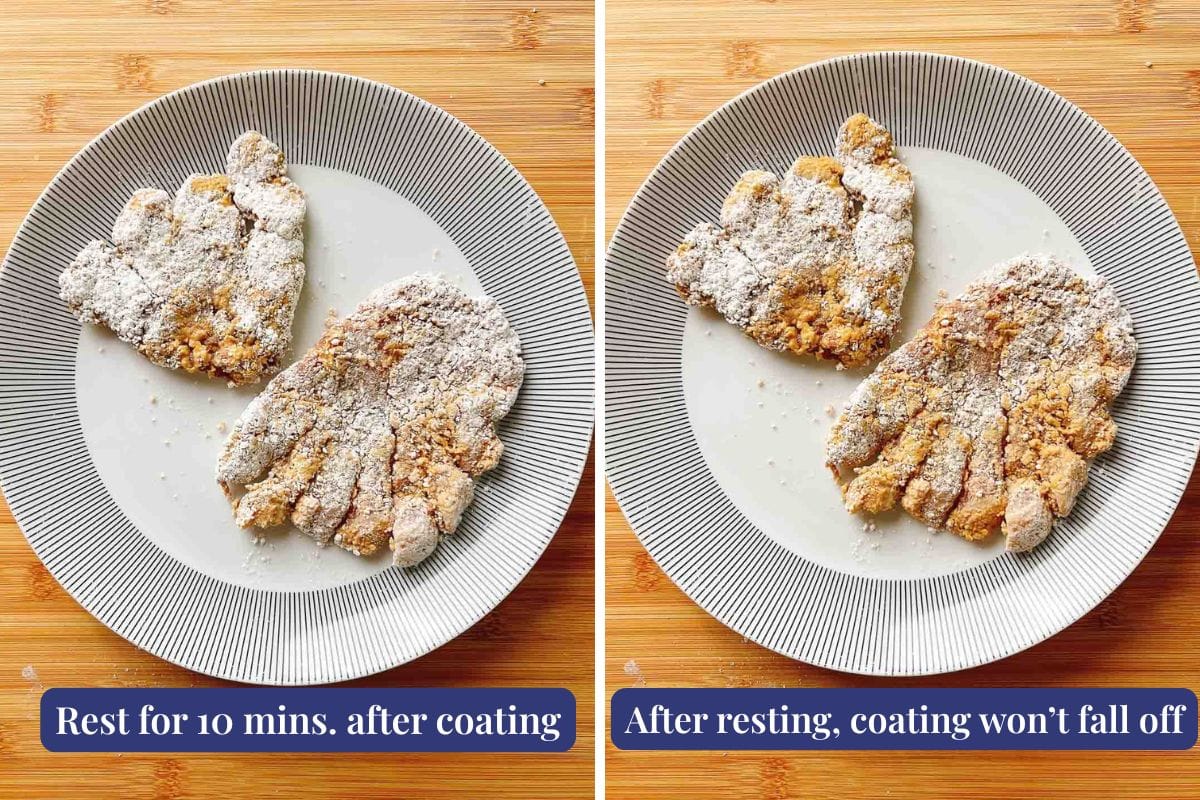
Lightly shake off excess marinade, then coat the pork evenly with sweet potato starch on both sides. Let the coated pork rest for about 10 minutes before cooking. You’ll notice the starch starts to look slightly damp instead of dry and powdery. This means it has absorbed some moisture and will stick better during cooking.
TIP: If you don’t have coarse sweet potato starch, you can use regular sweet potato starch. Add a tiny drop of water at a time while stirring to create small lumps, turning the fine powder into a more coarse, crumbly texture. It won’t be exactly the same, but it will give you a similar result.
Step 4: Cook (choose your method):
You can cook the pork chops using three methods, depending on what you have at home and the texture you prefer.
- Fry: This is the most authentic method and gives you that classic Taiwanese street-style texture—crispy, airy, and light. Control your oil temperature well so the coating doesn’t darken too quickly before the pork is cooked through.
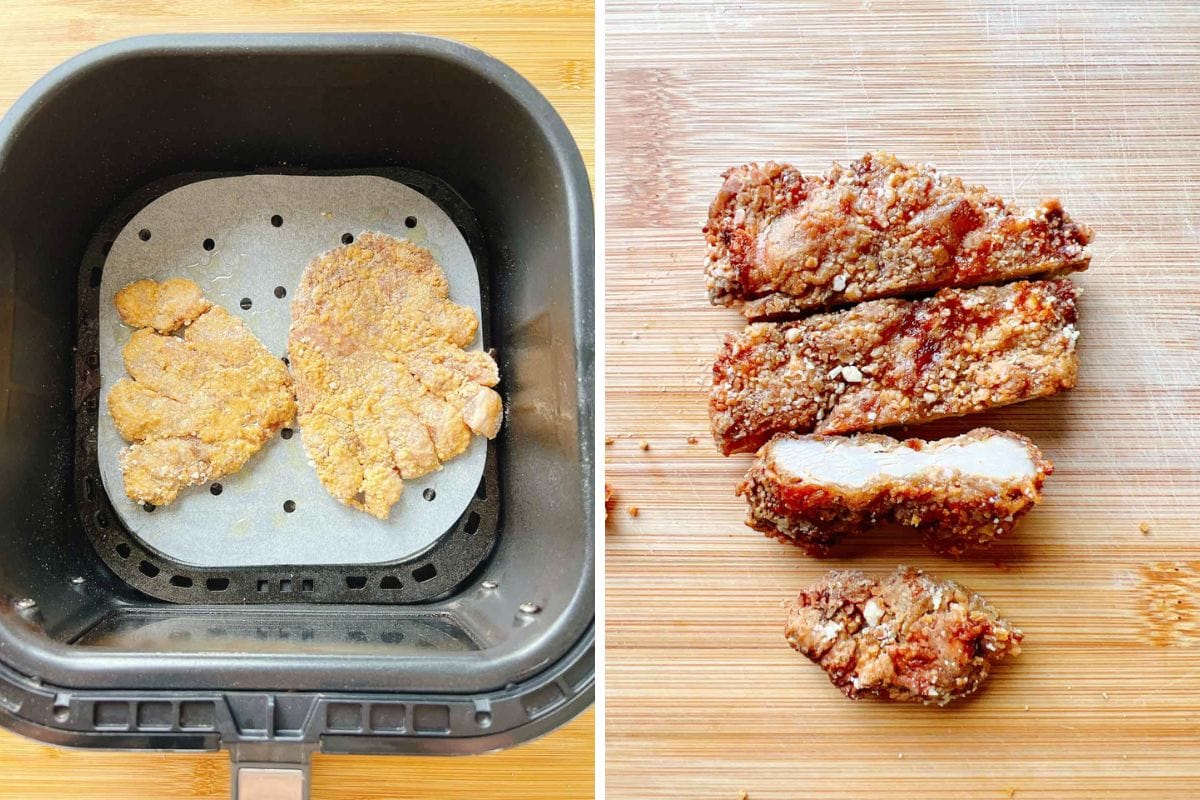
- Air fryer: My personal favorite. It gives you a really crispy coating with less oil and is easier to clean up. Cook at 360°F, flipping halfway and spraying oil to avoid dry spots.
- Oven: A good option if you don’t have an air fryer. Bake at 400°F on a wire rack, flipping once, and finish with a short broil for better color and light charring.
Step 5: Rest and slice:
Transfer the pork chops to a wire rack and let them rest for 2–3 minutes. This keeps the coating crisp and prevents the bottom from getting soggy. Slice into wide strips and serve while hot.
What to serve with Taiwanese pork chop
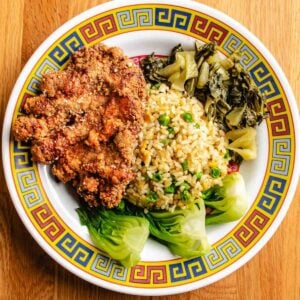
Taiwanese fried pork chops are usually served as part of a full plate, especially in bento boxes or casual lunch spots, with rice, vegetables, and something pickled to balance the richness.
- Rice (base of the plate): You can serve it with fried rice like Din Tai Fung chicken fried rice or Din Tai Fung shrimp fried rice. Steamed white rice also works well if you want to keep it simple.
- Vegetables (fresh and savory sides): Quick sautéed greens help balance the meal. Bok choy stir fry and sauteed Taiwanese cabbage are both great options—they’re light, slightly sweet, and cook quickly.
- Pickled sides (for contrast): Pickled vegetables add brightness and cut through the richness of the pork chop. Asian pickled cucumbers and pickled daikon are both commonly served.
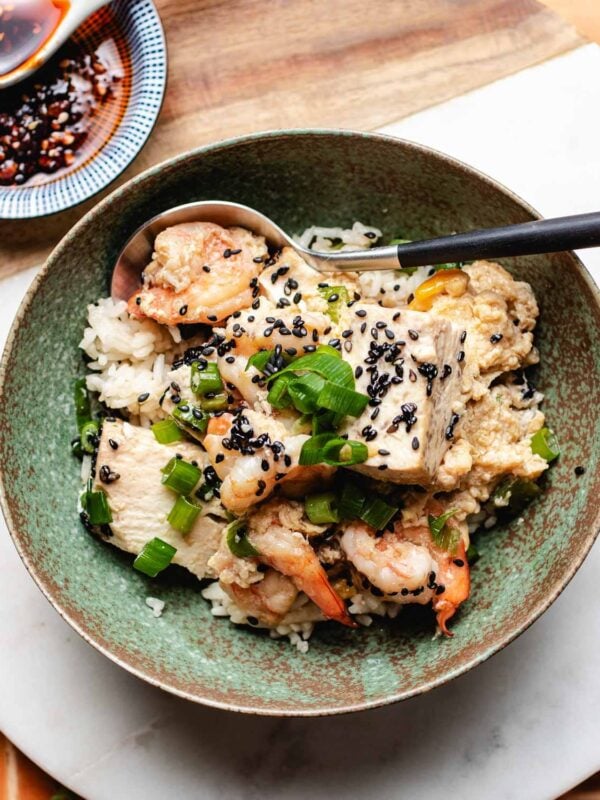
- Classic bento add-ons: For a more complete plate, you can add soy sauce eggs or braised tofu. These are often included in Taiwanese bento-style meals.
Taiwanese pork chop recipe
Ingredients
- 0.8 lb boneless pork chops from pork tenderloin, 2 pieces (about 0.4 lb each, 1–1¼-inch thick before pounding)
- ½ tsp garlic granules or 3 cloves grated garlic
- ¼ tsp ginger powder or 1 tsp grated ginger
- 1 tsp coarse sea salt
- ½ tsp ground white pepper
- ½ tsp ground black pepper
- ½ tsp five-spice powder
- 2 tbsp soy sauce
- ½ tsp sugar
- 2 tsp toasted sesame oil
- 1 tbsp Michiu clear rice cooking wine, or shaoxing wine
- 1 large egg
- 0.5 cup Thick sweet potato starch or coarse sweet potato starch
- Avocado oil spray
Instructions
Before You Start:
- This recipe includes an important make-ahead step. The pork chop needs to be marinated for at least 4 hours or preferably overnight in advance for the best flavor.
Prepare the pork:
- Slice each pork chop horizontally (butterfly-style) to create thinner pieces about ½-inch (1.25 cm) thick. This means each chop will become two pieces.
- On the side with the silver skin (the thin white strip), make 3–4 shallow cuts across the strip, about 1 inch (2.54 cm) apart, cutting through the strip but not all the way through the meat. This prevents the pork from curling during cooking.
- Gently pound each piece to about ¼-inch (0.64 cm) thickness to tenderize. Do not pound too thin or the pork will become dry.
Marinate:
- Transfer the pork to a rectangular container. Add all ingredients from garlic through egg. Use your hands to break up the egg and mix well until the pork is evenly coated. Cover and marinate in the refrigerator for at least 4 hours, preferably overnight.
Coat:
- Lightly shake off excess marinade, then coat each piece evenly with sweet potato starch on both sides. Transfer to a plate and let rest for 10 minutes until the starch appears damp so the coating can adhere and not fall off during cooking.
Cook the pork chops
- Air fryer: Lightly spray the air fryer basket with oil. Air fry at 360°F (182°C) for 7 minutes. Open the basket, flip the pork, and spray more oil on top. Continue air frying for another 6 minutes. For extra crispiness, flip once more and cook for an additional 2–3 minutes. Use a moderate temperature to prevent the starch from burning or turning too dark.
- Oven Bake: Preheat the oven to 400°F (200°C), or use the convection setting if available. Place a wire rack over a rimmed baking sheet to allow airflow, and lightly brush the rack with oil. Arrange the pork chops on top and spray generously with avocado oil until no dry, powdery spots remain. Bake on the middle rack for 7-8 minutes, then flip, spray any dry areas, and bake for another 5-7 minutes until golden. For a lightly charred finish, broil on the top rack for 1–2 minutes.
- Stovetop (shallow fry): Add about ¼ inch oil and heat it to 320–338°F (160–170°C). Carefully lay-in the pork chops and fry the first side for about 90 seconds until the sweet potato starch "pearls" and the edges look golden. Flip the chops and fry the second side for another 60–90 seconds until the crust is a light, sandy golden brown and the meat is cooked through.
Rest and serve:
- Transfer the pork to a wire rack and let rest for 3 minutes. Slice into wide strips and serve hot. The pork chops are well-seasoned and do not require additional seasoning.
- Serve with fried rice, sautéed baby bok choy (or green beans), soy-marinated eggs, and/or pickled cucumbers.
Notes
- The safe internal temperature for pork chops is 145°F (63°C). Once it reaches this temperature, let the meat rest for at least 3 minutes before slicing. This helps keep the pork juicy and tender.
- Oven baking: For the oven method, if your oven has a “Convection” setting, you might find the pork is done at the 12-minute mark. Without convection, you’ll likely use the full 15 minutes plus that 1-minute broiler boost.
Nutrition
Nutrition information is automatically calculated, so should only be used as an approximation.
More Taiwanese recipes to try next!
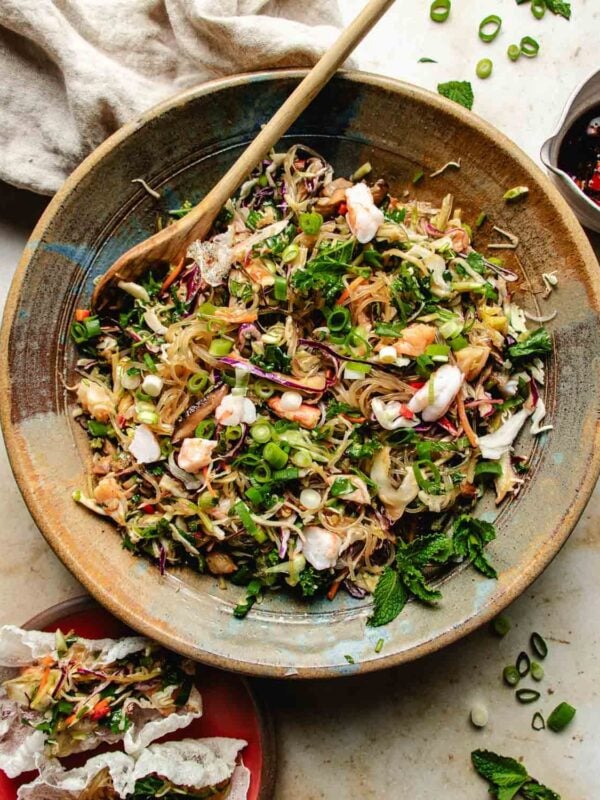
If you enjoy this Taiwanese pork chop, here are a few other Taiwanese dishes you might like:
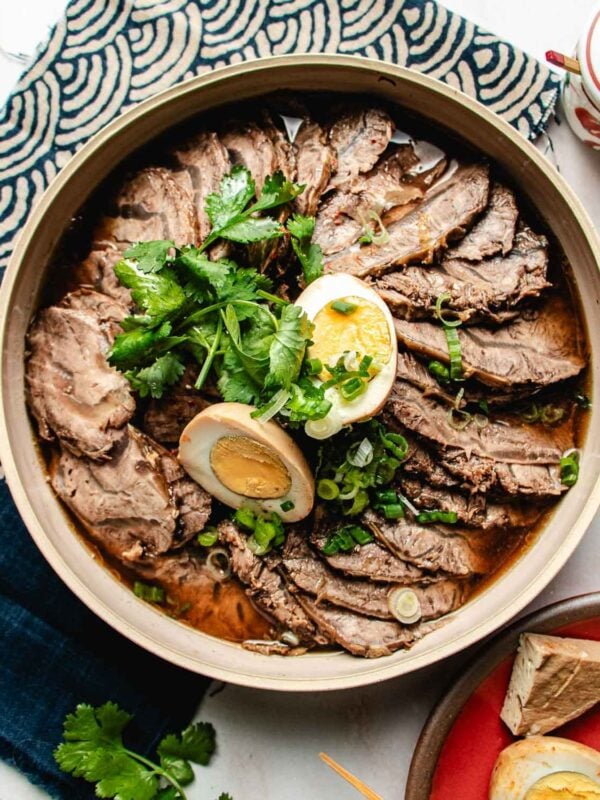
- Taiwanese beef noodle soup: Tender beef, rich broth, and chewy noodles—one of Taiwan’s most iconic dishes.
- Taiwanese braised minced pork (Rou zao fan): Savory braised pork served over rice, simple but deeply flavorful and a staple in Taiwanese home cooking.
- Three cup chicken: A classic dish cooked with soy sauce, sesame oil, and rice wine, with a bold, aromatic flavor and tender chicken.
- Taiwanese popcorn chicken (air fried): Bite-sized, crispy chicken with a light coating and classic Taiwanese seasoning, made lighter in the air fryer.