
This post may contain affiliate links. Please read our disclosure policy.
If your beef stir-fry turns out chewy or dry, the problem usually starts before the beef hits the pan. In Chinese cooking, the secret is velveting beef — a simple prep method that keeps thin slices of beef tender, juicy, and silky.
This home-cook version uses a small amount of baking soda, soy sauce, water, oil, and starch. No deep frying, no long restaurant-style rinse method — just a practical way to make tender beef stir-fry at home.
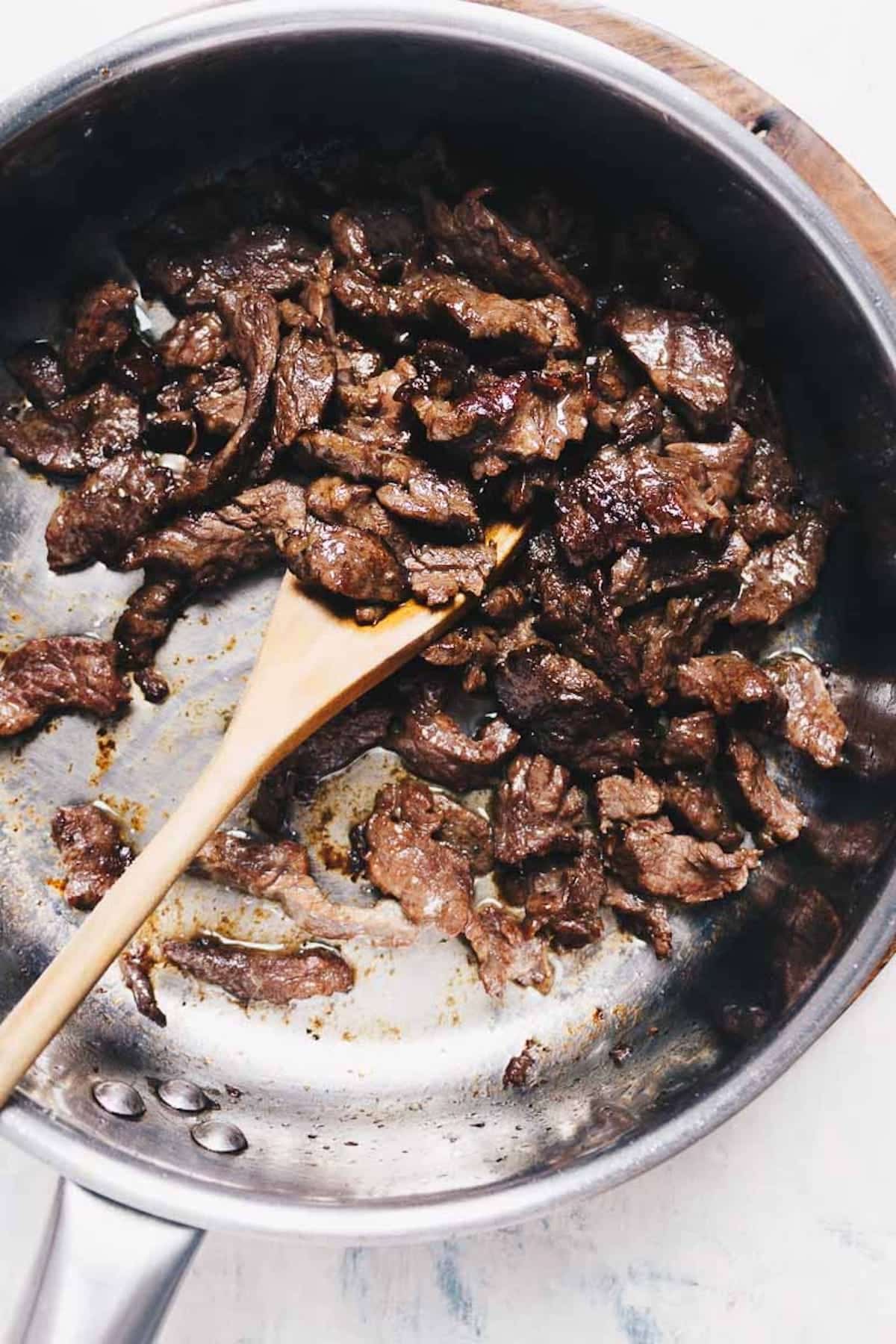
What is velveting beef?
Velveting beef is a Chinese cooking technique that helps thin slices of beef stay soft and juicy during high-heat cooking.
The process usually includes a few simple steps: slice the beef thinly against the grain, tenderize it with a small amount of baking soda, add moisture, coat it with starch, and cook it quickly in a hot pan.
Restaurants often pass the beef through hot oil for that classic silky texture. At home, I use a simpler method: massage water into the seasoned beef, add starch last, then sear it in a hot pan so the beef browns instead of steams.
Why this home method works

This guide walks you through the full process, so you know where to start and how each step helps the beef stay tender.
- Best beef cuts for stir-fry: We’ll go over a few cuts that work well for quick cooking, so you get the right head start.
- How to thinly slice beef: I’ll show you a doable home-cook method for slicing beef thinly and against the grain for tender bites.
- How to velvet beef at home: You’ll learn a simple way to season the beef while keeping it tender, moist, and juicy.
- How to sear it correctly: We’ll cover the pan, heat, and timing so the beef browns quickly and stays juicy.
Velveting beef vs. beef stir-fry marinade
Velveting beef is a tenderizing technique. It focuses on how to slice the beef, soften it, add moisture, coat it with starch, and sear it so the beef stays tender.
A beef stir-fry marinade is more about seasoning and flavor. It explains how to balance soy sauce, oil, starch, and optional seasonings for different stir-fry dishes.
For the full seasoning formula, see my beef stir-fry marinade guide.
Best beef cuts for stir-fry
The best beef cuts for stir-fry are lean, beefy, and easy to slice thin. I like flatter cuts because they’re easier to cut at a 45-degree angle into wide, thin slices — the kind you see in Chinese restaurant stir-fries.
My top choices are:
- Sirloin flap steak: My current favorite cut for stir-fry. It has great beefy flavor, stays tender when sliced thin, and works really well with this velveting method.
- Skirt steak: Another excellent choice. It’s naturally thin, easy to slice, and sears well because it doesn’t release too much moisture.
- Sirloin tip: Lean, tender, and full of flavor. This is a great option for quick weeknight stir-fries.
- Flank steak: A classic choice for Chinese beef stir-fries. It’s lean and flavorful, but pay attention to the grain so you slice it correctly.
- Top sirloin: Easy to find and works well when sliced thinly against the grain.
I don’t recommend brisket for this method. It needs a longer cooking time to break down properly, so it’s better for braising than quick stir-frying.
If using a tougher cut like boneless chuck steak, trim away thick fat and tough membrane first. It can work, but it takes more prep and careful slicing. For an easier start, go with sirloin flap, skirt steak, sirloin tip, flank, or top sirloin.
How to slice beef for tender stir-fry
How you slice the beef matters just as much as the cut you choose. For stir-fry, the goal is thin, wide pieces that cook quickly and stay tender.
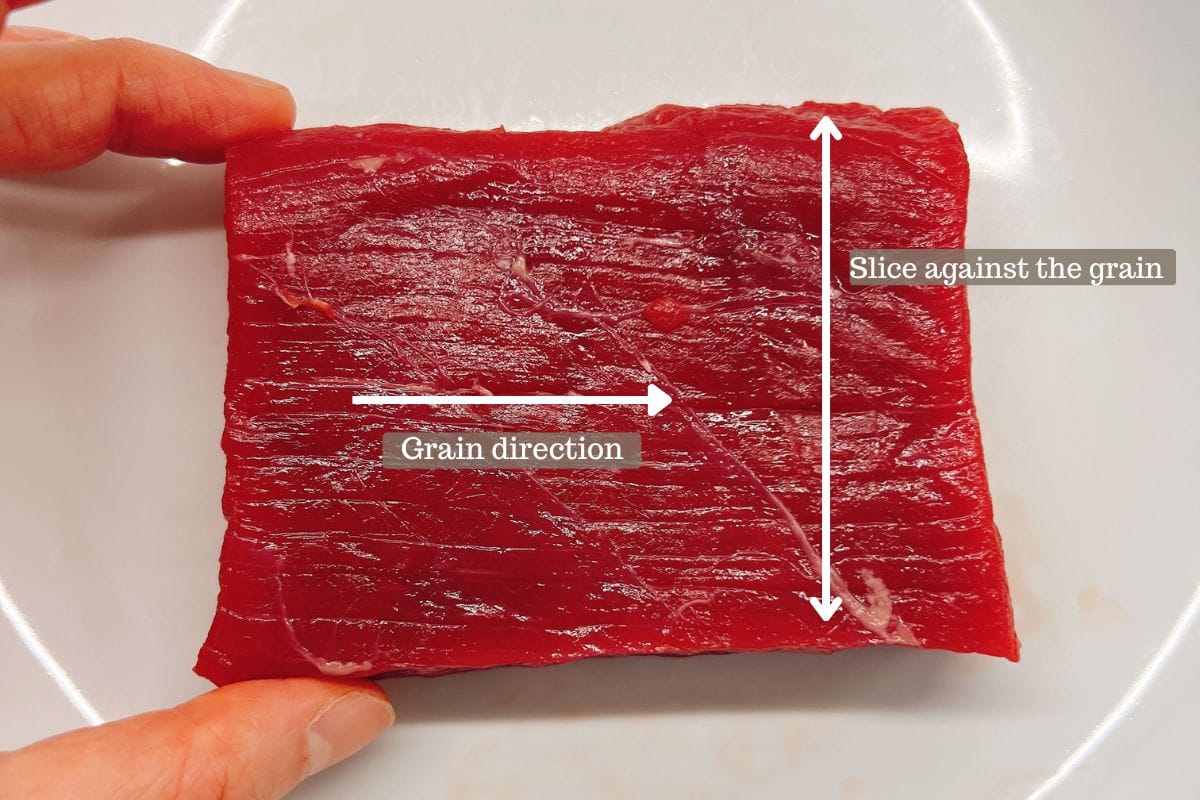
Start by looking for the grain of the meat — the long lines running through the beef. Slice against the grain, not with it. This shortens the muscle fibers so the beef is easier to chew.
For easier slicing, use a thin boning knife or fillet knife. I find it easier to control than a thick chef’s knife or cleaver, especially when cutting thin slices at home.
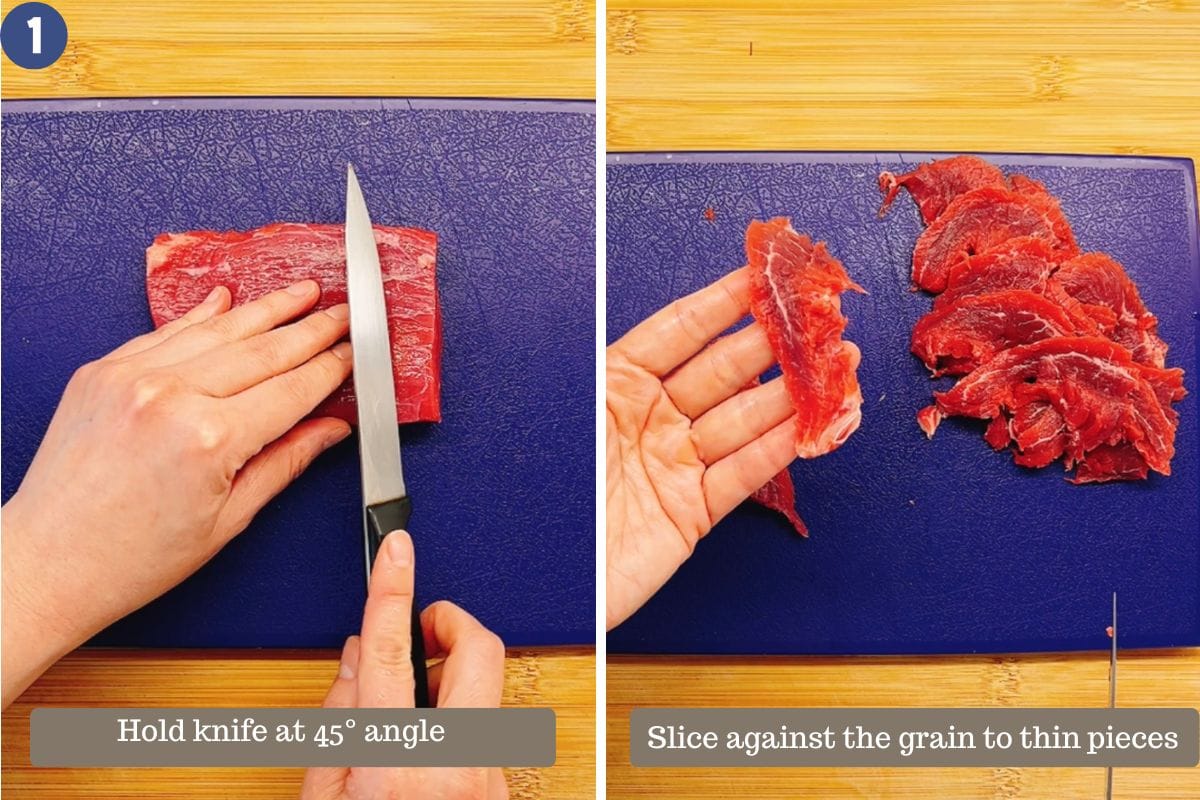
Hold your knife at a low 45-degree angle, or even slightly lower, and slice almost flat across the beef. Think of the motion as going from the upper left corner toward the lower right corner, not straight up and down. This gives you wider, thinner slices — the style you often see in Chinese restaurant stir-fries.
Aim for slices about ⅛-inch (3 mm) thick. For easier cutting, place the beef in the freezer for 15 to 20 minutes, just until it feels firm but not frozen solid. A slightly firm piece of beef is much easier to control.
If your beef has thick fat, silver skin, or tough membrane, trim those parts off first. They won’t soften much in a quick stir-fry and can make the beef chewy.
How to velvet beef for stir-fry
Velveting beef has two common approaches: the longer restaurant-style method and the faster home-cook method. For this recipe, I use the home method because it’s quicker, easier, and works well for everyday stir-fries.
Home-cook method:
Step 1: Season and tenderize the beef
Add the sliced beef to a bowl and season it with soy sauce, fish sauce if using, black pepper, baking soda, and oil. Mix well so every slice is lightly coated.
A small amount of baking soda helps soften the beef, while the seasoning gives it flavor from the start.
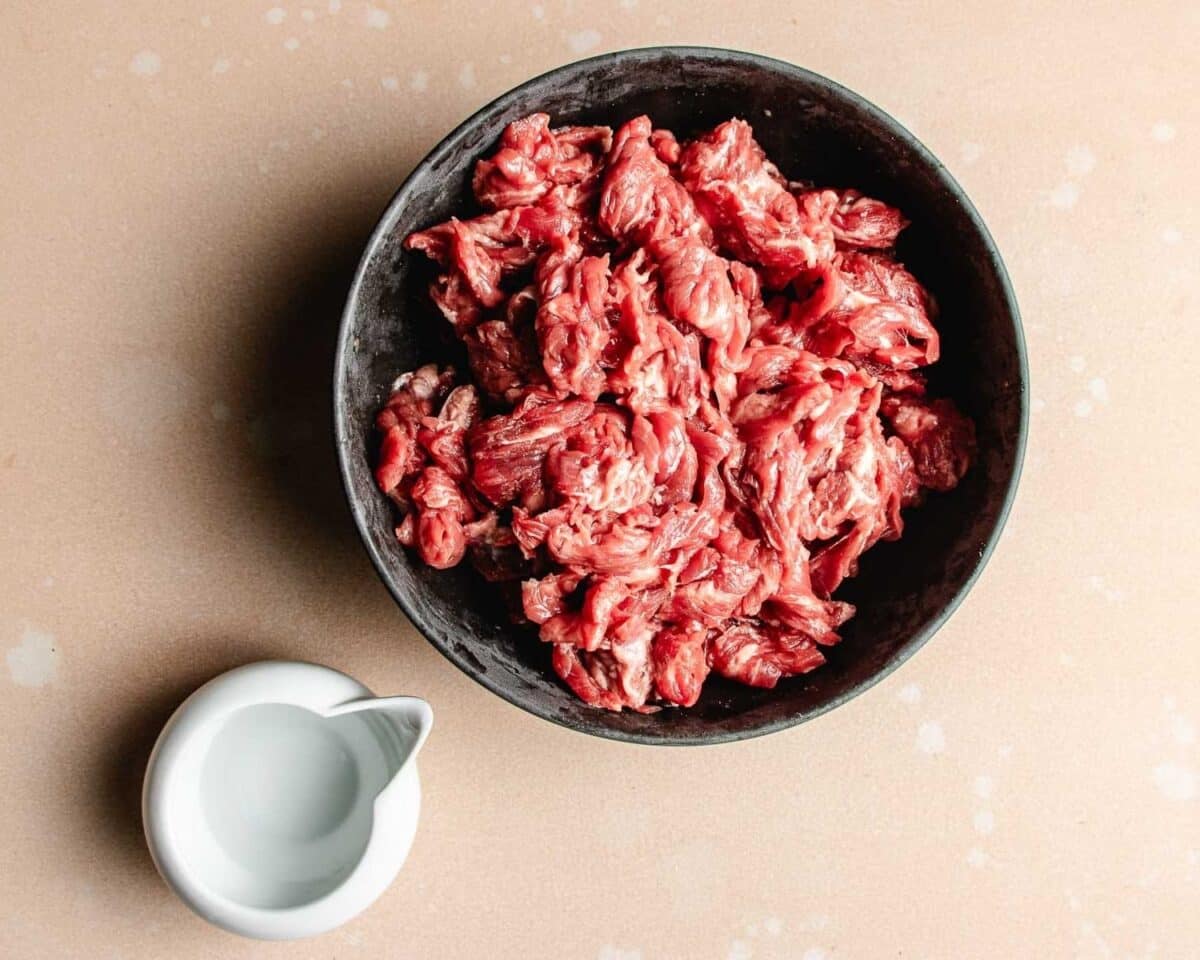
Step 2: Add water to rehydrate
Add the water little by little, gently massaging the beef after each addition until the water is fully absorbed. The beef should start to look a little plumper and juicier as it takes in the moisture.
There should be no water sitting at the bottom of the bowl. If you still see liquid, keep mixing before adding more.
Step 3: Add starch last
Sprinkle in the starch and mix until the beef is evenly coated.
Adding starch last creates a light coating around the beef. This helps hold in moisture and gives the beef a smooth, silky texture after searing.
Step 4: Marinate briefly
Cover and marinate the beef in the fridge for 15 minutes, or up to 1 day in advance.
For this home method, you don’t need to rinse the beef because we’re using a small amount of baking soda. If you’re meal prepping, this is where you can stop. See the recipe card notes for storage and freezer tips.
Restaurant-style method
Chinese restaurants often use a stronger baking soda method: baking soda and water are massaged into the beef, then the beef rests for 1 to 2 hours before being rinsed and drained well. After rinsing, the beef also needs to be squeezed to remove excess liquid before it is seasoned, coated with starch, and cooked.
That method works, but it takes more time and is harder to control at home. If the beef is not rinsed well, it can taste bitter or soapy. If it is not squeezed and drained well enough, the beef can turn watery in the pan instead of searing properly.
For home cooking, I prefer the simpler no-rinse method above. It’s faster, easier, and still gives you tender, juicy beef for stir-fry.
Do you need to rinse beef after baking soda?
Since we only use a small amount of baking soda in this home-cook method, no rinsing is needed. The beef can go straight from marinating to searing.
You only need to rinse if you use the stronger restaurant-style method, where the beef sits with more baking soda and water for 1 to 2 hours. In that case, rinse well, drain, and squeeze out the extra liquid before cooking.
If not rinsed well, the beef can taste bitter or soapy. If not drained well, it can turn watery in the pan.
How to sear velveted beef
Velveting helps make the beef tender, but the searing step is what finishes it. If the pan is too cool or crowded, the beef will release moisture and steam instead of browning.
Step 1: Preheat the pan
Use a large 12-inch (31 cm) sauté pan or wok so the beef has enough room to sear instead of steam. A wok is great, but a large stainless steel, cast iron, or nonstick sauté pan also works.
Preheat the pan over medium heat first. To test the temperature, carefully place your hand about 2.5 to 3 inches (6 to 8 cm) above the surface. When it feels too hot to keep your hand nearby, the pan is ready.
Add the oil. It should shimmer but not smoke. If the pan gets too hot, set it aside for a few minutes to cool slightly before adding the beef.
For more pan-heating tips, see my guide on how to stir-fry in a stainless steel pan.
Step 2: Sear in a single layer
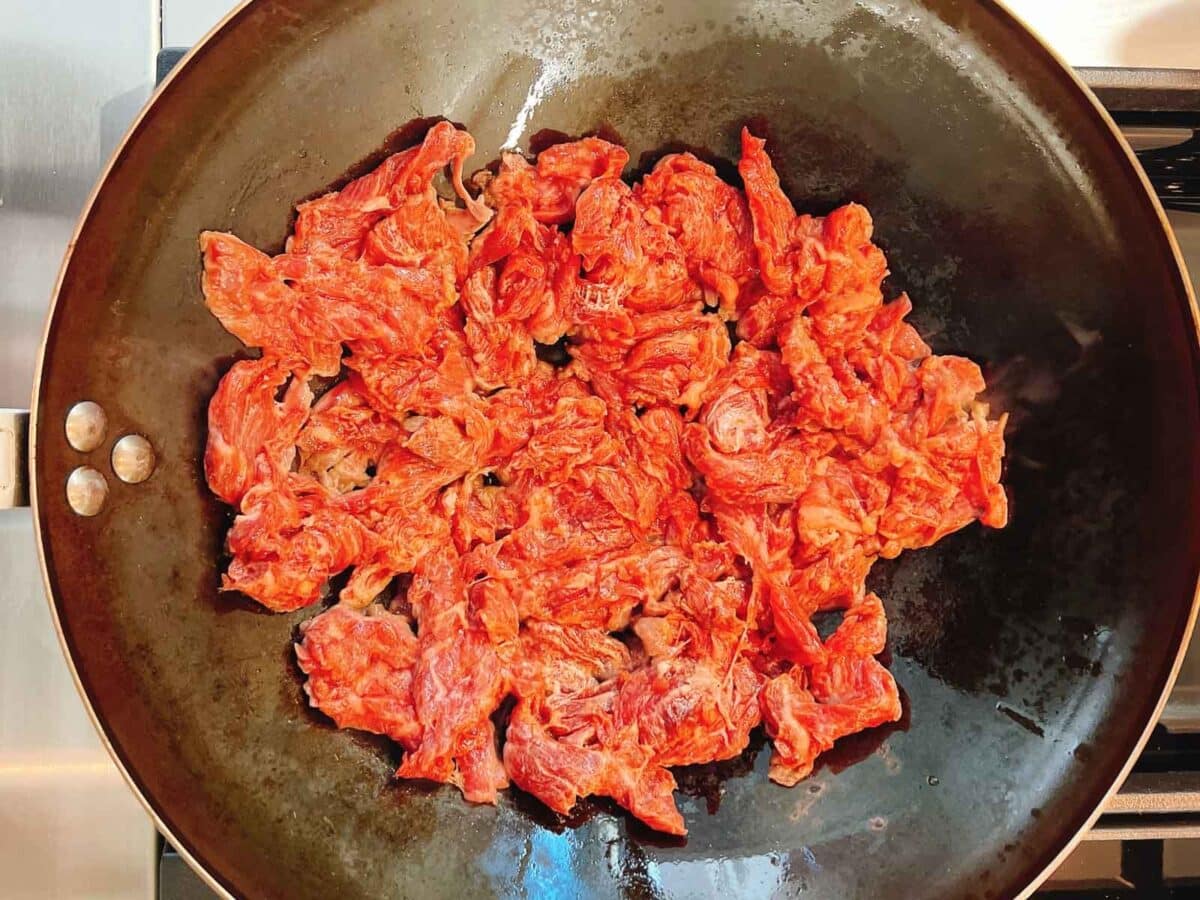
Turn the heat up to medium-high, then add the beef and spread it into a single layer. You should hear a strong sizzle right away. If you don’t, increase the heat slightly.
Let the beef sear undisturbed for about 2 minutes, or until the bottom is browned. Then flip and sear the other side for 30 seconds to 1 minute, just until the beef is almost cooked through.
Step 3: Remove the beef before adding vegetables
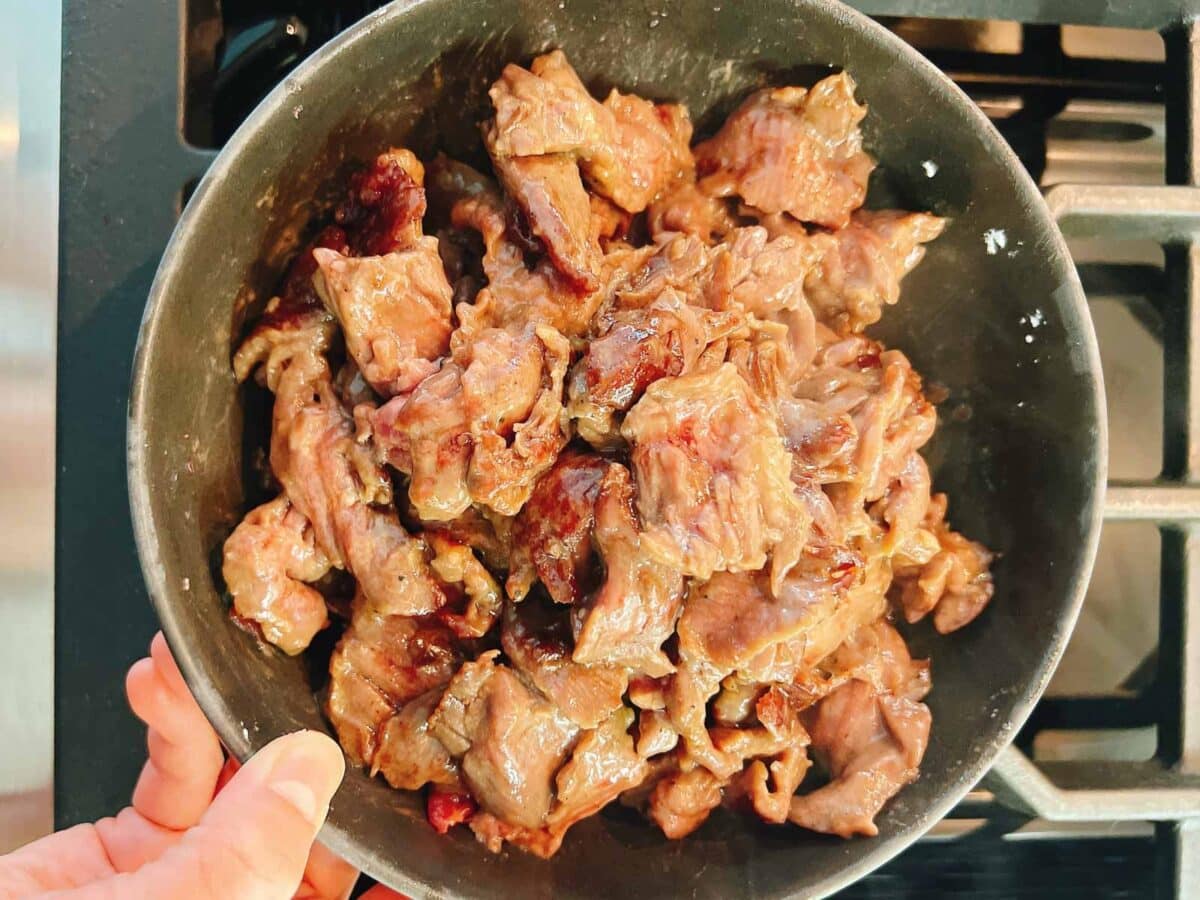
Transfer the beef out of the pan, including any pan juices, before cooking your vegetables or aromatics.
This keeps the beef from overcooking while the vegetables cook. Once the vegetables are ready, add the beef back at the end and toss everything together briefly. This way, the beef stays tender and juicy instead of turning dry or chewy.
Common mistakes and fixes
Even with the right velveting method, a few small details can affect the final texture. Here are the most common issues and how to fix them.
Beef tastes bitter or soapy
This usually means too much baking soda was used, or the beef sat too long. For the home-cook method, use only the small amount listed in the recipe and don’t marinate longer than recommended.
Beef turns watery
This can happen if the beef is too wet before cooking, the pan is not hot enough, or the pan is overcrowded. The beef should absorb all the water during marinating, and you should hear a strong sizzle when it hits the pan.
Beef is still tough
Check the cut and slicing first. Use a lean, flatter cut, slice thinly against the grain, and cut at a low angle. If the slices are too thick or cut with the grain, they can still taste chewy even after velveting.
Beef sticks to the pan
The pan may not be hot enough, or the beef may have been moved too soon. Preheat the pan well, add oil, then let the beef sear undisturbed before flipping. A firm spatula also helps release the beef cleanly.
Is baking soda the same as starch?
No. Baking soda and starch do different jobs. Baking soda helps soften the beef, while starch coats the beef and helps hold in moisture during searing. That’s why this method uses both.
Ways to use velveted beef
Once the beef is velveted and seared, you can use it in many Chinese-style stir-fries. The key is to cook the beef first, transfer it out, then add it back at the end so it stays tender.
- Beef with Chinese broccoli: A classic Cantonese-style stir-fry with tender beef, crisp gai lan, and a savory garlic sauce.
- Chinese pepper steak: Great for weeknights with bell peppers, onions, and a rich stir-fry sauce.
- Paleo Mongolian beef: Sweet, savory, and glossy with tender beef slices that are perfect over rice or cauliflower rice.
- Black pepper beef: Bold, peppery, and extra savory — a great one-pan dinner when you want something with a little more punch.
How to velvet beef for tender stir fry recipe
Video
Ingredients
- 1.25 lb. skirt steak or sirloin tip, flank, flap, or sirloin steak
- 1 tbsp soy sauce or 1.5 tbsp coconut aminos
- ½ tbsp fish sauce optional but adds extra umami
- ⅛ tsp black pepper
- ½ tsp baking soda
- 2 tsp olive oil
- 2 tsp toasted sesame oil
- 2-2.5 tbsp water
- 1.5 tbsp starch tapioca or potato starch
Other:
- 1 tbsp avocado oil or any neutral flavored and high heat friendly oil
- 1 spring onions Garnish
- Toasted white sesame seeds Garnish
Instructions
- Thinly slice beef: Hold your knife at a 45-degree angle to create wider, flatter slices. Slice the beef against the grain into thin pieces, about ⅛-inch thick.
- Tenderize and marinate: In a bowl, add the beef and season with everything from soy sauce to sesame oil. Add the water little by little, massaging the beef until fully absorbed. Sprinkle in the starch and mix until evenly coated. Cover and marinate in the fridge for 15 minutes, or up to 1 day in advance.
- Preheat the pan: Preheat a 12-inch (31 cm) sauté pan or wok over medium heat. Carefully place your hand about 2.5 to 3 inches (6 to 8 cm) above the pan surface to test the heat. When it feels too hot to keep your hand nearby, the pan is ready. Add the oil. It should shimmer but not smoke. If the pan gets too hot, set it aside for a few minutes to cool slightly.
- Sear the first side: Turn heat up to medium-high. Add the beef and spread into a single layer. You should hear a strong sizzle—if not, increase the heat. Sear undisturbed for about 2 minutes, until browned on the bottom.
- Sear the second side: Use a firm spatula to flip the beef and sear the other side for 30 seconds to 1 minute. The beef should be almost cooked through. Transfer the beef out, along with any pan juices.
- Serve or turn it into a stir-fry: Turn off the heat. Transfer the beef and pan juices to a serving plate. Garnish with scallions and sesame seeds, if using. The beef is ready to eat as-is, or you can sauté aromatics and vegetables separately, then combine them with the beef to make your own tender beef stir-fry.
Notes
- Cookware: Use a large sauté pan or wok. A 12-inch (31 cm) pan works best because the beef has more room to sear instead of steam.
- Use a splatter guard, not a lid: A lid traps moisture and can make the beef watery. A splatter guard helps with oil splatter while letting steam escape.
- Best beef cuts: Skirt, flank, sirloin tip, flap, or sirloin steak all work well. These cuts are easier to slice thin and stay tender with quick cooking.
- Knife tip: A sharp boning knife works well for thin, controlled slicing.
- Slicing technique: Always slice against the grain at a 45-degree angle for wider, thinner pieces and more tender bites.
- Heat matters: The pan should be hot enough to keep a steady sizzle once the beef goes in. If there’s no sizzle, the beef will release moisture and steam instead of sear.
- Make ahead: You can slice and marinate the raw beef up to 1 day in advance. Keep it covered in the fridge until ready to cook.
- Freeze: Add the sliced and marinated raw beef to a freezer-friendly bag and press it flat. Freeze for up to 2 months. Defrost overnight in the refrigerator before cooking.
Nutrition
Nutrition information is automatically calculated, so should only be used as an approximation.
Looking for a different protein?
You can also apply the similar process to chicken and pork! See my how to velvet chicken and how to velvet pork for stir fries!
Made a dish and loved it? Please rate the recipe and leave a comment in the section below! It helps my blog grow organically, allowing me to continue sharing free and awesome content with you. Thank you!









Delicious and easy. Loved the video.
Thank you so much!
This looks amazing! I assume you can use the marinade for any cut of meat, right? I want to try with some chicken!
I love making asian inspired meals at home and CAN NOT wait to try your beef stir fry… it looks delicious!
Looks Delish!
Thanks for the reminders re marinating and this great recipe!!
Great tips, thank you! I have never heard of using baking soda in a marinade, I am going to give this a try!
That was so helpful! I never get the stir fry as good as a restaurant! I’m so excited to try this! 🙂 Thanks!
Great tips! I learned a lot taking this, and your marinade sounds yummy. I can’t wait to try it!
I love your stir-fry recipes, the meat always looks perfectly cooked and seasoned. Thanks for all the tips and suggestions on making the best beef stir-fry. I am going to try out some new tricks 😉
Thank you for all of these tips for tender beef! Can’t wait for stir fry night!
That’s so awesome. Let me know how it goes!
Never thought of the type of meat cut in such detail. Great post!
Thank you, Catherine!