This post may contain affiliate links. Please read our disclosure policy.
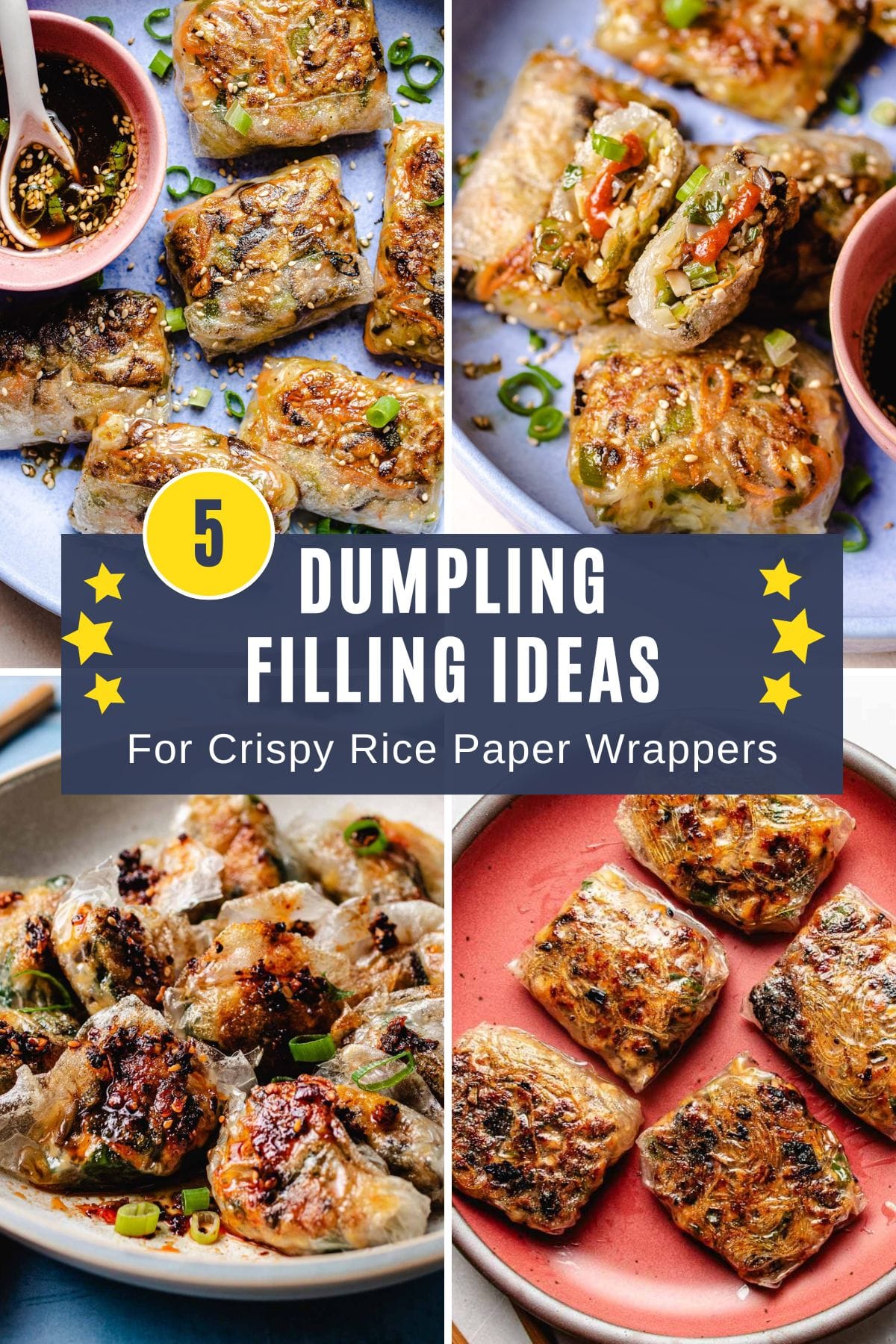
If you love crispy rice paper dumplings but want more variety, this guide is for you. These 5 dumpling filling ideas are made with rice paper wrappers in mind, so they’re flavorful, finely chopped, and not too wet.
Rice paper wraps behave differently from wheat dumpling or wonton wrappers. Because they’re thinner and more delicate, the filling needs a few small adjustments so the wrappers don’t tear, burst, or turn soggy when cooked.
New to making them? Start with my Rice Paper Dumplings recipe first — it walks you through the folding and crispy cooking methods.
Need basic wrapper tips? My How to Use Rice Paper Wrappers guide will help you soften, roll, and handle the sheets with more confidence.
Here are 5 creative filling ideas to try, from veggie-packed options to shrimp, chicken, and pork fillings.
Why rice paper dumplings need different fillings

Unlike flour-based wonton or dumpling wrappers, rice paper wrappers don’t absorb moisture the same way. If the filling is too wet, the wrappers can soften too fast and burst in the pan or air fryer.
That’s why these fillings are prepared a little differently. The ingredients are finely chopped, lightly cooked when needed, and cooled before wrapping so the dumplings stay crisp instead of soggy.
This guide shows you how to make fillings that are built for rice paper wrappers — flavorful, compact, and not watery.
The filling rules that keep rice paper from tearing
Rice paper dumplings cook differently from regular dumplings. With wheat-based wrappers, raw meat filling can steam inside the dough first, then crisp in the pan. Rice paper doesn’t work the same way because it crisps quickly in a hot pan or air fryer.
That’s why the filling needs to be ready for a faster cooking method:
- Cook meat fillings first: Chicken, pork, and beef need more time than rice paper wrappers. If the meat is raw, the outside can crisp before the center is cooked.
- Use quick-cooking seafood carefully: Finely minced shrimp and fish can go in raw because they cook much faster than ground meat.
- Control the moisture: The filling should be flavorful and tender, but not wet or sitting in liquid.
- Chop everything small: Large pieces can poke through the wrappers and make them harder to fold.
- Cool before wrapping: Warm filling softens rice paper too quickly and can make it tear.
- Don’t overfill: For an 8.5-inch wrapper, use about 2 to 2.5 tablespoons of filling.
Tip
After testing different fillings, I’ve found that rice paper works best when the filling is small, cooled, and not watery — with meat fillings already cooked through before wrapping.
5 fillings that work well with rice paper wrappers
These fillings are designed for rice paper wrappers, so they’re finely chopped, flavorful, and made to hold up inside delicate rice paper. Each one gives you a different texture and flavor, from veggie-packed to juicy shrimp, savory chicken, and pork.
Vegan vegetable and mushroom filling
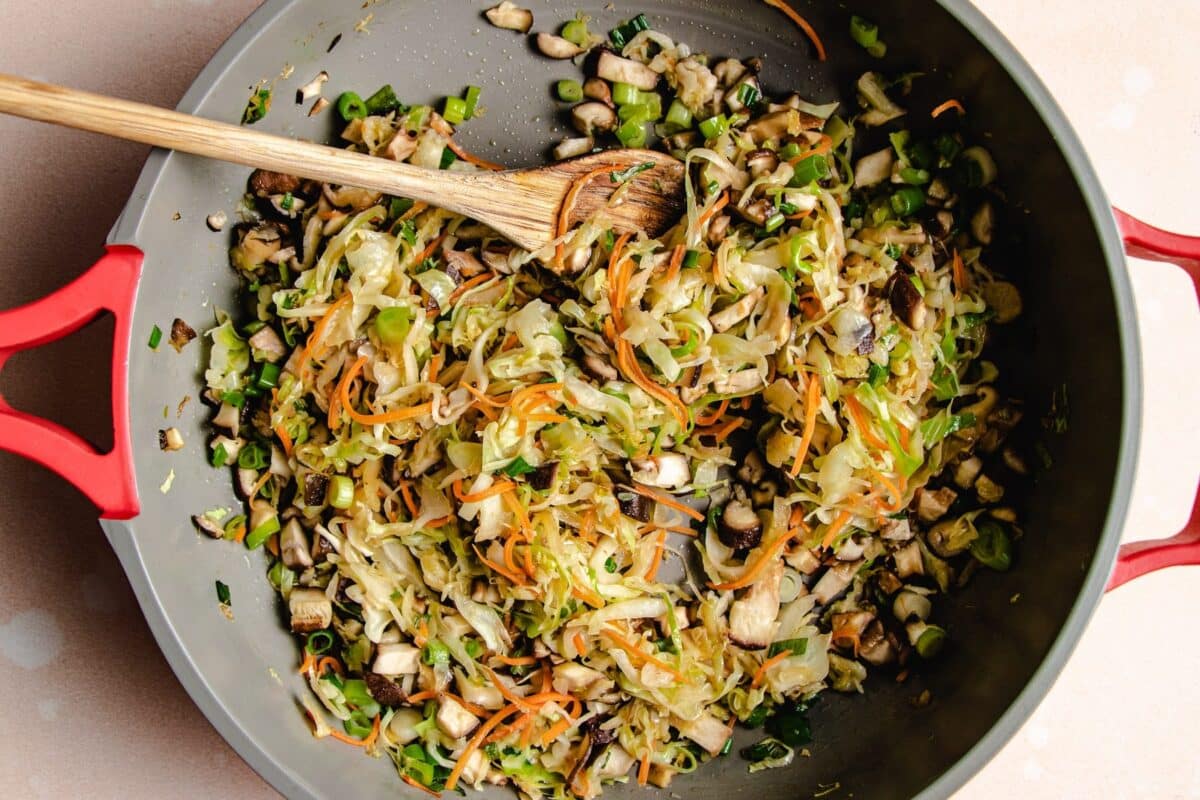
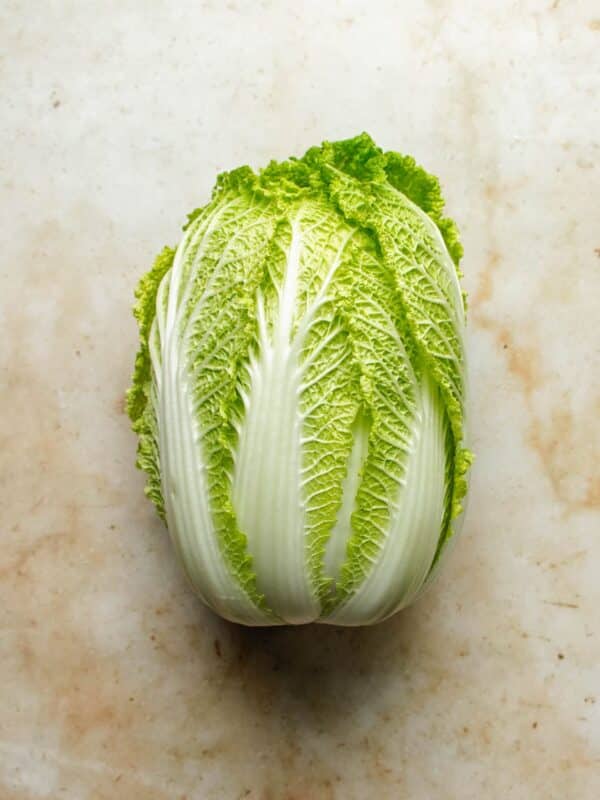
This is the lightest filling of the five, made with cabbage, carrots, and shiitake mushrooms. It has a crisp-tender texture with lots of savory mushroom flavor, so it still tastes satisfying without meat.
It works well with rice paper because the vegetables are very finely shredded, so there aren’t big or pointy pieces that can poke through the wrapper. A quick sauté softens them slightly while keeping some crunch and removing extra moisture.
Vegetarian chive and egg filling
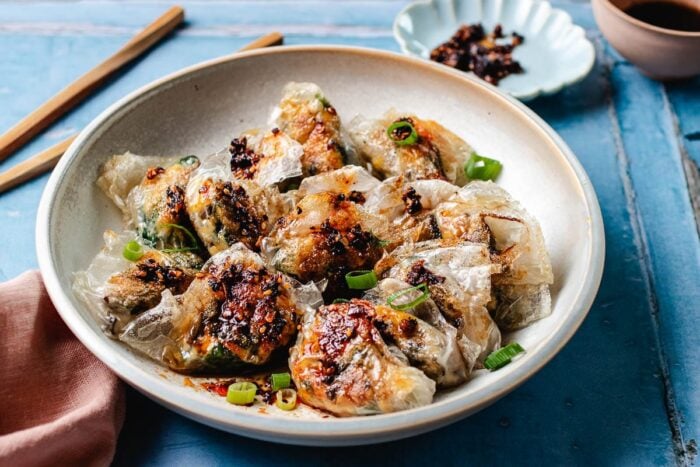
This filling is inspired by Chinese chive and egg dumplings, but adjusted for rice paper wrappers. The eggs make it soft and satisfying, while the garlic chives and shiitake mushrooms add a savory, fragrant flavor.
It’s a good vegetarian option because the filling is fully cooked before wrapping. The eggs also help bind everything together, so the mixture is easier to scoop and tuck inside the rice paper.
Shrimp har gow-style filling
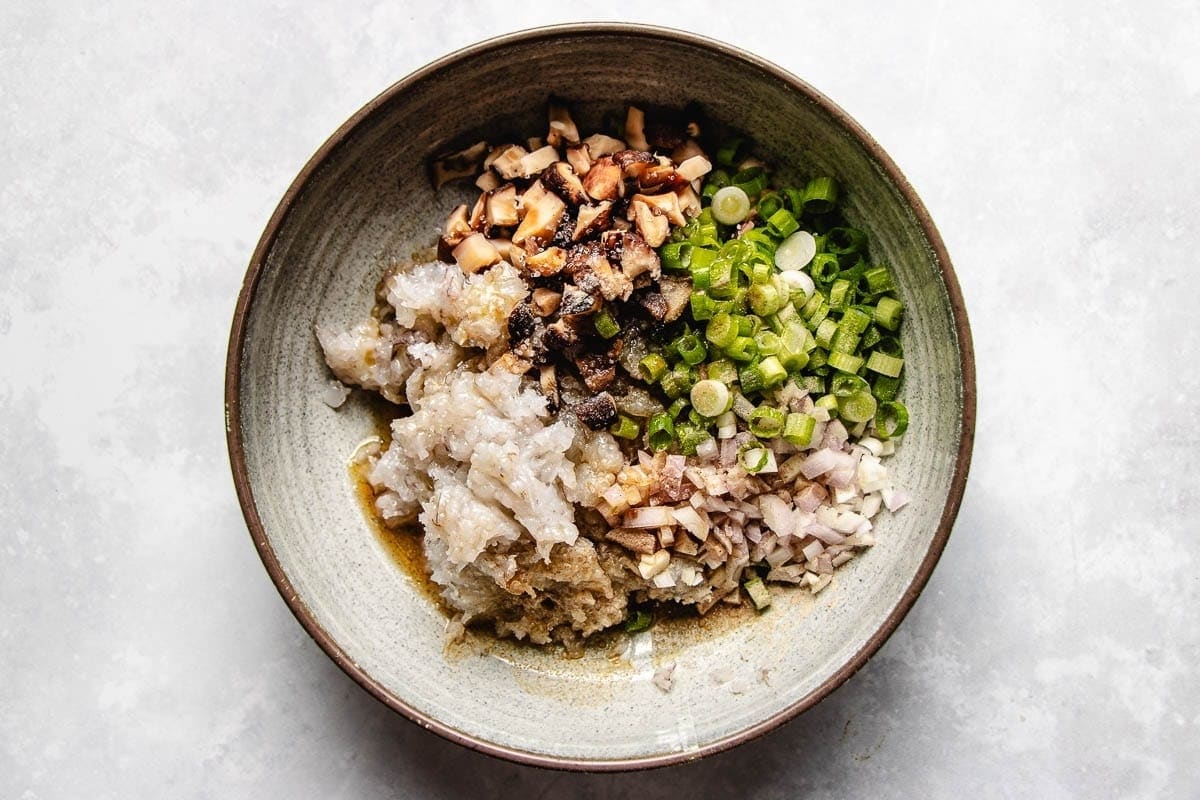
This one is inspired by har gow, the classic dim sum shrimp dumpling. The filling is juicy, lightly bouncy, and full of shrimp flavor, with shiitake, scallions, and shallots for extra aroma.
Shrimp works especially well with rice paper because it cooks quickly. When it’s finely minced, it turns slightly sticky and holds together nicely, so you don’t need to pre-cook it before wrapping.
Korean chicken and glass noodle filling
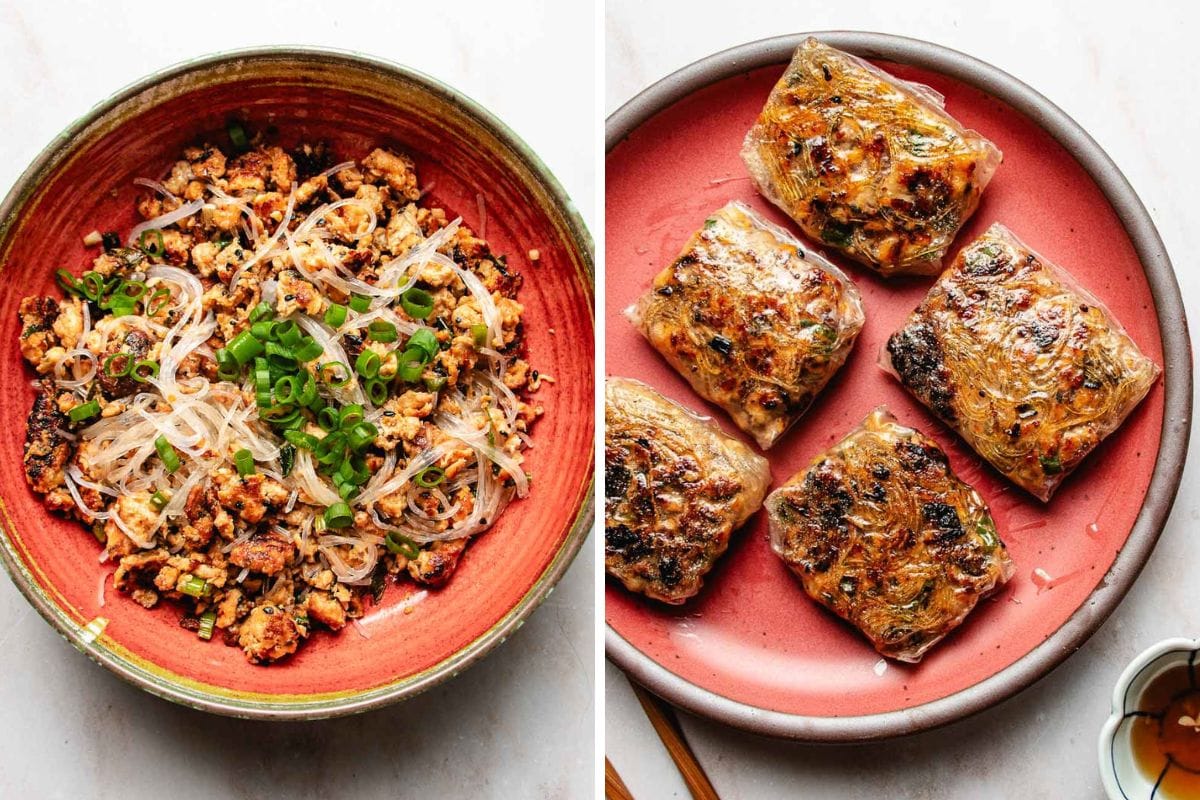
This is the heartiest filling, with ground chicken, gochujang, scallions, sesame oil, and glass noodles. It’s savory, a little spicy, and extra satisfying if you want a more filling dumpling./
The glass noodles help soak up flavor and give the filling a chewy bite, but they need to be drained well and cut into shorter pieces. The chicken is cooked first, so the rice paper only needs enough time to crisp on the outside.
Pork and shrimp “siu mai” style filling
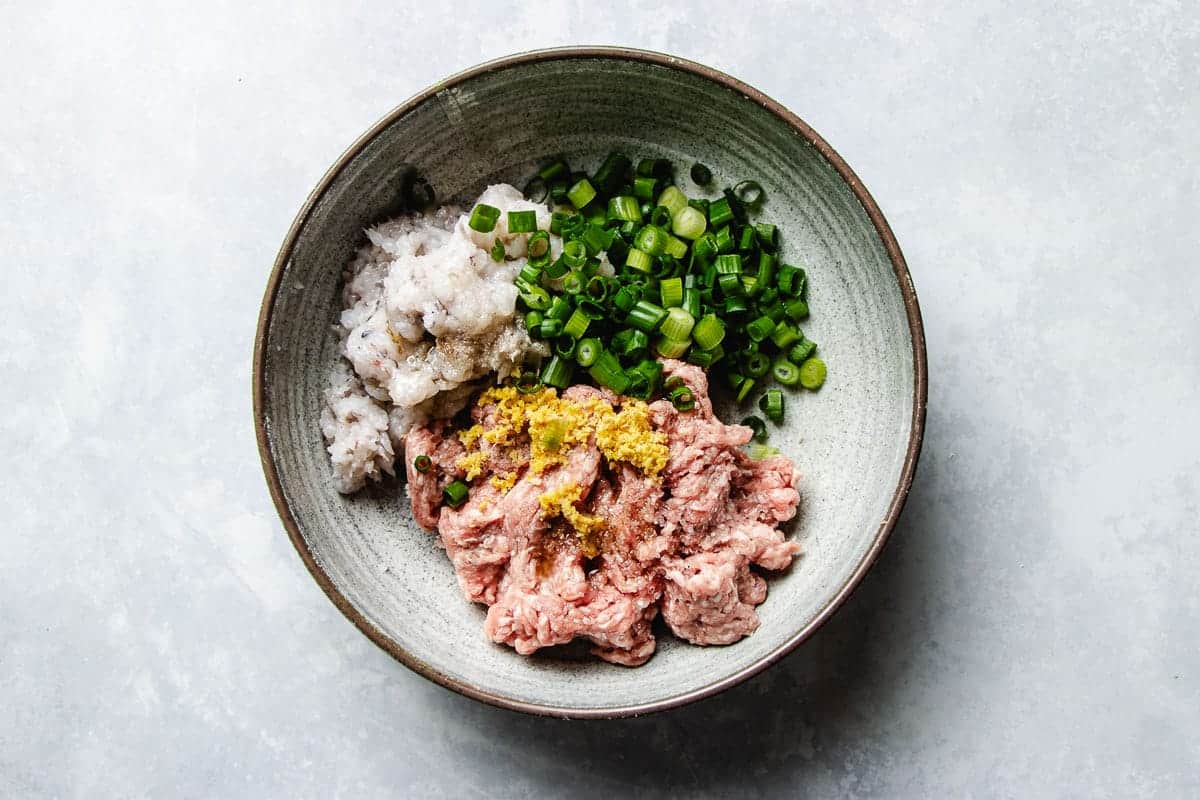
This filling is inspired by siu mai, with a mix of ground pork and shrimp for a juicy, savory bite. The shrimp gives the filling a little bounce, while the pork makes it rich and satisfying.
Because pork takes longer to cook than rice paper wrappers, this filling is cooked through before wrapping. That way, the rice paper can crisp quickly without waiting for the meat inside to finish cooking.
Which fillings should be cooked first?
For crispy rice paper wrappers, I like the filling to be either fully cooked or quickly sautéed to soften before it goes inside the wrapper. This helps the rice paper crisp fast without waiting too long for the center to cook.
- Cook meat fillings first: Ground chicken, pork, and beef should be cooked through before wrapping. Rice paper wrappers crisp quickly in a hot pan or air fryer, but raw meat needs more time to cook. If the filling starts raw, the outside can brown before the inside is done.
- Lightly sauté hearty vegetables first: Cabbage, mushrooms, chives, carrots, and other firm vegetables should be finely minced or finely shredded, then lightly sautéed. This softens the texture, removes extra moisture, and makes the filling easier to tuck inside the delicate rice paper.
- Shrimp and fish are the exceptions: Finely minced shrimp or fish can go in raw because they cook much faster than ground meat. Just keep the pieces small so they cook evenly while the wrapper crisps.
Tip
TIP: A simple rule: meat fillings should be cooked first, hearty vegetables should be lightly sautéed, and finely minced shrimp or fish can be cooked inside the wrapper.
More ways to customize the fillings
Once you understand the basic filling rules, you can mix and match the ingredients pretty easily. Just keep everything finely chopped, lightly cooked when needed, and not too wet before wrapping.
- Add more crunch: Finely minced carrots, celery, water chestnuts, or bamboo shoots work well. Keep the pieces small so they don’t poke through the rice paper.
- Boost the aroma: Try scallions, garlic chives, shallots, ginger, garlic, or a small drizzle of toasted sesame oil. These add a big flavor without making the filling watery.
- Use noodles to make it heartier: Glass noodles are great because they soak up flavor and help bind the filling. Just make sure they’re softened, drained well, and cut into shorter pieces before mixing.
- Keep sauces light: Strong sauces like gochujang, soy sauce, coconut aminos, or oyster sauce can add a lot of flavor, but don’t add too much. The filling should taste seasoned, not saucy. See my Asian sauces for more dumpling dipping ideas.
- Use leftovers the right way: Leftover cooked meat, shrimp, tofu, or vegetables can make great fillings, but they need a quick check first. Chop everything small, drain off extra liquid, and reduce any sauce in a pan so the filling is flavorful but not wet.
Dumpling filling ideas recipe for rice paper
Ingredients
Vegan vegetables and mushroom filling
- 8 oz. coleslaw mix finely shredded cabbage and carrots
- 3.5 oz. fresh shiitake mushrooms diced into small bits
- 0.3 oz. ginger grated
- 0.3 oz. garlic grated, about 2 medium cloves
- 3 scallions diced
- 1 to 1.5 tbsp avocado oil
- ¼ tsp coarse sea salt plus a small pinch, or to taste
- 1/2 tbsp soy sauce or 1 tbsp coconut aminos
- 1/4 tsp sugar skip if using coconut aminos
- 2 tsp toasted sesame oil
Vegetarian Chive egg dumpling filling:
- 4 oz. fresh shiitake mushroom caps about 4 large caps
- 3 oz. garlic chives
- 4 large eggs
- ¼ tsp coarse sea salt
- 1.5 tbsp avocado oil
- 2 tsp light soy sauce or coconut aminos
- ½ tsp sugar omit if using coconut aminos
- ⅛ tsp ground white pepper
- ½ tsp shiitake mushroom powder or chicken bouillon powder
- A small drizzle of toasted sesame oil
Shrimp har gow-style fillings:
- 1 lb Shrimp peeled and deveined (26-30 count per lb)
- 2.5 oz Shiitake Mushrooms finely chopped (4 large caps)
- 3 Scallions finely chopped
- 1 oz Shallots finely chopped (half of a medium shallot)
- 0.5 tsp coarse sea salt
- 1.5 tsp light soy sauce or 1.5 tbsp coconut aminos
- ½ tsp sugar skip if using coconut aminos
- 1 tbsp toasted sesame oil
- ¼ tsp ground white pepper
- 2 tsp Shaoxing wine or Taiwanese michu or Japanese sake (optional)
Korean chicken & glass noodle filling
- ¾ lb ground dark meat chicken or a mixed of white and dark meat
- 0.3 oz garlic cloves finely minced, 1 large clove
- 0.5 oz ginger root finely minced, 1 chubby thumb size
- 1 oz Shallots finely chopped (half of a medium shallot)
- 1 tbsp soy sauce
- 1 tbsp gochujang paste
- ¼ tsp coarse sea salt
- 2 tbsp toasted sesame oil
- 3 scallion sliced
- 1 tbsp toasted black sesame seeds
- 2 tbsp starch optional
- 1 large egg beaten
- 1.5 tbsp oil
- 1 bundle dry glass noodles
Pork & Shrimp “Siu Mai” Style filling
- 0.5 lb shrimp
- 0.5 lb ground pork
- 1 tsp grated ginger
- 2 scallions finely chopped
- ½ tsp coarse sea salt
- ¼ tsp ground white pepper
- ½ tsp mushroom bouillon or chicken bouillon optional
- 2 tsp toasted sesame oil
- A small splash chinese cooking wine or Taiwanese michu
- 1-1.5 tbsp oil
Equipment
- rice paper wrappers 8.5-inch (22 cm)
Instructions
Vegan vegetables and mushroom filling
- Prepare the vegetables and shiitake: If your coleslaw mix isn’t finely shredded, slice it into long, thin strips. Add it to a bowl with the diced shiitake. In a separate bowl, prepare the ginger, garlic, and scallions.
- Sauté the filling: Preheat a large sauté pan over medium heat until it feels warm. Add the oil, then sauté the garlic, ginger, and scallions with a small pinch of salt until fragrant, about 10 seconds.
- Add the coleslaw mix and shiitake to the pan. Season with ¼ teaspoon salt, coconut aminos, and sesame oil. Sauté for about 3 minutes, just until the vegetables release some moisture but still stay crisp. Avoid overcooking. The filling should be softened but dry, not watery. Set aside to cool to room temperature before wrapping.
Vegetarian chive egg dumpling filling
- Prep the vegetables: Dice the shiitake caps. Trim the garlic chives and slice them into 1-inch pieces.
- Scramble the eggs: Whisk the eggs with the salt. Preheat a large nonstick pan over medium heat and add the oil. Sauté the mushrooms for about 2 minutes, then add the chives and cook for 1 minute. Season with soy sauce, sugar, white pepper, and mushroom powder.
- Pour in the eggs and gently scramble until cooked through, about 2 minutes. Turn off the heat and drizzle with sesame oil. Let the filling cool to room temperature before wrapping.
Shrimp har gow-style dumpling filling
- Prep the shrimp: Peel and devein the shrimp, then mince them in a small food processor until finely chopped and slightly sticky. Transfer to a large bowl.
- Combine the filling: Add the shiitake, scallions, shallot, salt, coconut aminos, sesame oil, white pepper, and wine, if using. Stir in one direction until the mixture is well combined and slightly sticky.
- Because this filling is made with finely minced shrimp, it cooks quickly and does not need to be pre-cooked. Use about 2 to 2.5 tablespoons of filling per 8.5-inch rice paper wrapper. Pan-fry until the dumplings are crisp on both sides and the shrimp filling is cooked through.
Korean chicken glass noodle dumpling filling
- Combine the chicken mixture: In a large bowl, mix the chicken, garlic, ginger, shallot, soy sauce, gochujang, salt, sesame oil, scallions, black sesame seeds, starch, and egg. Stir until well combined.
- Cook the mixture: Preheat a large nonstick or ceramic pan over medium heat until the pan feels warm. Add the oil, then add the chicken mixture. Use a wooden spoon to break up the meat into small bits as it cooks. Sauté until the chicken is cooked through.
- Soften the glass noodles: While the chicken cooks, place the glass noodles in a large bowl and cover them with hot boiling water by about ½ inch above the bundle. Soak for 4 to 5 minutes, or until softened. Drain well, then use kitchen shears to cut the noodles into shorter pieces.
- Add the noodles to the cooked chicken mixture and stir to combine. Let the filling cool to room temperature before wrapping.
Pork shrimp siu mai style dumpling filling
- Prep the shrimp: Peel and devein the shrimp, then mince them in a small food processor until they form a sticky paste.
- Combine the filling: In a large bowl, mix the shrimp paste with the ground pork, ginger, scallions, salt, white pepper, bouillon, and sesame oil. Stir until well combined.
- Cook the filling: Preheat a large sauté pan over medium heat until well heated. Add the oil, then add the pork and shrimp mixture. Sauté until the meat breaks into small bits and is cooked through. Add a small splash of cooking wine to deglaze the pan, if using.
- Let the filling cool to room temperature before wrapping.
Notes
- Keep the fillings dry: For all fillings, use a large, wide pan so the moisture can evaporate quickly. Preheat the pan well before adding the ingredients. You want a steady sizzle, but not a harsh, violent sizzle. A splatter guard is helpful because it lets steam escape while keeping the stovetop cleaner.
- For meat fillings: For extra crunch and texture, add a small amount of carrots and/or celery. Pulse them a few times in a food processor so they are finely minced. Avoid large or sharp chunks because they can tear the rice paper wrappers. Sauté them with the meat until tender but still slightly crisp.
- Rice paper wrappers: I recommend using rice paper sheets that are about 22 cm or 8.67 inches wide.
- For how to wrap dumplings using rice paper, see my post on how to use rice paper wrappers.
Nutrition
Nutrition information is automatically calculated, so should only be used as an approximation.
FAQs
Yes, but you may need to adjust it first. Rice paper works best with fillings that are finely chopped, not too wet, and cooked first if they contain ground meat or hearty vegetables.
I don’t recommend it. Rice paper crisps quickly, but raw chicken, pork, or beef takes longer to cook through. It’s better to cook meat fillings first, then cool them before wrapping.
Yes. Cook and cool the fillings first, then store them in the fridge. If liquid collects at the bottom, drain it before wrapping so the rice paper doesn’t turn soggy.
More rice paper recipes to try
Once you’re comfortable working with rice paper wrappers, there are so many fun ways to use them beyond dumplings. These recipes will help you practice different textures, from soft and fresh to crispy and pan-fried.
- Rice Paper Dumplings: Start here if you want the full folding and crispy cooking method. This is the master recipe to use with the filling ideas in this guide.
- Rice Paper Egg Rolls: A crispy, vegetable-packed option with that golden outside, but made with rice paper instead of wheat wrappers.
- Vietnamese Rice Paper Pizza: A fun pan-grilled rice paper recipe with a crisp base and savory toppings.
- Rice paper shrimp pancakes: Double-layered crispy wrappers and a bouncy shrimp and shiitake filling. Easy to pan-fry and perfect for sharing.
- Rice Paper Noodles: A gluten-free way to turn softened rice paper sheets into chewy noodle-like strips for soups or salads.