
This post may contain affiliate links. Please read our disclosure policy.
Egg drop noodle soup is simple, comforting, and satisfying. You get soft, silky egg ribbons in a clear, savory broth — plus noodles underneath to make it a complete bowl.
It comes together in about 20 minutes using simple pantry ingredients. Light but not plain, hearty without feeling heavy — this is the kind of stovetop noodle soup I make when I want something warm and balanced without overthinking it.
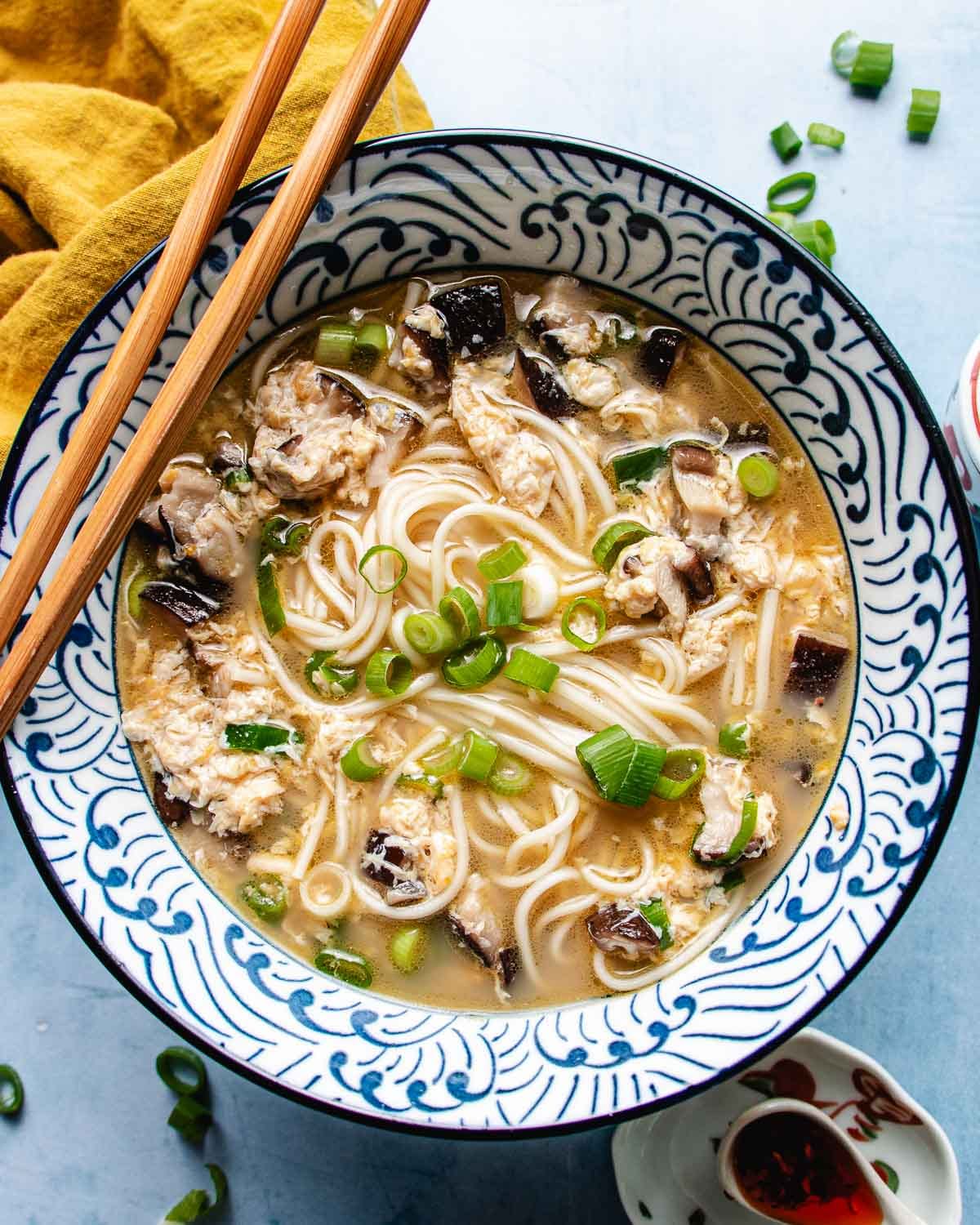
Why this egg drop noodle soup works

I created this version because I wanted a light noodle soup that could stand on its own — simple enough for one person, but easy to scale up. It’s quick, flexible, and easy to scale up. Over the years, I’ve also learned that many readers struggle with egg ribbons turning into scrambled bits, so this became my go-to recipe to teach that technique clearly and reliably.
- Silky egg ribbons – A simple straining method helps create soft, even egg flowers instead of clumps.
- Clear, balanced broth – Light and savory without being thickened or heavy.
- Noodles to make it a full bowl – Still comforting, but hearty enough to stand on its own.
- Flexible noodle choices – Wheat, rice, ramen, or egg noodles all work depending on the texture you prefer.
Main Ingredients
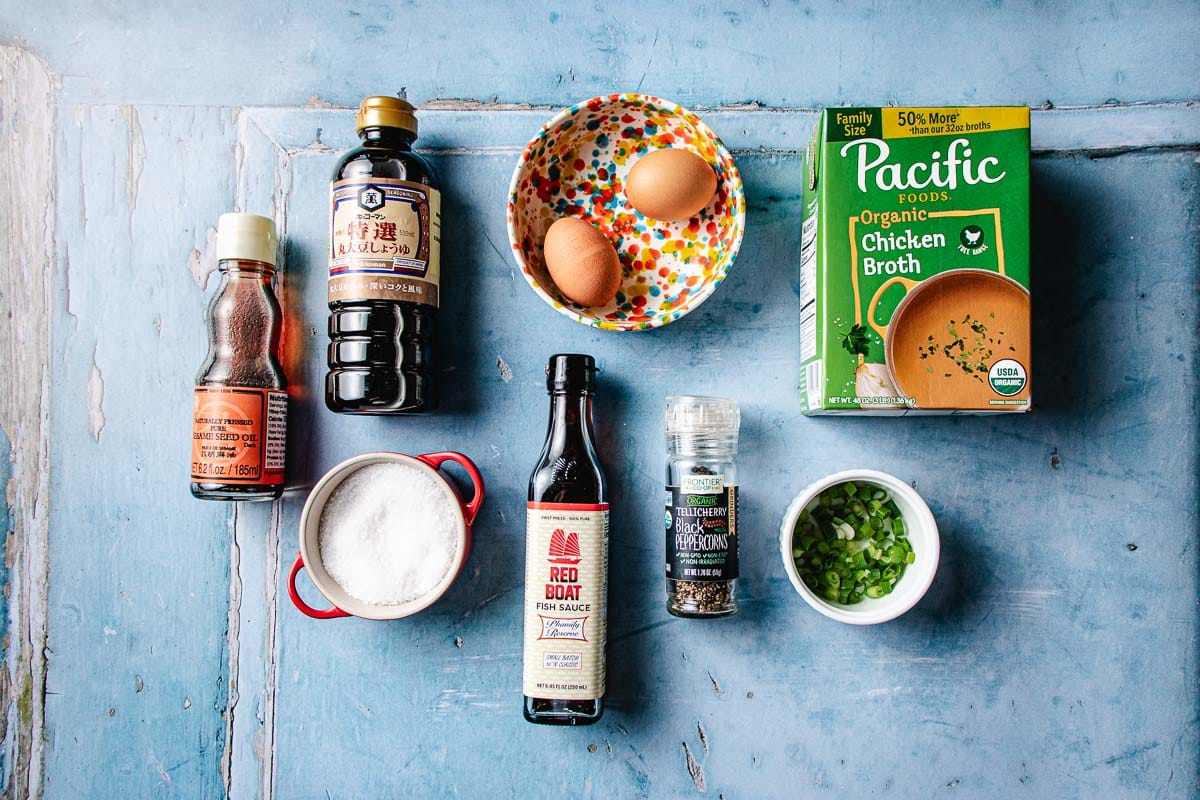
- Noodles – Use dried wheat noodles, ramen (discard seasoning packet), or rice noodles. Wheat noodles give the most classic texture and subtle flour aroma. Not sure which noodle works best? See my guide to Chinese noodle types.
- Broth (Chicken stock + water) – We combine chicken stock with a little water to keep the flavor balanced and not overly salty once seasonings are added. The exact water amount depends on how salty your stock is — adjust to taste. Straight stock can become too concentrated in a noodle soup.
- Seasoning (Soy sauce + salt + fish sauce) – Light soy sauce builds the base. A small touch of salt adjusts balance. Just ¼ tsp fish sauce deepens umami without tasting fishy. You can substitute mushroom seasoning seasoning, dashi seasoning, or my homemade bouillon powder if preferred.
- Eggs – Use fresh large eggs for cleaner, more defined ribbons. Fresher eggs hold their structure better in hot broth.
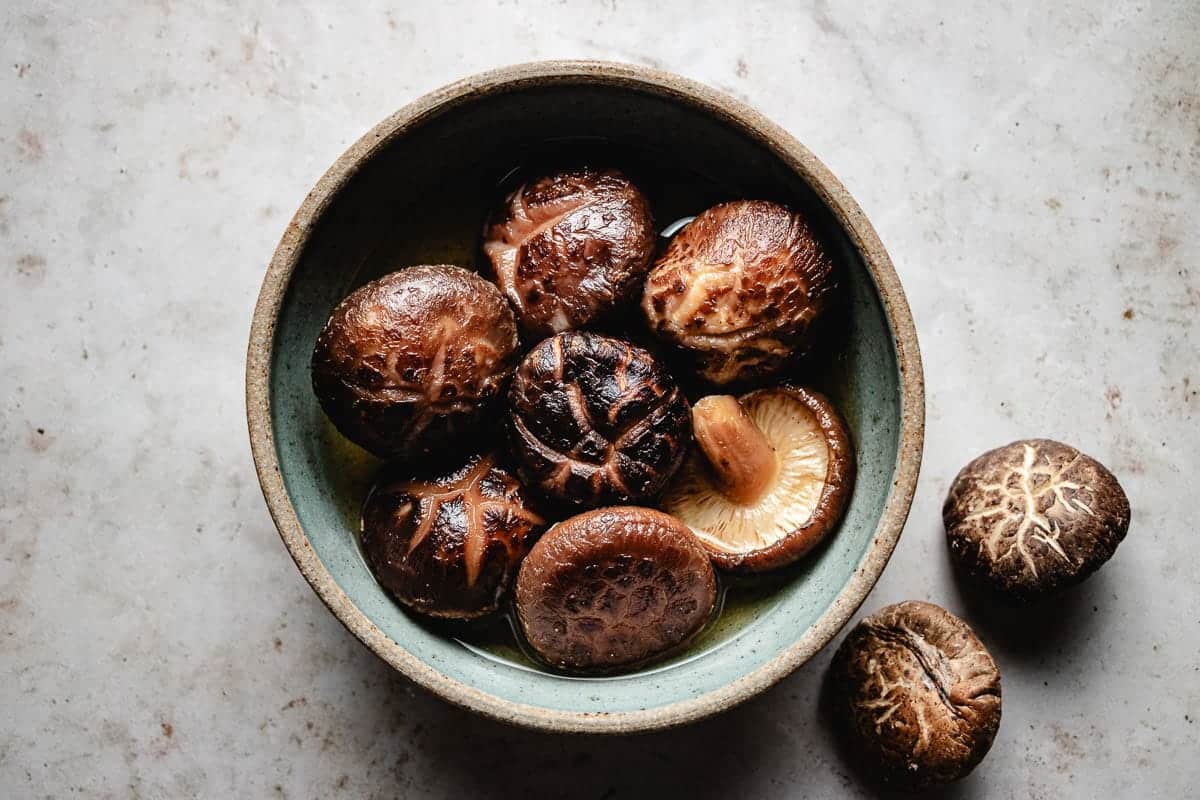
- Shiitake mushrooms – Fresh shiitake add gentle earthy depth without making the soup heavy. You can substitute rehydrated dried shiitake (slice thin), or use button or cremini mushrooms.
Tip
Why This Egg Drop Noodle Soup Doesn’t Use Cornstarch
Traditional egg drop soup is often thickened with a cornstarch slurry. That makes sense when the soup is served on its own.
But this is a noodle bowl.
When hot broth is poured over freshly cooked noodles, a little starch naturally releases into the soup. That’s enough to give this clear broth noodle soup a light body and help it cling to the noodles — without turning it thick or cloudy.
Adding slurry here would make the broth heavier than it needs to be. The goal is delicate egg ribbons in a clean, balanced soup, not a thickened sauce.
This keeps the texture light and balanced — exactly how this noodle bowl should feel.
How to make egg drop noodle soup (step-by-step)
Step 1: Cook the noodles just to al dente
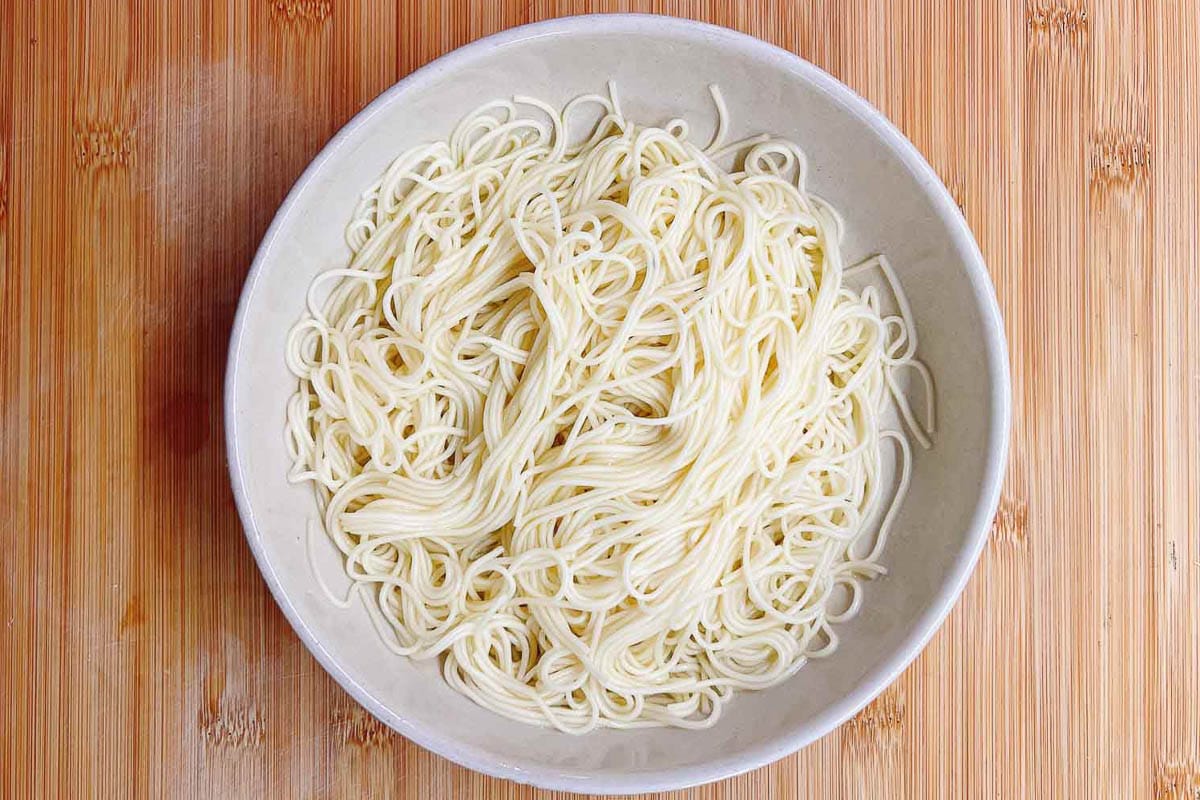
Cook the noodles until they’re just tender but still slightly firm. They will soften a bit more once hot broth is added, so don’t let them go too far.
I’ve tested this with wheat noodles and rice noodles — both work well. Wheat noodles stay a little chewier, while rice noodles are softer and lighter. You can also use egg noodles or even ramen (without the seasoning packet). It really comes down to the texture you prefer.
Step 2: Strain the eggs for silkier ribbons
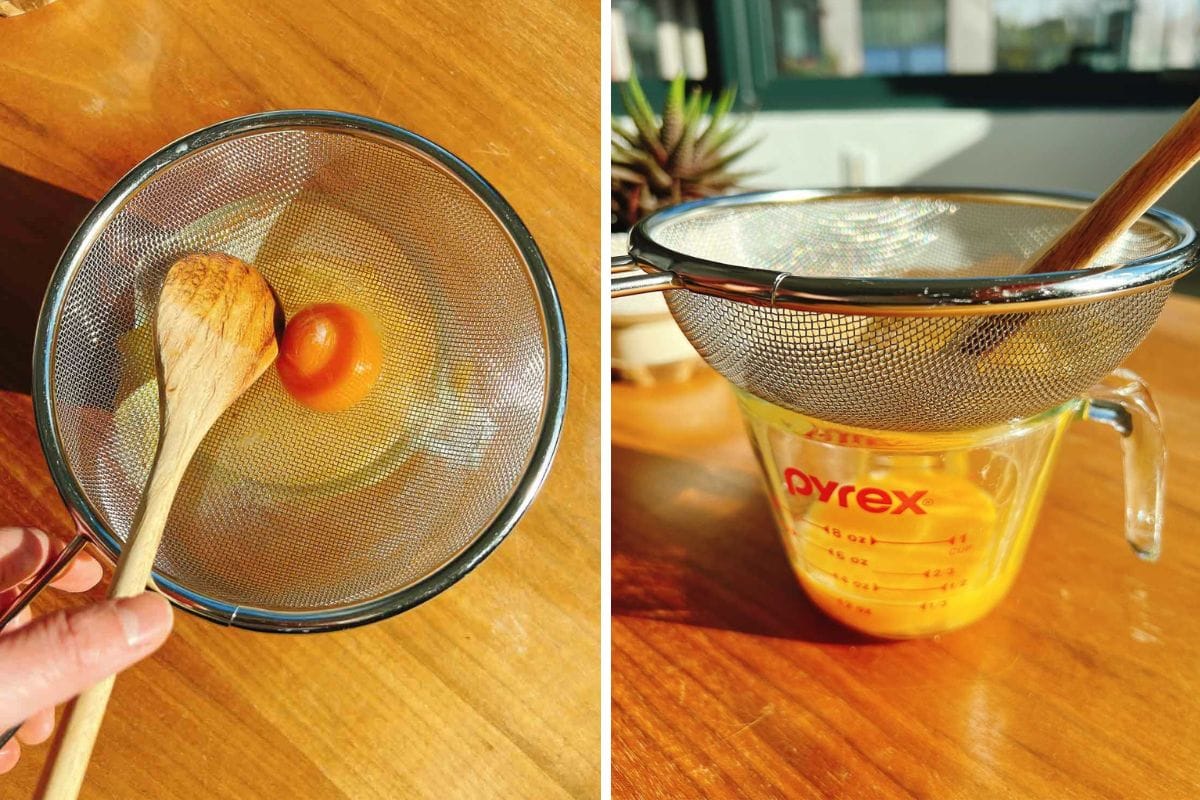
If you’ve ever had egg drop soup turn into clumps or scrambled bits, this step fixes that. In my testing, simply whisking the eggs wasn’t as reliable. Sometimes they’re over-whisked and too thin, sometimes the yolks and whites aren’t fully incorporated, and the pour becomes uneven.
Passing the eggs through a sieve, gently pressing with a spoon in a circular motion, breaks up thicker strands and gives you a smoother, more even stream. It takes an extra minute, but the ribbons come out noticeably finer and more delicate.
Step 3: Bring the broth to a proper boil

Combine the chicken stock, water, and shiitake, then bring it to a steady rolling boil. The broth must be actively boiling before you add the eggs — this is what allows the egg ribbons to form.
Keep in mind that different brands of stock vary in saltiness, so adjust the water slightly if needed.
Step 4: Turn off the heat, then stream the eggs
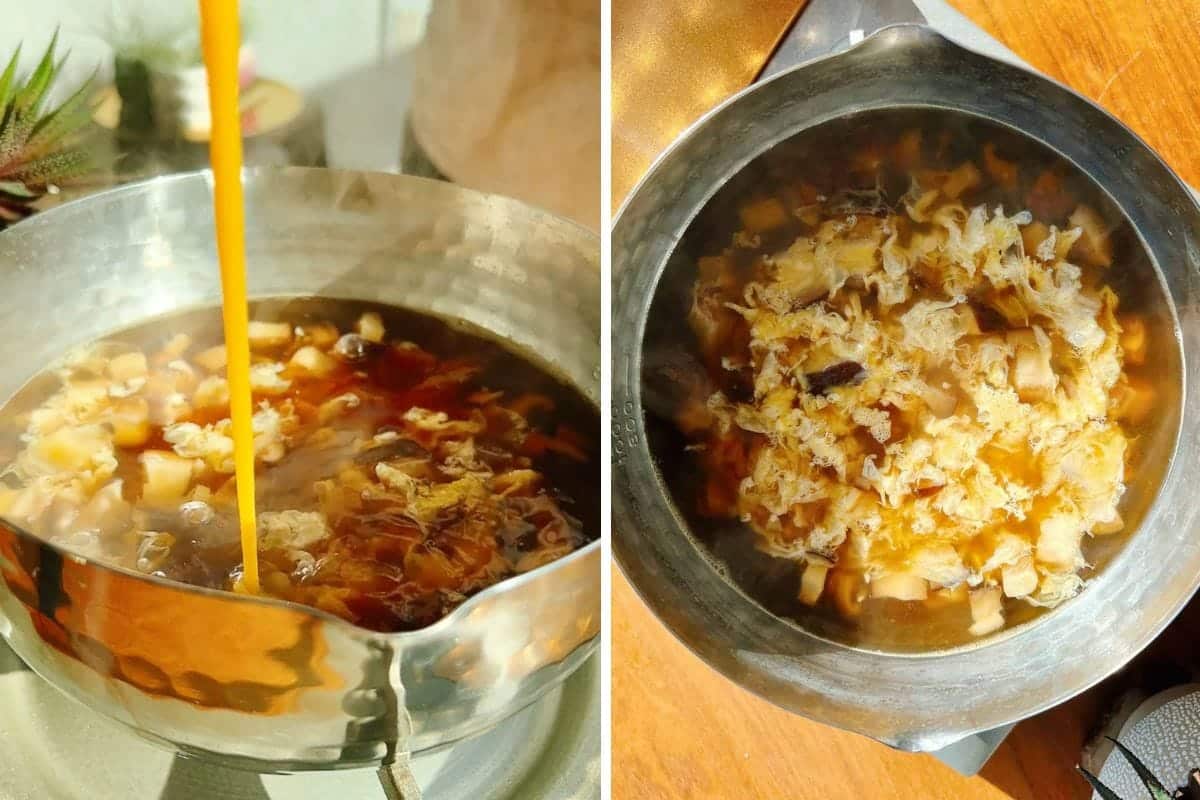
Once the broth is at a hot rolling boil, turn off the heat. Immediately and slowly drizzle the strained eggs in a circular motion. Pour steadily — not all at once — and let the eggs sit undisturbed for a few seconds so they can set and form soft strands.
If you add the eggs while the broth is still aggressively boiling, they tend to break apart and turn cloudy instead of forming silky egg flower ribbons. The boil gives you structure. Turning off the heat gives you tenderness.
Step 5: Assemble and serve right away
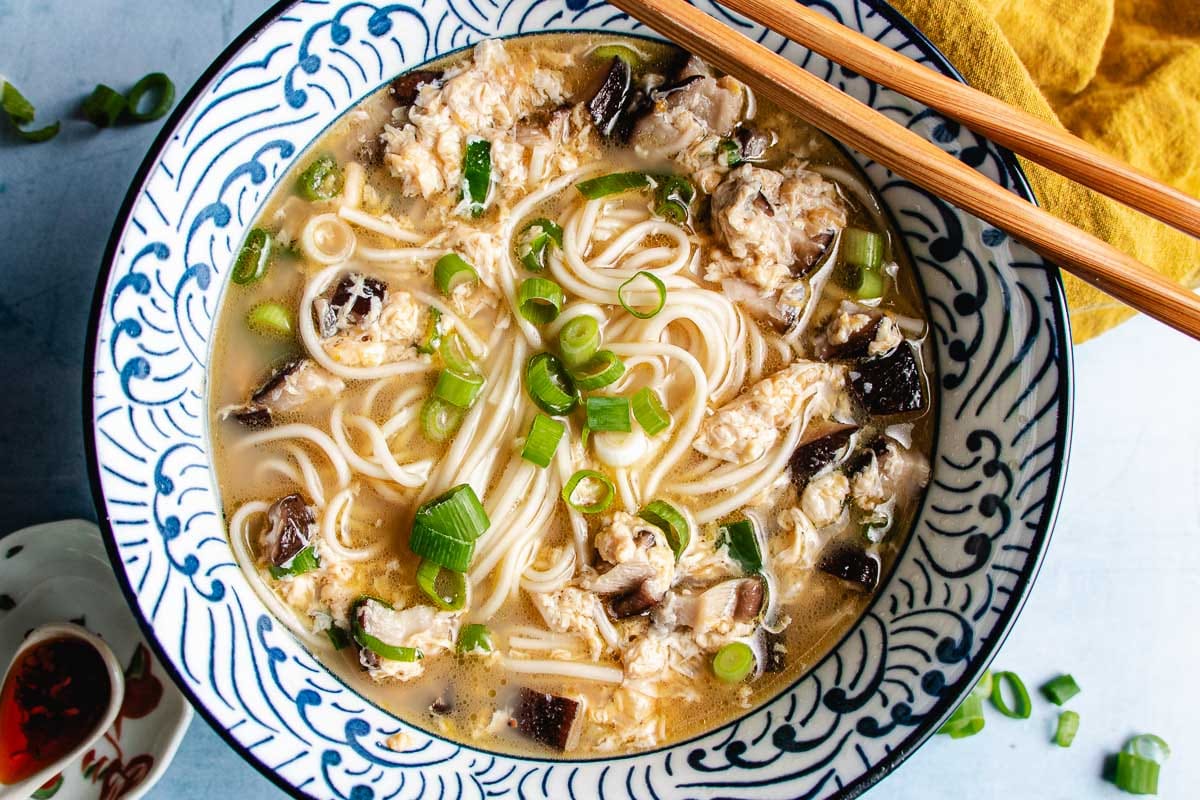
Place the drained noodles in a bowl and ladle the hot egg drop broth over the top. The light noodle starch gives the broth a gentle body.
Finish with scallions, sesame oil, and black pepper, and serve while the broth is clear and hot.
Good to know
Why Your Broth Turns Cloudy (And How to Avoid It)
is what makes this egg drop noodle soup feel light and balanced. If your soup turns cloudy, it’s usually caused by one of three things:
- Cooking noodles directly in the broth – Always boil noodles separately. This prevents excess starch from clouding the soup.
- Adding a cornstarch slurry – Traditional egg drop soup often uses it, but in a noodle version it makes the broth thicker and less transparent.
- Adding eggs while the broth is still boiling hard – The broth should reach a rolling boil first, then the heat should be turned off before adding the eggs.
When done properly, the broth should look clean, with delicate egg flower strands floating through it — not thick or murky.
Egg drop noodle soup recipe
Video
Ingredients
- 1 bundle dried noodles of choice wheat, ramen, or rice noodles
- 2 large eggs
- 2.3 oz fresh shiitake mushroom caps 1.5 thick large caps
- 2 cups chicken stock Pacific Foods or Kettle & Fire work well
- 0.5 cup water
- 0.5 tbsp light soy sauce or to taste
- ¼ tsp coarse sea salt or to taste
- ¼ tsp fish sauce or shiitake seasoning, Asian-style chicken bouillon, or dashi seasoning
- 1-2 scallion thinly sliced
- Drizzle toasted sesame oil
- A few rounds ground black pepper
Instructions
- Noodles: Bring a pot of water to a boil and cook the noodles according to the package instructions. When just al dente, drain but do not rinse. Transfer them to a large serving bowl. If desired, toss with a small drizzle of oil to prevent clumping. You can keep the noodles in a warm (unheated) oven while preparing the soup.
- Shiitake: Slice the shiitake caps into bite-sized pieces.
- Make soup broth: In a medium saucepan, combine the chicken stock, water, and shiitake. Season with soy sauce, salt, and fish sauce. Bring to a boil over medium-high heat, about 5–6 minutes, until the mushrooms are tender and the broth is well seasoned
- Eggs: Meanwhile, crack the eggs into a small bowl. Place a sieve over a large measuring cup with a pouring spout. Pour the eggs into the sieve and use a wooden spoon to gently press them through in a circular motion, helping the eggs pass evenly through the sieve. This creates a finer, silkier texture than simply whisking. Set aside.
- Make egg flower: Once the broth reaches a rolling boil, turn off the heat. Slowly and evenly stream the strained eggs into the hot broth from slightly above the pot in a circular motion without stirring. Let the eggs sit undisturbed for a few seconds so delicate ribbons can form.
- Garnish: To complete the soup, garnish with scallions, drizzle of sesame oil and a few rounds of ground black pepper.
- Serve: Ladle the hot soup over the prepared noodles. Garnish with scallions, a drizzle of toasted sesame oil, and freshly ground black pepper. Serve immediately.
Notes
- Use a sieve with medium-sized holes when straining the eggs. If the mesh is too fine, it will take much longer for the eggs to pass through.
- Cooking the noodles separately keeps the broth clean and clear by preventing excess starch from clouding the soup.
- If timed well, you can cook the noodles while preparing the soup to save time.
- This recipe is designed as a quick single-serving meal. It can easily be doubled for two servings.
- Storage and reheat: Store broth and noodles separately for best texture. Reheat the broth gently, then assemble just before serving. The egg ribbons will firm up slightly when reheated, but the flavor remains good.
Nutrition
Nutrition information is automatically calculated, so should only be used as an approximation.
What to serve with egg flower noodle soup
This is a light, clear-broth noodle soup, so pairing it with something that adds texture or protein makes it feel more complete.
- Add a simple protein on the side – If you want to make it more substantial, serve it with braised tofu for a plant-based option, or salt and pepper shrimp for something crispy and savory. Both add contrast without overpowering the soup.
- Pair with a classic Taiwanese-style main – If you’re serving this as part of a bigger meal, Din Tai Fung–style Taiwanese pork chops make a great centerpiece. The crisp exterior and juicy interior balance the light noodle broth nicely.
- Add a quick green vegetable – Since this soup is light on vegetables, pairing it with a simple Chinese broccoli stir fry, bok choy stir fry, or stir-fried choy sum adds color and freshness. A garlicky green side keeps the meal balanced without making it heavy.
- Serve with dumplings or egg rolls for a casual meal – For a comforting, takeout-style spread at home, pair the noodle soup with rice paper dumplings or rice paper egg rolls. The crispy texture works especially well against the soft egg ribbons and noodles.
FAQs
Yes. Double the stock and water first, then adjust seasoning at the end. Since different broths vary in saltiness, don’t automatically double the soy sauce and salt.
If the soup tastes too salty, a small pinch of sugar can help round it out. If it tastes bland after adding more liquid, adjust with a splash of soy sauce.
Yes. The flavor will be lighter, so you may need a bit more depth from mushroom seasoning, dashi, or an extra splash of soy sauce. Taste and adjust before serving.
You can make the broth ahead and reheat it gently. Once reheated, the egg ribbons will be slightly firmer, but the flavor remains good.
For the best texture, cook the noodles fresh and assemble just before serving.
More Egg Drop Soup Variations to Try
- Wonton Egg Drop Soup – A homemade wonton soup with delicate dumplings and silky egg ribbons in a light broth.
- Tomato Egg Drop Soup – Bright and slightly tangy, with soft egg strands in a comforting tomato-based broth.
- Chicken Corn Egg Drop Soup – A classic Chinese-style soup made with ground chicken and sweet corn, thickened slightly for a heartier feel.
- Classic Chicken Egg Drop Soup – A clear-broth version made from scratch with rich chicken flavor and delicate egg ribbons.
Made a dish and loved it? Please rate the recipe and leave a comment in the section below! It helps my blog grow organically, allowing me to continue sharing free and awesome content with you. Thank you!








Very tasty!
Thank you! Lovely! :))