This post may contain affiliate links. Please read our disclosure policy.
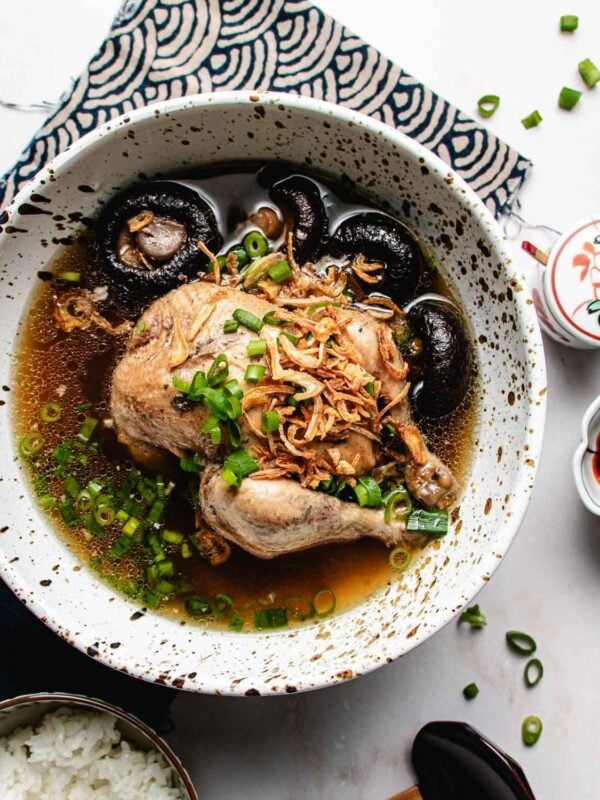
Taiwanese sesame oil chicken soup is a warming, aromatic chicken soup traditionally enjoyed during the colder months in Taiwan. It’s rich in aroma but light in texture, and it’s meant to be served as a main-dish soup, not just a small starter.
This is a soup I grew up eating every winter. It showed up again and again when the weather turned cool — comforting, nourishing, and simple in a way that feels very Taiwanese. This version stays true to those flavors while being approachable for home cooks who may be making it for the first time.

Why This Taiwanese Sesame Oil Chicken Soup Works

I created this recipe the same way Taiwanese home cooks make it — focusing on traditional flavor without unnecessary or complicated steps.
- Bone-in, skin-on chicken is used so the broth develops depth naturally and the meat stays tender as it cooks.
- Flavor builds gradually, which gives the soup time to come together without rushing or precise timing.
- Sesame oil is added later, so its aroma stays balanced instead of overpowering the soup.
- The liquid ratio is already dialed in, so the soup tastes warming and well-rounded, not too strong or heavy.
Ingredient Notes
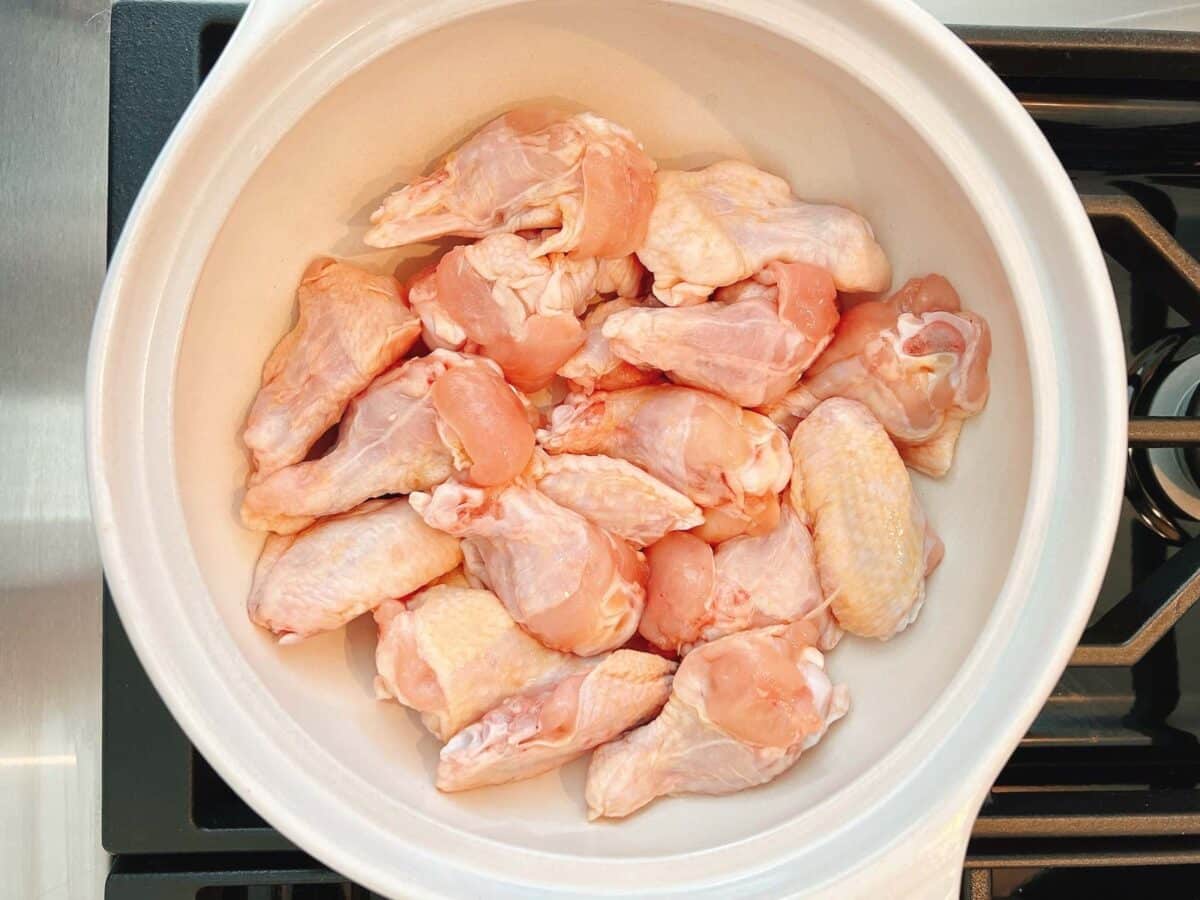
- Chicken (Bone-in, skin-on)
This soup works best with bone-in, skin-on chicken that’s cut into smaller pieces.Traditionally in Taiwan, sesame oil chicken soup is made with cut-up chicken drumsticks or wings, chopped into sections with a cleaver. The exposed bones and increased surface area help the broth develop deeper flavor in a shorter time.
Because cut-up drumsticks aren’t always easy to find at Western grocery stores, chicken drumlets, cut-up wings, or thighs are practical and accessible substitutes that work very well. They provide a good balance of meat and bone without requiring special butchering.Using whole, uncut drumsticks can result in a lighter broth unless the soup is simmered much longer.
- Ginger
Ginger is one of the flavor bases in sesame oil chicken soup. It adds warmth and aroma that balance the richness of the sesame oil and rice wine.Fresh ginger is used generously here and sliced rather than minced, so it perfumes the broth without overpowering it.
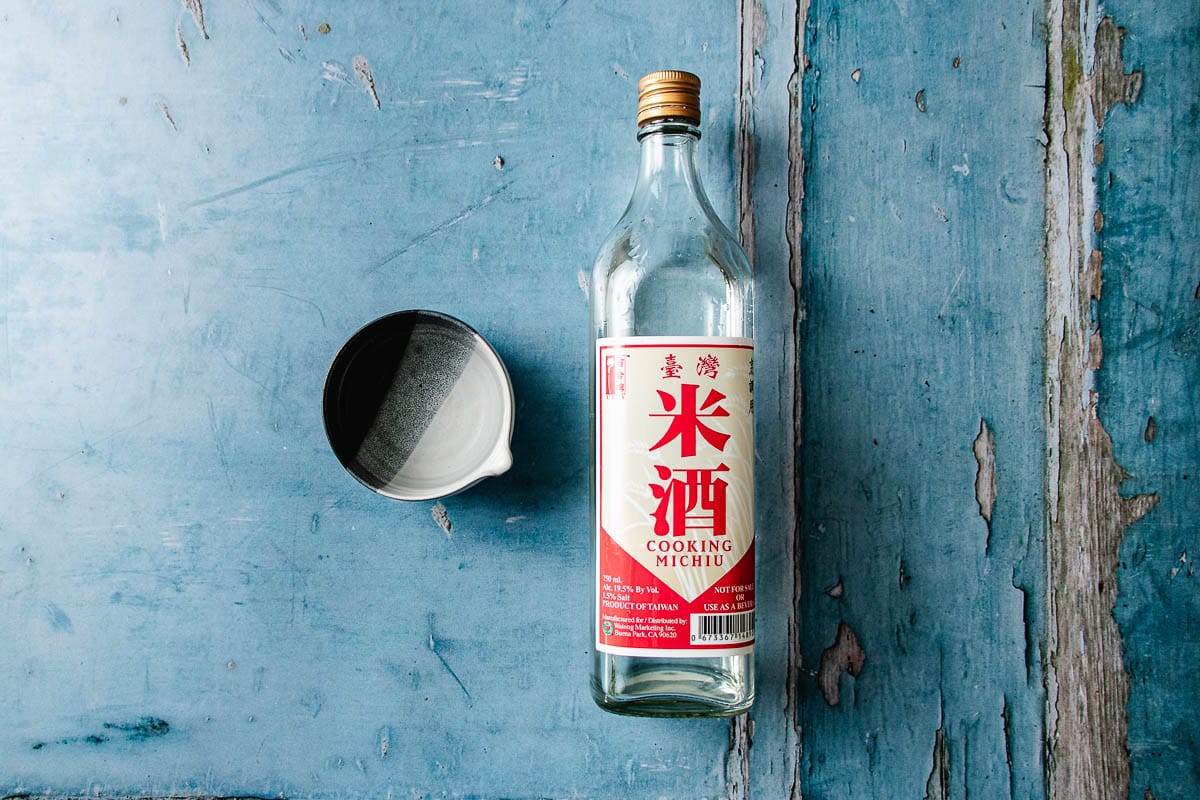
- Taiwanese rice wine (Mijiu)
Taiwanese mijiu is a clear rice cooking wine commonly used in soups, porridges, braises, and even a splash in stir-fries. It adds warmth and depth to dishes and helps bring out a more authentic Taiwanese flavor.Most mijiu is around 19–20% alcohol, though this can vary slightly by brand. It is not gluten-free.
Mijiu is shelf-stable and does not need refrigeration. You can store and use it the same way you would Shaoxing wine.
- Substitute: Shaoxing wine works well if that’s what you have.
- Gluten-free option: Use dry sherry or Japanese cooking wine sake.
- Goji Berries
Goji berries add a gentle natural sweetness and a slightly herbal note that’s common in many Chinese soups.They don’t make the soup taste sweet. Instead, they help round out the broth and add balance. Goji berries are shelf-stable and can be used in many savory soups where a touch of sweetness is needed.
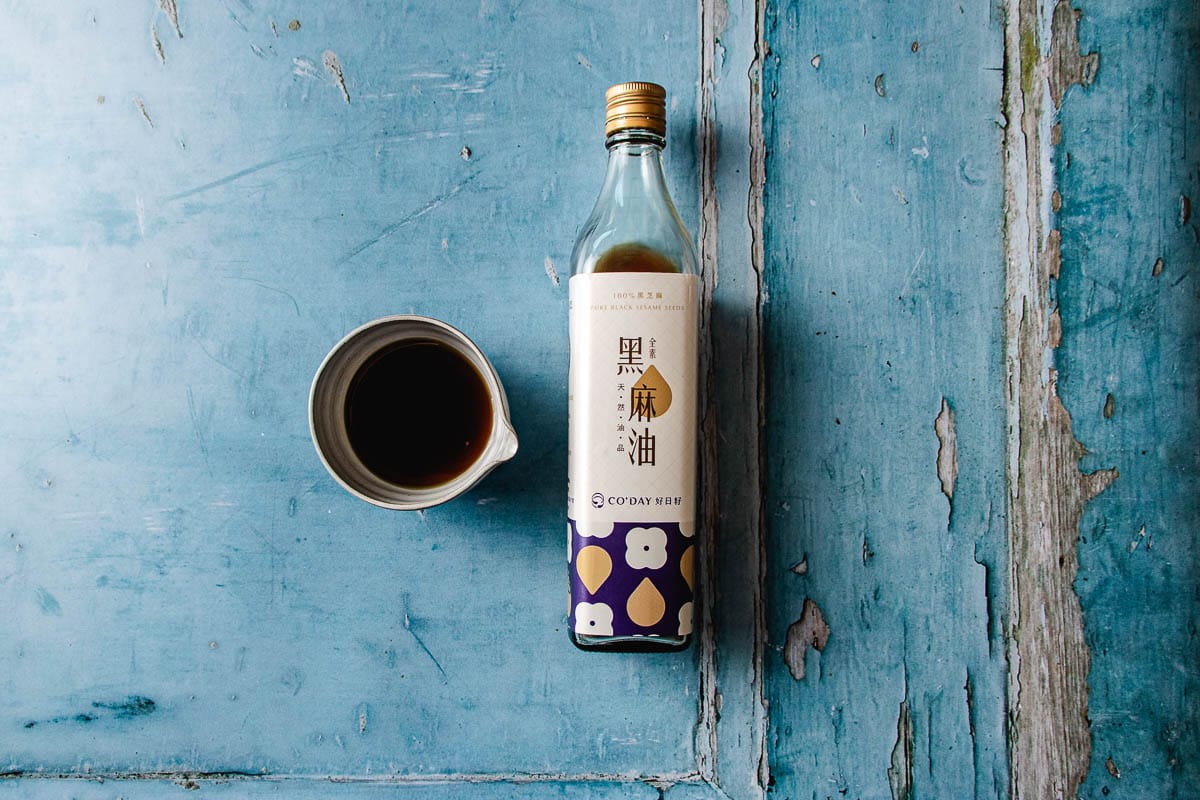
- Black Sesame Oil vs. Toasted Sesame Oil
Traditionally, black sesame oil is used for this dish. It has a deeper, nuttier flavor than regular toasted sesame oil.That said, toasted sesame oil works perfectly well if that’s what you have. The two can be used interchangeably here without stressing over it.
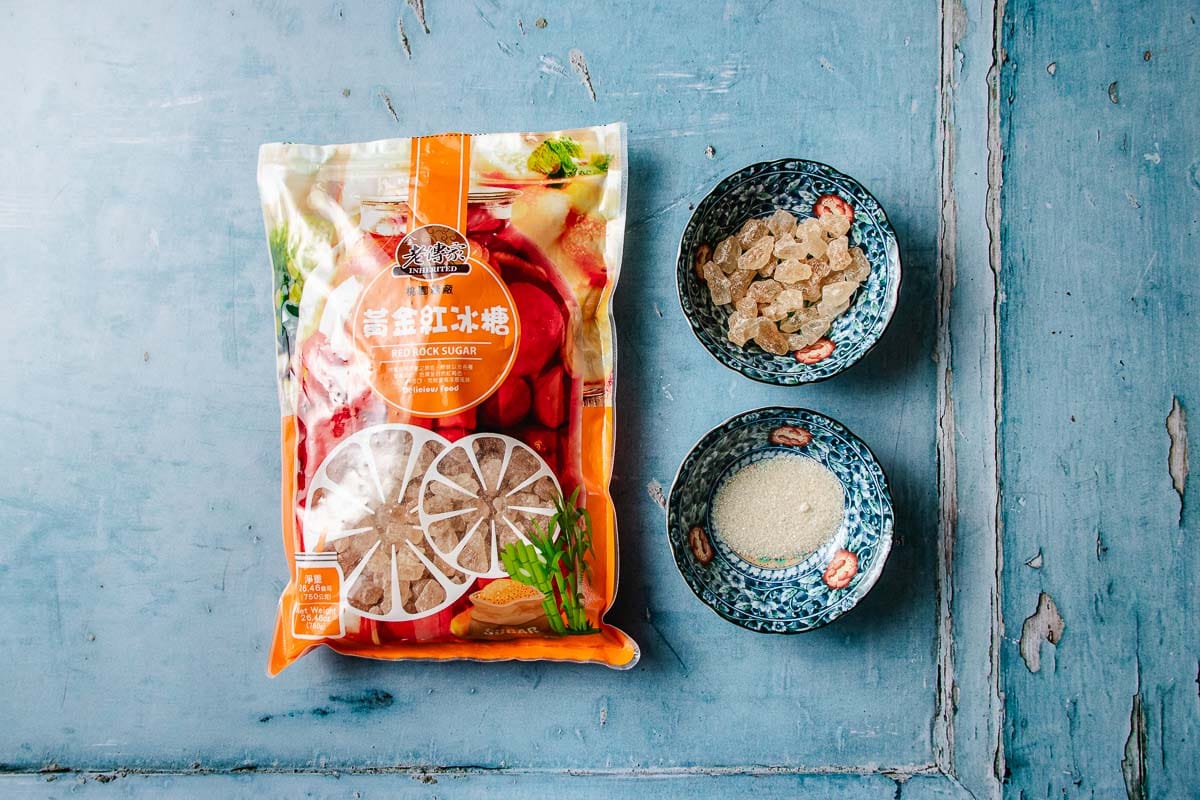
- Sugar vs. Rock Sugar
A small amount of sugar helps balance the richness of the soup.Rock sugar is traditional and less sweet than regular white sugar by volume, which is why a larger amount is used. It dissolves slowly and gives a softer sweetness.
If you don’t have rock sugar, regular granulated sugar works just fine — the soup should not taste sweet either way.
Key Points For Authentic Flavor
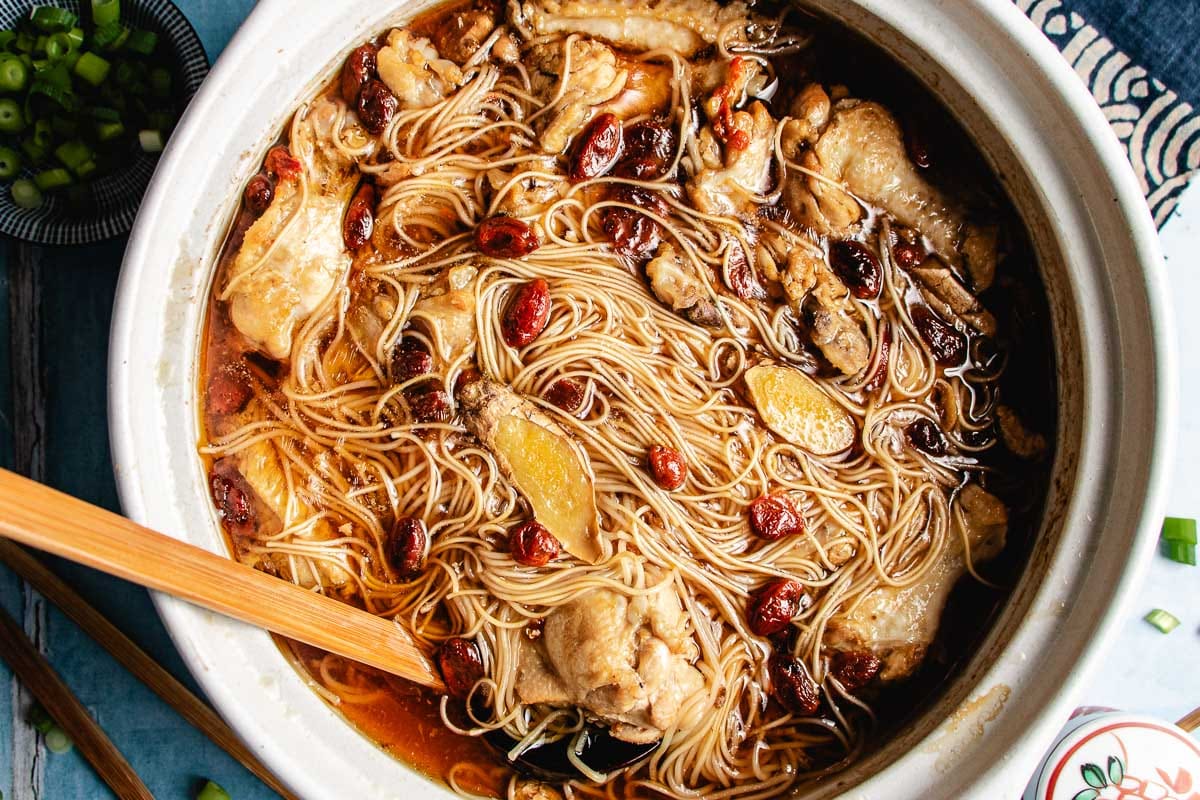
- Balance The Rice Wine
The concern most people have is that the soup might taste too strong. That doesn’t happen here.Traditional versions can be made with only rice wine and cooked long enough for the sharp edge to mellow. For home cooking, using rice wine together with water keeps the flavor well-balanced and smooth. After simmering, what’s left is warmth and depth — not a harsh taste — and the soup still tastes true to the dish.
- When To Add Sesame Oil
Sesame oil isn’t used to fry the chicken or ginger in this recipe.Instead, it’s added after the base is fragrant and right before the liquid goes in. This timing keeps the aroma nutty and clean, without turning bitter.
- Starting With A Cold Pan
This soup begins with a cold pan on purpose.Adding the chicken first and letting it heat up slowly helps release its natural fat. That fat becomes the foundation of the soup, which is why you don’t need much added oil.
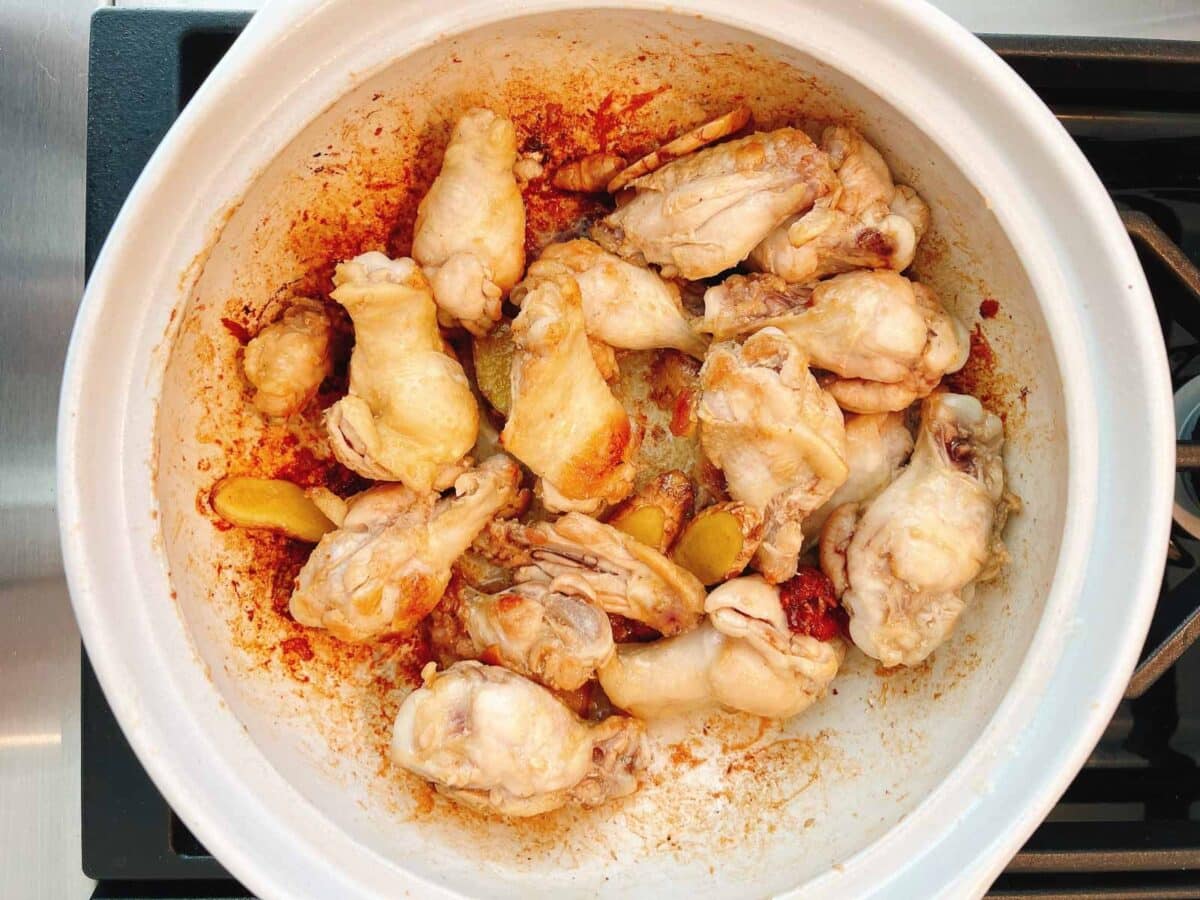
- Frying Ginger In Chicken Fat
Once the chicken fat is rendered, the ginger goes in.Frying ginger in the chicken fat — until it smells fragrant and looks slightly shriveled — is one of the biggest flavor builders in this soup. This step is often skipped, but it makes a noticeable difference.
- Why The Cooking Order Matters
The sequence here isn’t random.Chicken first, then ginger, then sesame oil and sugar, and only after that the liquid. Changing the order can affect how the flavors develop and how balanced the soup tastes in the end.
- If The Soup Tastes Flat
When this soup lacks depth, the most common reason is chicken pieces that are too large.This dish is meant for cut-up chicken, which releases flavor faster. Another common issue is ginger that didn’t get enough time to open up, or ingredients added out of order.
Sesame Oil Chicken Soup Recipe

Video
Ingredients
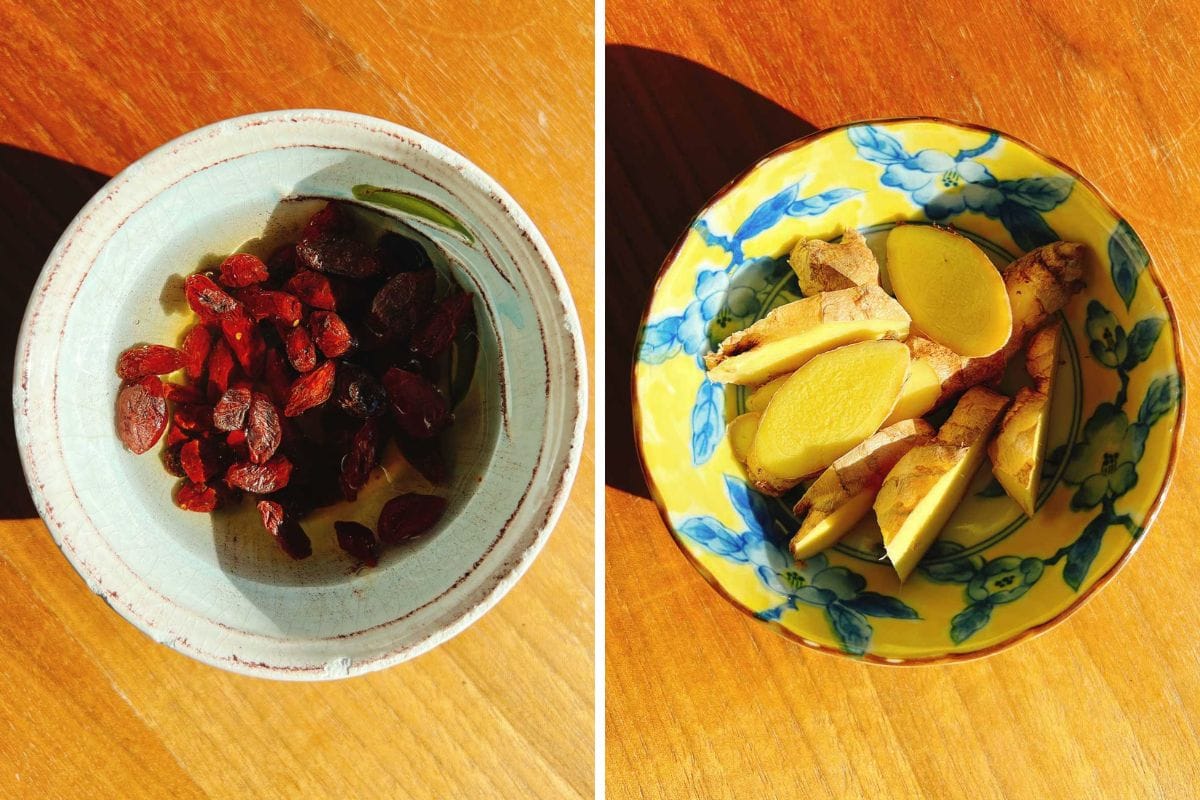
- 0.8 oz dry goji berries 3 tbsp
- 1 ⅓ cup Taiwanese mijiu clear rice cooking wine, divided
- 1 oz ginger sliced (about 8 slices, slightly under ¼-inch thick)
- 0.5 tbsp neutral-flavored oil such as avocado
- 1.5 lb bone-in & skin-on chicken drumettes cut-up wings, or cut-up drumsticks
- 4 tbsp black sesame oil or toasted sesame oil
- 3/4 tbsp sugar or 2 tbsp rock sugar
- 2.5 cup water
- ½+ ¼ tsp Coarse sea salt or to taste
- 100 gram Chinese-style thin noodles (optional) 1 bundle, or Japanese somen noodles
Instructions
- Soak the goji berries: In a small bowl, soak the goji berries with ⅓ cup mijiu to rehydrate. Set aside.

- Prep the ginger: Slice the ginger into pieces slightly under ¼ inch thick. There’s no need to peel the ginger. If it’s dirty, rinse and pat dry before slicing. Trim away any dry ends.
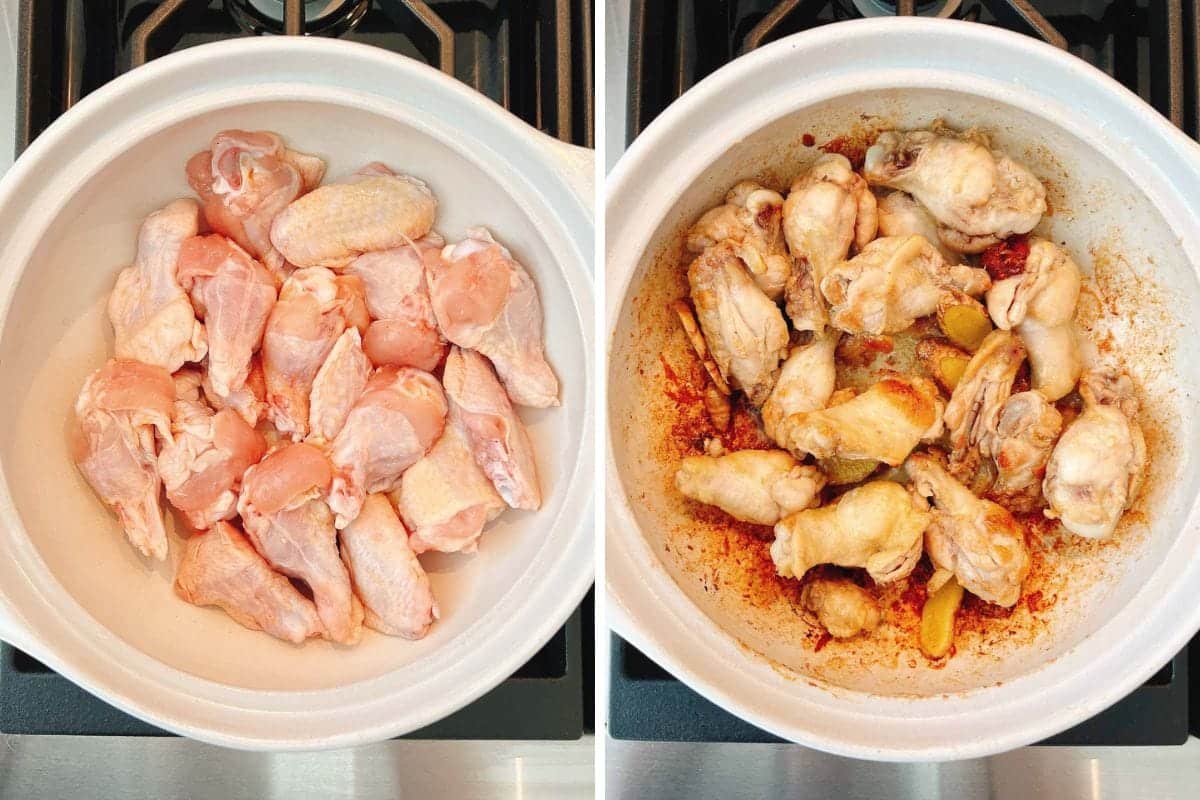
- Start with a cold pot: In a 4-quart soup pot, pat the chicken dry and add it directly to the cold pot. Add the neutral oil. Cook over medium heat in a single layer until both sides are lightly browned and the chicken has rendered fat, about 8–10 minutes per side. Do not flip or toss too often—this helps the chicken brown properly and render fat.
- Add the ginger: Once the chicken is lightly browned, add the ginger slices. Shift the chicken slightly so the ginger sits in contact with the rendered fat at the bottom of the pot.
- Fry the ginger: Lower the heat to medium-low. Fry the ginger until lightly browned and slightly shriveled, about 6–8 minutes, stirring occasionally so it doesn’t burn.
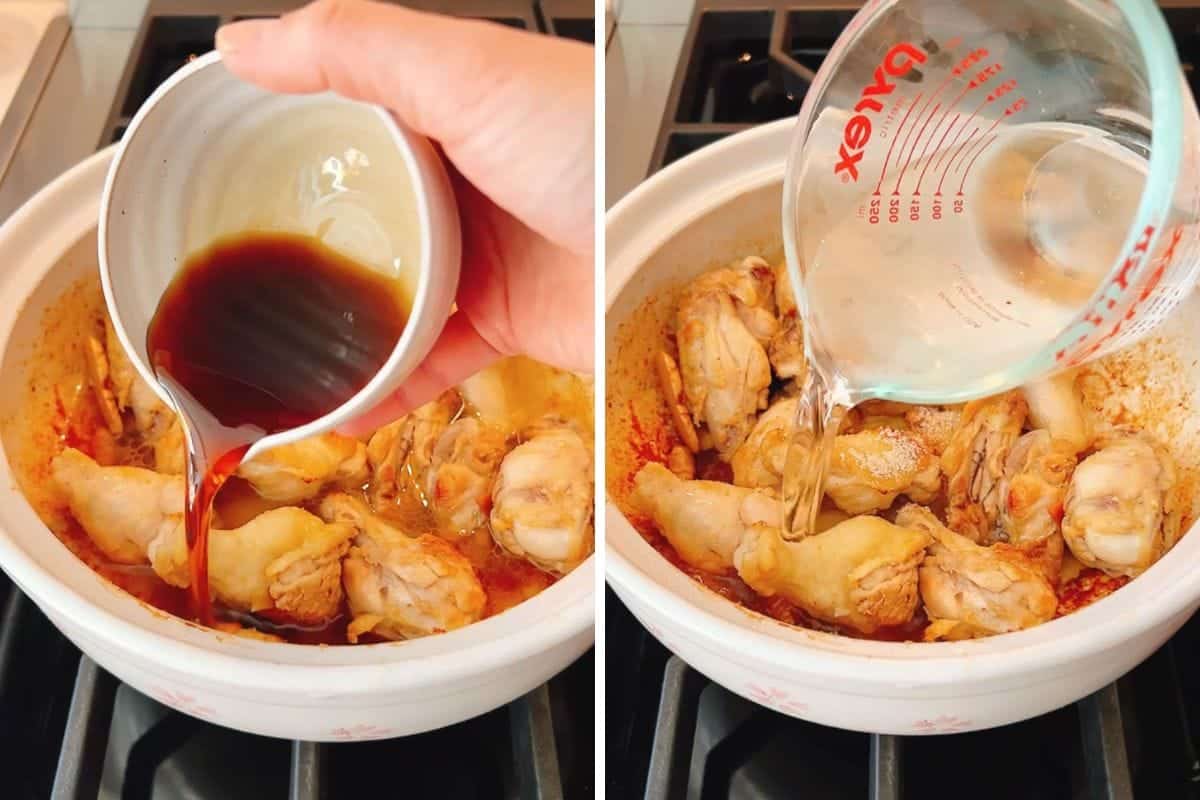
- Add sesame oil and sugar: When the ginger is fragrant, add the sesame oil and sugar. Stir-fry for 1 minute until aromatic.
- Add wine and water: Pour in the remaining 1 cup mijiu and the water. Cover and turn the heat to medium. Bring to a boil (about 8–10 minutes), then reduce to medium-low and simmer for 20 minutes. Leave the lid slightly ajar to prevent boiling over.
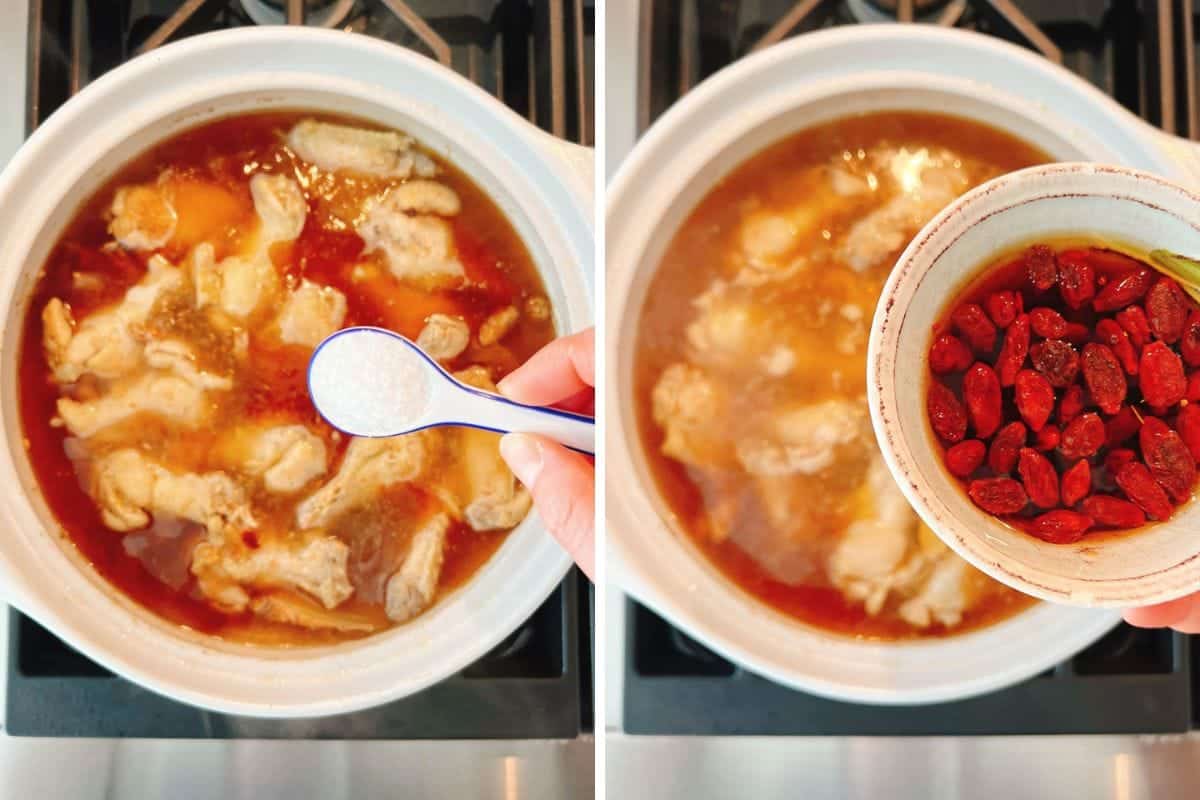
- Season the soup: After simmering, season with salt to taste.
- Add goji berries. Pour in the soaked goji berries along with the soaking wine. Simmer for 30 seconds to round out the flavor.
- If adding noodles: Add the noodles directly to the soup and cook according to package instructions.
- To serve: Discard the ginger slices. Transfer the chicken, noodles, and broth into individual bowls. Serve hot.
Notes
- Cuts of chicken to use: In Taiwan, this dish is traditionally made with bone-in, skin-on chicken cut into small pieces, most commonly drumsticks or leg quarters. The bones release more flavor, and cutting the chicken into smaller pieces helps extract flavor faster, creating a rich, savory, almost gelatin-like broth in a shorter cooking time compared to leaving the chicken whole.
- Why we don’t use sesame oil to fry the chicken: Sesame oil burns easily, so it’s added later for aroma instead of used for searing.
- Noodles note: Once noodles are added, they will continue to absorb the broth. If you plan to add noodles, it’s best to enjoy the soup right away. Alternatively, you can boil the noodles separately so they stay springy.
- Types of noodles to use: Thin wheat-based noodles that cook quickly and hold their shape work best. For gluten-free noodles, I recommend cooking them separately, since most rice-based noodles soften and turn mushy more quickly in the soup.
- Reheating: The flavor deepens overnight. Taste and adjust before serving. For a lighter broth, add more water or chicken stock. For a stronger flavor, add a small splash of rice wine.
Nutrition
Nutrition information is automatically calculated, so should only be used as an approximation.
What to Serve with Sesame Oil Chicken Soup
Sesame oil chicken soup is traditionally served as a main-dish soup, not a side. It’s common to pair it with a few light dishes to round out the meal rather than turning it into a full spread.
Refreshing or lightly pickled sides work especially well, such as:
These add contrast and help balance the richness of the soup.
For something warm and vegetable-forward, Sauteed Taiwanese cabbage is a natural pairing and commonly served alongside soups like this.
If you’re serving a larger meal or want an additional protein dish, braised beef shank (coming soon) is a classic Taiwanese appetizer or side that pairs well without competing with the soup.
FAQs
Yes. Using chicken stock will make the soup richer and slightly saltier. If you go this route, I recommend half chicken stock and half water so the flavor stays balanced and not too heavy.
Yes. Thin noodles work best and should be added right before serving, or cooked separately so they stay springy. For vegetables, add them toward the end of cooking. Mild greens like bok choy, yu choy, or tatsoi work especially well.
This usually means the chicken pieces are too large or the wrong cut was used. This soup works best with cut-up, bone-in, skin-on chicken. Avoid chicken breast — even bone-in — as it turns dry and doesn’t soften the same way.
Yes. Replace the rice wine with chicken stock. The soup will be lighter and less aromatic, but still comforting.
More Taiwanese Chicken Recipes You Might Like
- Taiwanese Chicken Rice Soup: A comforting rice soup with a velvety, almost congee-like texture. This version is garlic-forward, finished with crispy garlic chips for extra aroma and contrast.
- Taiwanese Three Cup Chicken: A classic stir-fry dish made with boneless chicken thighs, fresh basil, and a glossy, sweet-savory sauce. Bold, aromatic, and very different from broth-based chicken soups.
- Air Fryer Taiwanese Popcorn Chicken: A lighter take on a Taiwanese night market favorite. The chicken is marinated with Taiwanese five-spice, then air-fried until crispy for a crunchy, snack-style dish.