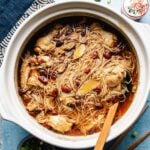
Sesame Oil Chicken Soup Recipe
Authentic Taiwanese sesame oil chicken soup made easy for home cooks. Balanced, aromatic, and meant to be served as a comforting main-dish soup.
Servings: 3 servings
Ingredients
- 0.8 oz dry goji berries 3 tbsp
- 1 ⅓ cup Taiwanese mijiu clear rice cooking wine, divided
- 1 oz ginger sliced (about 8 slices, slightly under ¼-inch thick)
- 0.5 tbsp neutral-flavored oil such as avocado
- 1.5 lb bone-in & skin-on chicken drumettes cut-up wings, or cut-up drumsticks
- 4 tbsp black sesame oil or toasted sesame oil
- 3/4 tbsp sugar or 2 tbsp rock sugar
- 2.5 cup water
- ½+ ¼ tsp Coarse sea salt or to taste
- 100 gram Chinese-style thin noodles (optional) 1 bundle, or Japanese somen noodles
Instructions
- Soak the goji berries: In a small bowl, soak the goji berries with ⅓ cup mijiu to rehydrate. Set aside.
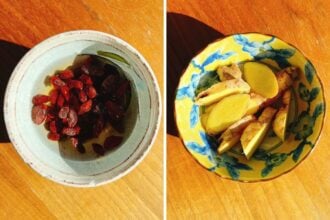
- Prep the ginger: Slice the ginger into pieces slightly under ¼ inch thick. There’s no need to peel the ginger. If it’s dirty, rinse and pat dry before slicing. Trim away any dry ends.
- Start with a cold pot: In a 4-quart soup pot, pat the chicken dry and add it directly to the cold pot. Add the neutral oil. Cook over medium heat in a single layer until both sides are lightly browned and the chicken has rendered fat, about 8–10 minutes per side. Do not flip or toss too often—this helps the chicken brown properly and render fat.
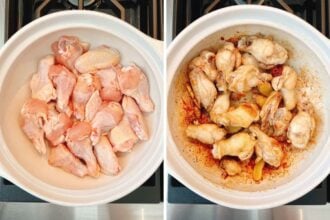
- Add the ginger: Once the chicken is lightly browned, add the ginger slices. Shift the chicken slightly so the ginger sits in contact with the rendered fat at the bottom of the pot.
- Fry the ginger: Lower the heat to medium-low. Fry the ginger until lightly browned and slightly shriveled, about 6–8 minutes, stirring occasionally so it doesn’t burn.
- Add sesame oil and sugar: When the ginger is fragrant, add the sesame oil and sugar. Stir-fry for 1 minute until aromatic.
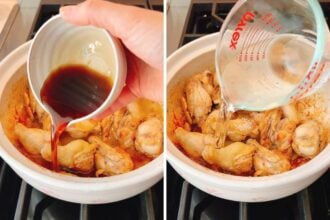
- Add wine and water: Pour in the remaining 1 cup mijiu and the water. Cover and turn the heat to medium. Bring to a boil (about 8–10 minutes), then reduce to medium-low and simmer for 20 minutes. Leave the lid slightly ajar to prevent boiling over.
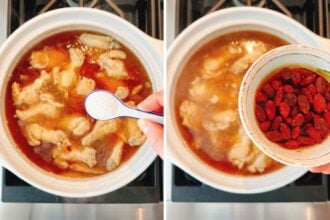
- Season the soup: After simmering, season with salt to taste.
- Add goji berries. Pour in the soaked goji berries along with the soaking wine. Simmer for 30 seconds to round out the flavor.
- If adding noodles: Add the noodles directly to the soup and cook according to package instructions.
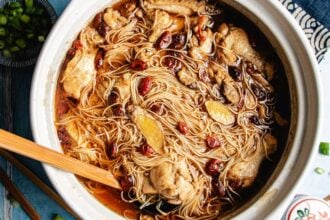
- To serve: Discard the ginger slices. Transfer the chicken, noodles, and broth into individual bowls. Serve hot.
Video
Notes
- Cuts of chicken to use: In Taiwan, this dish is traditionally made with bone-in, skin-on chicken cut into small pieces, most commonly drumsticks or leg quarters. The bones release more flavor, and cutting the chicken into smaller pieces helps extract flavor faster, creating a rich, savory, almost gelatin-like broth in a shorter cooking time compared to leaving the chicken whole.
- Why we don’t use sesame oil to fry the chicken: Sesame oil burns easily, so it’s added later for aroma instead of used for searing.
- Noodles note: Once noodles are added, they will continue to absorb the broth. If you plan to add noodles, it’s best to enjoy the soup right away. Alternatively, you can boil the noodles separately so they stay springy.
- Types of noodles to use: Thin wheat-based noodles that cook quickly and hold their shape work best. For gluten-free noodles, I recommend cooking them separately, since most rice-based noodles soften and turn mushy more quickly in the soup.
- Reheating: The flavor deepens overnight. Taste and adjust before serving. For a lighter broth, add more water or chicken stock. For a stronger flavor, add a small splash of rice wine.
Nutrition
Serving: 1serving | Calories: 646kcal | Carbohydrates: 15g | Protein: 24g | Fat: 41g | Saturated Fat: 9g | Polyunsaturated Fat: 12g | Monounsaturated Fat: 17g | Trans Fat: 0.2g | Cholesterol: 94mg | Sodium: 581mg | Potassium: 257mg | Fiber: 1g | Sugar: 7g | Vitamin A: 180IU | Vitamin C: 1mg | Calcium: 28mg | Iron: 1mg
