
This post may contain affiliate links. Please read our disclosure policy.
Roasted napa cabbage is an easy, oven-baked vegetable side that turns a humble head of Chinese cabbage into something rich, savory, and deeply satisfying. This version uses miso butter and a crispy breadcrumb topping for bold flavor, with tender stems, lightly charred leaves, and just enough contrast to keep every bite interesting.
If you enjoy roasted vegetables but aren’t sure how napa cabbage behaves in the oven, this recipe is designed specifically for it. It’s simple to prep, hands-off once it’s in the oven, and finishes with big flavor without complicated steps.
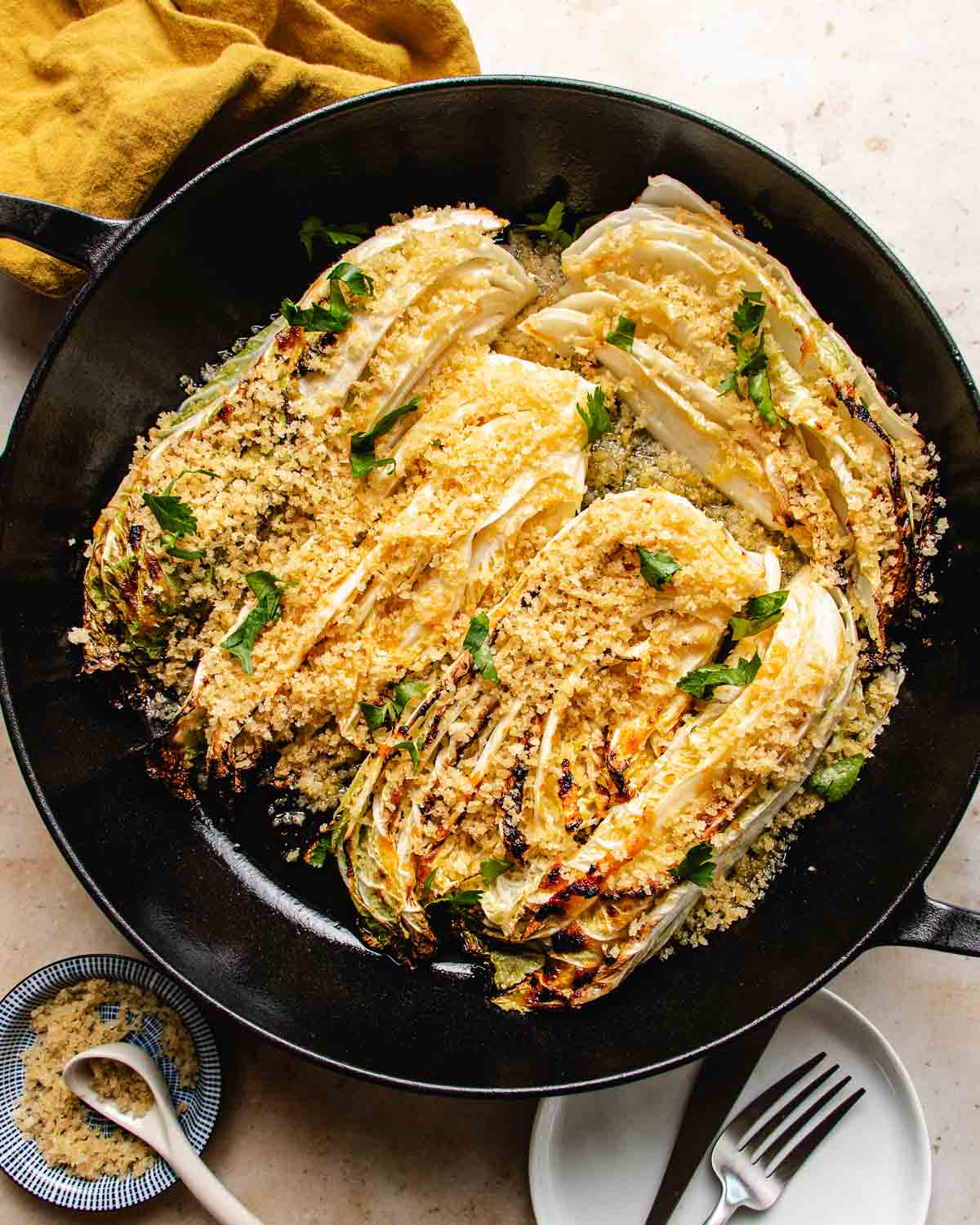
What Makes This Roasted Napa Cabbage Different

Napa cabbage can be tricky to roast because it has two very different parts — soft, crinkly leaves and crisp, firm stems — that don’t cook the same way. This recipe is built specifically around that contrast, rather than treating napa cabbage like sturdier cabbages that roast easily.
- Flavor-forward: rich ghee butter and savory miso paste quickly season the cabbage, so it tastes bold and satisfying without extra sauces.
- Balanced texture: roasted at 400°F / 205°C for just long enough to gently char the leaves while keeping the stems tender, crisp, and juicy — not dry or limp.
- Easy and intentional: simple prep, simple ingredients, and hands-off oven time make this an easy weeknight vegetable side.
- Designed to solve common problems: this recipe directly addresses the usual issues with roasting napa cabbage, helping avoid bland flavor, soggy texture, and uneven cooking.
Key Ingredients for Roasted Napa Cabbage
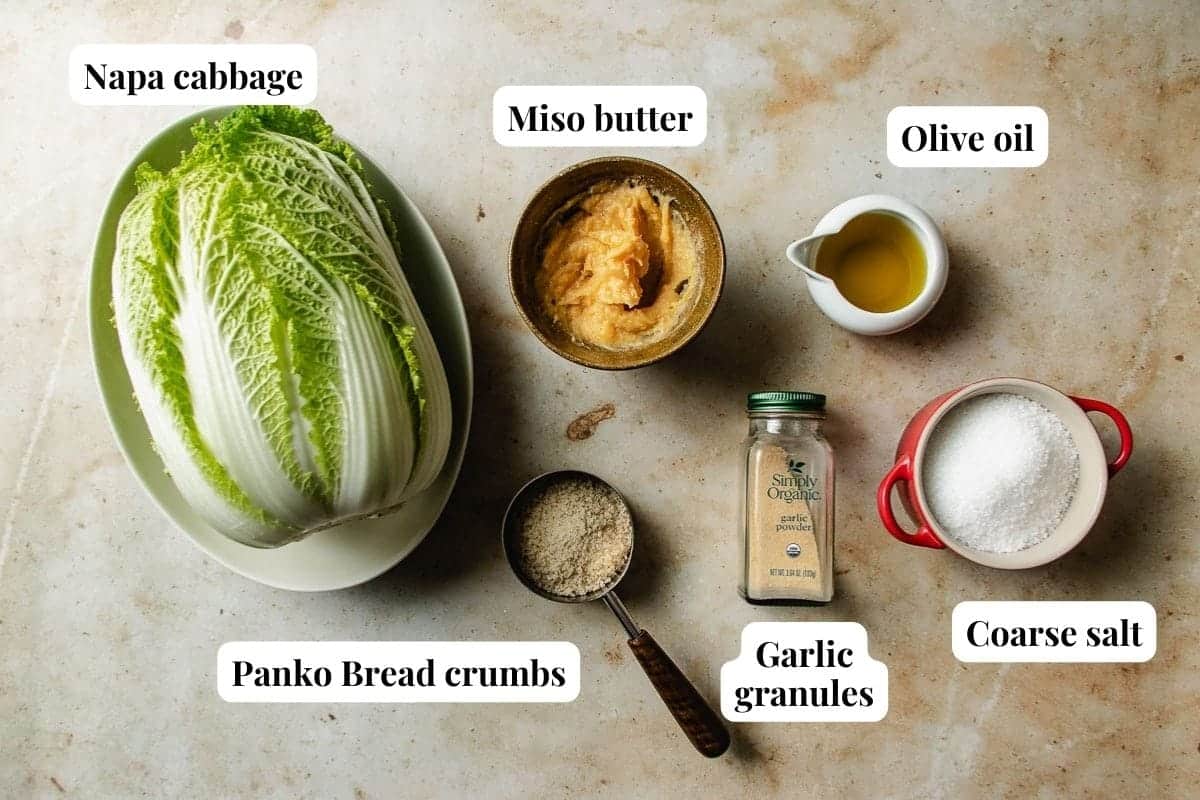
- Napa cabbage
This recipe uses napa cabbage, not green cabbage. Look for a large, heavier napa cabbage that feels weighty in your hand — that’s a good sign it’s juicy and naturally sweet. Larger cabbages also work better here since they can be sliced into thicker wedges that hold together more easily. A few bruised outer leaves are fine; they can be peeled away before cooking. - Miso butter
Miso butter is simply miso paste mixed with ghee or softened butter. In this recipe, it’s used as a flavor base rather than a sauce. I recommend using ghee instead of regular butter when possible — it has a deeper, more pronounced flavor and pairs especially well with miso. White or yellow miso both work well and keep the seasoning balanced. - Panko breadcrumbs
Panko breadcrumbs add a light, crunchy contrast to the tender cabbage. Regular panko works well, and there are also excellent gluten-free options available. I’ve tested gluten-free panko from Kikkoman as well as Japanese-style rice panko, and both perform very well. See the recipe notes for details.
Key Techniques for Roasting Napa Cabbage Successfully
Roasting napa cabbage (also known as Chinese cabbage) works best when you understand what it can and can’t do in the oven.The goal isn’t crispy cabbage from edge to core — it’s good structure, balanced moisture, and bold flavor.
- Why napa cabbage turns soggy or mushy
Napa cabbage releases moisture as it cooks, especially when oven-roasted. Two things make this worse: cutting it too small and crowding the pan. More cut surfaces mean more moisture leaking out, and crowding traps that moisture, turning roasting into steaming.Takeaway: keep the wedges large and give them space so moisture can evaporate instead of pooling.
See my guide on How to cut Napa cabbage for more info.
- How to get the right texture (not crisp, but not limp)
Napa cabbage cooks unevenly because the leaves cook much faster than the stems. A moderate oven temperature (around 400°F / 205°C) strikes the right balance — hot enough to cook the stems through, but gentle enough that the leaves don’t overcook.You’re looking for lightly charred cabbage leaves and stems that are tender but still crisp and juicy, not dry or burnt.
- How to season napa cabbage so it doesn’t taste bland
Salt and olive oil alone usually aren’t enough for napa cabbage. Because it’s mild and juicy, it needs enough fat and a savory seasoning to carry flavor through the whole wedge. That’s why this recipe uses miso butter instead of oil alone — the fat adds richness, and the miso brings depth so the oven-roasted cabbage tastes savory and satisfying, not watery or flat.
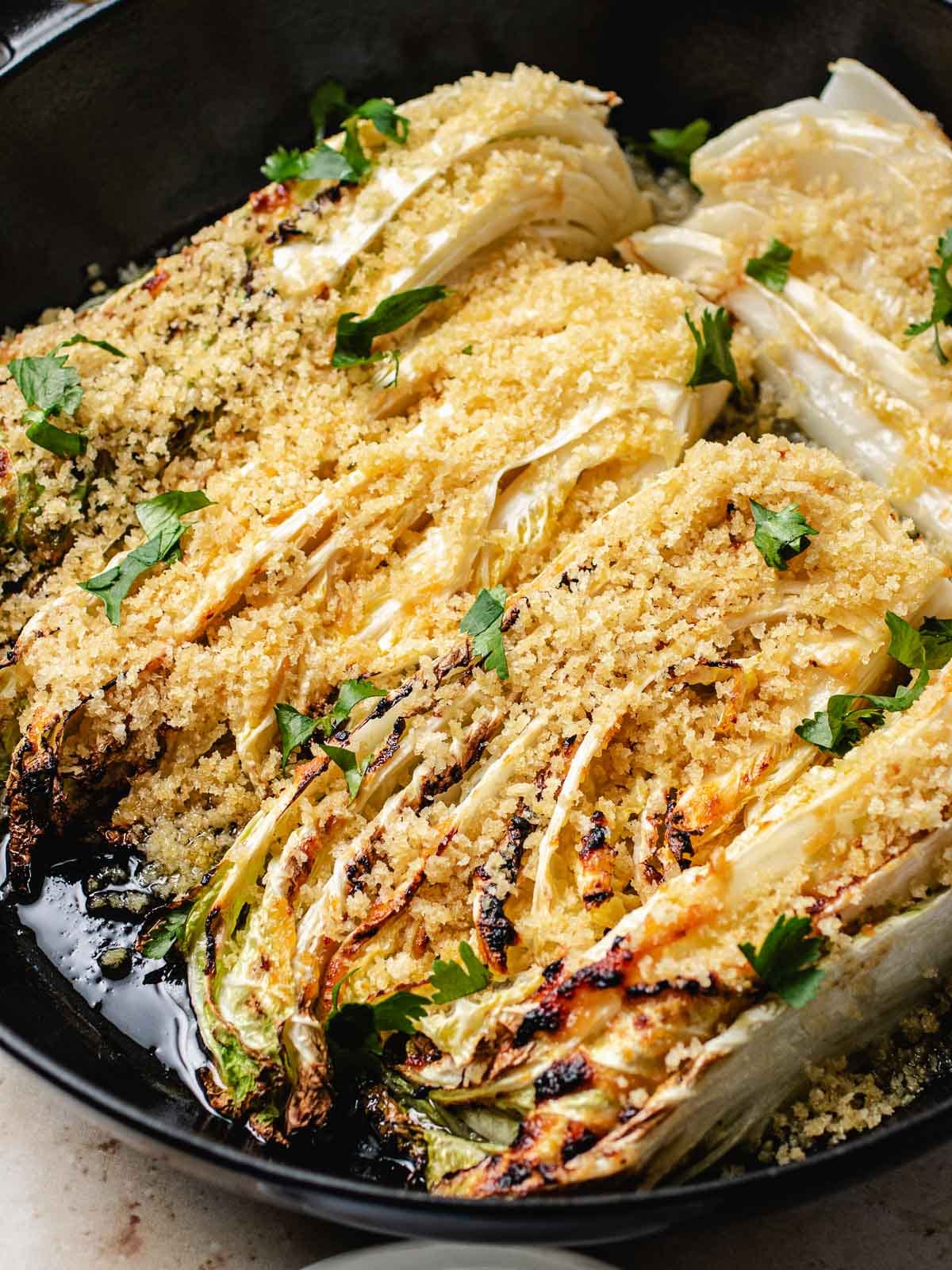
- Keeping the wedges from falling apart
When napa cabbage is sliced into wedges, some outer leaves may separate from the core, especially on larger heads. That’s normal. If needed, secure loose leaves to the stem end with a small toothpick to help the wedges hold together while roasting. Remove before serving.
How to Serve Roasted Napa Cabbage
Oven-roasted napa cabbage works best as a savory vegetable side that rounds out a simple, well-balanced meal. Its rich, umami flavor pairs especially well with lighter mains and staple carbs.
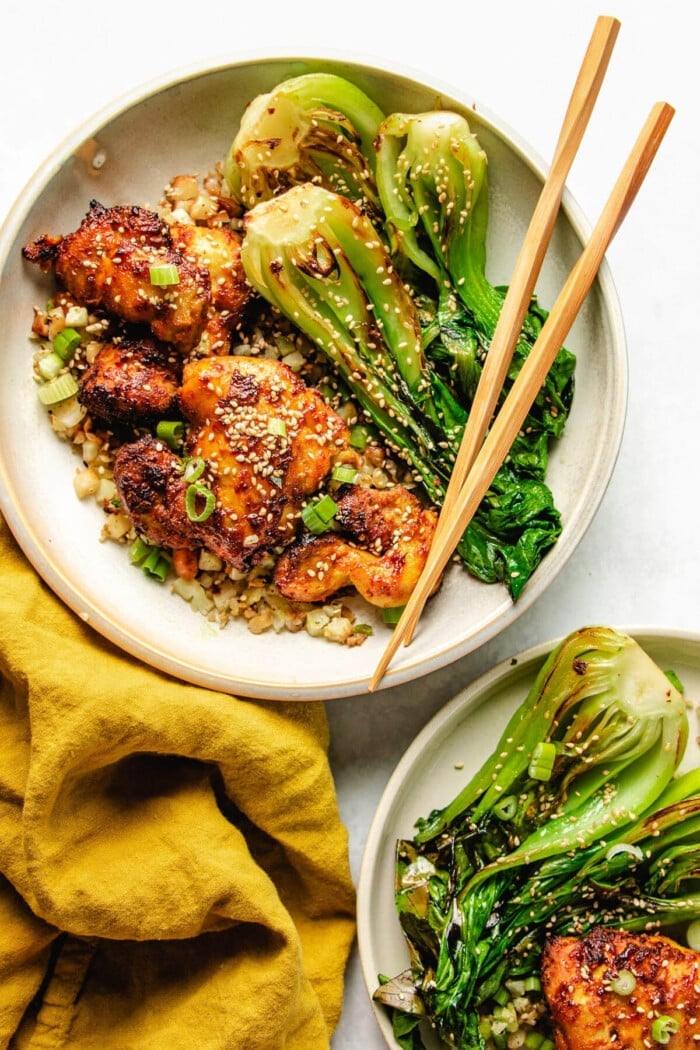
- For proteins, serve it alongside dishes like crispy scallion chicken, air fryer teriyaki salmon, or miso ground pork stir fry, which let the cabbage stay the star without competing flavors.
- For rice and noodles, pair it with dishes such as Din Tai Fung shrimp fried rice, Din Tai Fung chicken fried rice, garlic chili noodles, or scallion oil noodles to soak up the extra miso butter and pan juices.
FAQs
You can, but the result will be different. Green cabbage is denser and drier than napa, so while you can use the same seasoning, the roasting temperature and time will need to be higher and longer. This recipe is written specifically for napa cabbage, which needs a gentler approach.
Napa cabbage has a high water content and thin leaves, so it won’t roast fully crisp. That’s why this recipe finishes with crispy breadcrumbs — the crunch comes from the topping, not the cabbage itself.
You can prepare the cabbage in advance, but it’s best to add the breadcrumb topping right before serving. Once the breadcrumbs touch moisture, they soften quickly.
More Napa cabbage recipes our readers love
If you enjoy Chinese cabbage, here are a few other reader-favorite ways to cook it — each with a very different method and flavor:
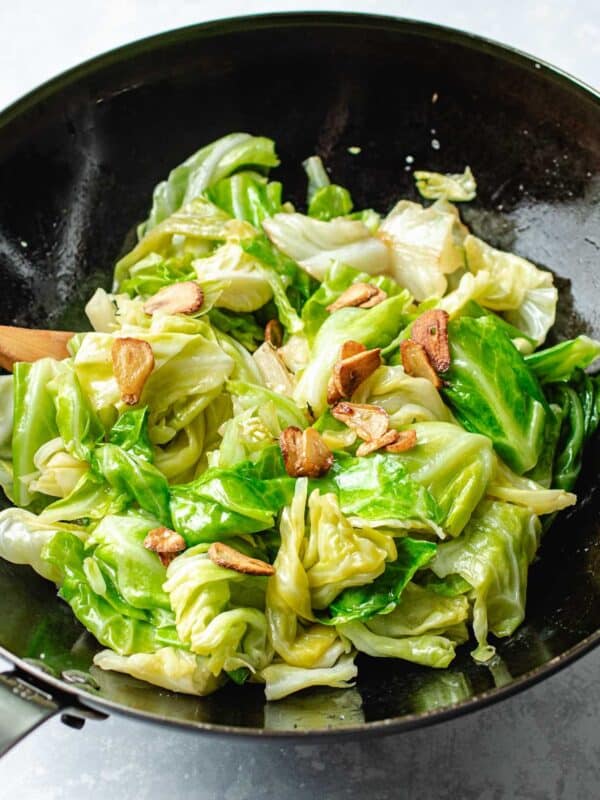
- Sautéed napa cabbage – Quick stovetop saute with a sweet-savory flavor.
- Braised napa cabbage – A quick stovetop braise, Hong Kong–style, finished with crispy bacon.
- Napa cabbage slaw – Fresh, raw, and crunchy.
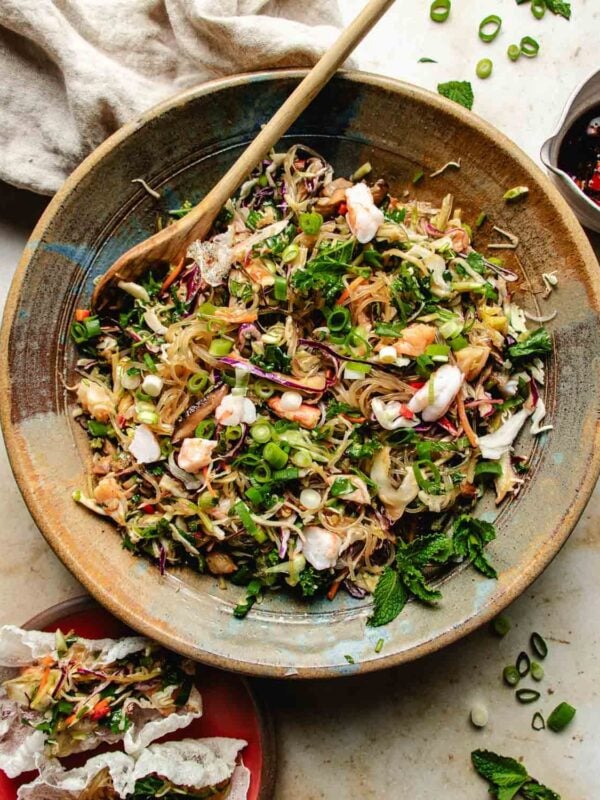
- Napa cabbage soup – Gently simmered in a light broth.
Roasted napa cabbage recipe
Video
Ingredients
- 2 lb Napa cabbage
- 4 tbsp ghee or room temperature butter
- 2 tbsp miso paste yellow or white
- 3.5 tbsp olive oil divided
- ½-1 tsp coarse sea salt plus a pinch more
- ½-1 tsp garlic granules plus a pinch more
- 0.5 cup panko bread crumbs see notes for gluten-free option
- Light sprinkle chopped parsley or cilantro (optional)
Instructions
- Preheat the oven to 400°F (205°C).
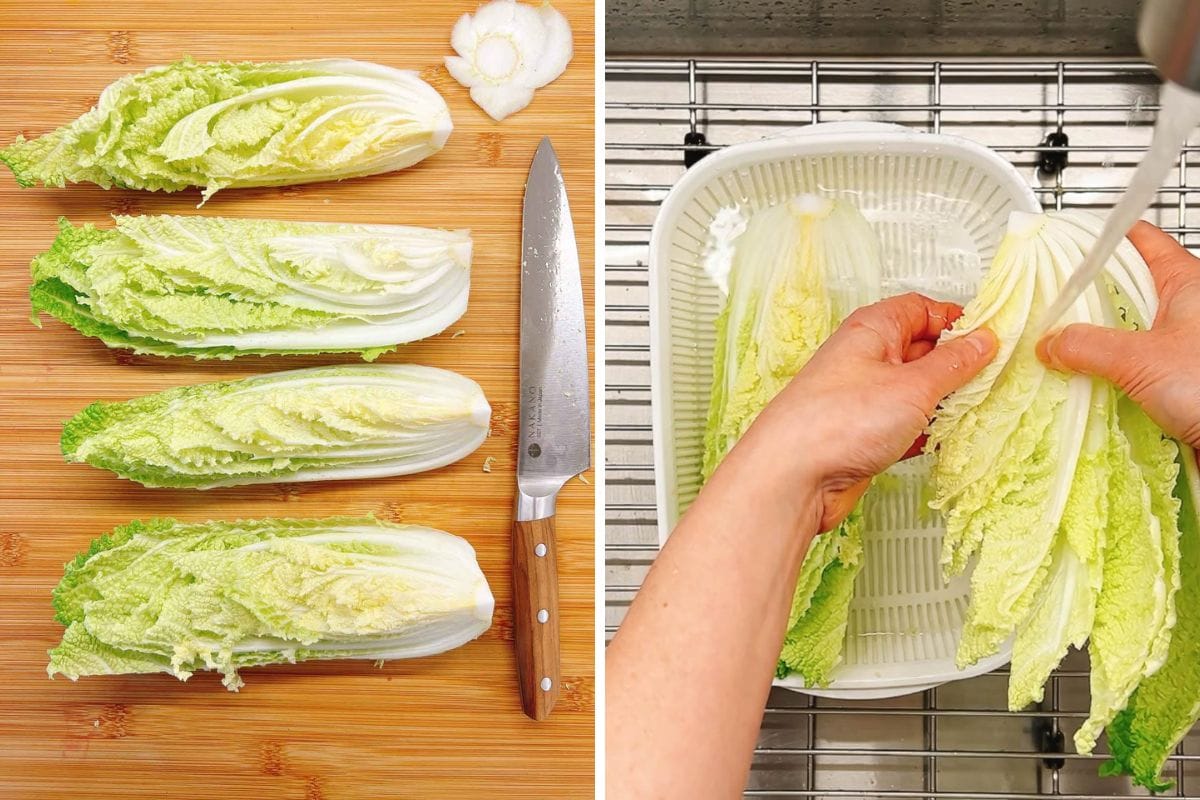
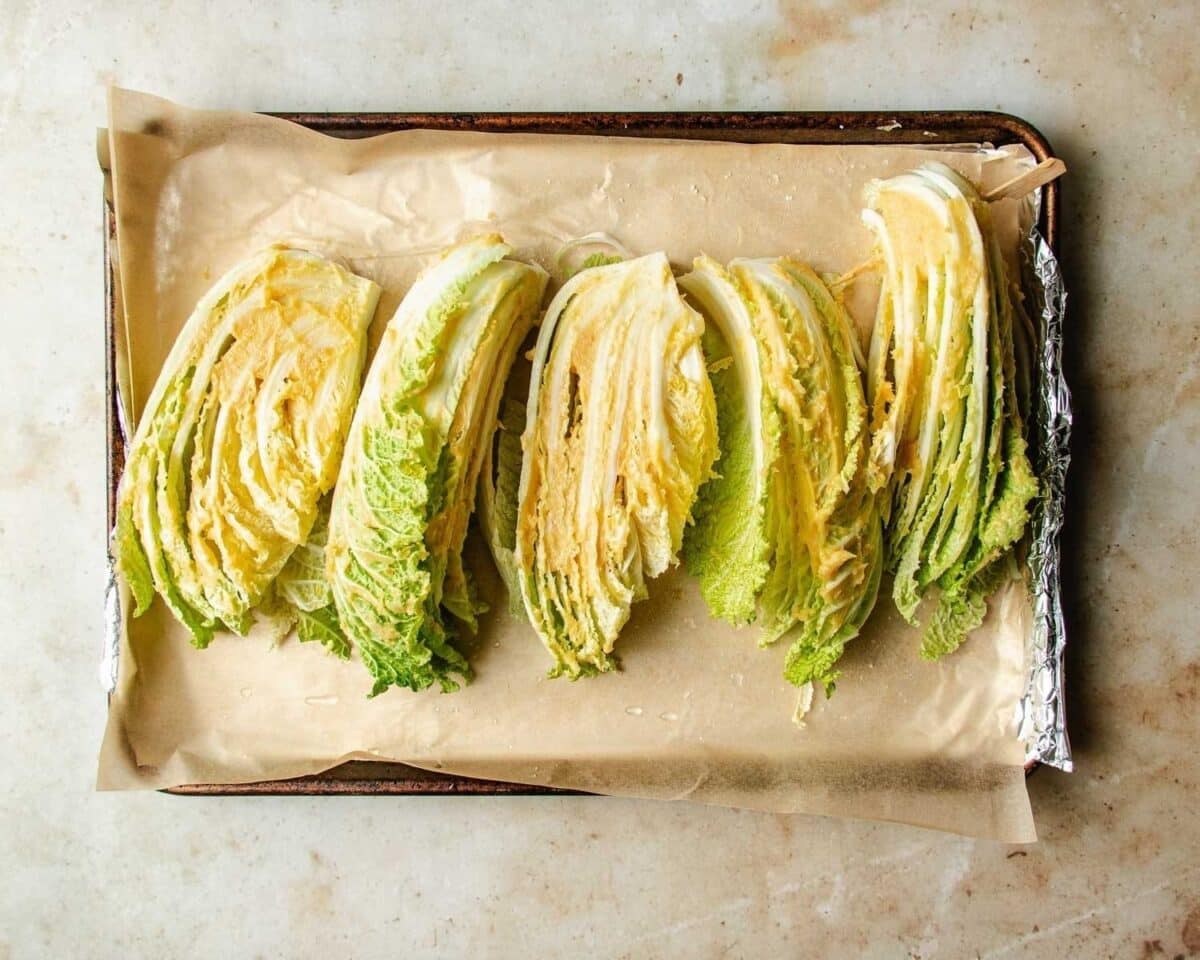
- Prepare the cabbage: Trim a thin slice off the very bottom of the napa cabbage, removing just the tip of the core. The goal is to keep the head as intact as possible so the wedges hold together. Peel away any dirty or bruised outer leaves.
- Slice into wedges: Cut the napa cabbage lengthwise in half through the core. Place each half cut-side down, then make two lengthwise cuts to divide it into 3 large wedges per half. You should end up with 6 sturdy wedges total from one large cabbage.

- Clean the cabbage: Rinse each wedge under running water. Use your hands to gently separate the layers, especially near the stem where dirt tends to hide. Shake off excess water and set aside to drain well.
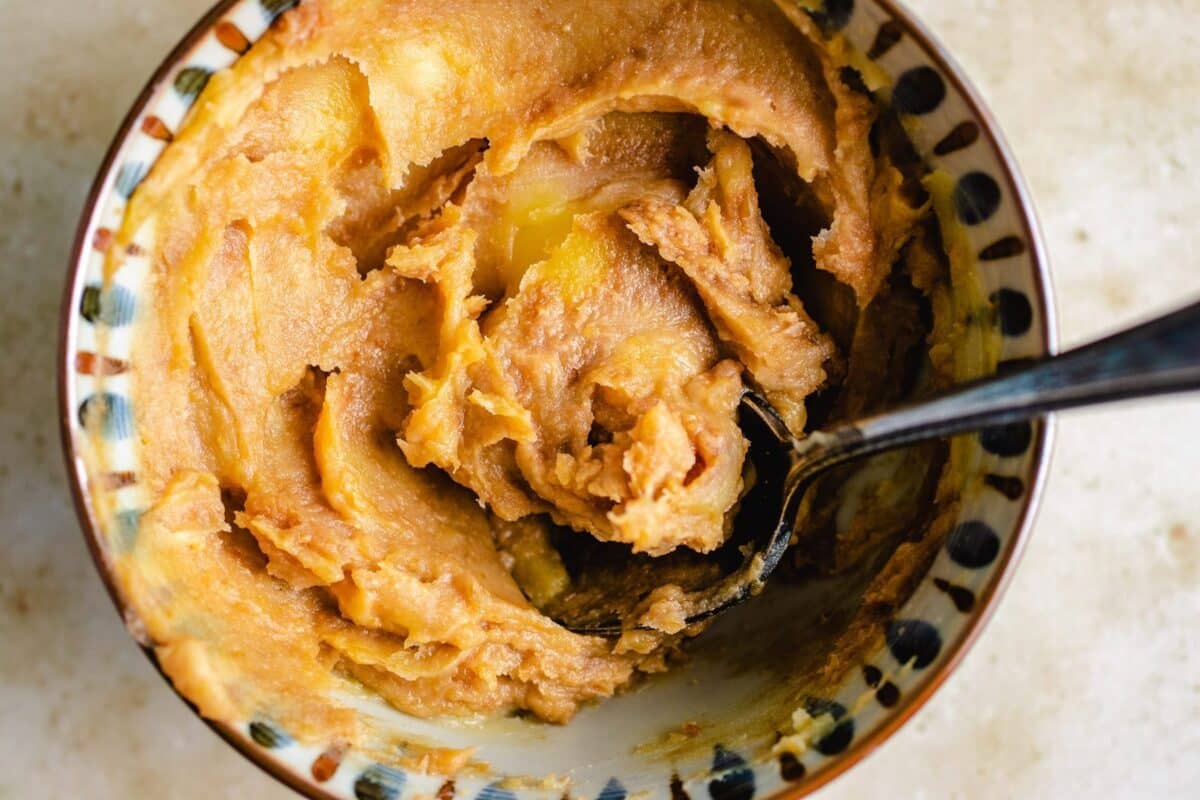
- Make the miso butter: In a small bowl, combine the miso paste with the ghee or softened butter until smooth.
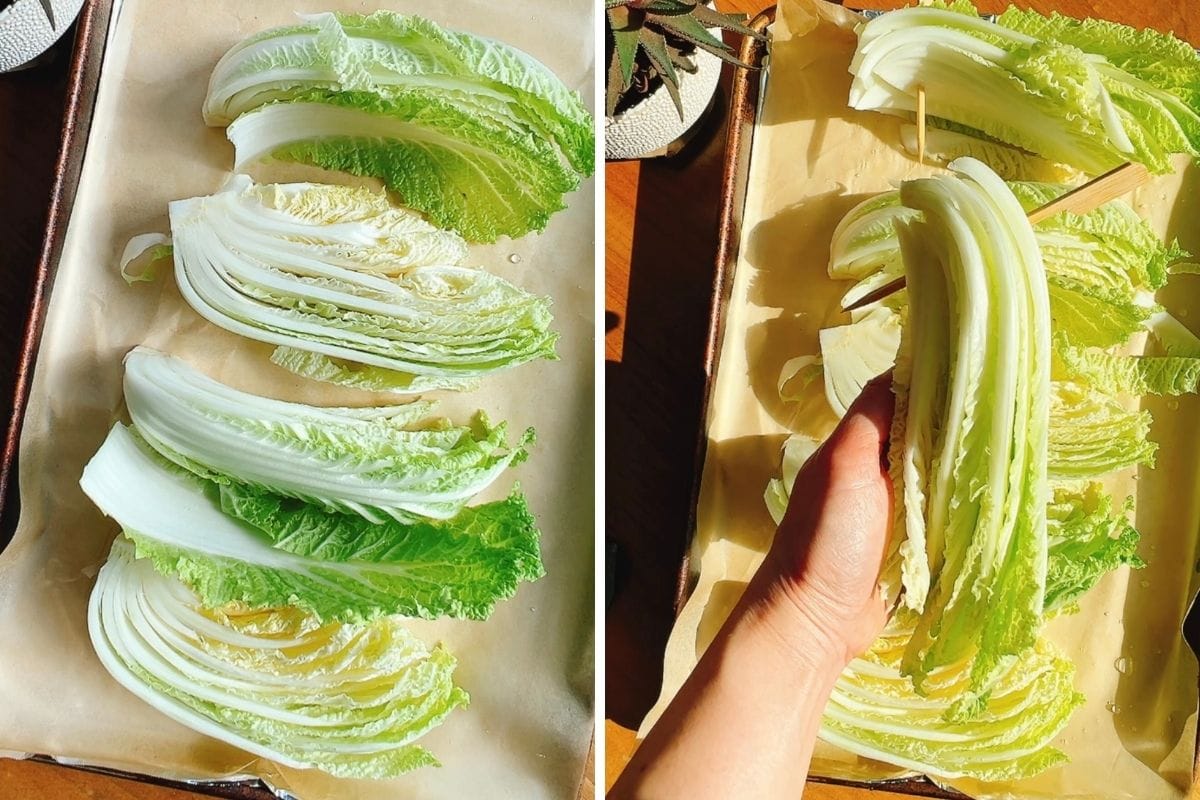
- Arrange the cabbage: Place the cabbage wedges cut-side down on a large lined sheet pan. Use two sheet pans if needed, leaving space between wedges so they roast instead of steam.
- If any wedges loosen or separate, use a small toothpick to gently secure the layers together by threading it through the stem end. This helps the wedges stay intact while roasting and is easy to remove before serving.
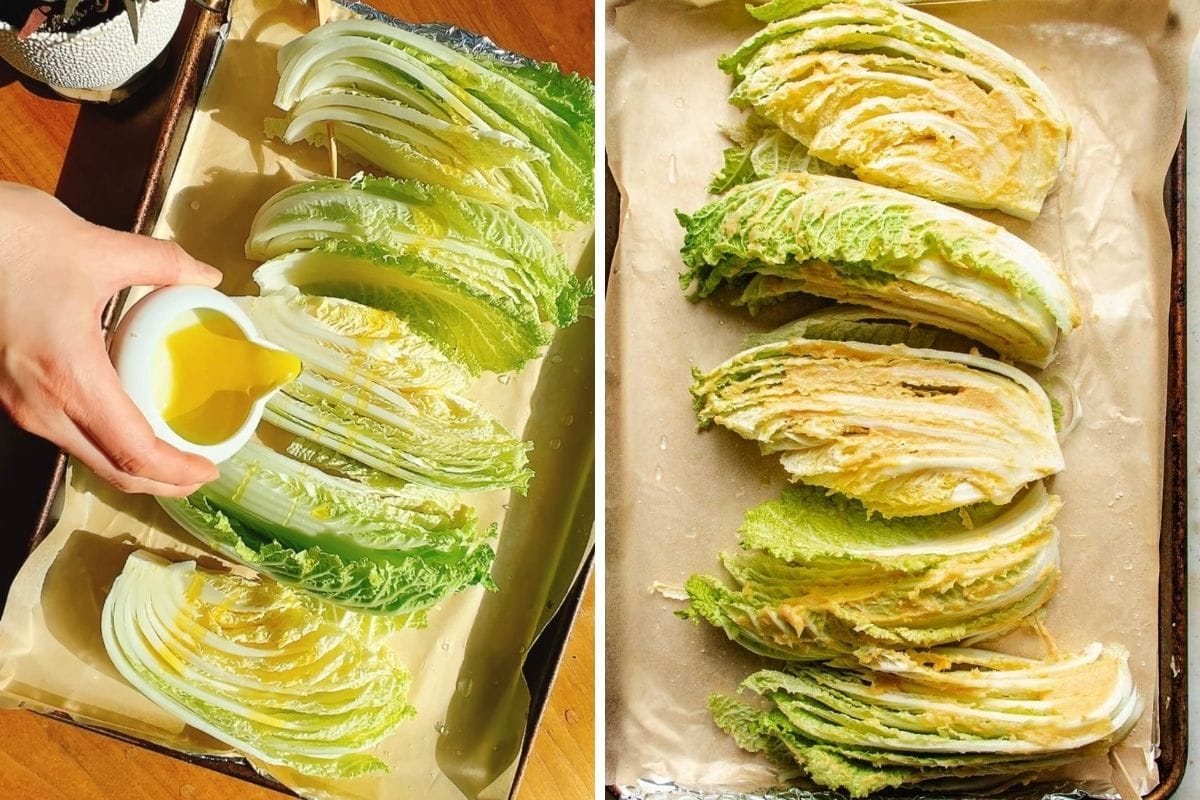
- Season the cabbage: Drizzle with 2 tablespoons of olive oil. Sprinkle evenly with salt and garlic granules. Use your hands to gently massage the oil and seasoning over both the leafy and stem portions.
- Add the miso butter: Using a butter knife or flat wooden paddle, spread the miso butter over the cut sides and outer layers of the cabbage, focusing especially on the thicker stem portions, which need more fat to cook through.

- Roast: Bake at 400°F (205°C) on the middle rack for 15 minutes, until the cabbage is tender and lightly caramelized at the edges.
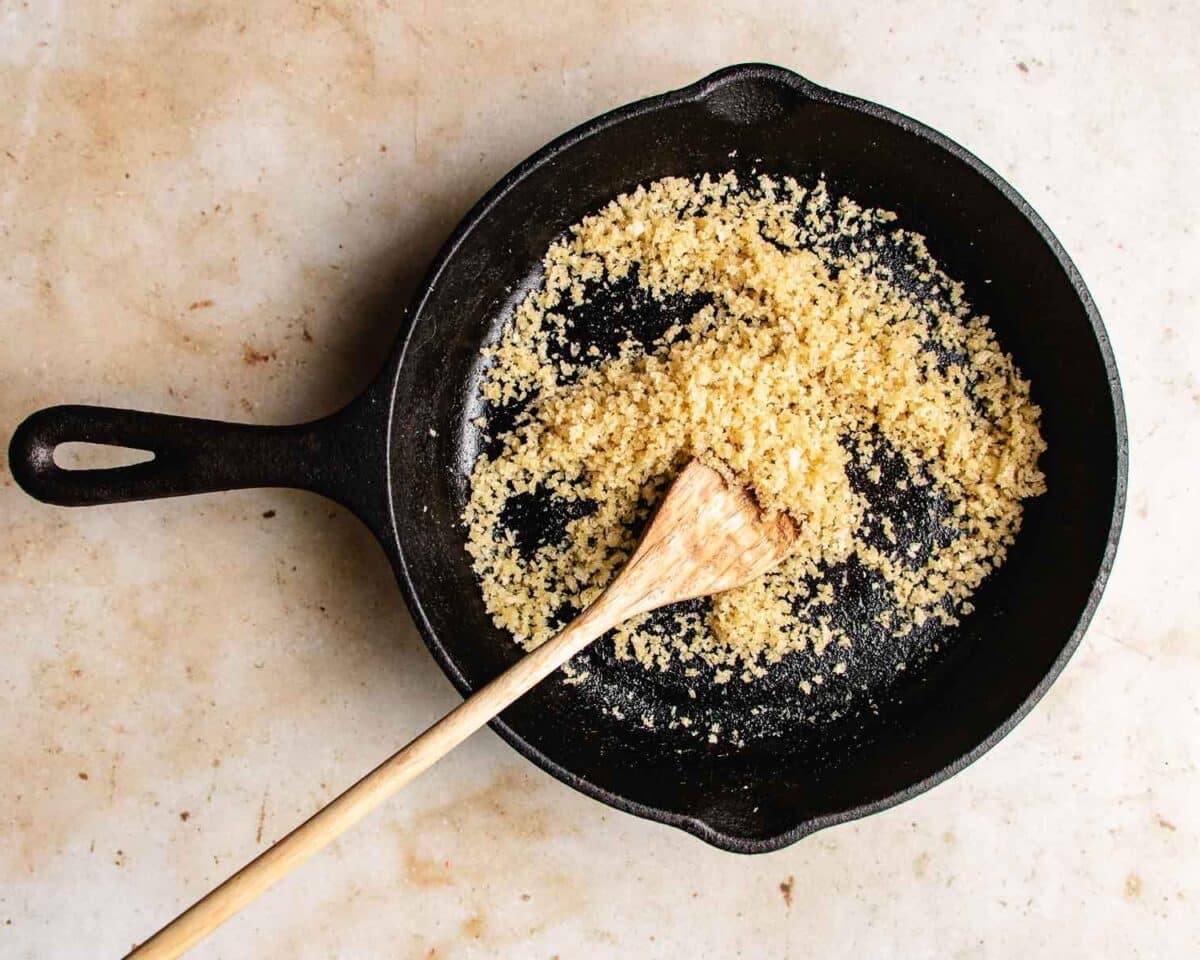
- Toast the breadcrumbs: While the cabbage roasts, heat a small pan over medium heat until warm. Add the breadcrumbs and remaining 1½ tablespoons olive oil. Lower the heat to medium-low. Stir to evenly coat the breadcrumbs with oil, then spread them into an even layer. Season with a small pinch of salt and garlic granules. Toast, stirring occasionally, until golden brown and crisp, about 2–3 minutes.
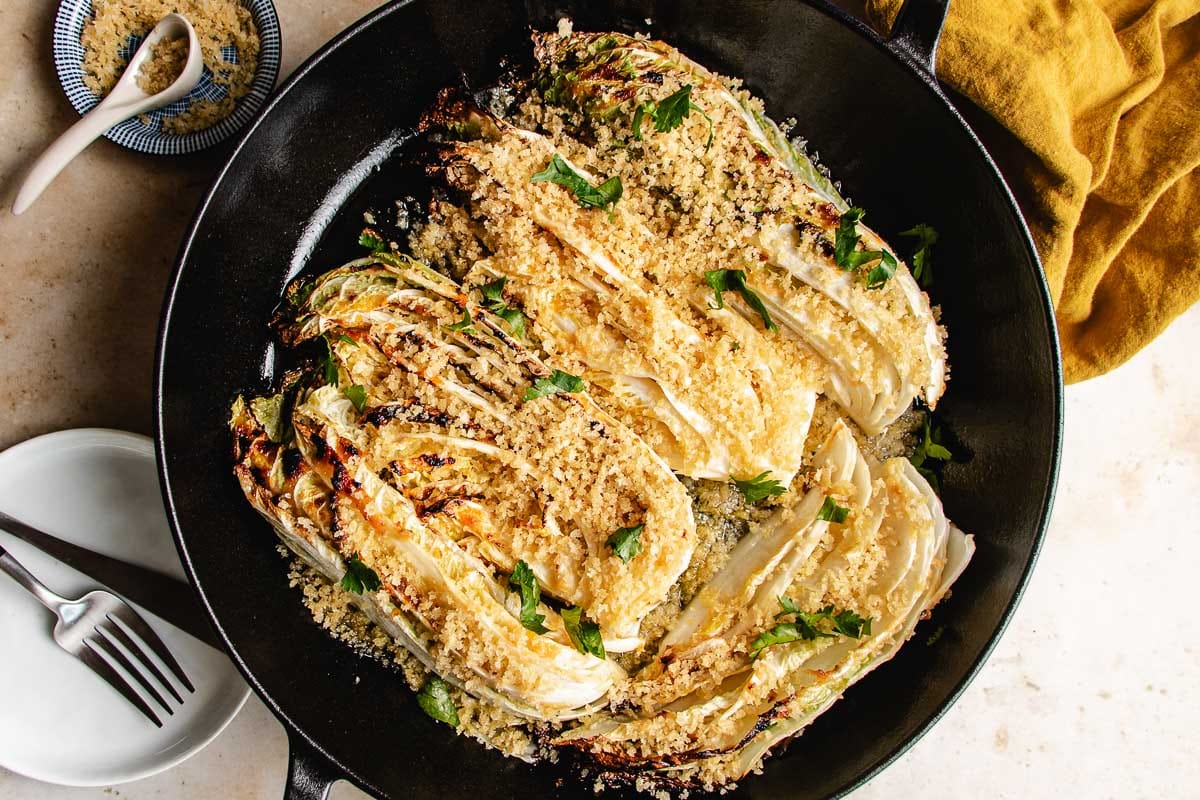
- Assemble: Transfer the roasted napa cabbage to a serving platter. Spoon a few tablespoons of the pan juices and melted butter from the sheet pan over the cabbage if it looks dry. Generously sprinkle the crispy breadcrumbs on top. Finish with chopped parsley or cilantro, if using.
- How to serve: Serve hot or warm, while the breadcrumbs are still crisp. A fork and knife work best for cutting the wedges cleanly.
Notes
- Gluten-free option: Use gluten-free panko or rice panko. If using rice panko, toast for about 1 extra minute, stirring often, until fully crisp.
- Seasoning note: Miso adds plenty of salt and umami, so avoid over-salting the cabbage.
- Breadcrumb timing: Toasted breadcrumbs soften quickly once they touch moisture. Sprinkle only what you plan to serve and add more as needed.
- Make-ahead: The cabbage can be sliced and washed 1–2 days in advance. Drain well, pat dry, and store flat in a container or crisper drawer lined with a dry paper towel to absorb excess moisture.
- Reheating: Reheat the cabbage in the microwave on medium power for 1 minute. The breadcrumbs will soften, but the cabbage will still taste great.
Nutrition
Nutrition information is automatically calculated, so should only be used as an approximation.
Made a dish and loved it? Please rate the recipe and leave a comment in the section below! It helps my blog grow organically, allowing me to continue sharing free and awesome content with you. Thank you!









Made these for the family over the weekend and they were a hit! So good and the panko breadcrumb topping made it extra excellent. Will be making it again and highly recommend it!
Wonderful. Thank you!