
This post may contain affiliate links. Please read our disclosure policy.
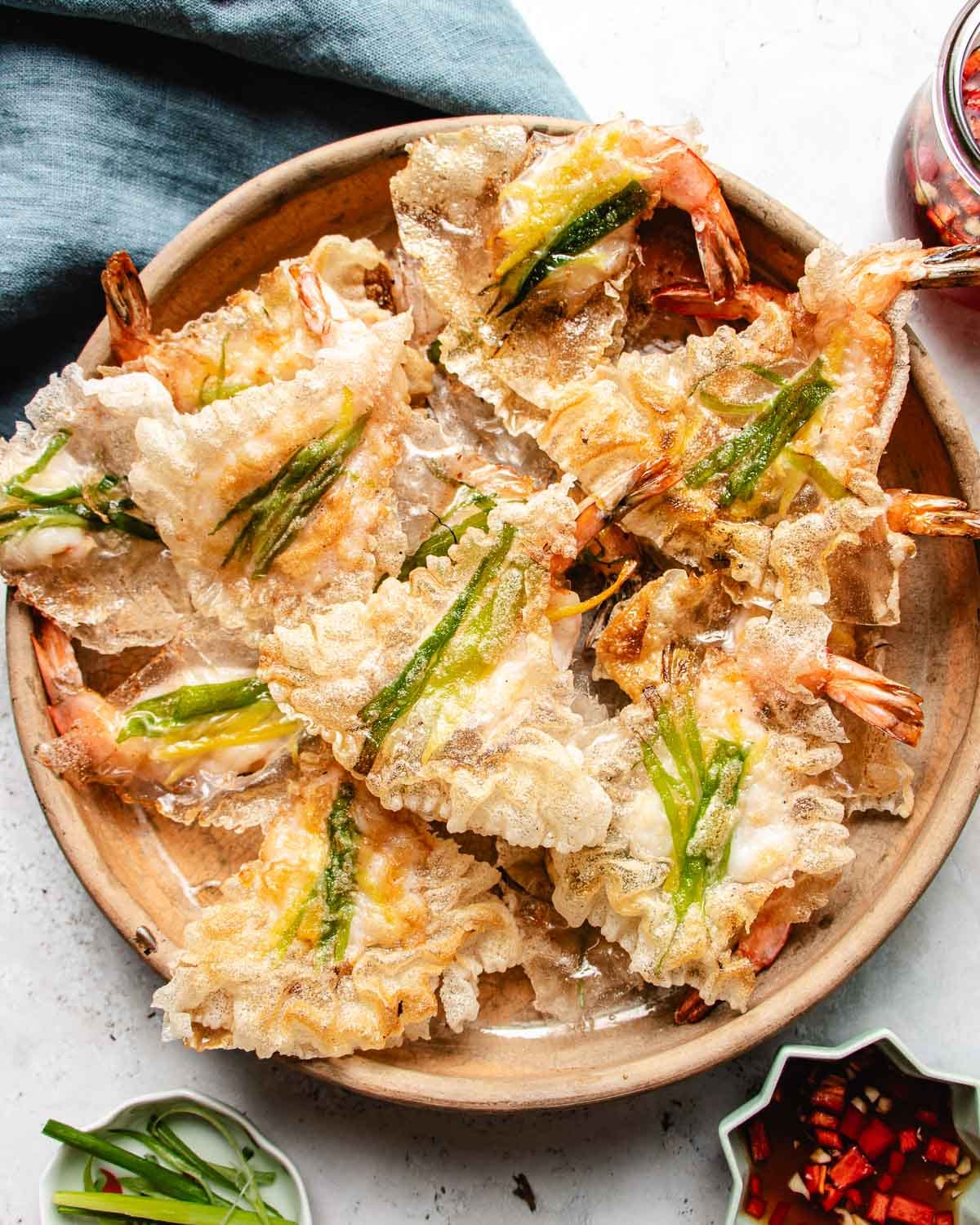
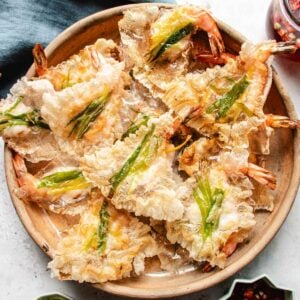
These Rice Paper Shrimp Chips are light, crispy, and so fun to eat! Each chip is made with butterflied shrimp, a few strips of ginger and scallion, and dry rice paper that puffs beautifully when shallow-fried.
I tested a few popular methods, including the air fryer version, and this gives the best crunch without that chewy, sticky rice paper texture. Serve them fresh and hot with nuoc cham on the side.
What are rice paper shrimp chips?
Rice paper shrimp chips are a homemade crispy snack made by sandwiching shrimp between pieces of rice paper, then shallow-frying until the wrapper puffs and turns crisp.
They are not the same as traditional packaged shrimp chips or prawn crackers, which are usually made from shrimp paste and starch. This version uses whole butterflied shrimp, so you get a light, crunchy rice paper shell with juicy shrimp in every bite.
Why this recipe works better

- Puffed, not chewy: Shallow-frying helps the dry rice paper puff quickly into a light, crisp cracker texture.
- Fresh ginger-scallion flavor: A few thin strips of ginger and scallion add aroma, color, and a more finished flavor without making the chip heavy.
- Better shape, better bite: Each chip is made as its own triangle parcel, so the rice paper puffs more evenly and the butterflied shrimp cooks quickly while staying juicy.
- Tested for real-life results: This recipe is well-tested, not just made for a viral effect. The method gives you a crisp, reliable shrimp chip that is actually enjoyable to eat.
Ingredients you’ll need
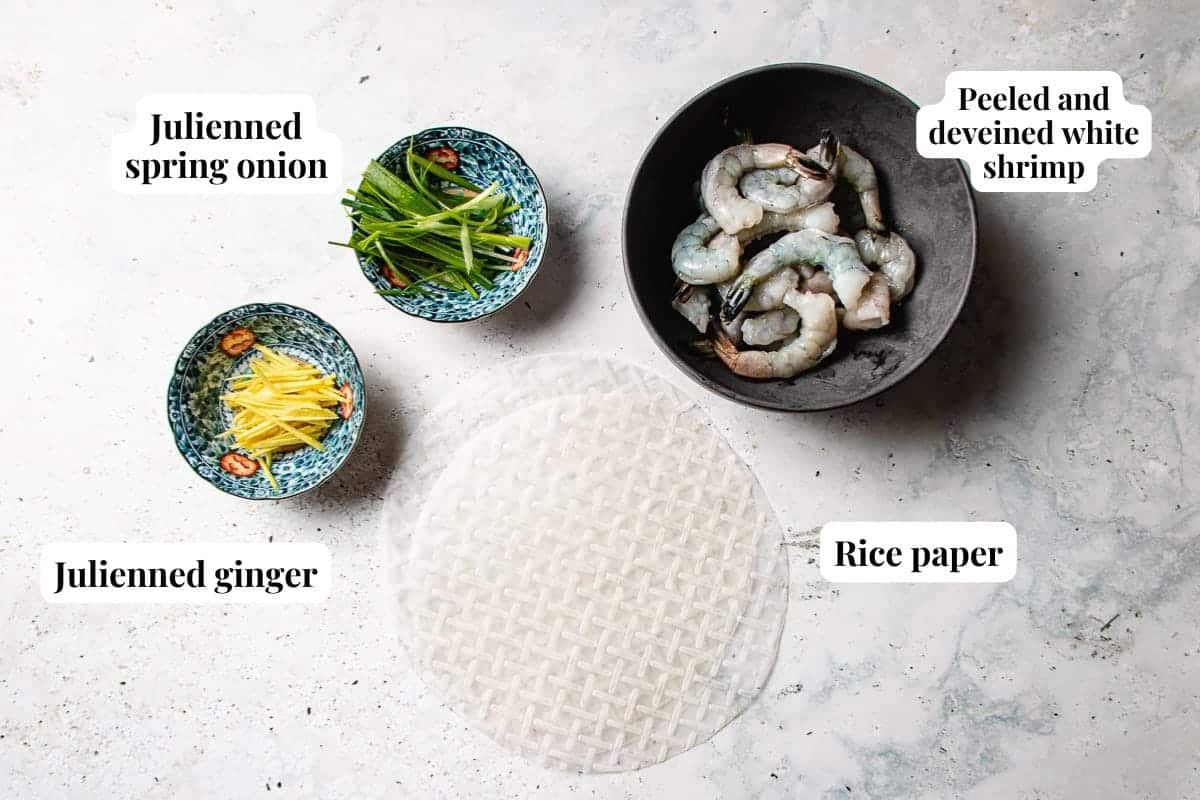
- Shrimp: Use peeled and deveined white shrimp, 26/30 count per pound. Tail-on shrimp looks pretty and gives you a little handle when eating, but tail-off works too.
- Rice paper wrappers: Use round 8.5-inch / 22 cm translucent white rice paper wrappers, the common kind made with white rice and tapioca starch. I find these are more flexible and forgiving when used dry. Avoid colored rice paper wrappers, which are often made with black or brown rice. Because those rice grains are less milled, the sheets can be more brittle and break easily when cut.
- Ginger: Fresh ginger adds a warm, clean aroma that pairs so well with shrimp. It gives the chips more flavor without needing a heavy seasoning mix.
- Scallions / spring onions: Use the green parts for fresh color and mild onion flavor. They make the shrimp chips look prettier and taste more finished.
- Avocado oil: A neutral, high-heat oil works best for shallow-frying. Avocado oil is my go-to, but another neutral oil with a high smoke point also works.
- Nuoc cham dipping sauce: This bright Vietnamese-style dipping sauce balances the crispy shrimp chips with lime juice, fish sauce, rice vinegar, warm water, honey, garlic, and chili. Serve it on the side so the chips stay crisp.
How to make rice paper shrimp chips
Here’s a quick look at how to make these crispy rice paper shrimp chips before you start:
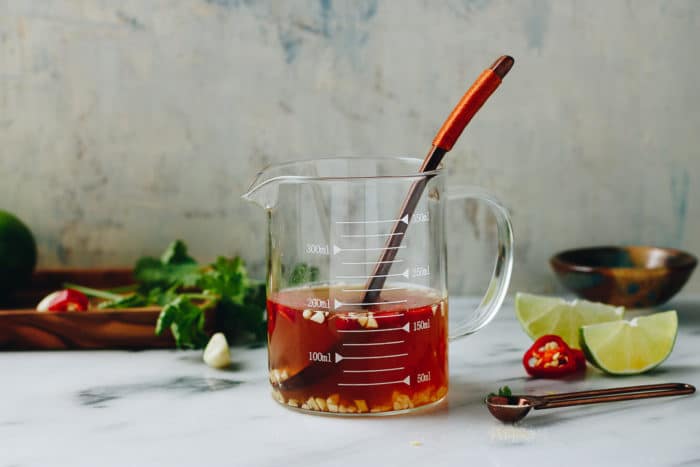
- Make the nuoc cham: Stir the dipping sauce ingredients together first so it’s ready when the shrimp chips come out hot.
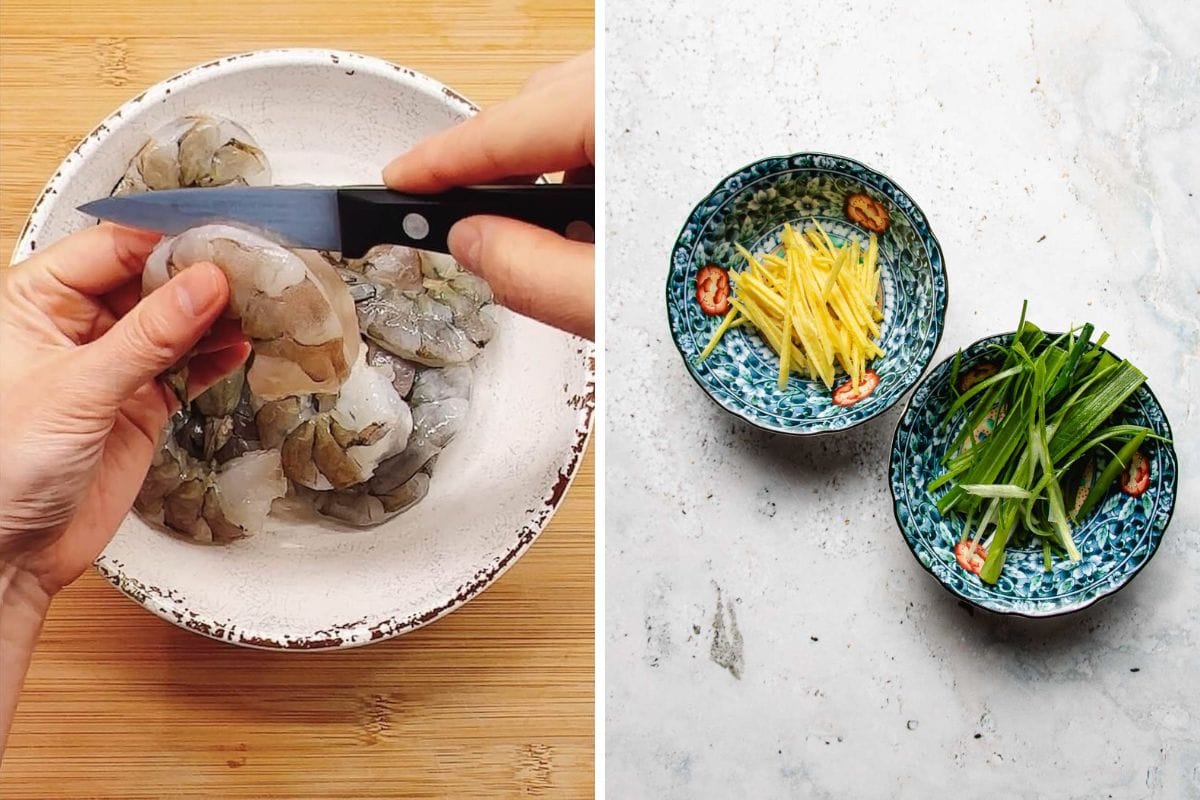
- Prep the aromatics: Julienne the ginger and scallion greens into thin strips so they fit neatly inside each chip.
- Butterfly the shrimp: Cut along the back of each shrimp, then gently open and flatten it. This helps the shrimp cook quickly and gives you more shrimp flavor in every bite.
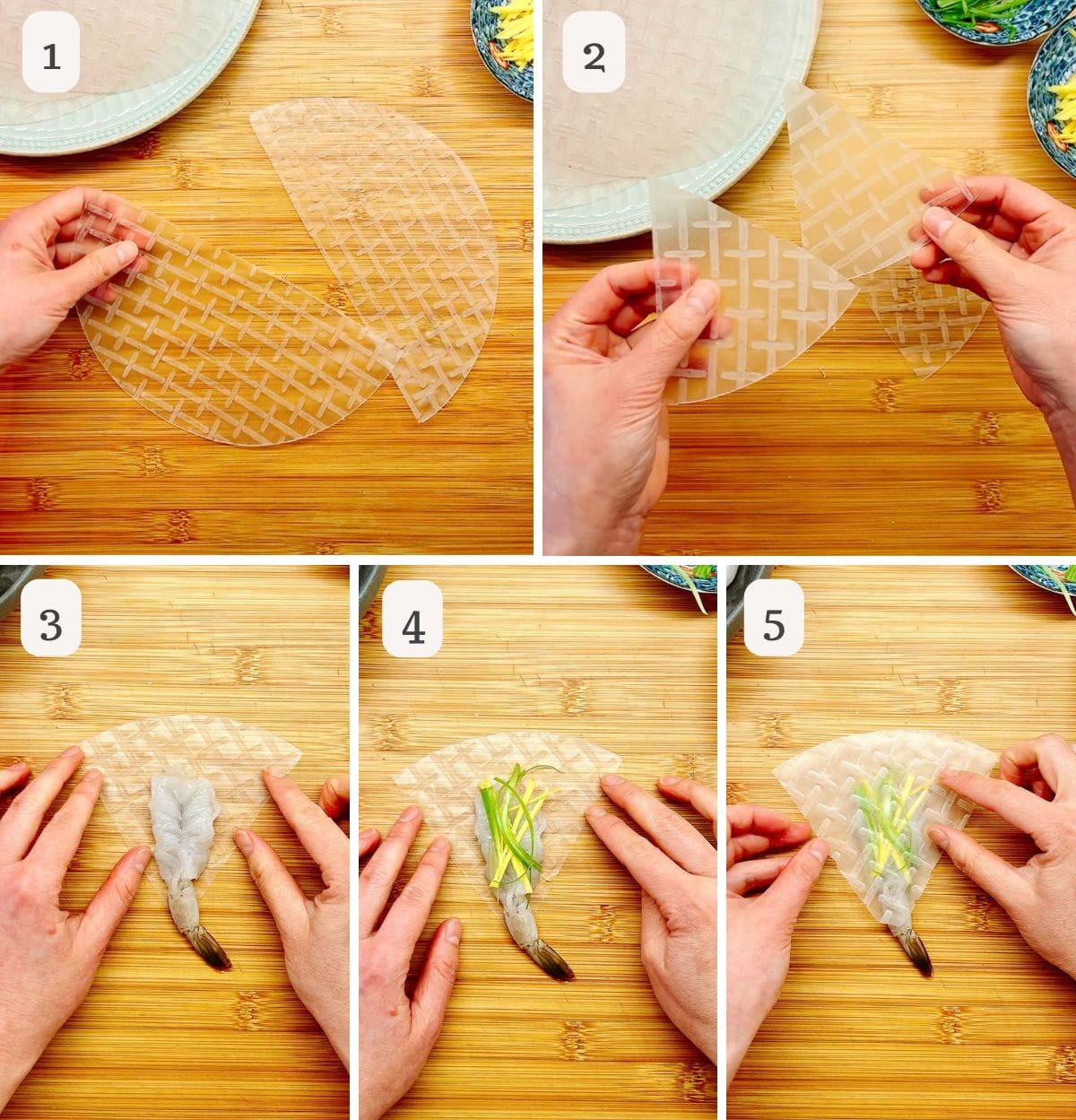
- Cut the rice paper: Use kitchen shears to cut each round white rice paper sheet into small triangles. I recommend the common translucent white rice paper because it is more flexible. Avoid colored rice paper wrappers, which can be brittle and break easily when used dry.
- Assemble the chips: Place one dry rice paper triangle down, add the shrimp, ginger, and scallion, then cover with another rice paper triangle.
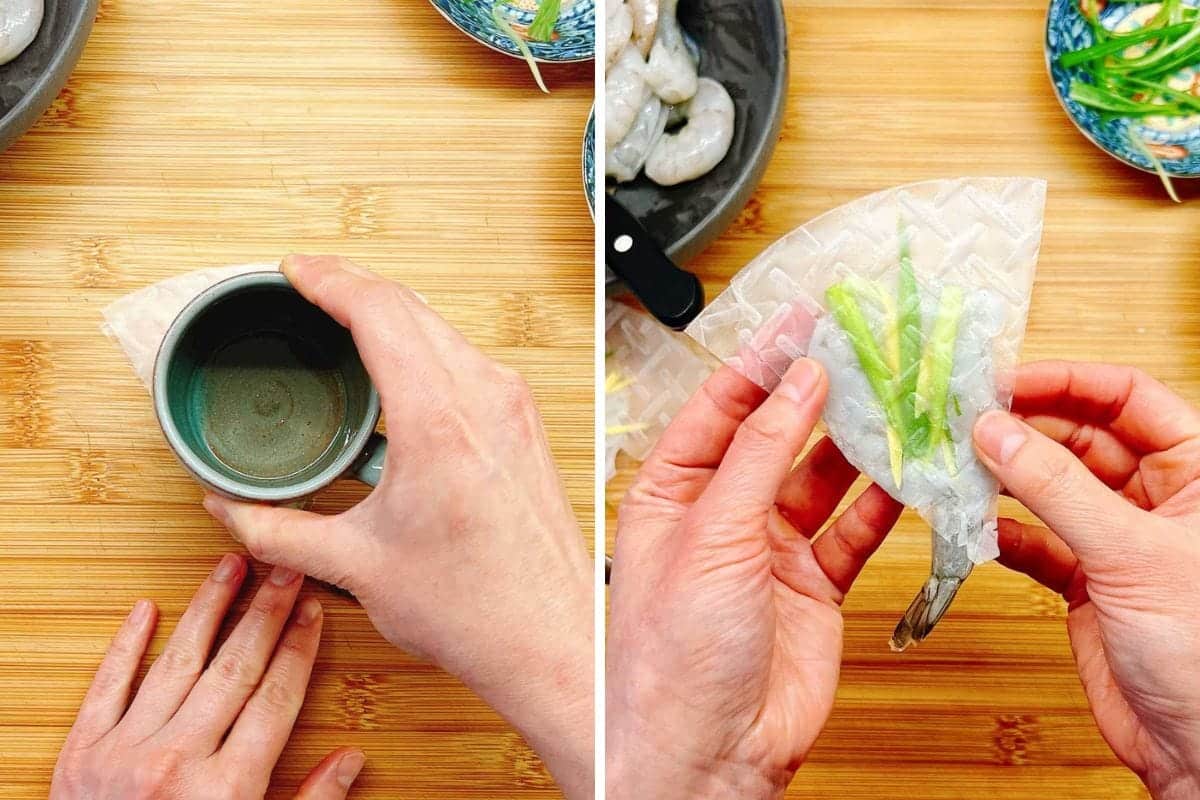
- Press gently: Use a flat-bottom cup to press each shrimp chip with moderate pressure. Don’t pound or press too hard — too much force can squeeze the filling out and make the rice paper shift.
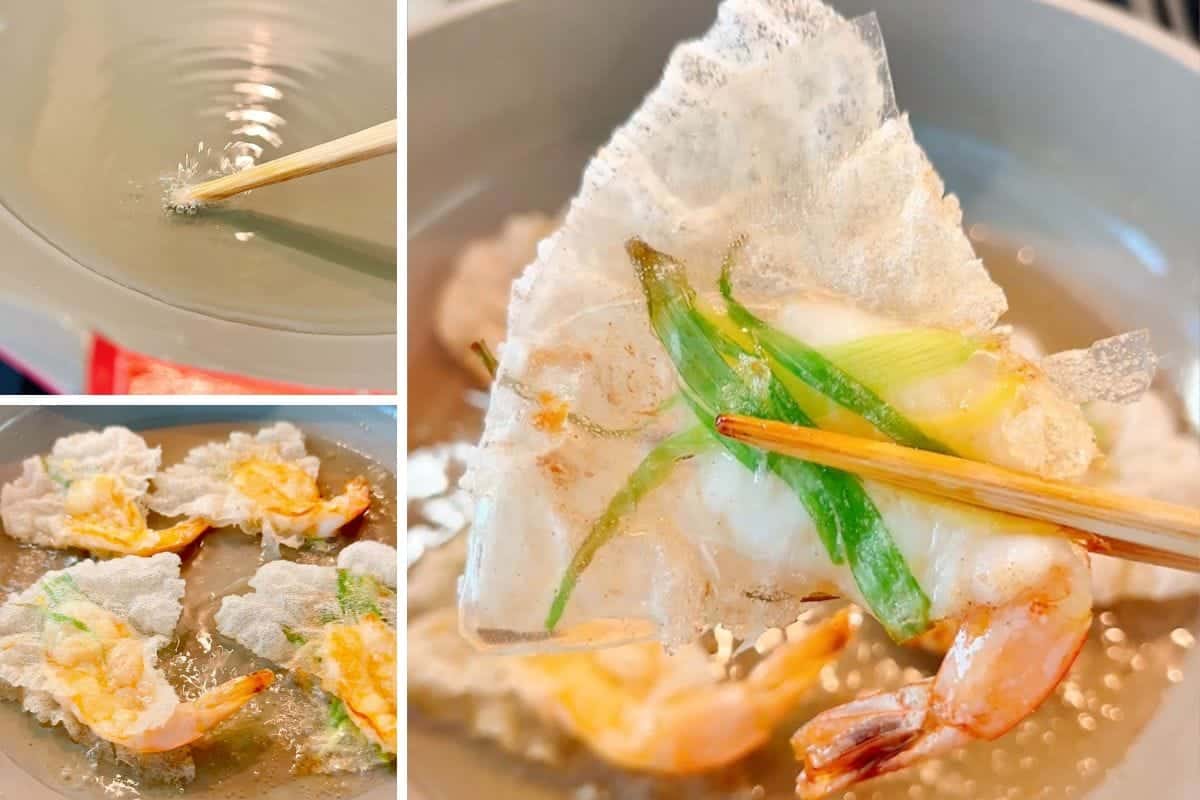
- Shallow-fry: Fry the shrimp chips in a shallow layer of oil until the rice paper puffs and turns crisp.
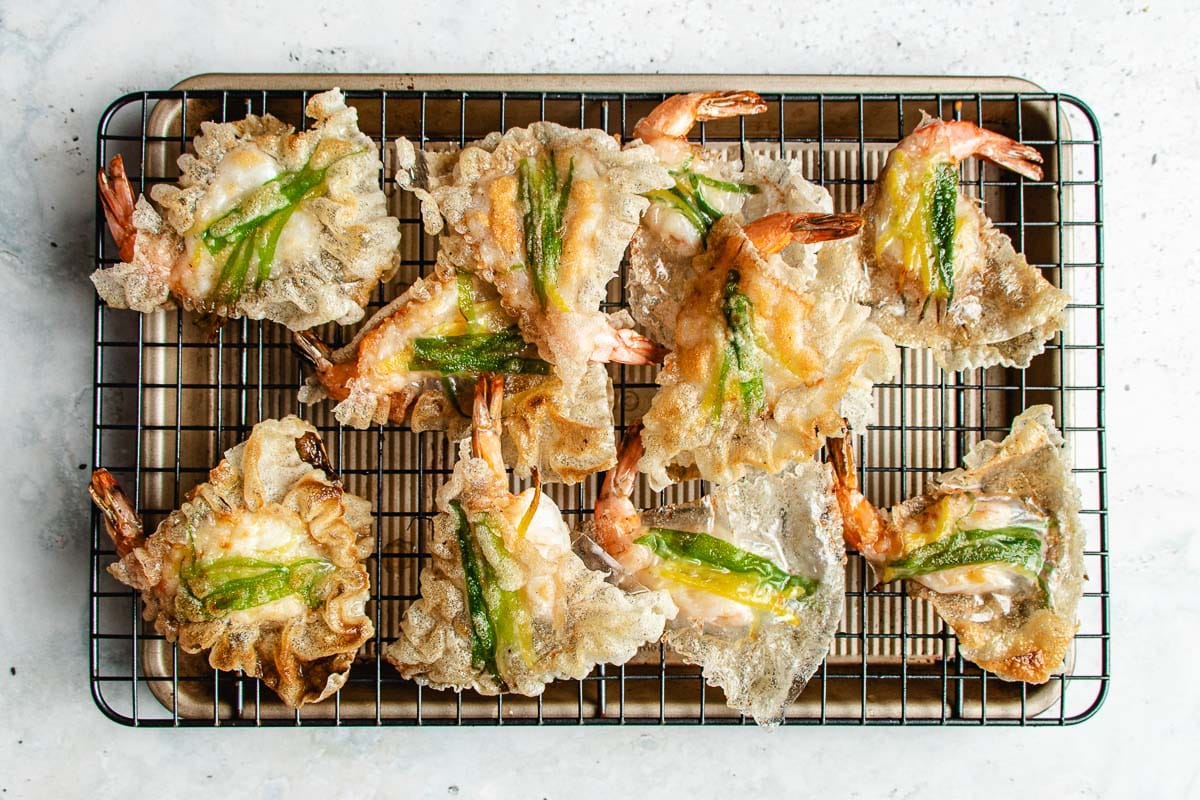
- Drain and serve: Transfer to a wire rack and serve right away with nuoc cham while the rice paper shrimp crackers are still crisp.
The key to crispy rice paper shrimp chips
The biggest secret to crispy rice paper shrimp chips is this: use dry rice paper and make sure the oil is hot before frying.
Do not soak the rice paper for this shallow-fried version. The dry rice paper should puff quickly once it touches the oil, giving you that light, airy rice paper prawn cracker texture.
Make sure the oil is hot. To test the oil, dip a clean, dry wooden chopstick into the oil. If small bubbles form around it, the oil is ready. You want to hear a steady sizzle when the shrimp chip goes in, and the rice paper should puff right away.
If the oil is too cool, the rice paper won’t puff well and the chips can taste greasy. If the rice paper only crisps on the surface but doesn’t fully puff, it can turn chewy after the first bite and stick to your teeth.
Can you make them in the air fryer?
I tested these rice paper shrimp chips in the air fryer, and I don’t recommend it for the best texture.
Dry rice paper with only oil spray did not work well — it stayed too flat and became sticky on the teeth. Lightly moistened rice paper works better for assembly, but it still does not puff the same way as shallow-fried rice paper. The chips can look crisp at first, but once you bite into them, the rice paper softens and can cling to your teeth.
For the best puffed, airy rice paper shrimp crackers, shallow-frying gives a much better result.
What to serve with rice paper shrimp chips
Serve these rice paper shrimp chips hot with the nuoc cham dipping sauce on the side. Dip as you eat so the rice paper stays puffed and crisp.
For a different flavor, try a Thai sweet chili lime dressing for something sweet, tangy, and a little spicy, or add a spoonful of garlic chili sauce to make a quick chili crisp-style dip.
If you’re serving these as an appetizer plate, pair them with something cool and refreshing, like Taiwanese marinated cucumbers or a light shaved daikon salad.
Rice paper shrimp chips recipe
Video
Ingredients
- 2 spring onions green parts only, julienned lengthwise into 2 to 2.5-inch strips
- 0.7 oz ginger julienned (2-inch length knob)
- ½ lb white shrimp peeled and deveined, tail-on preferred, 26 to 30 count per pound
- 3 whole round rice paper wrappers 8.5 inches in diameter
- Avocado oil enough to cover the pan by about ¼ inch
Nuoc cham dipping sauce (makes 1 cup):
- 2 tbsp fresh lime juice
- 2.5 tbsp fish sauce
- 1 tbsp rice vinegar
- 5 tbsp warm water
- 3 tbsp honey or maple syrup
- 2 small clove garlic finely minced
- 1 whole Thai chili or ½ red serrano chili pepper seeds removed and sliced
Instructions
- Make the dipping sauce. In a small bowl, stir together the lime juice, fish sauce, rice vinegar, warm water, honey, garlic, and chili until the honey dissolves. Set aside.
- Prepare the aromatics. Use only the green parts of the spring onions. Slice them lengthwise into thin 2 to 2.5-inch strips. Peel the ginger with a small spoon, then julienne it into thin 2-inch strips.
- Butterfly the shrimp. Place each shrimp on a cutting board, back side facing up. Make a shallow cut along the back, without cutting all the way through. Gently open and flatten the shrimp.
- Cut the rice paper. Use kitchen shears to cut each round rice paper wrapper in half. Cut each half into 3 equal triangles. Each rice paper wrapper will give you 6 triangles, which makes 3 shrimp chips.
- Assemble the shrimp chips. Place one dry rice paper triangle on a cutting board, smooth side down and rough side up, with the point facing toward you. Place one shrimp on top, back side down, with the tail slightly outside the wrapper. Gently flatten the shrimp with your fingers, then add a few strips of ginger and spring onion on top.
- Seal and flatten. Place another dry rice paper triangle directly on top to enclose the shrimp, ginger, and spring onion. Use the bottom of a small flat-bottomed cup to gently press, not pound, the shrimp chip. This helps flatten the shrimp and makes the top and bottom rice paper pieces stick together.
- Repeat. Transfer the assembled shrimp chip to a large plate and repeat with the remaining shrimp and rice paper triangles.
- Heat the oil. In a 10-inch heavy-bottomed pan with high sides, add enough avocado oil to cover the bottom by about ¼ inch. Heat over medium heat until hot. To test the oil, dip a clean, dry wooden chopstick into the oil. If small bubbles form around it, the oil is ready.
- Fry the shrimp chips. Add the shrimp chips one at a time. Place the ginger and spring onion side down into the oil first, not the back side of the shrimp. Fry for about 15 seconds per side, adjusting the heat as needed so the rice paper puffs quickly without burning.
- Drain and serve. As soon as the shrimp turns pink and opaque and the rice paper is puffed and crisp, transfer the shrimp chips to a wire rack. Serve right away with the nuoc cham dipping sauce while the rice paper is still crisp.
Notes
- Best served right away: These shrimp chips are best hot and fresh, while the rice paper is still puffed and crisp. The rice paper will soften as it sits, so make only what you plan to eat.
- Make-ahead sauce: The nuoc cham can be made ahead and stored in an airtight glass container in the fridge for 3 to 4 weeks. It tastes brightest within 1 week. Use a clean spoon each time.
- Leftovers: Store leftover shrimp chips in a flat container lined with a dry paper towel. Reheat in the air fryer at 360°F for 4 minutes. No extra oil needed.
- Air fryer note: I tested these in the air fryer at 400°F for 4 minutes. The rice paper did not puff properly and became sticky on the teeth. For the best texture, I recommend shallow-frying.
Nutrition
Nutrition information is automatically calculated, so should only be used as an approximation.
FAQs
Yes. Thaw the shrimp fully, then pat them very dry before butterflying and flattening. Extra moisture can make the rice paper harder to puff and crisp.
These are best served right away while the rice paper is puffed and crisp. The rice paper softens as it sits, so I recommend frying only what you plan to eat.
The oil was likely not hot enough, or the rice paper did not puff fully. Rice paper that didn’t puff up can soften after the first bite and stick to your teeth.
More rice paper recipes to try
If you have extra rice paper wrappers after making these shrimp chips, try my crispy rice paper dumplings next. They’re pan-fried until golden and chewy-crisp, with a juicy filling inside.
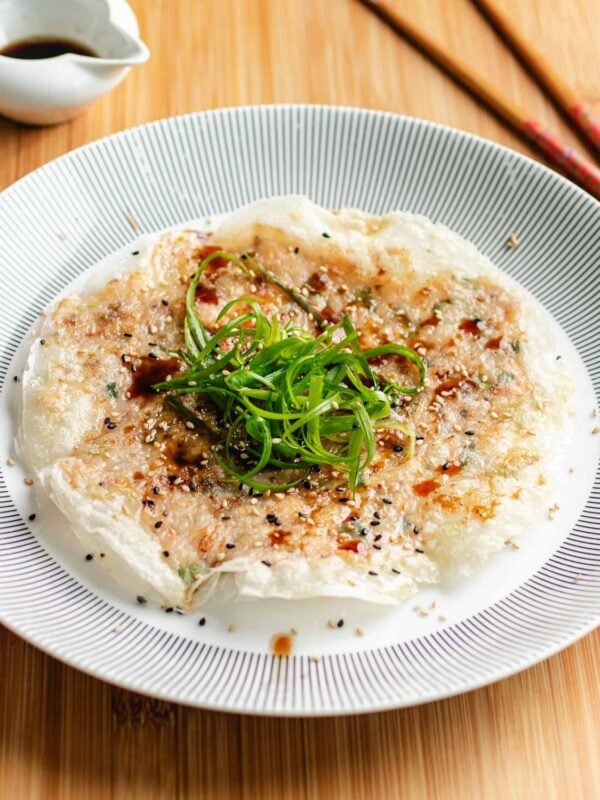
For a larger, shareable option, try my rice paper shrimp pancakes, made with a minced, wonton-style minced shrimp filling instead of whole shrimp.
For more filling ideas, see my guide to dumpling fillings for rice paper wrappers so your dumplings stay flavorful without tearing.
Made a dish and loved it? Please rate the recipe and leave a comment in the section below! It helps my blog grow organically, allowing me to continue sharing free and awesome content with you. Thank you!








My family and I enjoyed this appetizer. It was fun to make and a great way to use up extra rice paper sheets. I love the ginger and scallion addition. It elevated the chips without being complicated. Will make them again.
Wonderful. Thank you