
This post may contain affiliate links. Please read our disclosure policy.
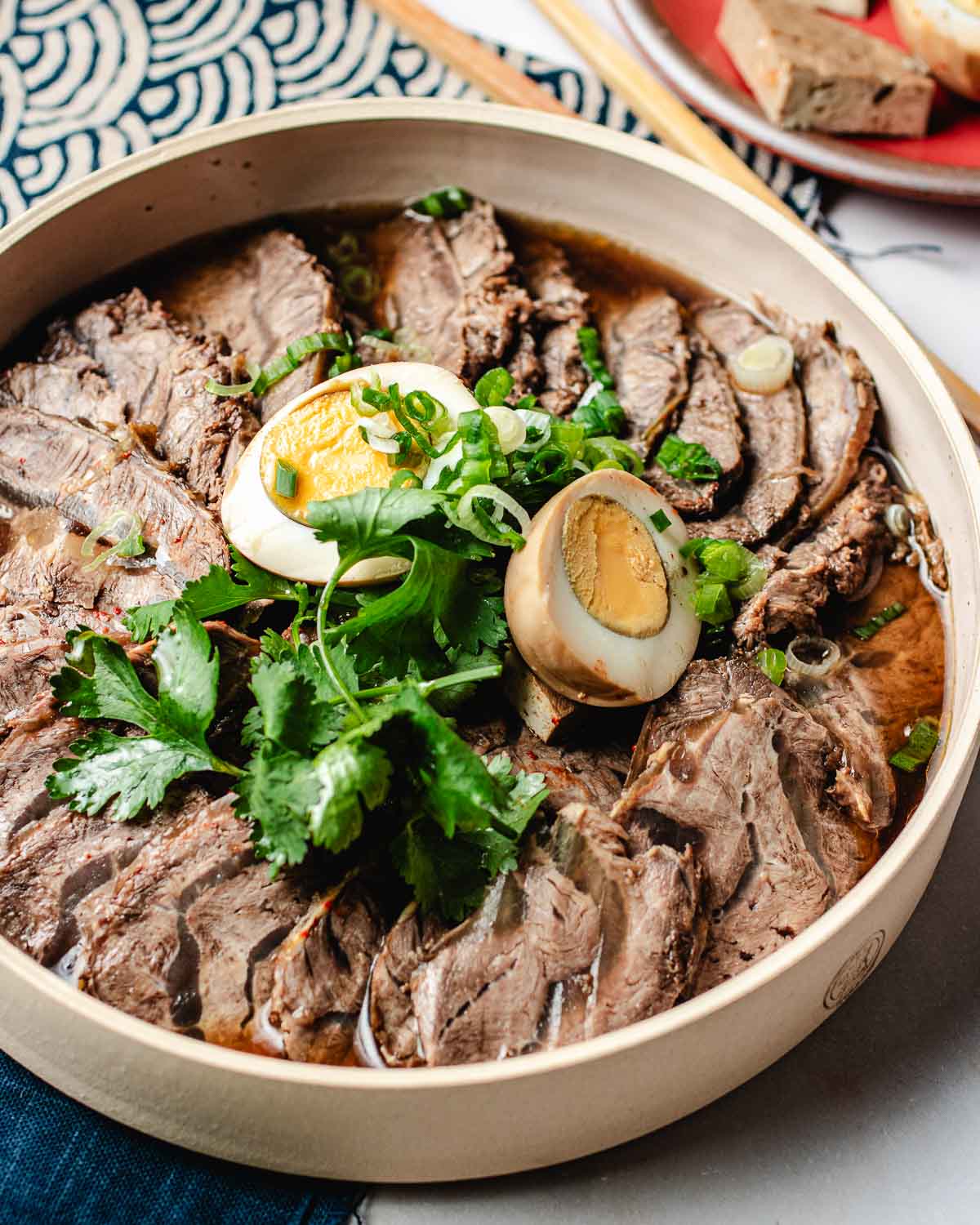
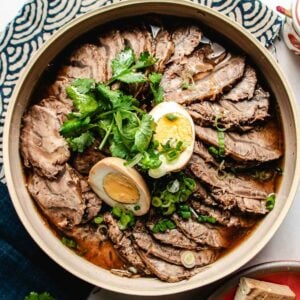
Taiwanese Braised Beef Shank (滷牛腱), also known as lu niu jian, is a classic chilled appetizer you’ll see at Taiwanese homes and night markets. The beef is tender but sliceable, lightly fragrant with soy and warm spices, and served cold or at room temperature. When you slice it thinly, you can see the beautiful tendon marbling running through each piece — clean, glossy, and full of flavor.
This version keeps things simple and approachable. Instead of a long stovetop simmer, we use a pressure cooker to get reliable results. The soy-braised beef is lighter than Chinese beef stew and not meant to be eaten hot like beef noodle soup. It’s designed to be made ahead, chilled, and sliced thin — the way I grew up eating it.
Why This Version Works

I grew up eating braised beef shank. It was something my grandma made, then my mom made, and it’s still a quintessential dish across Taiwan today. I’ve tasted more versions than I can count — from home kitchens to Taiwanese eateries — so I care deeply about getting the texture and flavor just right.
This version follows the Taiwanese style closely, but I’ve simplified it for home cooks:
- The shank stays whole so it cooks evenly and slices cleanly.
- The braise is clean and fragrant, not dark or heavy.
- The pressure cooker timing is tested specifically for that tender-but-sliceable texture.
If you’ve ever wondered how restaurants get those clean, glossy slices that hold their shape, this method will give you that result — without complicated steps.
What’s the difference?
Taiwanese vs Chinese Braised Beef Shank
- Taiwanese-style (滷牛腱 / lu niu jian): Typically lighter in color and flavor. It relies on garlic, ginger, scallions, rice wine, light soy sauce, and simple warming spices for a clean, balanced taste.
- Many Northern Chinese versions (often 酱牛肉 / jiang niu rou): Usually darker and more concentrated, sometimes using fermented sauces, dried tangerine peel (chenpi), or Sichuan peppercorn for a deeper, more intense profile.
Both are traditional. This recipe follows the Taiwanese style — lighter, fragrant, and designed for clean, sliceable texture.
Main Ingredient Notes
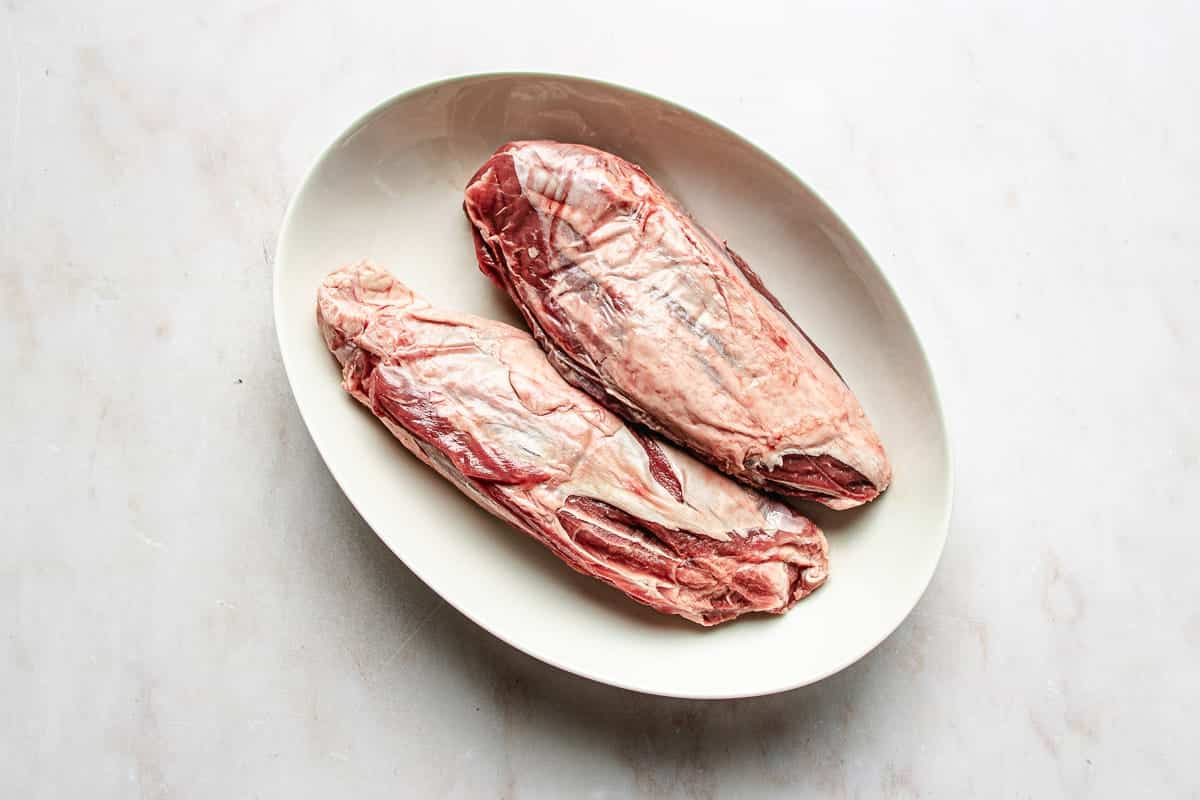
- Boneless Beef Shank (牛腱): Look for whole, boneless beef shank at Chinese or Asian grocery stores. Each piece is usually about 12 oz (340 g) and shaped like a long, lean leg muscle. That log shape helps the beef cook evenly and slice cleanly after chilling.
If you can’t find beef shank, use boneless chuck roast or boneless brisket. See the section below for more details and time adjustments.
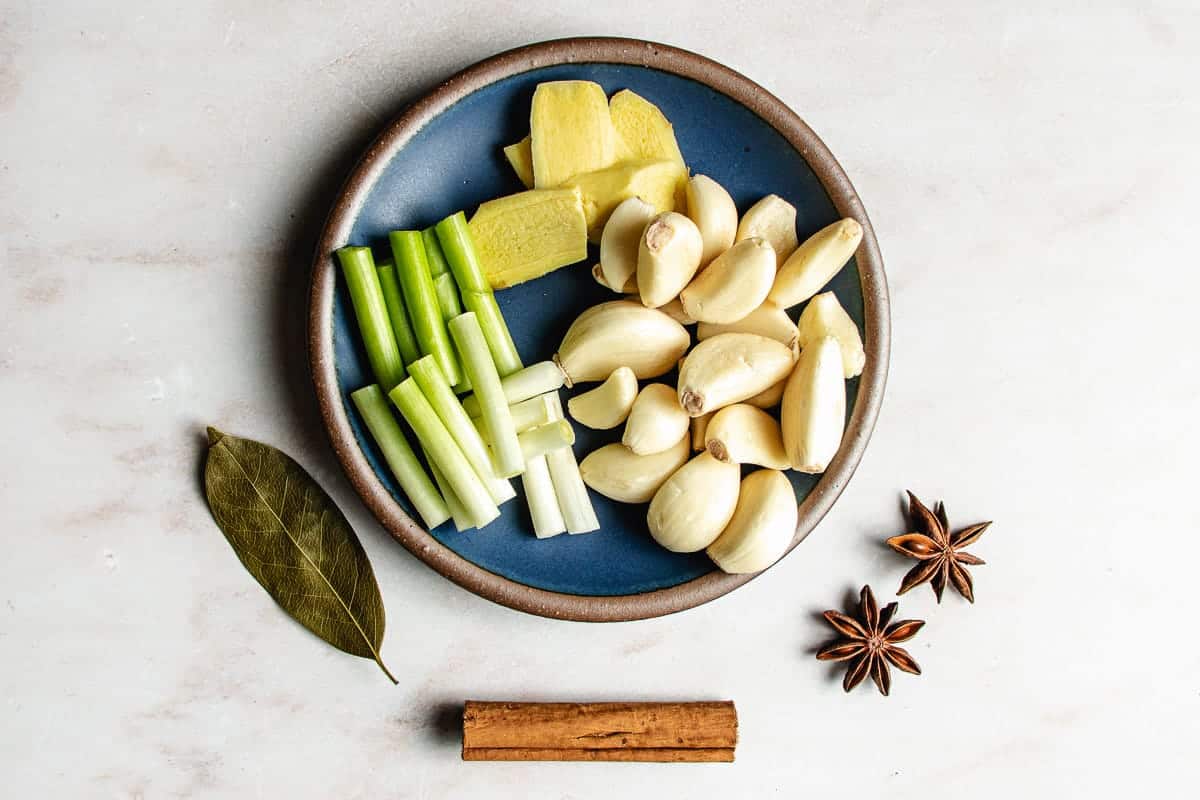
- Fresh aromatics: Garlic, ginger, and scallions build a clean, balanced base. Taiwanese versions keep the aromatics simple — no heavy bean pastes or fermented sauces.
- Whole spices: Cinnamon stick, bay leaf, and star anise provide warmth and depth. We’re aiming for a light, fragrant braise — not a dark or medicinal spice profile.
- The braising liquid: Beef stock, light soy sauce, Taiwanese mi jiu (or Shaoxing wine), five-spice powder, and sugar. Rock sugar is traditional and gives a cleaner sweetness. Brown sugar works but has a deeper molasses note.
- Optional add-ins: In Taiwan, it’s common to braise hard-boiled eggs, firm tofu, and fresh kelp knots in the same liquid as part of a lu wei assortment. Kelp knots can be harder to find in Western markets, so I kept this version simple with eggs and tofu.
How to Make Taiwanese Braised Beef Shank
- Prepare the Beef Shank
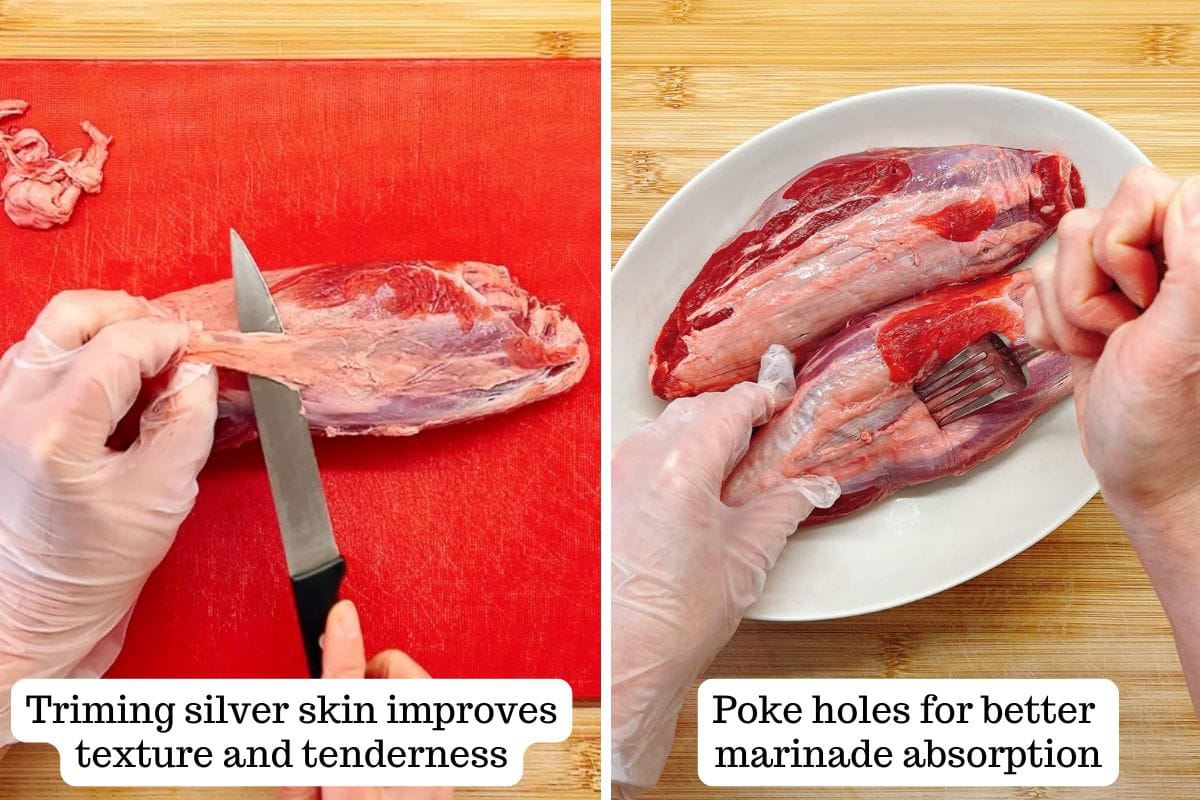
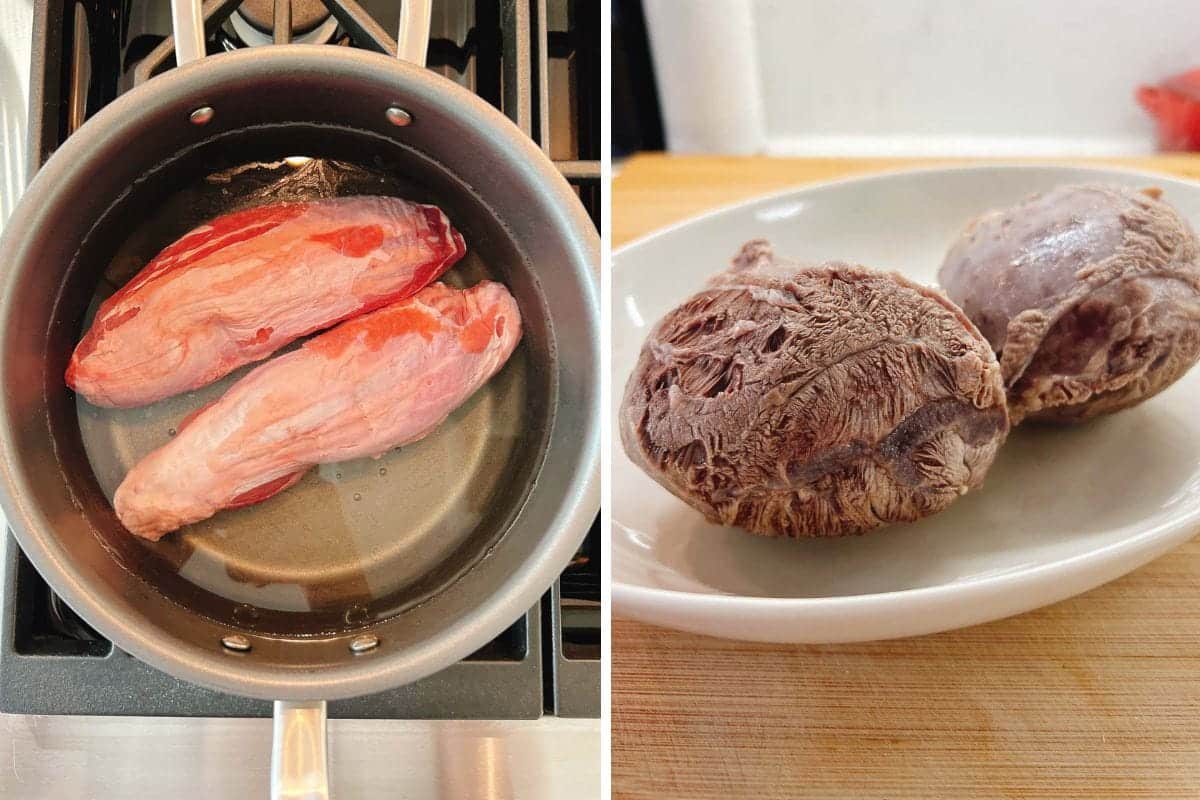
Trim off the silver skin — the thin, shiny membrane on the surface. It doesn’t break down during cooking and can make the slices chewy, so removing it gives you a cleaner texture and prettier presentation.Keep the shank whole. Do not cut it into chunks. The log shape helps it cook evenly and keeps the juices inside.
- Blanch the Beef (Start from Room Temperature Water)
Place the shanks in a pot and cover with room temperature water. Bring everything up to a boil together, then simmer for about 10 minutes.I don’t drop the beef into boiling water. Starting cold allows the heat to rise gradually and helps draw impurities from deep inside this thick cut — not just the surface. That’s what keeps the final braising liquid clear.
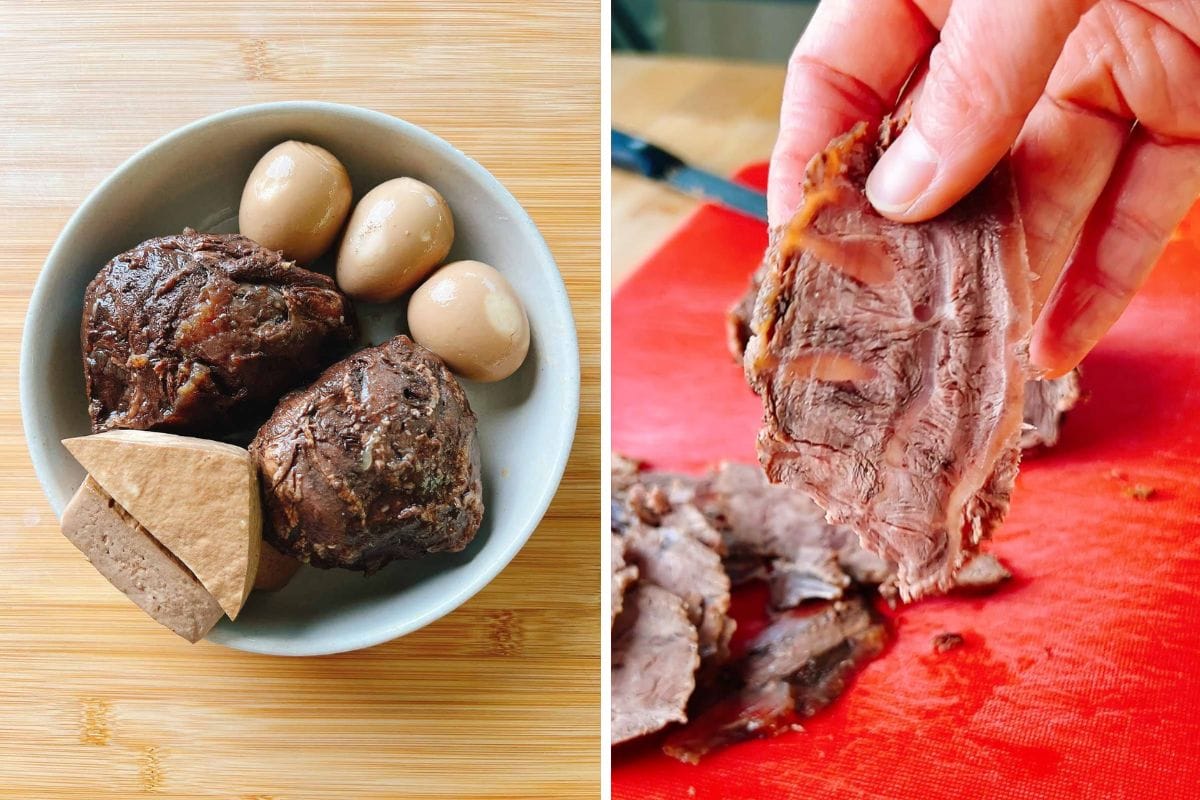
You’ll see foam rise up, and the beef will shrink into a round, ball-like shape. That’s completely normal.
Remove the shank and discard the water. Do not rinse under cold water — it can tighten the exterior and affect texture.
- Build the Braising Base
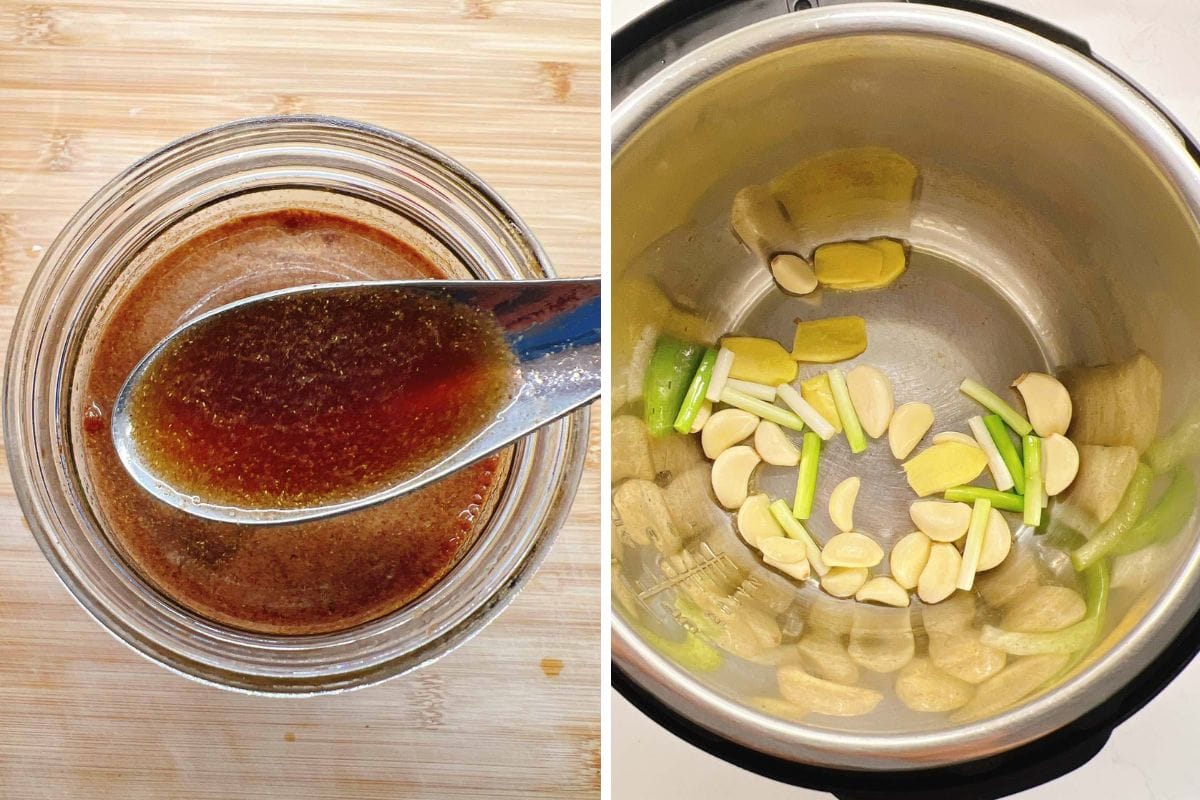
To keep this dish approachable and hands-off, I use a pressure cooker for consistent results.Sauté the garlic, ginger, and scallion whites until fragrant, then add the braising liquid and warming spices.
The liquid should look like strong black tea — light brown, not dark. It should taste balanced but not overly salty. The salt will concentrate as the beef braises and marinates, so don’t over-season now.
- Pressure Cook Until Tender but Sliceable
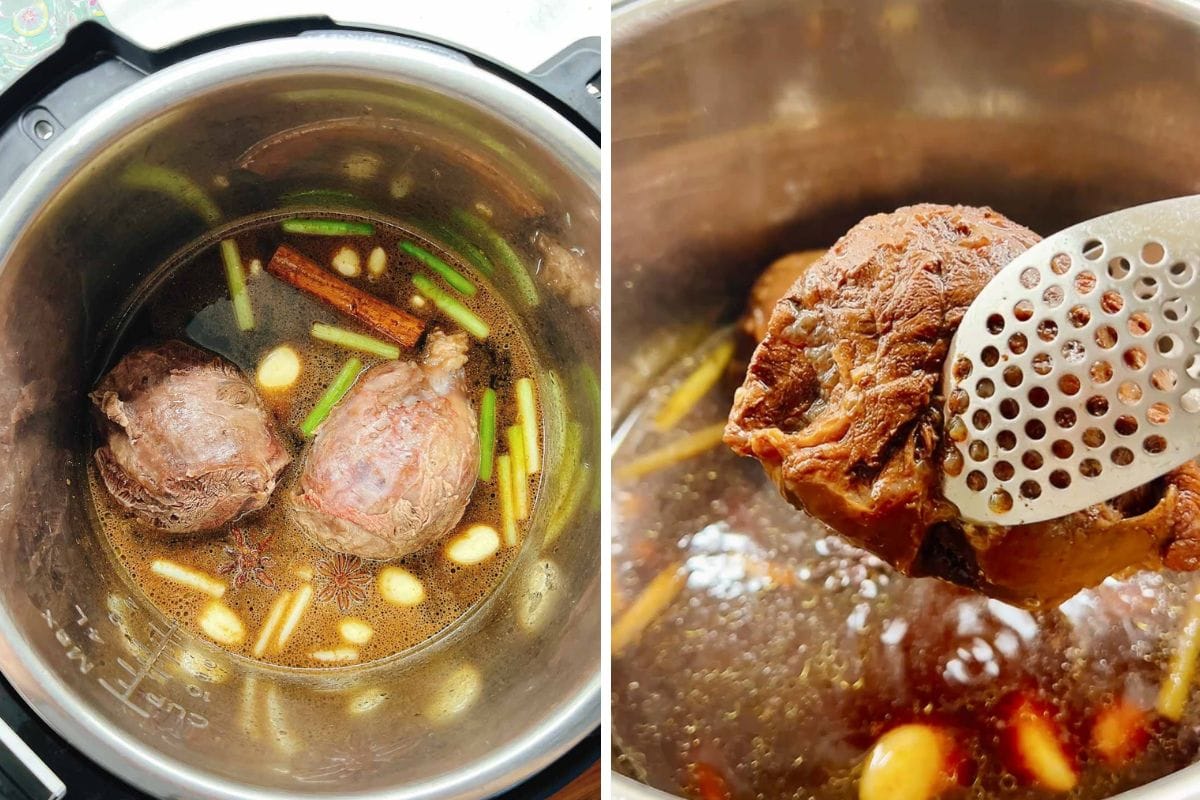
After testing different times, I found 35 minutes on high pressure in a 6-quart Instant Pot gives the best texture. Let it release naturally — no quick release. Quick release can tighten the meat.Natural release takes about 25–30 minutes, so plan for it.
When done, you should be able to lift the whole shank with tongs without it falling apart. It should feel firm with a slight bounce — not soft or fragile. A small knife should go in with gentle resistance.
- Marinate (Highly Recommended)
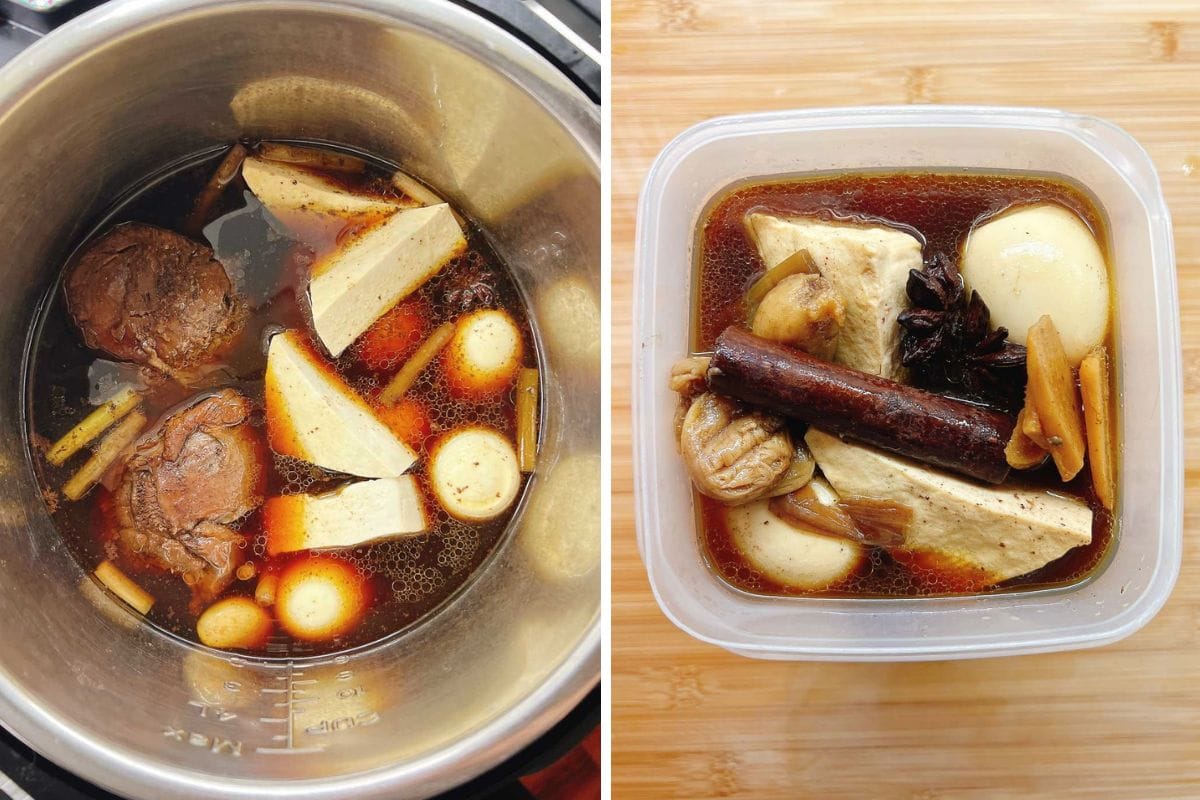
You can eat it once cooled to room temperature. But traditionally, we let it cool in the liquid and marinate — that’s how my family does it.As it chills, the flavor deepens and the texture firms slightly, making thin slicing much easier.
Refrigerate overnight if possible, up to 3 days. It’s common to braise eggs or tofu in the same liquid as part of a casual lu wei assortment — soy-braised items served chilled or at room temperature.
- Slice and Serve
Once fully chilled, slice thinly against the grain.Hold a slice up to the light and you’ll see beautiful tendon marbling running through it. That’s the goal — tender, clean, glossy slices.
Spoon a little braising liquid over the top, drizzle with sesame oil, and garnish. Serve chilled or at room temperature.
Common question
Can I Reuse the Braising Liquid?
I don’t recommend reusing this braising liquid to cook a second batch of beef.
Unlike Chinese master stock, this Taiwanese-style braise is designed for one-time use. The aromatics and spices have already released most of their flavor, so a second batch won’t taste as fragrant.
Instead of reusing, repurpose it.
The broth is delicious. Dilute slightly and use it for noodle soup. Add daikon, carrots, or bok choy for a simple vegetable beef soup. It also works beautifully as a light sauce over rice or chilled noodles.
Taiwanese braised beef shank recipe
Ingredients
- 2-3 whole boneless beef shank about 12 oz each (牛腱)
- 3 oz whole garlic cloves 10 large
- 0.6 oz ginger sliced (6 slices)
- 4 scallion separate white and green parts
- 1 tbsp neutral oil
- 1 whole cinnamon stick 3.25-inch stick
- 1 whole bay leaf
- 2 whole star anise pods
Braising liquid:
- 1 cup beef stock
- 1 cup water
- ½ cup light soy sauce
- ½ cup Taiwanese Michu clear rice wine, or Shaoxing wine
- 1.5 tsp coarse sea salt
- 2 tsp five spice powder
- 2 tbsp brown sugar or 3-3.5 tbsp rock sugar
Optional add-ins (marinate together):
- Hard boiled eggs
- Medium-firm to firm tofu not extra-firm, cut into large chunks
Garnish & serving:
- Drizzle Toasted sesame oil
- Diced Cilantro leaves or diced green onions
- Taiwanese thick soy sauce optional dipping
- Garlic chili sauce optional dipping
Instructions
- Before You Start: This recipe works best if you let the beef chill in the braising liquid overnight after cooking. The cooling and resting time helps the flavor settle and makes slicing much easier — so plan ahead.
- Trim the beef shank: Use a sharp boning knife to trim away the surface silver skin. This step isn’t strictly required, but trimming the silver skin gives noticeably cleaner texture and better slicing.Leave the shank whole — do not slice.
- Poke holes: Use a fork to poke holes all over the beef shank. This helps the braising liquid penetrate more evenly during chilling.
- Remove impurities: Fill a large pot with room-temperature water and add the whole shanks. The water should be about 1 inch (2.5 cm) above the meat.
- Bring to a boil, then lower to medium and simmer for 10 minutes. This removes impurities and keeps the braising liquid clear and clean in flavor.
- The shank will “shrink” into a round ball shape and that’s totally normal. Remove the shanks and set aside on a plate. Do not rinse under cold water. Discard the boiling water.
- Prepare aromatics: Measure the garlic (leave whole). Slice the ginger into long pieces. Separate scallion whites from greens. Cut the white parts into large sections. Dice the green parts finely for garnish and store in a sealed container in the refrigerator.
- Mix braising liquid: Combine all braising liquid ingredients (from stock through sugar) in a large jar. Stir until the sugar dissolves.
- Pressure cook: In a 6-quart Instant Pot, press SAUTE. Add 1 tbsp oil and wait until it reads HOT. Add garlic, ginger, and scallion whites. Sauté for 2 minutes, stirring frequently.
- Add liquid: Pour in the braising liquid. Use a wooden spoon to scrape the bottom to prevent sticking. Press CANCEL.
- Add remaining ingredients: Add bay leaf, star anise, cinnamon stick, and return the beef shanks to the pot. Seal the lid. Set valve to SEALING. Press MANUAL (HIGH PRESSURE) for 35 minutes. Allow natural release for 25–30 minutes until fully depressurized.
- After depressurizing: Open the lid. Press CANCEL. Flip the shanks so the top side contacts the braising liquid.
- Optional add-ins: Add hard-boiled eggs and tofu to the liquid.
- Marinate: Let the braise cool completely. Transfer everything (including aromatics) to a large container. Make sure the beef is fully submerged. Refrigerate overnight and up to 3 days for deeper flavor.
- After marinating, discard the bay leaf, cinnamon stick, and star anise before slicing.
- Plating and serving: Slice thinly against the grain. Arrange on a round plate with halved eggs and tofu in the center. Drizzle with sesame oil. Spoon a few tablespoons of braising liquid over the slices to moisten and season. Garnish and serve chilled or at room temperature with optional dipping sauce on the side.
Notes
- Beef shank alternative cuts: You can use chuck roast or brisket if boneless shank isn’t available. Trim excess fat and cut into thick long, shank-sized pieces so they hold their shape when sliced.
- Adjust pressure cook time (6-quart Instant Pot):
- Chuck roast: 25–30 minutes + full natural release
- Brisket: 45–50 minutes + full natural release
- Do not quick release
- Do not rinse the beef shank after the blanching step. Rinsing—especially with cold water—can cause the surface of the meat to tighten and slightly firm up. Simply discard the blanching water and continue with the recipe.
- Braising liquid balance: Do not make the sauce too salty. The color should be light golden brown — similar to black tea. If the liquid starts too salty, the beef will taste even saltier after chilling.
- Leftover braising liquid: Taste and dilute with water or stock to use as a noodle soup base.
- Make-ahead: This dish is designed for making ahead. Marinate the whole shank (after cooked and unsliced) up to 3 days in the refrigerator.
- Freeze Braised Beef Shank: For best results, freeze the shank whole (do not slice). Divide into individual airtight containers, ideally one shank per container, and add enough braising liquid to mostly submerge the meat. It’s normal if the shank floats slightly. Freeze for up to 2–3 months for best quality.
- Defrosting: Thaw in the refrigerator for 24–36 hours until fully defrosted, then slice and plate as usual. Do not slice before freezing — the whole shank retains texture better.
Nutrition
Nutrition information is automatically calculated, so should only be used as an approximation.
Tip
If You’re Substituting Chuck Roast or Brisket Instead
Beef shank gives the most reliable result because it has the right balance of muscle and connective tissue. But if you can’t find it, you can use chuck roast or brisket.
Trim most of that fat before braising then cut the meat into 1-pound log-shaped pieces (about 4 × 2 inches, roughly the width of a shank) so it cooks evenly and holds its shape for slicing.
- Chuck roast: Pressure cook for 25–30 minutes, followed by full natural release. Chuck is softer than shank, so if you cook it the full 35 minutes (as the recipe instructs), it can turn into a pot-roast texture and crumble when sliced. It may feel very soft when you first open the lid — don’t panic. Once chilled, it firms up nicely.
- Beef brisket: Pressure cook for 45–50 minutes, with full natural release. Brisket has a tighter grain and needs a little more time to become tender enough to slice cleanly. At only 35 minutes, it can still feel slightly firm in the center.
For both cuts, do not skip natural release. The slow pressure drop allows the fibers to relax. Quick release can cause the meat to tighten, which makes thin slicing harder.
How to serve Taiwanese braised beef shank
- As a chilled appetizer: This is the most traditional way. Slice thin and serve cold or at room temperature with a drizzle of sesame oil. I often serve it with Chinese Smashed Cucumber Salad, Din Tai Fung Taiwanese Cabbage with Garlic, or Din Tai Fung Stir Fried Broccoli for a fresh, crunchy contrast.
- With a dipping sauce: You can enjoy it as is, but in my family we like to serve it with a little Taiwanese Thick Soy Sauce for dipping, sometimes mixed with Chili Garlic Sauce for heat.
- As a noodle topping: Add thin slices over Scallion Oil Noodles or Chili Oil Ramen. The clean soy-based flavor pairs beautifully with simple noodles without overpowering them.
- With rice or fried rice: Serve it alongside Din Tai Fung Shrimp Fried Rice or Din Tai Fung Chicken Fried Rice for a fuller meal. The beef adds a rich, savory contrast to lighter rice dishes.
Storage & Make-Ahead
This dish is meant to be made ahead. The beef can stay whole in the braising liquid in the refrigerator for up to 3 days. The flavor gradually deepens as it sits.
For freezing, keep the shank whole and freeze it with some of the braising liquid. The liquid helps protect the surface from drying out. It’s fine if the beef floats slightly.
Always thaw slowly in the refrigerator before slicing. Keeping the shank intact preserves the texture much better than freezing it pre-sliced.
FAQs
I don’t recommend it for this recipe. Cross-cut shank (with the marrow bone in the center) cooks and slices very differently from whole boneless shank. The timing and texture won’t match this method.
If you can’t find boneless shank, it’s better to use chuck roast or brisket and follow the adjusted instructions in the section above.
You can slice and eat the beef once it has cooled to room temperature. But chilling it in the braising liquid overnight makes a real difference. The texture firms up, the slices hold their shape better, and the flavor settles more evenly throughout the meat.
If you’re short on time, it will still taste good. But if you want that classic Taiwanese cold-cut texture, the overnight rest is worth it.
This usually means it was either cooked too long, quick-released instead of naturally released, or sliced while still warm. The beef should feel firm with a slight bounce when done — not soft and fragile.
Natural release is especially important because it allows the fibers to relax slowly. And always chill the shank fully before slicing. Cold beef slices cleanly; warm beef tends to crumble.
More Taiwanese-Style Beef Recipes
- Taiwanese Beef Noodle Soup – The iconic hot bowl with chewy noodles, a rich broth, and thick-cut, tender beef slices. If this shank is the chilled appetizer, this is the full meal centerpiece.
- Chinese Beef Stew – A darker, more intense soy-based braise simmered with daikon and carrots. Richer, deeper, and more sauce-forward compared to the cleaner Taiwanese-style shank here.
Made a dish and loved it? Please rate the recipe and leave a comment in the section below! It helps my blog grow organically, allowing me to continue sharing free and awesome content with you. Thank you!








Another excellent dish from Chihyu! Everything we’ve tried from her blog has always been a hit with my family. The instructions are clear and the photos are easy to follow. We made several shanks and freeze them so we can always have a quick and yummy meal handy!
Thank you. Appreciate it!