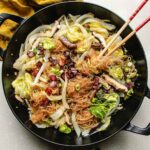
Steamed napa cabbage with glass noodles recipe
Steamed napa cabbage recipe with glass noodles, shiitake, pancetta, and oyster-soy sesame sauce. Easy, savory, and weeknight-friendly.
Servings: 4 servings
Ingredients
- 21 oz Napa cabbage 10-12 medium leaves and stems
- 4 oz Fresh shiitake mushroom caps 3 large and thick caps
- 0.7 oz garlic cloves finely minced (3-4 large)
- 0.4 oz ginger finely minced (1.5-inch small knob)
- 3 oz diced pancetta Canadian bacon, or bacon
- 2.5 tbsp oil divided, or more
- ⅛ tsp coarse sea salt or more to taste
- A few rounds ground black pepper
- 1.5 tbsp light soy sauce
- 1.5 tbsp oyster sauce
- 1 tbsp toasted sesame oil plus more for garnish
- 3.6 oz dry mung bean glass noodles cellophane noodles (3 bundles)
- 1 cup + 4 to 5 tbsp chicken stock divided
- 1-2 Green onion sliced to small rounds
Instructions
PREP:
Napa cabbage
- Trim about ½ inch (1.3 cm) from the bottom of the cabbage to remove the tough base. Peel away any outer leaves that look bruised or dirty. Separate the cabbage into individual leaves.
- Stack a few leaves together, then slice to separate the stems from the leafy parts. Slice the stems into long, thin strips. I like to follow the natural “grain” of the stem so the pieces stay long and neat. For large leaves, cut them in half. Smaller leaves can be left whole.
- Wash the chopped cabbage by dunking it in a large bowl of water a few times. Keep the stem pile separate from the leafy pieces. Rinse and drain well.
Shiitake, garlic, ginger, pancetta:
- Slice the shiitake mushrooms into strips. Finely mince the garlic and ginger. Dice the pancetta. Set everything aside so it’s ready to cook.
Sauce:
- In a bowl, combine the soy sauce, oyster sauce, and sesame oil. Stir well.
COOK:
Crisp the pancetta:
- In a 12- to 14-inch (30 to 35 cm) braiser or deep sauté pan with a lid, preheat the pan over medium-low heat until it feels warm.
- Add 1 tablespoon of oil and the pancetta. Stir occasionally and cook over medium heat until the pancetta is crisp, about 8 minutes. Transfer the pancetta out and leave the oil behind in the pan.
- Depending on the type of pancetta or bacon you use, there should be at least 1 to 1.5 tablespoons of oil left in the pan. If not, add a little more oil before adding the vegetables so they don’t stick.
ADD and STEAM:
- Add the cabbage stems first, followed by the shiitake mushrooms, garlic, ginger, glass noodles, salt, and pepper. Wiggle the noodles into the pan so the bottom side touches the pan and the liquid once added.
- Pour in 1 cup chicken stock, circling around the edge of the pan. Add the cabbage leaves on top to cover the whole pan, then drizzle another ½ tablespoon oil over the top.
- Close the lid. Set the heat to medium and steam for 10 minutes.
TOSS and SEASON:
- After 10 minutes, open the lid. Flip the noodles so the bottom side is now facing up. The top side of the noodles will not be as soft yet because it hasn’t touched as much liquid. Flipping and tossing helps loosen and soften the strands.
- Add 4 to 5 tablespoons of stock, about 2 tablespoons at a time, directly over the noodles. Keep tossing until the noodle strands loosen and soften, about 2 to 3 minutes.
- Once the noodles are softer, pour in the sauce. Toss for another minute to distribute the sauce evenly. Turn off the heat.
GARNISH:
- Drizzle with a little more sesame oil. Garnish with the crispy pancetta and chopped green onions. Serve right away or while still warm.
Video
Notes
- This recipe is designed to be easy with less hands-on cooking time. Because of that, slicing the vegetables to the right size is important. The cabbage stems should turn tender, while the leafy parts stay juicy and soft.
- Layering order and pan size: Please follow the layering order when making this dish. Use a deep sauté pan or braiser with a lid so there is enough room to hold all the ingredients.
- Glass noodles: Mung bean glass noodles often come in small bundles, where the noodles are nested together. Sometimes they are sold as loose, thin strands, but those are less common in the U.S. This recipe is written with bundled noodles in mind. After steaming, they need a few extra tosses to soften evenly and loosen the strands.
- Storage and reheating: Store leftovers in the fridge for 4 to 5 days, but for the best texture, finish them within 3 days. Reheat on the stovetop over medium heat with a little oil, or microwave on medium for 1 minute, or until warmed through.
Nutrition
Serving: 1serving | Calories: 365kcal | Carbohydrates: 35g | Protein: 8g | Fat: 22g | Saturated Fat: 5g | Polyunsaturated Fat: 4g | Monounsaturated Fat: 12g | Trans Fat: 0.03g | Cholesterol: 16mg | Sodium: 902mg | Potassium: 622mg | Fiber: 3g | Sugar: 4g | Vitamin A: 514IU | Vitamin C: 43mg | Calcium: 140mg | Iron: 2mg
