
This post may contain affiliate links. Please read our disclosure policy.
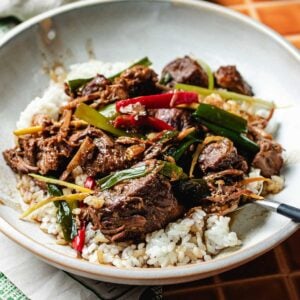
This slow cooker Mongolian pork is a hands-off way to get the bold, savory flavor of classic Mongolian dishes without standing at the stove. Instead of stir-frying, pork shoulder is slowly cooked until tender, then coated in a rich, savory sauce that’s balanced—not overly sweet or salty.
It’s an easy, make-ahead friendly dish that works well for busy days, family dinners, or meal prep. Serve it over rice, turn it into a bowl, or pair it with simple vegetable sides for a comforting, satisfying meal.
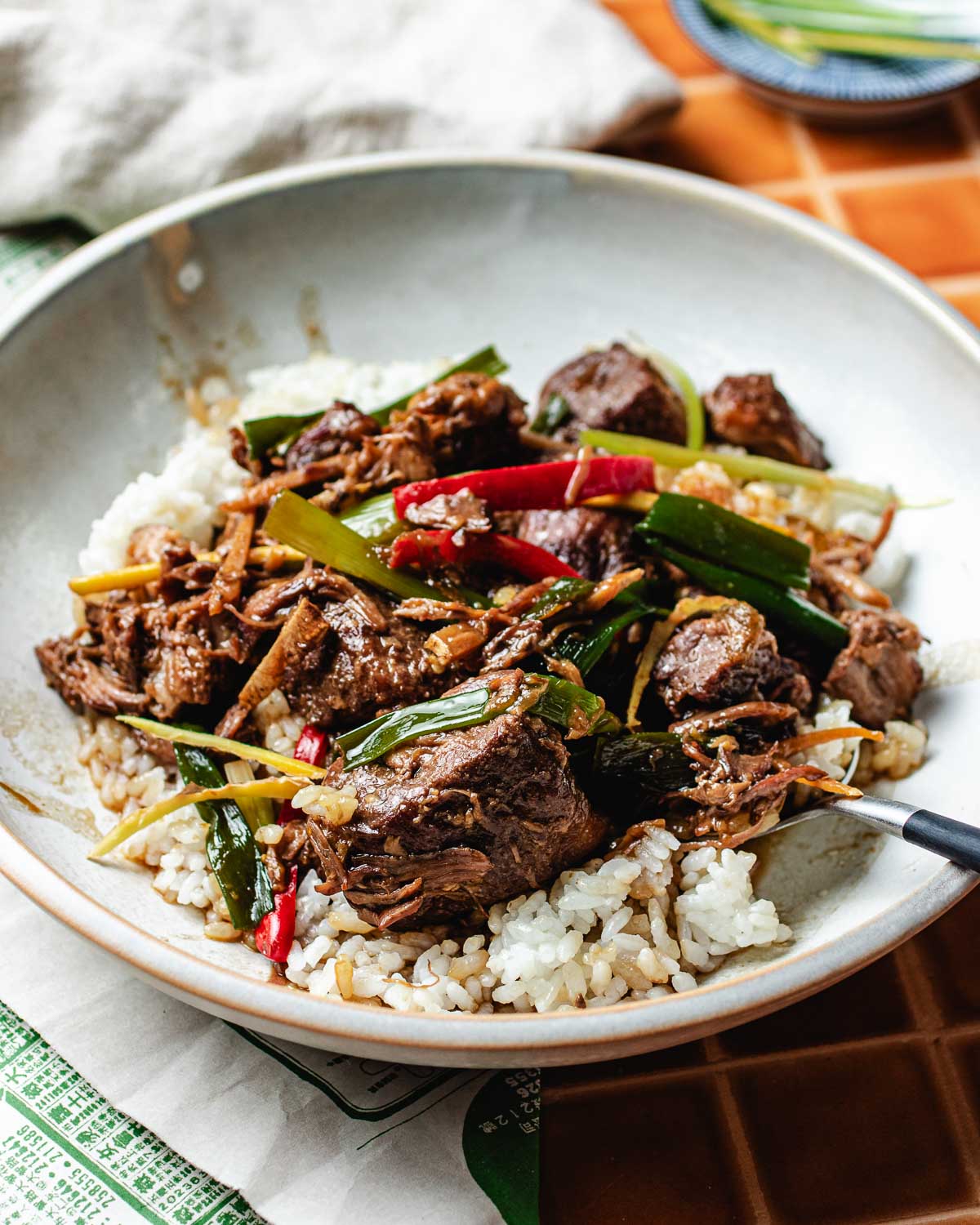
Why You’ll Love This Slow Cooker Mongolian Pork

I developed this recipe because I love Mongolian dishes, but wanted something easier and more hands-off. This slow cooker version lets you set it and walk away, while still delivering the same bold, savory flavor.
It’s designed to make a generous portion, so it’s great for feeding a family with leftovers to spare. Even though the cooking method is different, the flavor is not compromised—just adjusted for slow cooking. The result is a cozy, comforting dish that’s especially perfect for fall and winter.
Key Ingredient Notes
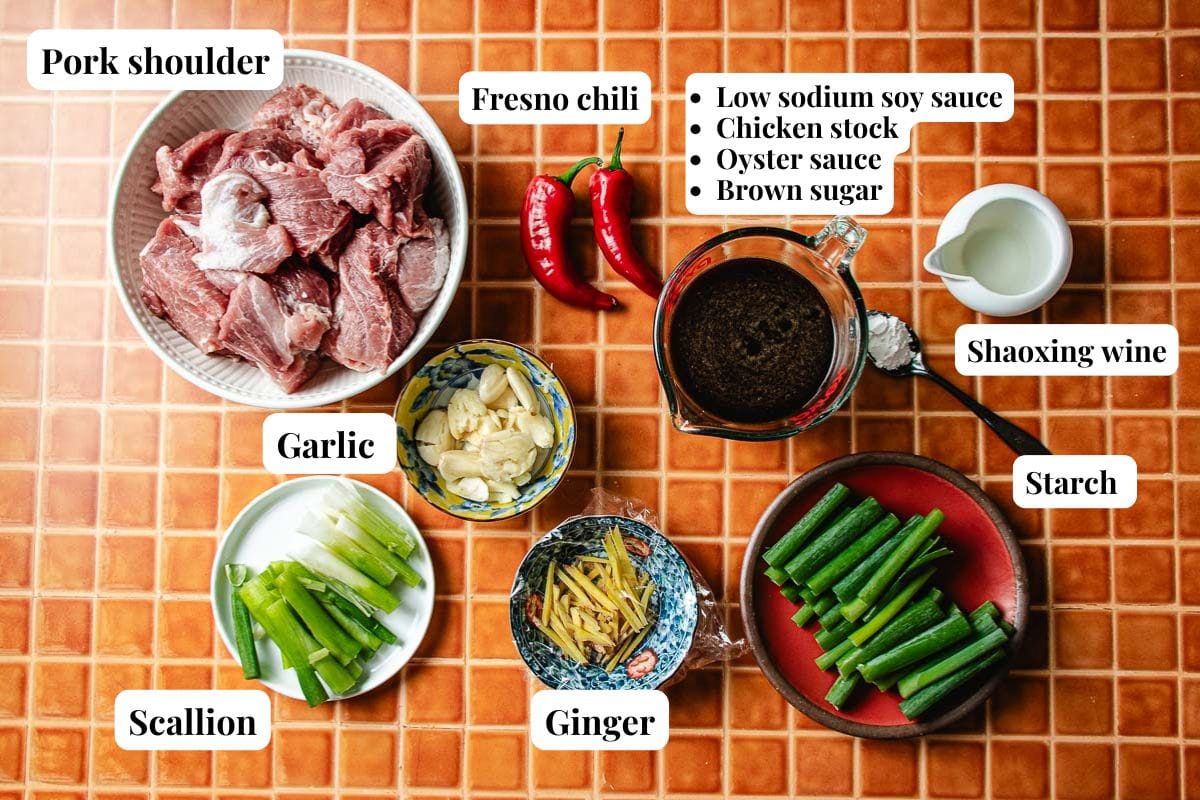
- Pork shoulder (pork butt): The best cut for slow cooking because it stays juicy and turns fork-tender over time. Look for pork shoulder that’s well-marbled with more meat than thick exterior fat, so the final dish is rich but not greasy.
- Low-sodium light soy sauce: A must for slow cooker cooking. In a sealed environment, salty flavors taste stronger over time. Using low-sodium soy sauce keeps the dish savory and balanced instead of overly salty.
- Aromatics (garlic, ginger, scallions, Fresno chili): These are the Asian holy trinity, with chili added for gentle heat. They form the flavor base you’ll also find in classic Mongolian stir-fry dishes and give the sauce its signature aroma.
- Oyster sauce + brown sugar: Oyster sauce adds depth and umami, while a small amount of brown sugar (or coconut sugar) balances the saltiness. This combination creates a well-rounded sauce without making the dish sweet.
What Makes This Slow Cooker Version Reliable
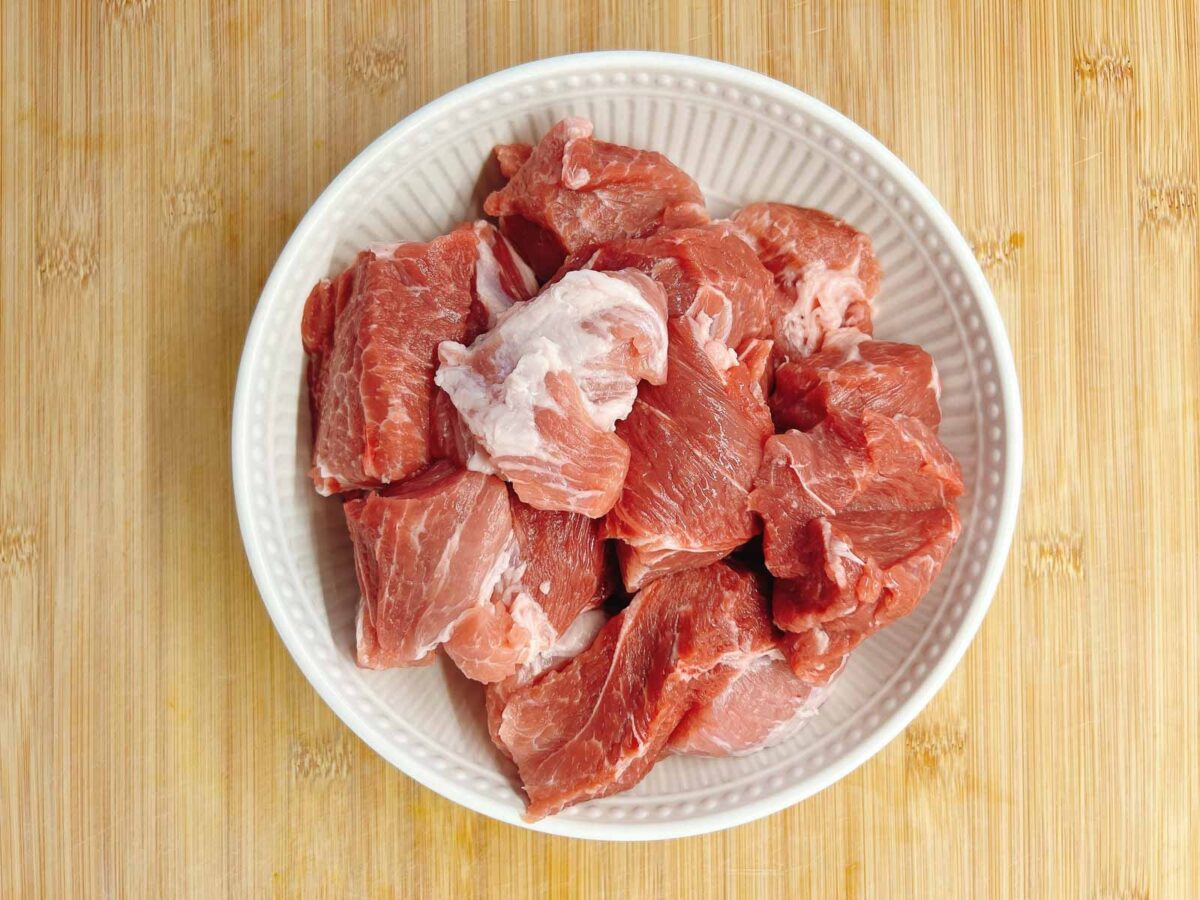
- Why Pork Shoulder Is Cut Into Larger Chunks
Instead of slicing the pork thin, this recipe cuts pork shoulder into 2-inch chunks. This size lets the meat break down gradually during slow cooking without falling apart too early. You get fork-tender pork that still holds its shape, not shredded or mushy meat.
- Savory Sauce That’s Not Too Sweet
Because slow cookers don’t reduce liquid, salty flavors become more pronounced over time. This recipe is balanced to stay savory, with just enough sweetness to round things out.If you don’t have low-sodium soy sauce, mix ⅓ cup regular light soy sauce + ⅙ cup water (2 tablespoons + 2 teaspoons) to replace ½ cup low-sodium soy sauce. The brown sugar is only there to soften the saltiness, not to make the dish sweet.
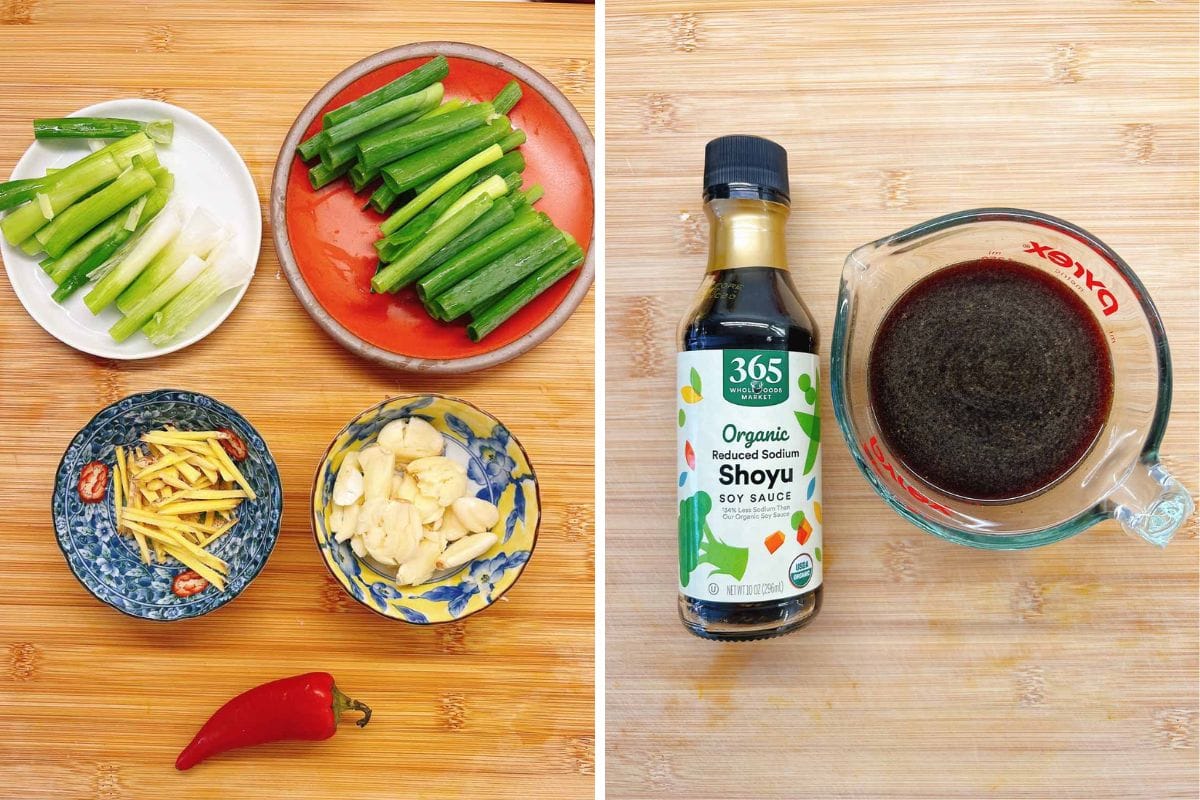
- Build Flavor With Aromatics
Briefly sautéing the aromatics before slow cooking is key. This step wakes up the garlic, ginger, scallions, and chili so their flavor carries through the entire cook time. Skipping it often leads to flat-tasting slow cooker dishes. - How to Thicken the Sauce in a Slow Cooker
Slow cookers don’t reduce liquid, so the sauce is thickened at the end with a slurry made from the braising liquid already in the pot, not added water. This tightens the sauce quickly and gives it a smooth, spoonable finish instead of a watery one.
Mongolian Pork Slow Cooker Recipe
Video
Ingredients
- 3 lb pork shoulder or pork butt, dice to 2-inch chunks
- 1.5 oz garlic cloves peeled and smashed (8 large)
- 0.6 oz ginger thinly sliced (one chubby thumb)
- 4-5 scallion
- 2 tbsp avocado oil saute
Braising sauce:
- ½ cup low sodium light soy sauce
- ½ cup chicken stock
- 2 tbsp oyster sauce
- 2.5 tbsp brown sugar or coconut brown sugar
Finishing:
- 1 tbsp starch
- 2 tbsp Chinese cooking wine gluten-free sake or dry sherry
- 1-2 whole red fresno chili pepper julienned (seeded, optional)
Instructions
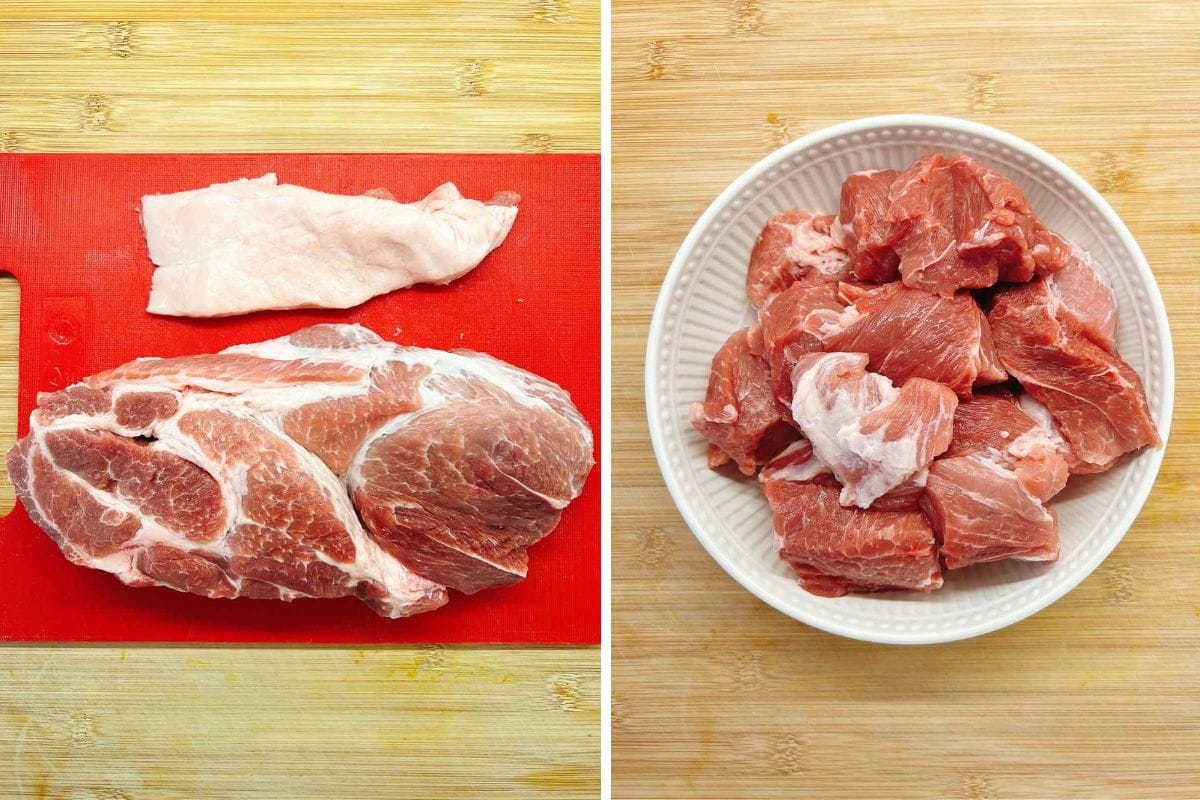
- Trim the pork: Trim excess surface fat from the pork shoulder and cut it into 2-inch (5.08 cm) chunks. Transfer to a bowl and set aside.

- Prep the aromatics: Smash the garlic cloves. Thinly slice the ginger.
- Prep the scallions: Separate the white and green parts. Lightly pound the scallion whites with the back of a knife to flatten slightly, then cut them into 2½–3-inch (6.35 – 7.62 cm) sections. Cut the scallion greens into similar lengths and store them in the fridge for later.
- Mix the braising sauce: In a large measuring cup, combine the soy sauce, chicken stock, oyster sauce, and sugar. Stir until the sugar dissolves.
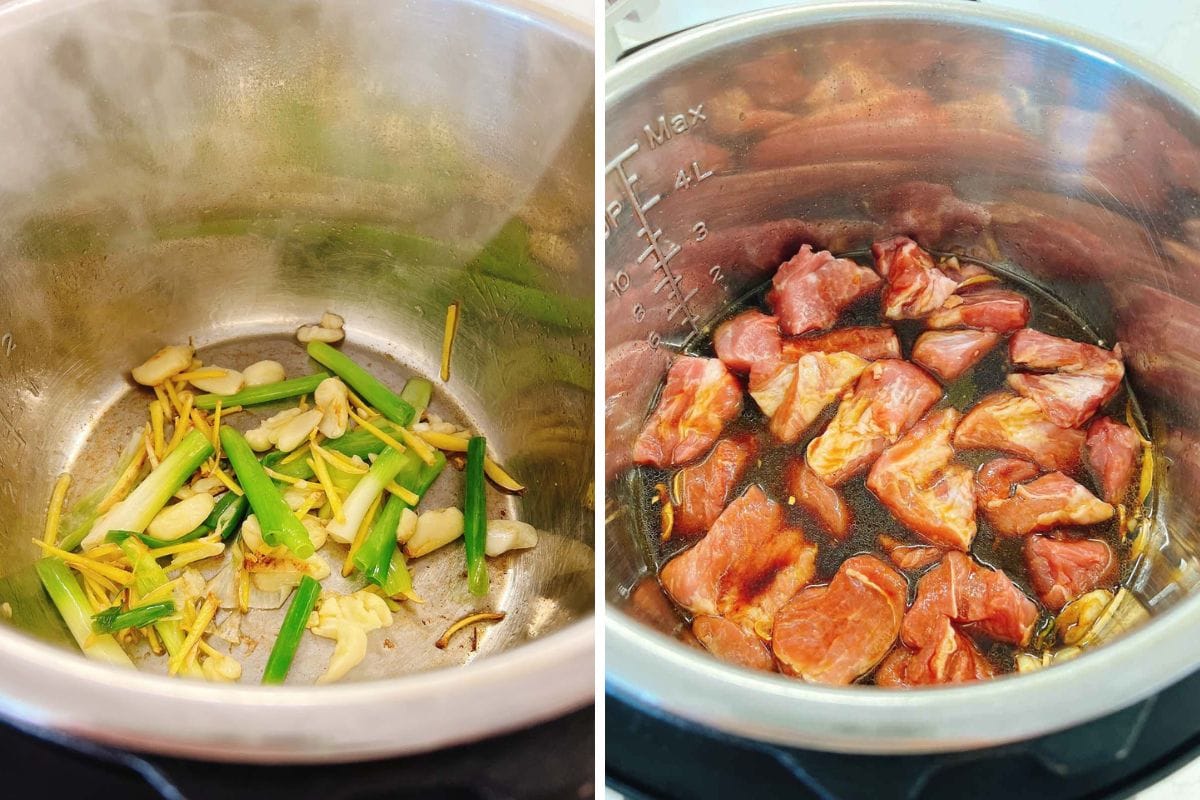
- Sauté the aromatics: On a 6-quart Instant Pot, select Sauté – More/High. Add the oil and preheat until shimmering. Add the garlic, ginger, and scallion whites. Sauté for 2–3 minutes, stirring often so nothing burns. Press Cancel.Using a regular slow cooker (Crockpot)? Simply sauté the aromatics in a large skillet on the stovetop first, then transfer everything to your slow cooker before continuing with the slow cook steps below.
- Add the pork and sauce: Pour in the braising sauce, scraping up any browned bits from the bottom. Add the pork, stir to coat, then spread it into an even layer.
Slow cook:
- Using a regular slow cooker (Crockpot):Transfer everything to your slow cooker. Cover and cook on High for 4–5 hours or Low for 6–7 hours, until the pork is fork-tender.
- Using the Instant Pot slow cook function with a tempered glass lid: Cover with the lid. Select Slow Cook – More/High and cook for 4–5 hours, until the pork is fork-tender. Press Cancel and remove the lid.
- Using the Instant Pot slow cook function with the pressure cooker lid (venting): Lock the lid in place and move the valve to Venting. Select Slow Cook – More/High and cook for 4–5 hours, until the pork is fork-tender. Press Cancel and carefully open the lid.
- Make a slurry: Skim off excess surface fat. In a small bowl, mix the starch with 3 tbsp of the braising liquid to form a slurry.
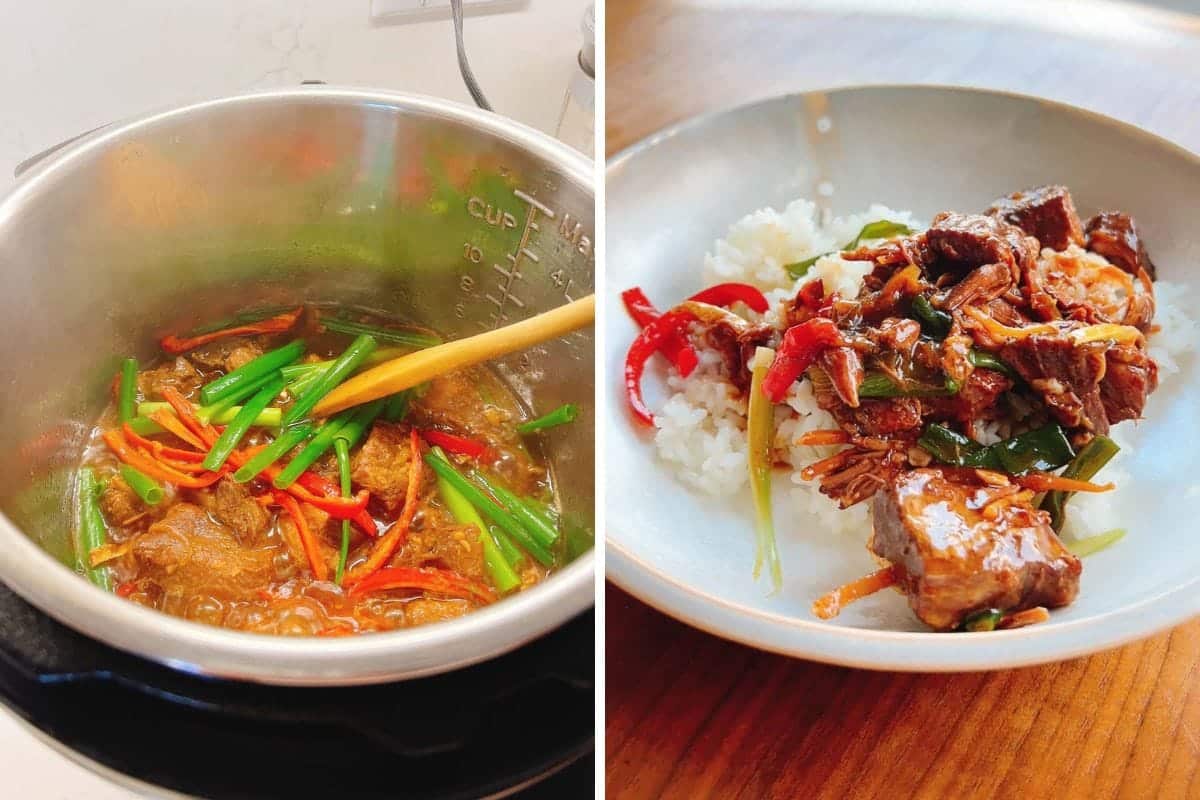
- Finish and thicken: Select Sauté – Normal/Medium and bring the sauce to a gentle simmer. Add the cooking wine, chili peppers, and scallion greens. Stir for 1 minute, then slowly pour in the slurry while stirring until the sauce lightly thickens, about 30 seconds to 1 minute. Press Cancel.
- To serve: Spoon the pork and sauce over hot steamed rice. Serve hot or warm with a simple vegetable side.
Notes
- Pressure cooker method (instead of slow cook): Lock the lid and set the valve to Sealing. Select Manual/Pressure Cook – High and cook for 30 minutes. Allow a 15-minute natural release, then carefully vent the remaining pressure.
- Soy sauce tip: Use low-sodium light soy sauce. Regular soy sauce will make the dish overly salty.
- Make-ahead friendly: This dish tastes even better the next day, making it ideal for meal prep.
- Storage: Once cooled to room temperature, store the pork in the fridge for up to 4–5 days. You can also shred the pork, divide it into individual portions, and freeze for up to 3 months.
Nutrition
Nutrition information is automatically calculated, so should only be used as an approximation.
Slow Cooker vs. Pressure Cooker: What’s the Difference?
The slow cooker gives the pork more time to break down gently, which helps the flavors develop into a deeper, more savory umami. As the meat cooks slowly, moisture is released gradually, so the sauce tastes more cohesive and concentrated by the end.
A pressure cooker works much faster, but the high pressure forces more liquid out of the pork at once, often leaving the sauce thinner and the flavors sharper.
If you’re after melt-in-your-mouth pork and a rich, balanced sauce, the slow cooker is the better choice; the pressure cooker is best when speed matters most.
What to Serve With Mongolian Pork
- With rice: Serve it over Steamed white rice for a classic pairing, or try Air fryer rice if you like a slightly crisp texture that soaks up the sauce well.
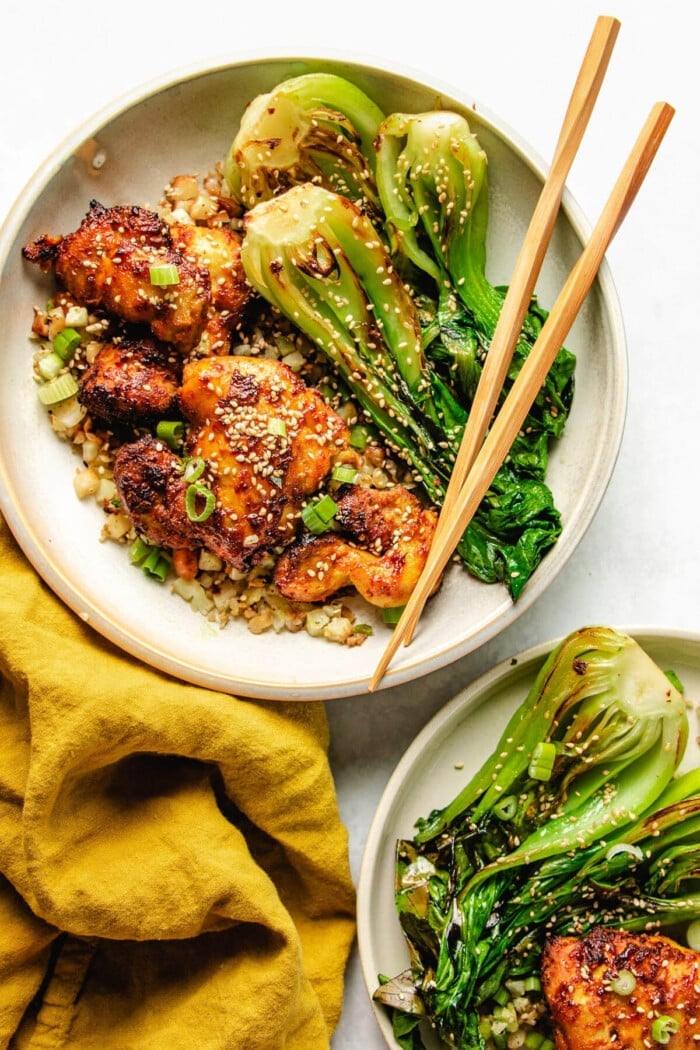
- With vegetable sides: Balance the rich pork with Chinese smashed cucumber salad, Chinese broccoli stir fry, or simple Steamed bok choy for freshness.
- Make it a bowl: Turn it into a rice bowl with Soy sauce eggs, Crispy tofu puffs, and Taiwanese pickled daikon for contrast in texture and flavor.
FAQs
Pork tenderloin and pork fillets are much leaner and tend to dry out in a slow cooker. Pork shoulder works better because it stays juicy over long cooking. For tenderloin, a quick stovetop stir-fry is a better choice.
Yes, but add them near the end so they don’t turn soft or watery. Quick-cooking vegetables like bell peppers, snow peas, or broccoli florets work best in the last 30 minutes.
Yes, but the result will be different. Pressure cooking releases more liquid quickly, which can leave the sauce thinner and the flavor sharper. The slow cooker gives you softer pork and a more balanced sauce.
More Mongolian & Braised Pork Dishes to Try
- Paleo Mongolian beef – A quick wok-style stir-fry with bold, savory Mongolian flavor, great when you want something fast and punchy.
- Mongolian chicken – A slightly crispier stir-fry version with the same classic Mongolian sauce, perfect for weeknight cooking.
- Mongolian shrimp – A quick and easy shrimp stir fry dish with loads of Mongolian aromatics and sauce.
Made a dish and loved it? Please rate the recipe and leave a comment in the section below! It helps my blog grow organically, allowing me to continue sharing free and awesome content with you. Thank you!








I am so confused! I want to make your Mongolian Beef in our Slow Cooker, but your directions keep talking about an Instant Pot or a Pressure Cooker. Very confusing and we just want to use the Slow Cooker!
Please help! Your recipes look so good, but I am confused.
Hi! Thank you so much for asking.
You can absolutely use a regular slow cooker (Crockpot). Just add everything to your slow cooker after sautéing the aromatics, then cook on High for 4–5 hours or Low for 6–7 hours, until the pork is fork-tender.
The Instant Pot instructions are there for readers who have one with a slow cook function — but you do not need an Instant Pot to make this recipe.
I hope that helps! Let me know if you have any other questions — I’m excited for you to try it!
We made this slow cooker pork for our mid-week dinner and have plenty of left for the next day + lunch. The pork is so tender and the gravy sauce is so flavorful and comforting. Super easy to make, too. Just add eveyrthing and dinners read in no time!
That’s wonderful. Thank you!
Can this be cooked in a regular slow cooker?
Yes. If using a crockpot, saute the aromatics on the stovetop first then simply transfer it to a crockpot and add the rest of ingredients, followed by the same cooking time.