This post may contain affiliate links. Please read our disclosure policy.
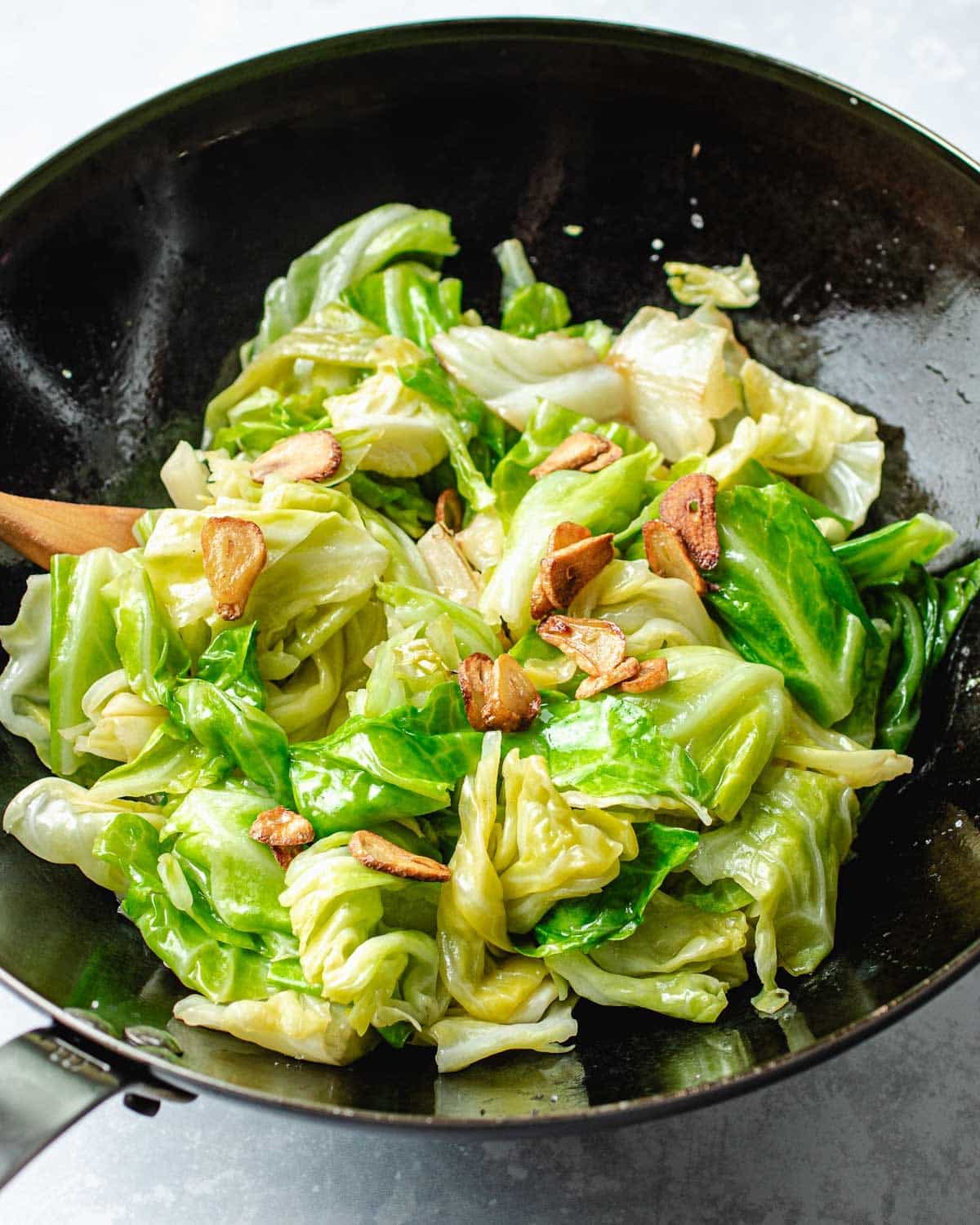
Every time we visit Din Tai Fung, this garlic cabbage is one of the first dishes I order. It looks simple — just cabbage and garlic — but the flavor is unmistakably restaurant-style. Light, clean, and deeply fragrant. The texture is crisp and juicy, never soggy.
The good news? It’s actually very easy to make at home. No complicated sauces. No long ingredient list. Just garlic, oil, salt, and the right timing and this dish comes together in minutes.
Let me show you how to recreate this Din Tai Fung cabbage copycat at home.
What Makes Din Tai Fung Cabbage Different?

This dish is so simple, yet so good. It looks humble, but the first bite tells you exactly what it is — unmistakably Taiwanese. The flavor is clean and simple, yet incredibly satisfying. The focus is on texture and letting the ingredients shine.
That’s the heart of Taiwanese cooking.
What sets this version apart:
- Garlic chips – Thinly sliced garlic is slowly fried until crisp. They’re not just garnish — they add aroma and texture.
- Garlic oil flavor base – The cabbage is sautéed in the same fragrant garlic oil, so every bite carries that gentle, savory warmth.
- Only salt as seasoning – No soy sauce. No oyster sauce. Just salt. When the technique is right, the cabbage tastes naturally sweet and clean.
If you’ve tried my Taiwanese sautéed cabbage, that version follows a more home-style approach and uses shiitake mushroom seasoning for added umami. This Din Tai Fung restaurant copycat focuses on garlic oil, minimal seasoning, and precise texture instead.
Both are approachable — they just highlight different flavor foundations.
Main Ingredient Notes
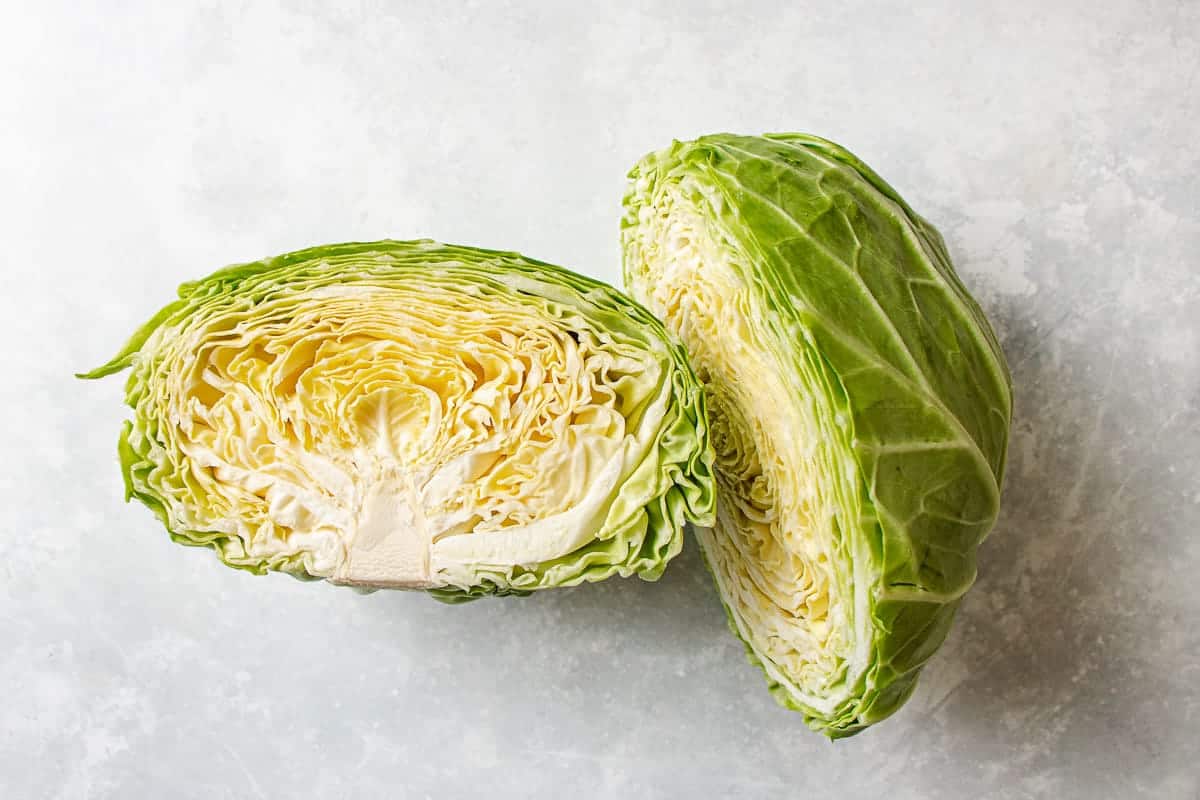
- Taiwanese cabbage (flat white cabbage): You can usually find it at Asian grocery stores and sometimes at farmers’ markets. It has loose, pale green leaves and wide, juicy stems that stay tender yet crisp when cooked. Avoid round green cabbage — it’s too dense and won’t give the same light, juicy texture.
Tip
Best Taiwanese Cabbage Subsitute
If you can’t find Taiwanese cabbage, the best substitute is Korean flat white cabbage, which has a similar wide shape and juicy texture. Flat cabbage from Japanese grocery stores is also a good option.
Pointed white cabbage (also called sweetheart, conehead, or sugarloaf cabbage) is the next best substitute. It works well, though it’s slightly less sweet and not quite as juicy.
- Garlic: A must-have ingredient to make garlic chips and garlic oil that gives this dish its signature Din Tai Fung flavor. Look for whole, large cloves that are plump, firm, and shiny, without bruises or dry spots.
- Neutral oil: Use avocado or another neutral oil. It keeps the flavor clean and allows the garlic and cabbage to shine. Neutral oils also handle high heat well, which is important for stir-frying.
- Taiwanese mijiu (rice wine): A clear rice cooking wine commonly used in Taiwanese kitchens. It’s lighter and cleaner in aroma than Shaoxing wine. Chinese clear rice wine works well as a substitute. Shaoxing wine is slightly deeper in flavor but still suitable. For an alcohol-free option, use chicken stock.
- Salt: The only seasoning. With good ingredients and proper cooking, salt is all you need.
How to Make Din Tai Fung Cabbage (Copycat Version)
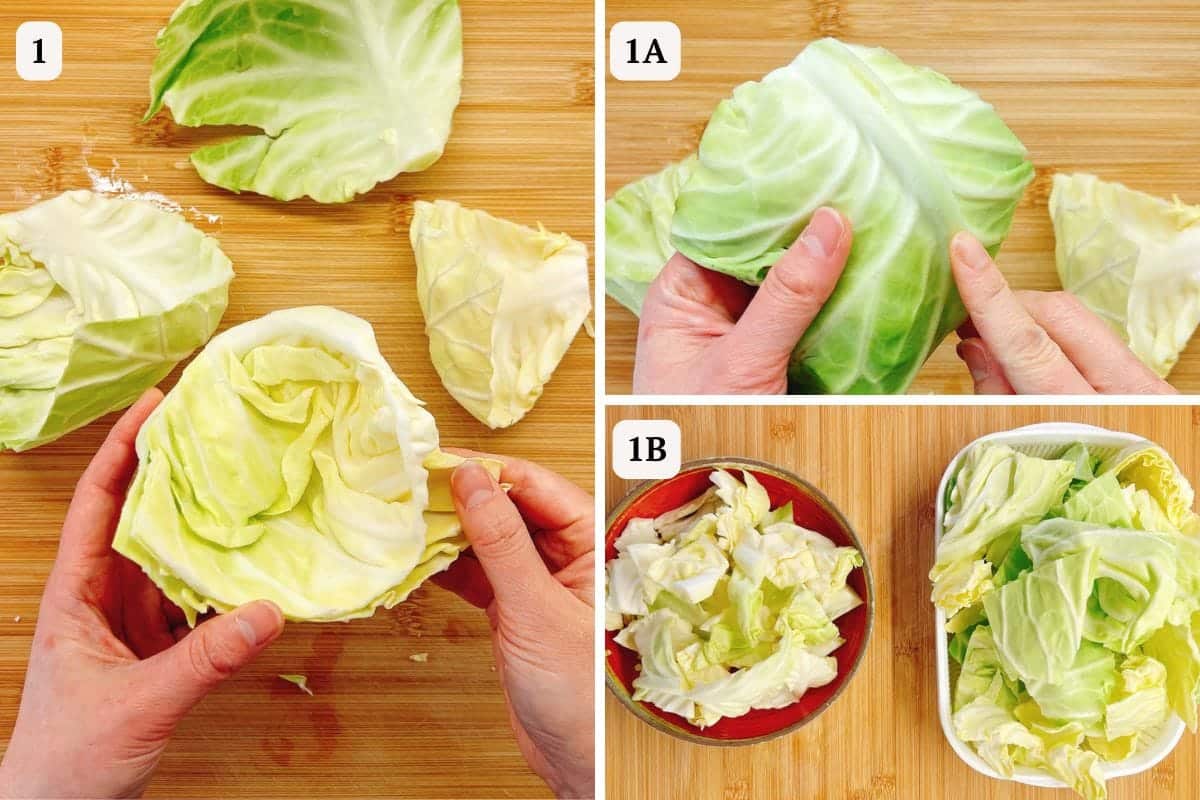
Step 1: Break down the cabbage correctly. Taiwanese cabbage leaves are tightly layered, so gently pull them apart with your hands — this helps them cook faster and more evenly. Separate the thick stems from the leafy portions. Cut the stems slightly smaller and keep the leaves a bit larger. They don’t need to be perfectly uniform, just close enough so everything finishes at the same time.
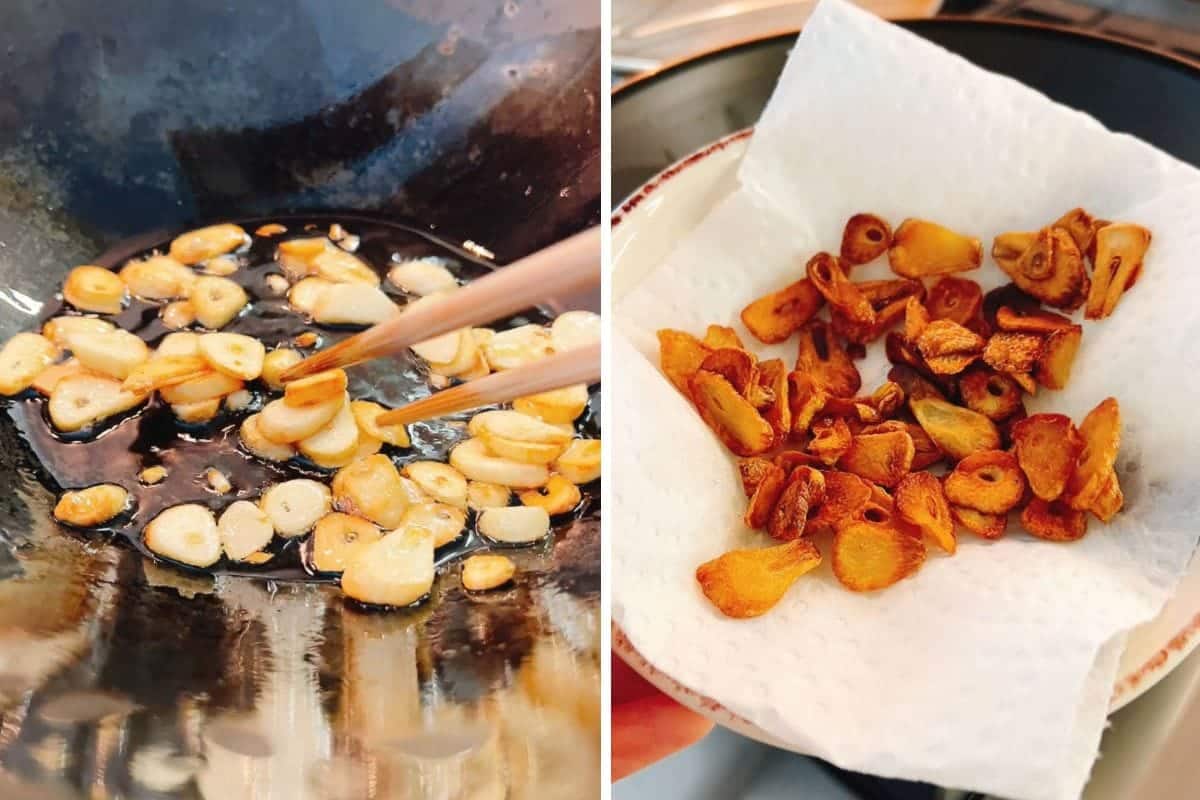
Step 2: Bloom the garlic in cold oil. Add the sliced garlic and oil to a cold pan, then turn on medium-low heat. Starting cold allows the garlic to slowly release its aroma into the oil and brown evenly. Once the slices turn light golden, watch closely — this is when they can burn quickly. Flip frequently and remove as soon as they look golden and crisp. Burnt garlic will make the oil bitter.
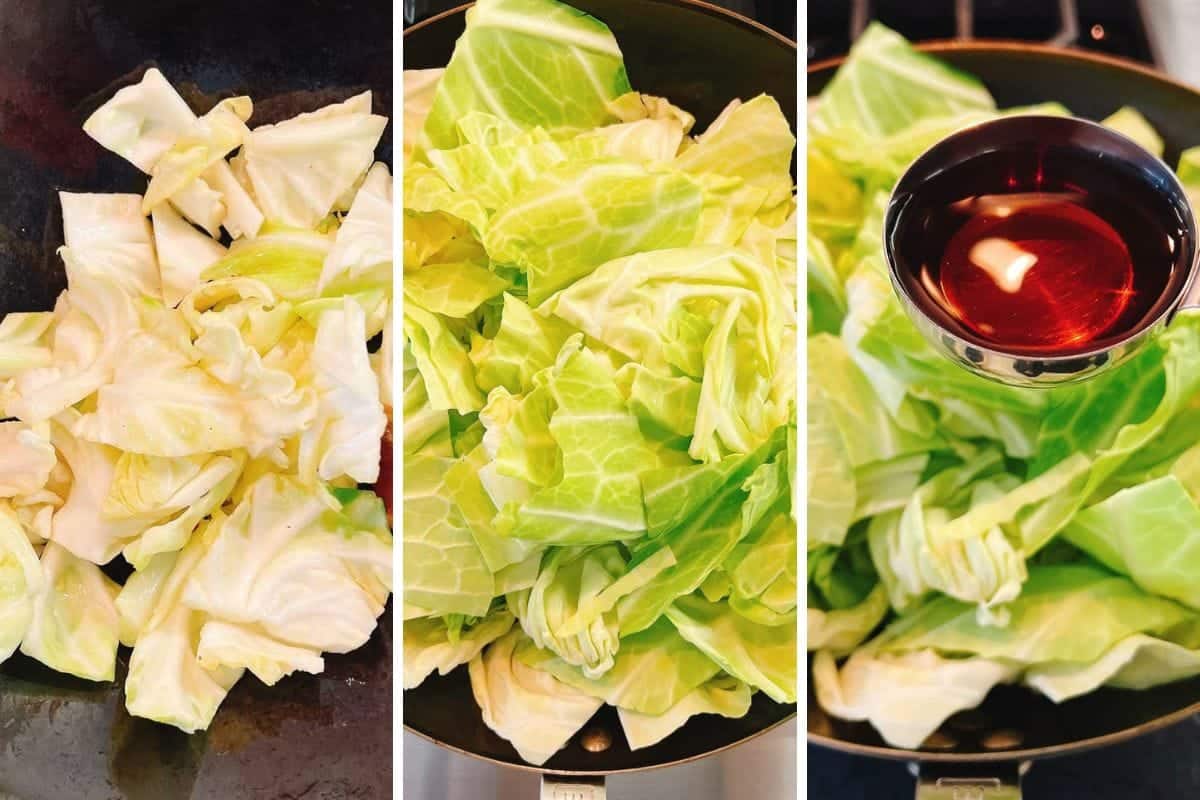
Step 3: Control heat and timing. Once the garlic is removed, increase the heat to medium-high. The pan should feel hot, but not smoking. Add the cabbage stems first and toss constantly for about 30 seconds. You should hear a steady sizzle. Tossing introduces cooler air and helps regulate the pan temperature so nothing scorches.
Step 4: Trap the steam briefly. Add the leafy portions and give a quick toss. Pour in the rice wine and immediately cover the pan. Reduce heat to medium and let it steam for about 2 minutes. This short covered phase softens the cabbage evenly without overcooking it — a technique that works especially well for home stoves.
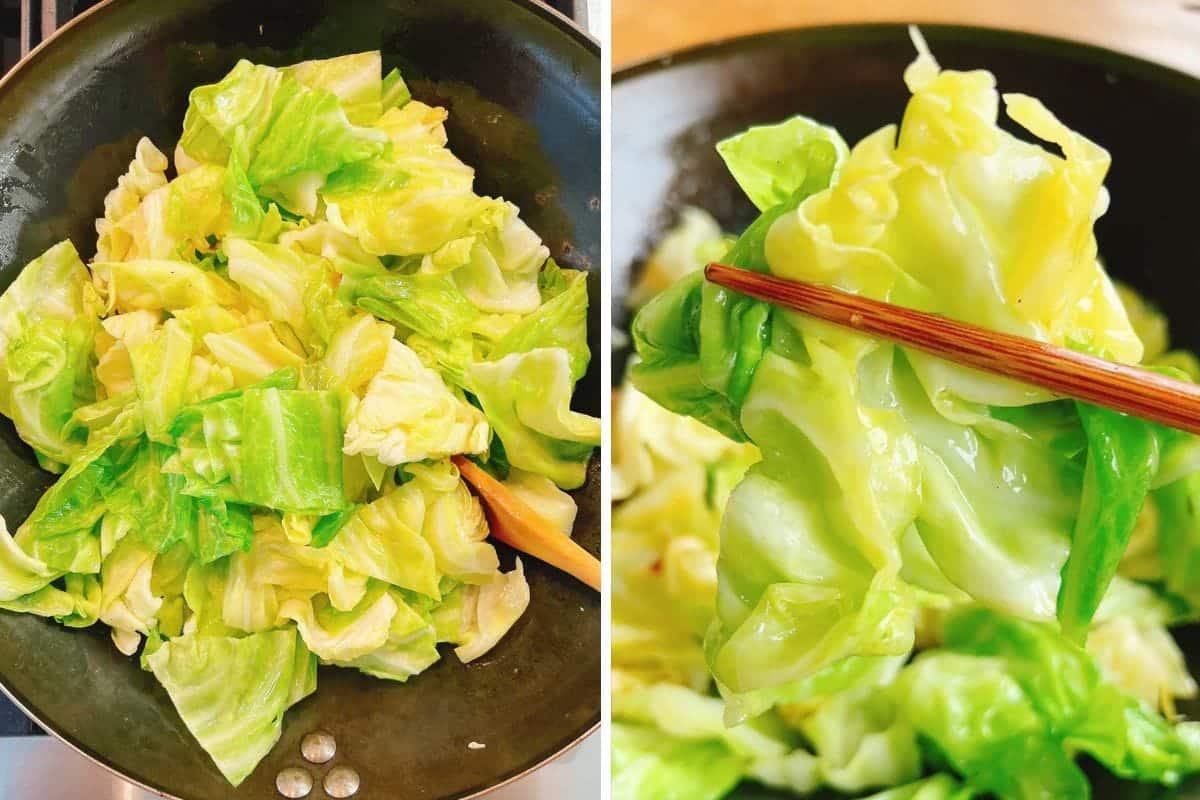
Step 5: Use visual cues, not just time. When you remove the lid, the top layer should look bright green, glossy, and slightly translucent. The bottom layer cooks faster because it’s closer to the heat source, so if the top looks pale, toss once so the bottom comes to the top and cover briefly again.
Step 6: Season and stop early. Add salt and toss just to distribute. Turn off the heat while the cabbage is still crisp and juicy. The stems should look slightly translucent, and the leaves bright and glossy. Residual heat will finish the job.
How to Keep the Cabbage Crisp and Not Watery
- Why did my cabbage turn watery?
Most of the time, it’s overcooked. When the heat is too low or the pan is overcrowded, the cabbage slowly releases liquid instead of lightly sautéing.Use a large, wide sauté pan so you still have room to toss. You should hear a steady sizzle from the start. If the cabbage sits too long without enough heat, it will steam in its own juices and turn soft.
Draining well after rinsing also helps, but heat control is usually the real issue.
- Why is my cabbage unevenly cooked?
The stems and leaves cook at different speeds. Give the stems a short head start, then add the leaves. A quick covered steam for about two minutes helps everything cook evenly while keeping the texture crisp. - Why did my garlic turn bitter?
Garlic burns quickly once it turns golden. Begin with a cold pan over medium-low heat so the slices slowly release their fragrance and bloom into the oil. Watch closely as the color changes — once golden and lightly firm, remove immediately. Dark brown means bitter. - Why doesn’t mine taste like Din Tai Fung?
The flavor comes from garlic oil and proper texture — not extra seasoning. If you overcook the cabbage, use too little garlic, or start adding soy sauce or other sauces, the flavor changes.Focus on good cabbage, enough garlic, steady heat, and proper timing. That’s what gives it that clean, restaurant-style taste.
Din Tai Fung Taiwanese Cabbage With Garlic Recipe
Ingredients
- 2 lb Taiwanese cabbage (flat white cabbage)
- 1.5 oz garlic cloves thinly sliced (8 large)
- 2 tbsp neutral flavored oil plus more if needed
- ¼ + ⅛ cup Taiwanese mijiu (clear rice wine) or Shaoxing wine, dry sherry, or 1/4 cup chicken stock
- Less than 1 tsp coarse sea salt or to taste
Equipment
- 1 12-inch or larger saute pan (or wok pan)
- 1 A id (to cover the pan)
Instructions
Slice the cabbage:
- Use your hands to peel away and discard the outermost layer.
- Use a chef’s knife to quarter the cabbage. Hold the knife at a 45-degree angle to trim away the core.
- Use your hands to gently separate the layers so they cook evenly.
- For thicker stem sections, slice the leaves away from the core. Gather the stems into a pile and dice them into smaller chunks.
- For tender leafy sections, roughly chop into larger pieces. They don’t need to be perfectly even, but aim for similar sizes so they cook at the same rate.
Clean the cabbage:
- Rinse the cabbage under running water. Shake off as much moisture as possible, then spread it over large towels to drain. The cabbage should be slightly damp but not dripping.
Make garlic chips:
- In a large 12-inch wok or deep sauté pan with a lid, add the oil and sliced garlic to a cold pan.
- Turn the heat to medium-low and slowly fry the garlic until golden, about 8–10 minutes. Stir occasionally so both sides cook evenly. Keep the heat gentle to prevent burning.
- Transfer the garlic to a paper towel-lined plate. It will crisp up further as it cools. Leave the fragrant garlic oil in the pan.
Saute the cabbage stems first:
- Increase the heat to medium-high. Once the pan feels hot (but not smoking), add the cabbage stems. Sauté for about 30 seconds.
Add the cabbage leaves:
- Add the leafy portions. Give everything a quick toss.
- Pour in the rice wine (or stock) and immediately cover the pan with a lid.
- Reduce the heat to medium and cook for 2 minutes. You should hear a gentle, steady sizzle.
Check:
- Remove the lid. The top layer of the cabbage should look bright green, glossy, and slightly translucent.
- If it still looks pale or raw, give the cabbage a quick toss so the bottom layer comes to the top. Cover again and cook for 1 more minute.
- If the cabbage looks dry instead of glossy, drizzle in a little more oil.
Season:
- Sprinkle in the salt. Toss for about 30 seconds to distribute evenly. There should not be a large pool of liquid in the pan. A small amount of natural cabbage juices is normal.
- Turn off the heat while the cabbage is still crisp, juicy, and light green.
Serve:
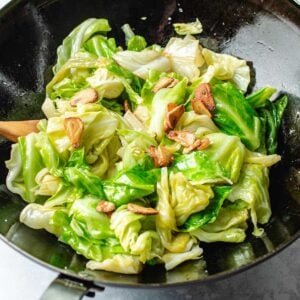
- Transfer to a serving plate and garnish with garlic chips. Serve hot or warm.
Notes
- Cabbage selection: Use Taiwanese cabbage (flat cabbage) for best texture and sweetness. Choose one that feels heavy and fresh.
- Substitutes: White cabbage from Korean markets works best. Pointed cabbage (sweetheart) is acceptable but slightly less juicy.
- Not recommended: Regular round green cabbage (with a tight round shape) is too dense and won’t produce the same tender, glossy result.
- Storage and reheat: The cabbage stores well in the fridge for 4 days. It tastes sweet and juicy even when served chilled.
Nutrition
Nutrition information is automatically calculated, so should only be used as an approximation.
What to Serve with Din Tai Fung Cabbage
This garlic cabbage pairs well with savory Taiwanese mains and rice dishes.
Proteins
- Taiwanese Three Cup Chicken – Bold, savory, and slightly sweet, it balances the clean garlic flavor of the cabbage.
- Taiwanese Soy Marinated Chicken – Tender and deeply flavorful, it makes this a complete, comforting meal.
- Din Tai Fung Pork Chops – Crispy on the outside and juicy inside, just like the restaurant pairing.
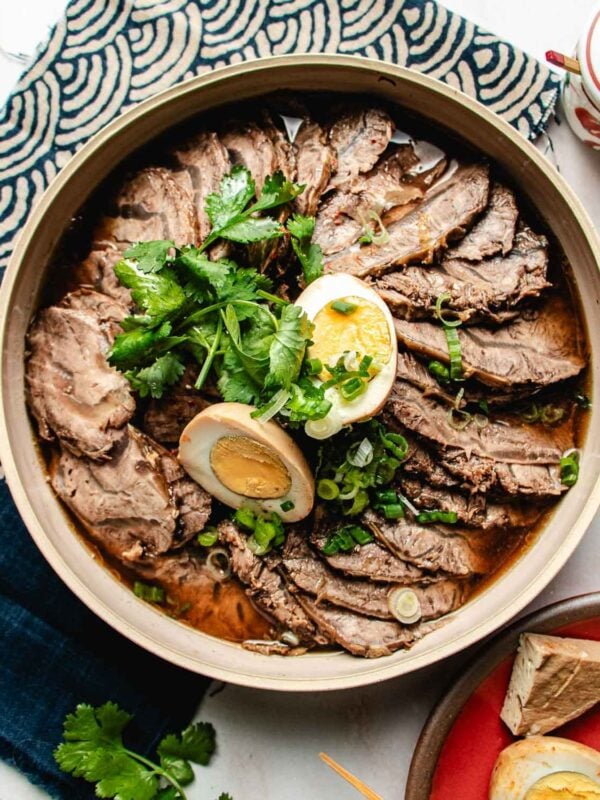
- Taiwanese Braised Beef Shank – Rich and savory, it contrasts nicely with the light, glossy cabbage.
Rice Dishes
- Din Tai Fung Shrimp Fried Rice – A classic combination if you’re recreating the restaurant experience.
- Din Tai Fung Chicken Fried Rice – Savory and comforting, it lets the cabbage stay the star.
More Taiwanese recipes you might like
If you love comforting Taiwanese flavors, here are a few more classics to try:
- Taiwanese Beef Noodle Soup – Rich, deeply savory broth with tender braised beef and chewy noodles. It’s one of the most iconic Taiwanese dishes.
- Dan Bing – A traditional Taiwanese breakfast crepe with authentic flavor and texture. Soft, slightly chewy, and delicious in the best way.
- Lu Rou Fan – Slow-cooked pork shoulder simmered in a savory sauce and served over rice. This home-style version uses a leaner cut, just like many modern Taiwanese families make it.
Made a dish and loved it? Please rate the recipe and leave a comment in the section below! It helps my blog grow organically, allowing me to continue sharing free and awesome content with you. Thank you!