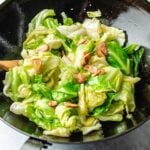
Din Tai Fung Taiwanese Cabbage With Garlic Recipe
Din Tai Fung cabbage copycat made with garlic chips, garlic oil, and simple salt seasoning. Crisp, clean, and easy to make at home.
Servings: 4 servings
Equipment
- 1 12-inch or larger saute pan (or wok pan)
- 1 A id (to cover the pan)
Ingredients
- 2 lb Taiwanese cabbage (flat white cabbage)
- 1.5 oz garlic cloves thinly sliced (8 large)
- 2 tbsp neutral flavored oil plus more if needed
- ¼ + ⅛ cup Taiwanese mijiu (clear rice wine) or Shaoxing wine, dry sherry, or 1/4 cup chicken stock
- Less than 1 tsp coarse sea salt or to taste
Instructions
Slice the cabbage:
- Use your hands to peel away and discard the outermost layer.
- Use a chef’s knife to quarter the cabbage. Hold the knife at a 45-degree angle to trim away the core.
- Use your hands to gently separate the layers so they cook evenly.
- For thicker stem sections, slice the leaves away from the core. Gather the stems into a pile and dice them into smaller chunks.
- For tender leafy sections, roughly chop into larger pieces. They don’t need to be perfectly even, but aim for similar sizes so they cook at the same rate.
Clean the cabbage:
- Rinse the cabbage under running water. Shake off as much moisture as possible, then spread it over large towels to drain. The cabbage should be slightly damp but not dripping.
Make garlic chips:
- In a large 12-inch wok or deep sauté pan with a lid, add the oil and sliced garlic to a cold pan.
- Turn the heat to medium-low and slowly fry the garlic until golden, about 8–10 minutes. Stir occasionally so both sides cook evenly. Keep the heat gentle to prevent burning.
- Transfer the garlic to a paper towel-lined plate. It will crisp up further as it cools. Leave the fragrant garlic oil in the pan.
Saute the cabbage stems first:
- Increase the heat to medium-high. Once the pan feels hot (but not smoking), add the cabbage stems. Sauté for about 30 seconds.
Add the cabbage leaves:
- Add the leafy portions. Give everything a quick toss.
- Pour in the rice wine (or stock) and immediately cover the pan with a lid.
- Reduce the heat to medium and cook for 2 minutes. You should hear a gentle, steady sizzle.
Check:
- Remove the lid. The top layer of the cabbage should look bright green, glossy, and slightly translucent.
- If it still looks pale or raw, give the cabbage a quick toss so the bottom layer comes to the top. Cover again and cook for 1 more minute.
- If the cabbage looks dry instead of glossy, drizzle in a little more oil.
Season:
- Sprinkle in the salt. Toss for about 30 seconds to distribute evenly. There should not be a large pool of liquid in the pan. A small amount of natural cabbage juices is normal.
- Turn off the heat while the cabbage is still crisp, juicy, and light green.
Serve:
- Transfer to a serving plate and garnish with garlic chips. Serve hot or warm.
Video
Notes
- Cabbage selection: Use Taiwanese cabbage (flat cabbage) for best texture and sweetness. Choose one that feels heavy and fresh.
- Substitutes: White cabbage from Korean markets works best. Pointed cabbage (sweetheart) is acceptable but slightly less juicy.
- Not recommended: Regular round green cabbage (with a tight round shape) is too dense and won’t produce the same tender, glossy result.
- Storage and reheat: The cabbage stores well in the fridge for 4 days. It tastes sweet and juicy even when served chilled.
Nutrition
Serving: 1serving | Calories: 155kcal | Carbohydrates: 17g | Protein: 4g | Fat: 7g | Saturated Fat: 1g | Polyunsaturated Fat: 1g | Monounsaturated Fat: 5g | Sodium: 624mg | Potassium: 432mg | Fiber: 6g | Sugar: 7g | Vitamin A: 223IU | Vitamin C: 86mg | Calcium: 111mg | Iron: 1mg
