This post may contain affiliate links. Please read our disclosure policy.
Din Tai Fung chicken fried rice is one of the restaurant’s most famous dishes. The rice is light and fluffy, coated in eggs for its signature pale yellow color, and tossed with tender chicken and scallions.
The ingredients are simple, and once you understand a few key techniques, you can recreate this Din Tai Fung–style chicken fried rice at home with the same clean flavor and fluffy grains. I’ll walk you through the method step-by-step, and the whole dish comes together in about 30 minutes.

What Makes Din Tai Fung Chicken Fried Rice Different
Din Tai Fung chicken fried rice reflects a classic Taiwanese fried rice style—light, clean, and well-seasoned. Instead of relying on heavy sauces, the dish focuses on good ingredients and a few key techniques that bring everything together.
- Simple seasoning that lets the ingredients shine: The rice is seasoned with salt, white pepper, and seasoning powder rather than soy sauce. This keeps the grains light in color while giving the dish a balanced savory flavor.
- Egg and rice cook almost together: The eggs go into the pan just before the rice. Because they’re still soft when the rice is added, they coat the grains as everything is tossed together, creating the signature pale yellow color.
- Thinly sliced, tender chicken: The chicken is sliced very thin and quickly marinated before cooking, which keeps the meat soft and juicy.
- Light, fluffy rice texture: The grains stay separate and airy rather than clumped together, giving the fried rice its signature fluffy texture.
Main Ingredient Notes

- Rice (short-grain white rice): In Taiwan, the most common rice is short-grain white rice, similar to Japanese rice. This comes from Taiwan’s history with Japan. For the most authentic Din Tai Fung–style fried rice, use short-grain white rice (California-grown works well). My favorite brand is Takami Gold. The rice should be completely cooled, ideally chilled overnight, so the grains stay separated when stir-fried.
- Chicken breast: Taiwanese chicken fried rice typically uses thinly sliced chicken breast. When prepared properly, the chicken stays tender and absorbs the seasoning well. I’ll show you the simple method used in many Asian kitchens to keep the chicken soft and flavorful.
- Eggs: Large eggs are essential for this dish. You’ll need at least three eggs so the fried rice gets its signature light yellow color.
- Scallions: Separate the scallions into white and green parts. The white portion is sautéed to build flavor, while the green portion is added at the end for freshness and color.
- Seasoning: Salt, ground white pepper, shiitake mushroom seasoning, or chicken bouillon are commonly used to give the rice a light savory flavor while keeping the rice pale.
How Din Tai Fung Makes Chicken Fried Rice (Step-by-Step)
This restaurant-style fried rice cooks very quickly once the wok is hot. Instead of repeating the recipe card instructions, this section shows how the dish comes together in the pan and what to watch for so you can achieve the same fluffy texture at home.

- Everything is prepared before the wok gets hot
Fried rice moves fast, so all ingredients must be ready before cooking begins. The rice should already be separated into loose grains, the chicken thinly sliced, and the scallions, eggs, and seasonings measured out. For the rice, gently break apart any clumps with your hands before cooking. I usually wear a disposable glove when doing this—it helps separate the grains more easily.(We’ll talk more below about how the chicken is sliced and why it stays so tender.)

- The chicken is cooked separately first
Din Tai Fung cooks the chicken separately from the rice because they require different stovetop heat levels. The chicken is seared over medium to medium-high heat, while the rice is later stir-fried over medium-high heat.Use a large 12-inch wok or sauté pan and preheat it until the pan feels quite warm but not smoking. Spread the chicken out in a single layer so it sears evenly. You should hear a gentle steady sizzle, not a hard sear. The chicken stays mostly pale with light golden edges, which keeps it juicy. Once just cooked through, remove it so the rice can stir-fry properly.

- Eggs start the fried rice
When the wok is hot and oil is added, the eggs go in whole—not whisked. They should immediately begin bubbling in the oil. Quickly break them up with your spatula for a few seconds. While the eggs are still barely set, add the rice and start tossing. This timing allows the eggs to lightly cling to the rice grains, giving Din Tai Fung fried rice its signature pale yellow coating. (We’ll explain this technique more in the egg section below.) - Tossing the rice builds the texture
Instead of pressing the rice down, lift and toss it from the bottom of the wok. This scooping motion introduces air and helps the grains stay separate. Avoid smashing the rice with the spatula—doing so compresses the grains and can make the fried rice dense. - Listen for the gentle popping sound
As the rice stir-fries, moisture evaporates and the grains begin to lightly crisp. You’ll start hearing a soft popping sound from the pan. This is a good sign that the rice is drying properly and developing the fluffy texture this Taiwanese fried rice is known for.

- Bring everything together
Once the rice becomes fluffy and you start hearing the gentle popping sound, return the chicken and add the scallion greens. Give everything a quick toss so the ingredients combine evenly.To serve it like Din Tai Fung, lightly pack the fried rice into a small bowl, level the top, and invert it onto a plate. When the bowl lifts away, the rice holds a neat dome shape, just like the restaurant version.
Why the Chicken Stays So Tender
One detail that makes this fried rice special is the soft, juicy texture of the chicken. Instead of cooking plain sliced chicken, the meat is lightly marinated before searing.

First, the chicken is thinly sliced at about a 45-degree angle. Cutting at an angle creates wider pieces that can be sliced very thin—ideally thinner than ⅛ inch. Thin slices cook quickly and stay tender in the wok. I also find that using a boning knife makes it easier to slice the chicken thinly than using a large chef’s knife.
The marinade uses a few simple ingredients common in many Asian kitchens. A small amount of water helps rehydrate the chicken breast, and as you gently massage the meat, it absorbs that moisture. Starch forms a light coating that protects the surface during cooking, while a tiny amount of baking soda helps tenderize the protein—you won’t taste it in the final dish.
This technique is closely related to velveting, a method widely used in Chinese stir-fries to keep meat tender. If you’d like to learn more, see my guide on How to Velvet Chicken.
How the Eggs Coat the Rice
One of the signature details of Din Tai Fung-style fried rice is how the eggs lightly coat each grain of rice instead of forming large scrambled pieces.
This method is different from the fried rice technique many home cooks are used to. Normally, eggs are scrambled first, removed from the pan, and added back later. Din Tai Fung’s approach is closer to cooking the eggs and rice almost at the same time.
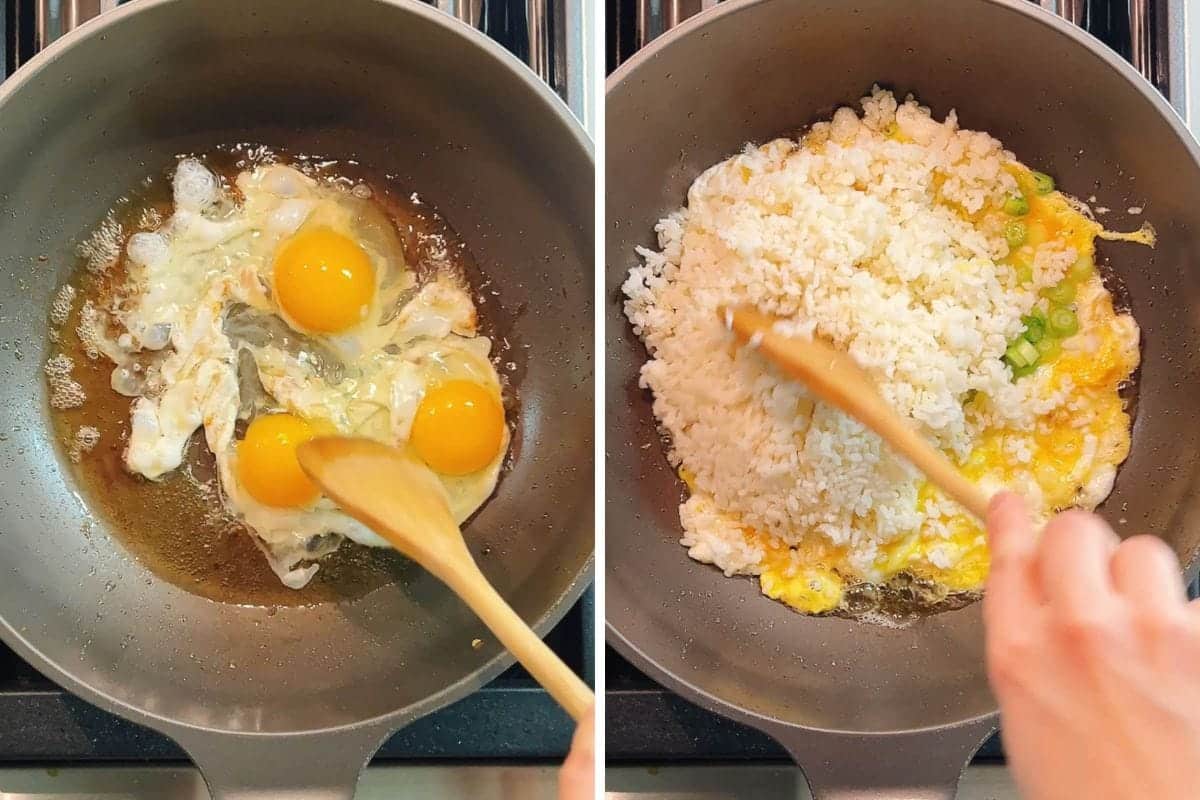
The eggs go into the hot oil whole—not whisked. As soon as they hit the pan, quickly break them up with a spatula for just 3–5 seconds. Before the eggs fully set, the rice is immediately added to the wok.
Because the eggs are still soft at that moment, they cling to the rice grains as the rice is tossed. With constant scooping and tossing, the eggs form a thin coating around the grains, giving the fried rice its signature pale yellow color.
Din Tai Fung Chicken Fried Rice Recipe

Ingredients
For the chicken:
- 8 oz chicken breast boneless, skinless, about 1 thick breast
- ¼ tsp coarse sea salt
- 2 small dash ground white pepper
- 1 tbsp olive oil
- 2 tsp starch
- ¼ tsp baking soda
- 1 tbsp water
For the rice:
- 2.5 cups cooked day-old cold rice short-grain white rice, sushi rice, or jasmine rice
- 3 large eggs
- ½ tsp coarse sea salt
- ½ tsp garlic powder
- 1.5 tsp shiitake mushroom seasoning or chicken bouillon
- ⅛ tsp ground white pepper plus a dash more for garnish
- 2 scallions diced (separate white and green parts)
- 2 tbsp oil divided (0.5 tbsp for chicken; 1.5 tbsp for rice)
Instructions
Prep:
- Chicken: Thinly slice the chicken breast at an angle by holding the knife at about a 45-degree angle. This creates thin slices instead of thick strips.
- Transfer the chicken to a large bowl and season with salt, pepper, oil, starch, baking soda, and water.
- A small amount of water helps rehydrate the chicken breast and keeps it moist, but don’t add too much. Gently massage the chicken mixture until the liquid is absorbed.
- Chilled Rice: Before cooking, use your hands to gently separate the rice grains so there are no clumps. This dish cooks quickly, so there won’t be time to break apart the rice once you start stir-frying.
- Scallions & eggs: Dice the scallions into small rounds and separate the white and green parts. Crack the eggs into a small bowl but do not whisk them.
- Seasonings: Measure out the salt, garlic powder, white pepper, and bouillon powder.
Sear chicken:
- Sear the chicken breast: In a large 12-inch wok or sauté pan, preheat over medium heat until the pan feels quite warm (but not smoking). Add ½ tbsp oil. Add the chicken and quickly spread it into a single layer.
- Sear the first side over medium to medium-high heat for about 2 minutes. Flip with a spatula, reduce the heat to medium, and cook for another 2 minutes. Transfer the chicken out once cooked and set aside.
Fried rice:
- Eggs: Using the same pan, preheat over medium-high heat. When hot, add 1½ tbsp oil. Pour in the eggs — they should immediately start bubbling. Use a wooden spatula to quickly break up the eggs, about 5 seconds.
- Rice: While the eggs are still barely cooked, add the white scallion parts and the rice. Turn the heat up to high and stir-fry the rice using a scooping and tossing motion. Scoop the rice from the bottom of the pan and toss the grains upward so they mix with the eggs, about 1 minute.
- Avoid pressing down on the rice with your spatula. Work around the pan, lifting and tossing from the bottom rather than smashing the grains.
- Season fried rice: Sprinkle in the seasoning mixture and keep scooping and tossing the rice to introduce air into the hot wok.This helps moisture evaporate and keeps the rice grains crisp.
Combine:
- Continue tossing until you hear the rice grains making a gentle popping sound. This means the grains are no longer wet and the texture becomes slightly crisp, about 1–2 minutes. Taste and adjust the seasoning if needed.
- Add chicken & green onions: Return the chicken to the pan and add the green scallion parts. Give everything a quick toss for 20–30 seconds, then turn off the heat.
Serve:
- Plate like Din Tai Fung: To plate like Din Tai Fung, lightly pack the fried rice into a small bowl. Level the surface and gently press it down so it holds its shape. Place a plate over the bowl and carefully invert it so the bowl is upside down.Lift the bowl and you’ll have a dome-shaped fried rice, just like the restaurant version. Serve hot.
Notes
- Types of rice to use: Din Tai Fung uses California-grown short-grain white rice. In the U.S., this type of rice is commonly labeled as sushi rice.
- Use day-old rice: Day-old chilled rice makes the best fried rice. The grains are separated and slightly dry, so they stir-fry better and don’t turn mushy or sticky.
- Chicken color and tenderness: The chicken in Din Tai Fung fried rice stays mostly white with only a light golden color. This shows the heat is controlled carefully — not overly hot — so the chicken stays tender and moist.
Nutrition
Nutrition information is automatically calculated, so should only be used as an approximation.
What to Serve with Din Tai Fung Fried Rice
Din Tai Fung fried rice is often served with a few simple sides to round out the meal. If you’re building a similar spread at home, try pairing it with:
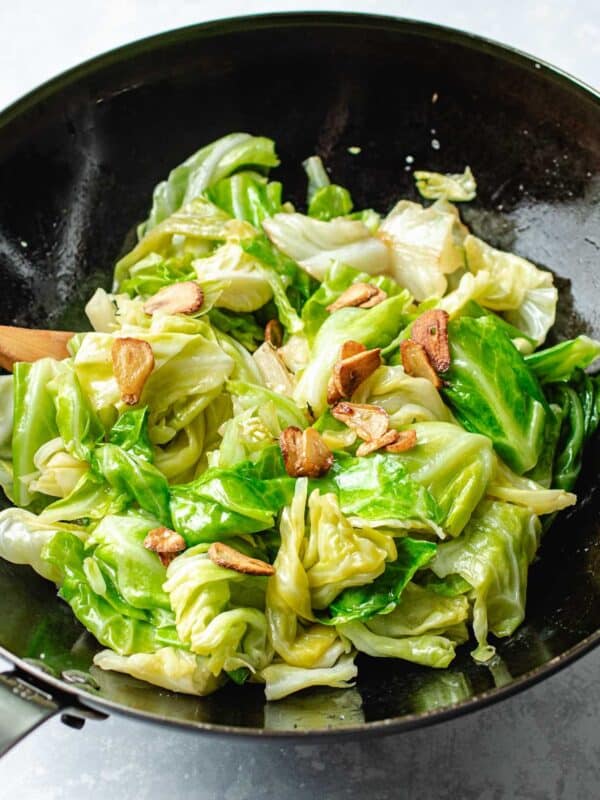
- Din Tai Fung Taiwanese cabbage with garlic – light, garlicky, and one of the restaurant’s most popular vegetable sides.
- Din Tai Fung air fryer garlic green beans – crisp, savory, and easy to make.
- Asian cucumber salad – refreshing and crunchy alongside the warm fried rice.
- Spicy chicken wontons – soft dumplings tossed in a flavorful chili sauce.
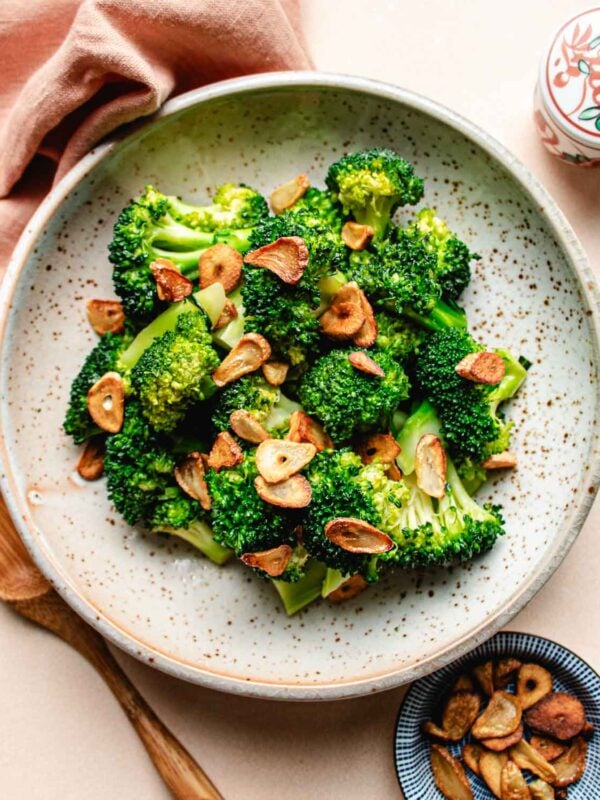
- Din Tai Fung stir fried broccoli – Tender and crisp broccoli stir fried in garlic oil.
FAQs
This usually happens when the rice is too moist or overcooked. Use fully cooled rice (preferably chilled overnight) and gently break apart any clumps before stir-frying so the grains stay separate. If you’re unsure about the rice-to-water ratio, see my guide on How to Cook Rice in a Rice Cooker for the method I use at home.
Fresh rice is usually too soft and moist. Let the rice cool completely first, ideally chilling it overnight so the grains stay fluffy when stir-fried.
Din Tai Fung seasons the rice with salt, white pepper, and seasoning powder instead of soy sauce. This keeps the rice light in color while still giving it a savory flavor.
The eggs are added whole and broken up just before the rice goes in. Because the eggs are barely set, they lightly coat the rice grains and create the signature pale yellow color.
Din Tai Fung Fried Rice Variations
Once you understand the basic technique, many Din Tai Fung fried rice dishes follow the same foundation. The restaurant typically starts with simple egg fried rice and then adds different proteins.
- Din Tai Fung shrimp fried rice: This is one of the restaurant’s most popular versions. The shrimp are cooked separately and then tossed with the egg fried rice at the end so they stay tender and juicy.
- Pork chop fried rice: At Din Tai Fung, the pork chop is cooked separately and served sliced over egg fried rice rather than mixed in. To recreate this version at home, pair the fried rice with my Taiwanese pork chop recipe inspired by Din Tai Fung’s simple, clean flavor.
- Din Tai Fung egg fried rice: This is the simplest and most classic version. It highlights the signature technique where the eggs coat the rice grains, creating the light yellow color and fluffy texture the restaurant is known for.
Made a dish and loved it? Please rate the recipe and leave a comment in the section below! It helps my blog grow organically, allowing me to continue sharing free and awesome content with you. Thank you!