
This post may contain affiliate links. Please read our disclosure policy.
This chicken meatball hot pot is one of my favorite cozy meals for cold weather. The broth is clean and savory, the chicken meatballs stay soft and tender, and the whole pot feels warm and comforting without being heavy.
The style is a mix of Japanese and Taiwanese home cooking — both cuisines love light, clear broths with simple, fresh ingredients. Everything cooks in one pot, and the result is a comforting chicken hot pot that’s very beginner-friendly and perfect for weeknights, relaxed hot pot nights at home, or family gatherings.
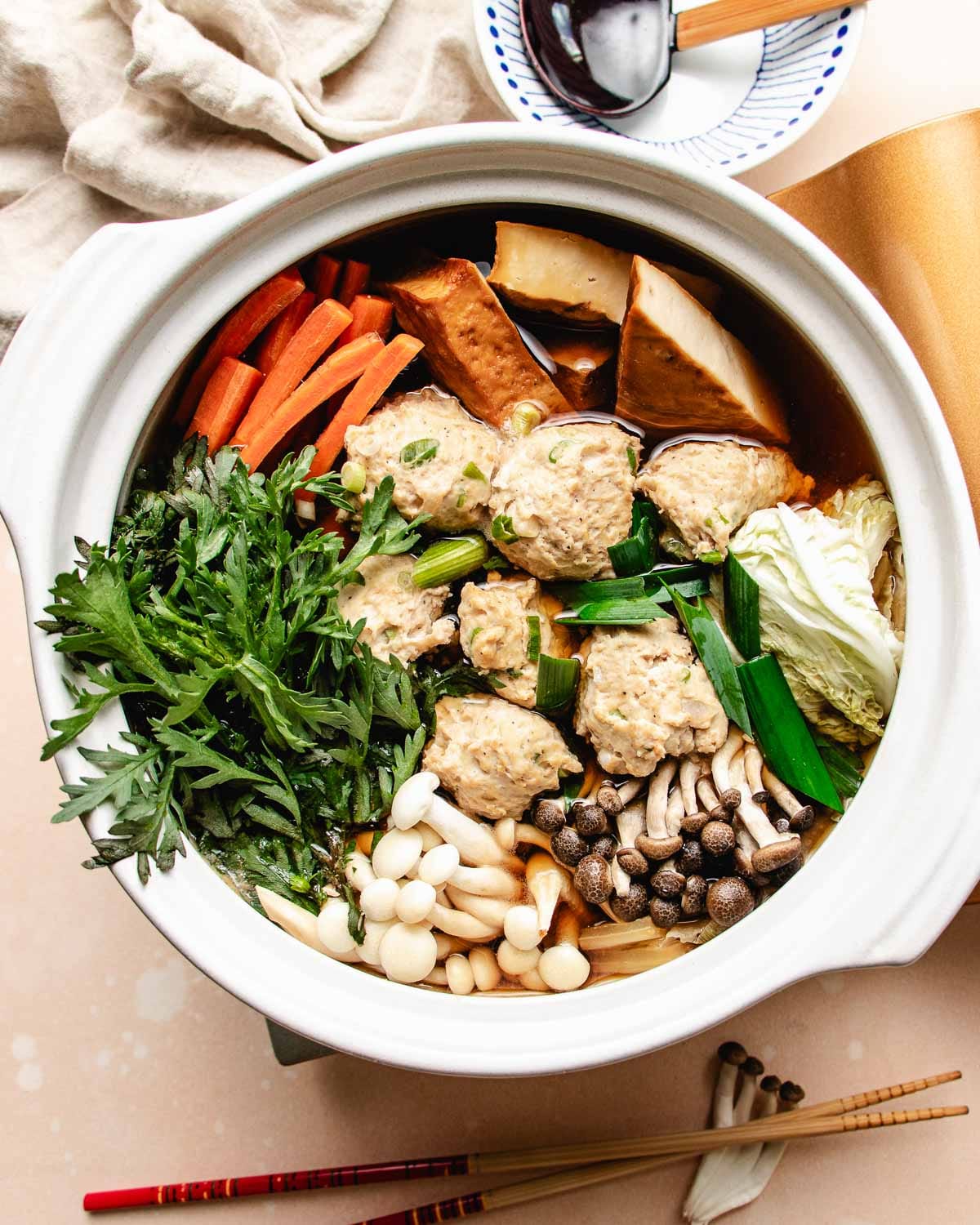
Chicken Meatball Hot Pot at a Glance
- Flavor: Light, savory, and comforting — a clear chicken broth that stays clean and delicate.
- Protein: Soft, fluffy chicken meatballs made with ginger, scallions, and a little starch for bounce.
- Veggies: Napa cabbage, mushrooms, carrots, tofu, and quick-cooking greens added in stages so everything stays tender.
- Why it’s easy: One pot, simple ingredients, and very beginner-friendly timing.
- Perfect for: Cozy winter dinners, family-style hot pot at home, or an easy weeknight soup with lots of flavor.
Key ingredient highlights
This chicken meatball hot pot is built on three simple parts — juicy chicken meatballs, a light and savory chicken hot pot broth, and a mix of colorful hot pot vegetables.
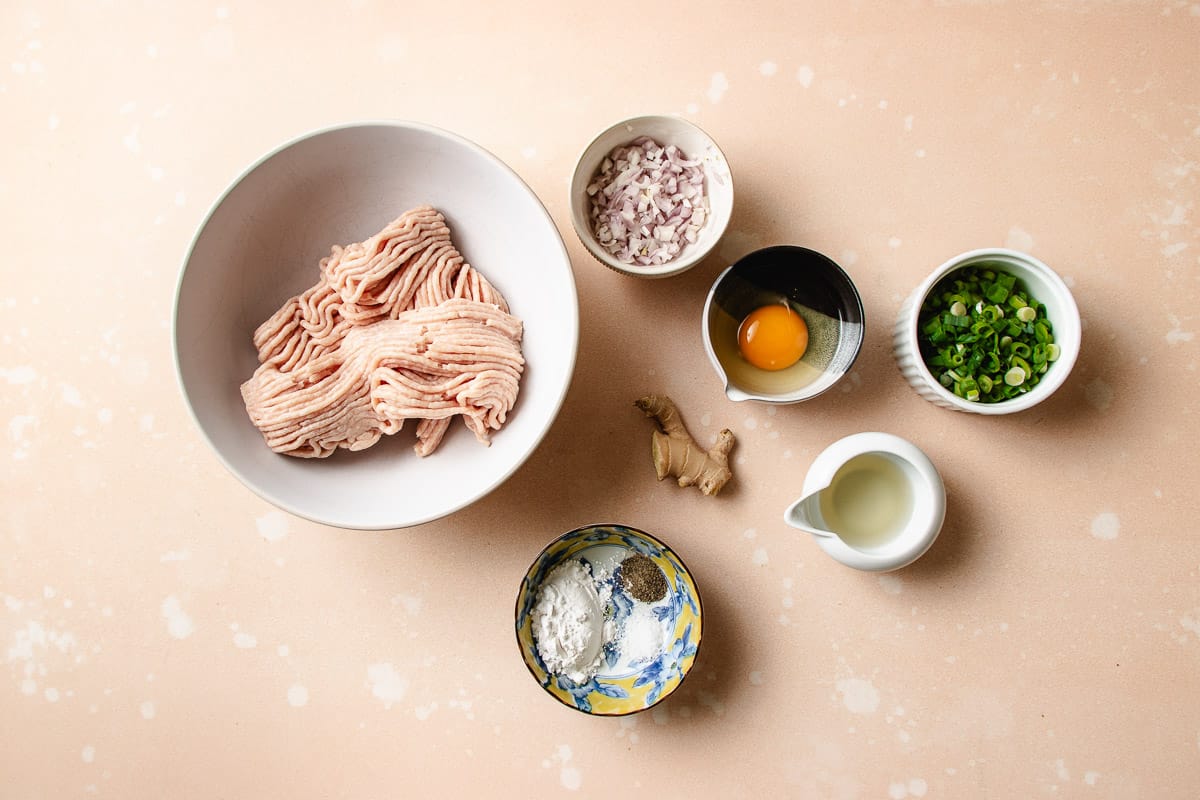
- Chicken Meatballs: These chicken meatballs are soft and tender, made from ground chicken mixed with starch, an egg, sake, grated ginger, scallions, and a little finely chopped shallot. The starch and egg help the meat hold together, while the aromatics give the meatballs a warm, cozy flavor that works perfectly in a light hot pot.
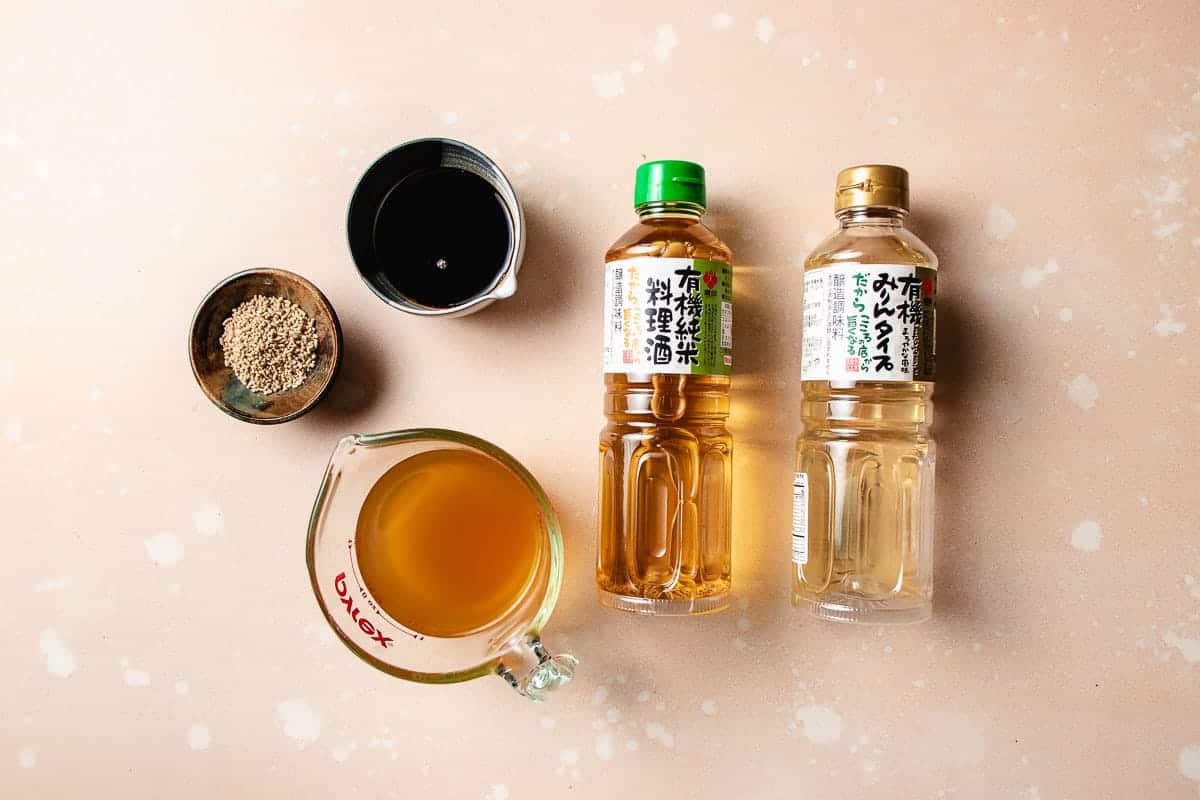
- Clear Chicken Hot Pot Broth: The broth is a simple mix of chicken stock, light soy sauce, sake, mirin, and a spoonful of shiitake mushroom seasoning (or dashi powder). It’s a clean, savory base that stays light in color and lets the flavor of the meatballs and vegetables shine through without becoming heavy or salty.
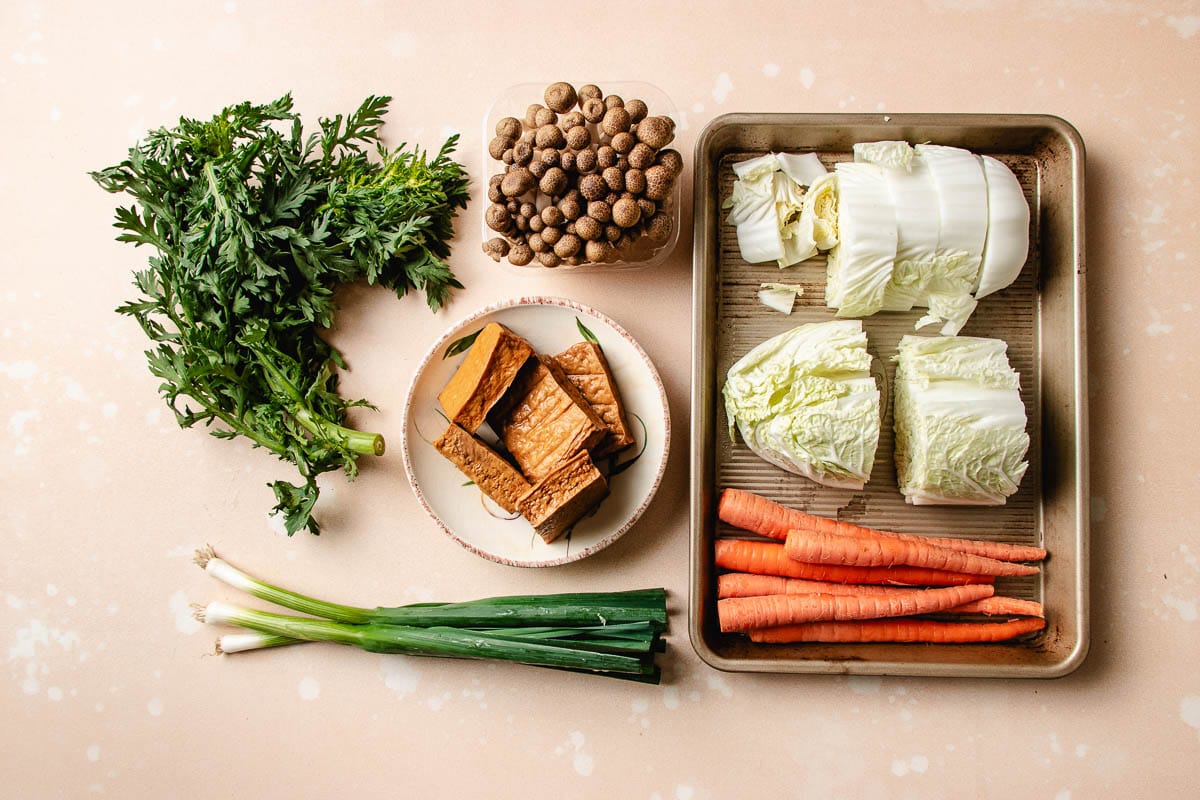
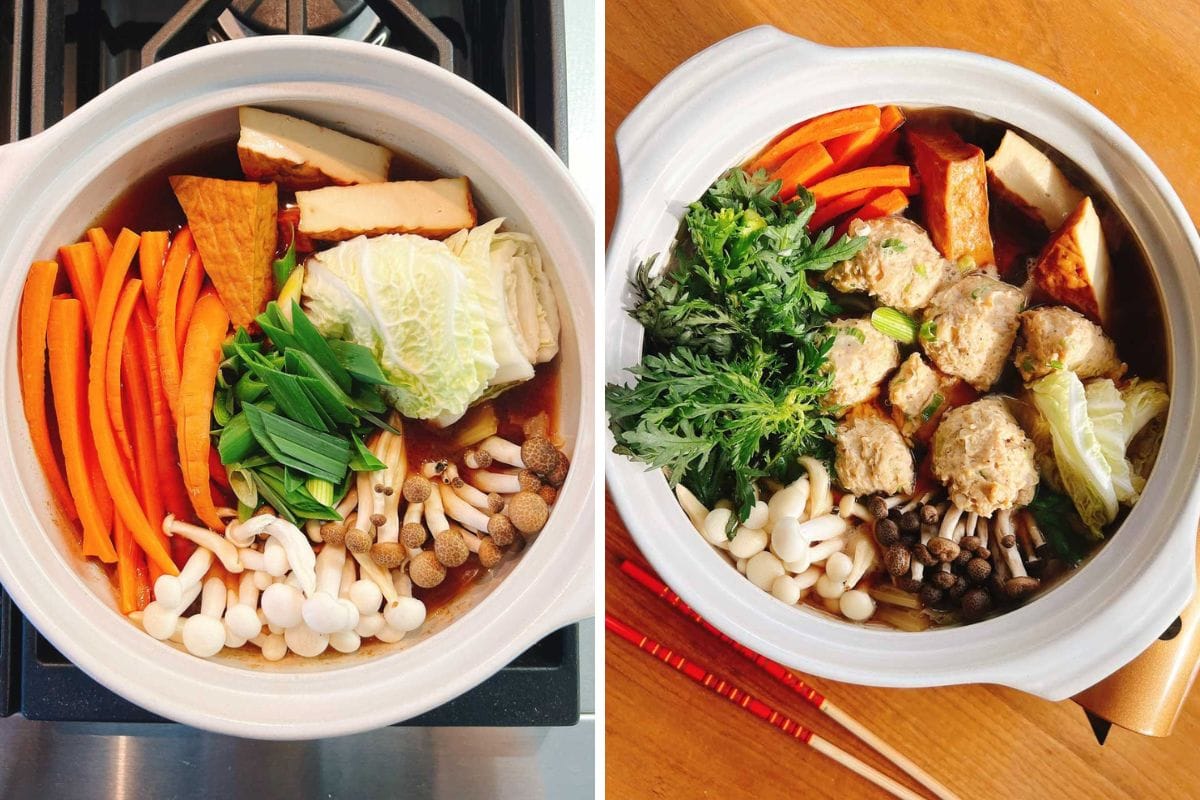
- Hot Pot Vegetables: For the vegetables, you only need a small assortment: napa cabbage, carrots, mixed mushrooms, tofu, negi (Japanese scallions) or scallions, and quick-cooking greens like mizuna (chrysanthemum greens) or leafy greens of choice. This combination gives the pot sweetness, texture, and color without feeling complicated.
- Optional: Serve the hot pot with your favorite hot pot dipping sauces.
Tips for making the best chicken hot pot
Hot pot looks simple, but a good chicken meatball nabe has a few small details that make everything taste cleaner and softer. These are the things I noticed while testing this cozy chicken meatball hot pot at home — the real-life tips that help you cook with confidence.
How to get soft, fluffy meatballs (not dense or rubbery)
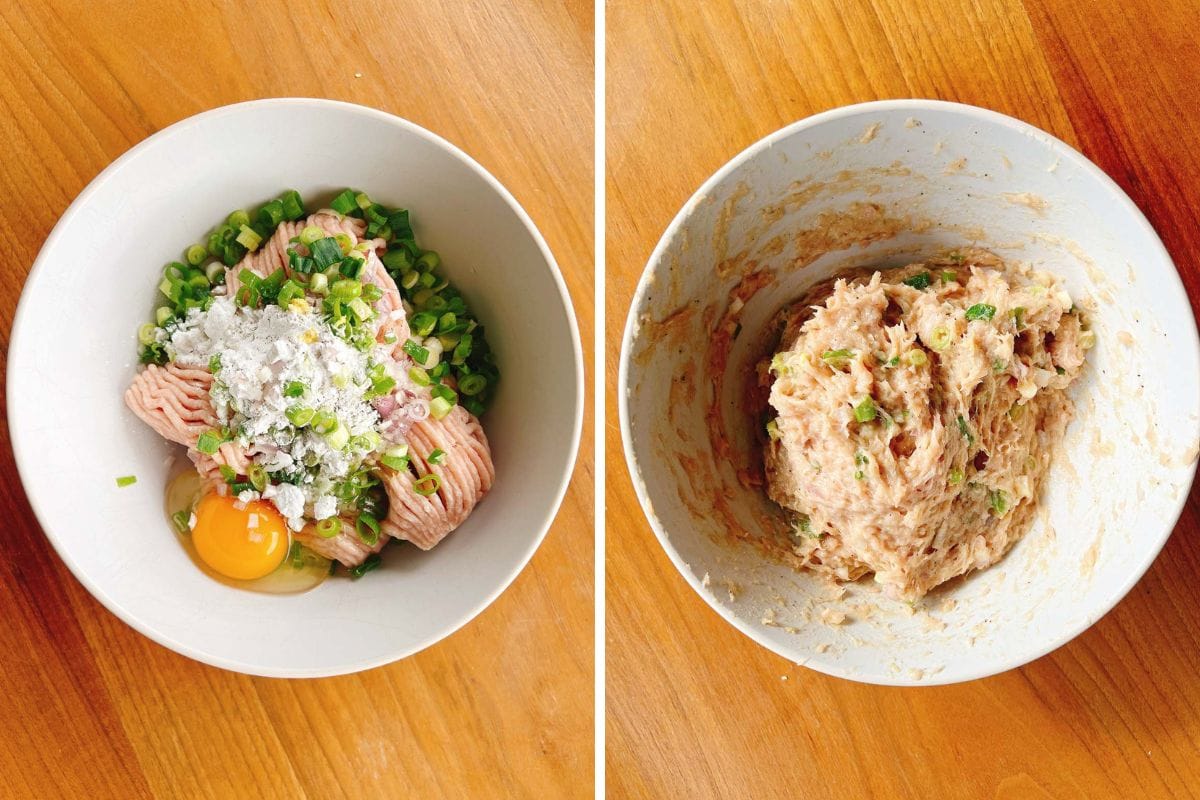
For this style of chicken meatball hot pot, you want the meatballs to stay light and bouncy. I use ground chicken that has a mix of dark meat in it, so there’s a bit more natural fat. The key is mixing in one direction until the mixture turns sticky and elastic. It’ll feel very soft — almost too soft — but that’s exactly what gives you those fluffy, tender meatballs in the broth.
How to keep the meatballs from falling apart
This mixture is naturally very soft, so instead of shaping by hand, it’s easier to scoop it straight into the broth. Once the meatballs hit the heat, they firm up quickly. Working in smaller batches keeps them round and prevents the pot from getting crowded
How to keep the broth clean and clear
What really helps is keeping the heat at a gentle simmer instead of a hard boil. If the pot bubbles too aggressively, the broth gets cloudy fast. Adding ingredients gradually also makes a difference — especially mushrooms, tofu, and greens — so the pot stays calm and the broth stays clean.
When to add which vegetables
Hot pot ingredients all cook at different speeds, so timing really matters. Napa stems, carrots, mushrooms, and tofu like a little head start because they need more time to soften and flavor the broth. Quick-cooking greens go in last and cook in under a minute. This simple order keeps everything tender without turning mushy and makes your chicken hot pot with vegetables taste naturally sweeter.
A neater pot makes a big difference
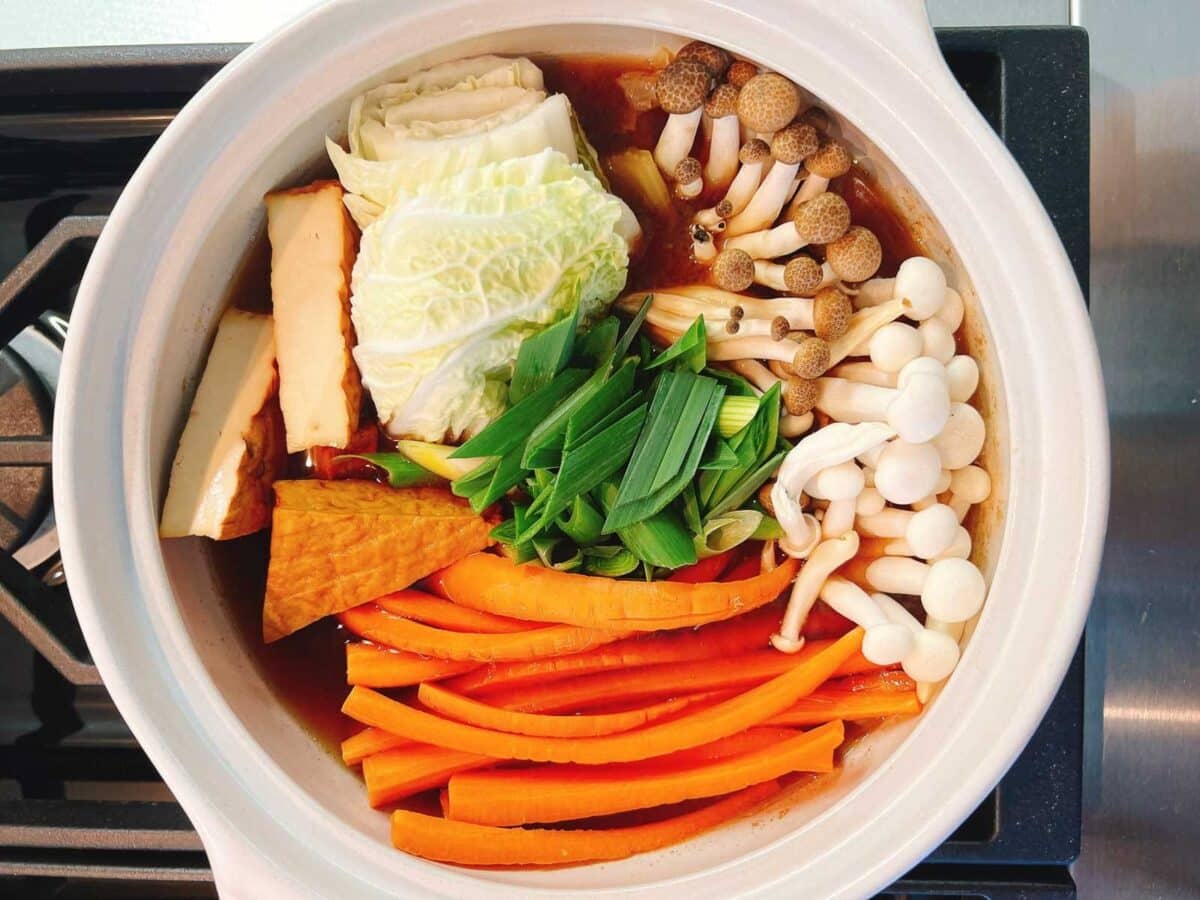
One thing I noticed while testing is how quickly the pot can look messy if everything gets tossed in together. Placing ingredients in small grouped sections around the pot — like napa in one area, mushrooms in another — keeps things tidy and easy to grab. It also makes the pot look really pretty on the table, which always feels nice when you’re making a cozy hot pot night at home.
Hot pot dipping sauce ideas
This chicken meatball hot pot is already full of flavor, so dipping sauces are completely optional. If you like the clean, savory broth on its own, you honestly don’t need anything else. But if you want to add little pops of flavor on the side, here are a few simple, beginner-friendly ideas:
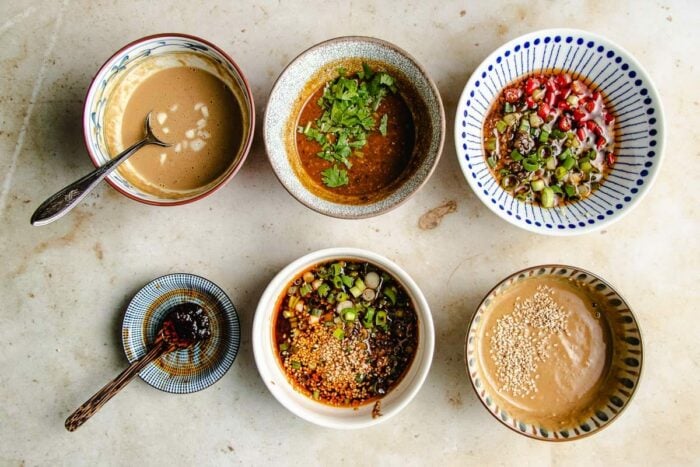
- Taiwanese sha-cha (savory + smoky): Sha-cha (also known as Bullhead bbq sauce) is a salty, savory sauce with a little smokiness. You can mix a spoonful with soy sauce, a splash of vinegar, and some scallions for a quick Taiwanese-style dip.
- Creamy sesame (nutty + rich): This one tastes like a smooth, nutty dressing — great if you want something a bit richer. Stir together tahini or sesame paste with a little soy sauce, rice vinegar, and a pinch of sugar.
- Ponzu (citrusy + bright): Ponzu is a light Japanese soy sauce mixed with citrus. It’s great with chicken and veggies. Use it as-is or add grated daikon, scallions, or a tiny bit of chili oil for a little kick.
- Chili oil or garlic chili sauce (spicy + crunchy): If you want heat, a small spoon of chili crisp goes a long way. Mix it with soy sauce or ponzu for a quick spicy dip.
For more ideas, see my full Hot Pot Sauces guide with easy variations you can mix at home.
How to Serve Hot Pot at the Table
The traditional way to enjoy hot pot is with a small portable stove right on the table. Set the pot on low heat to keep it gently simmering, and place the uncooked vegetables, tofu, and extra meatball mixture around it. Everyone uses a shared ladle or long chopsticks to cook what they want, adds a little to their bowl, and dips into their own sauces. When something runs low, just add more to the pot and top up the broth as needed.
If you don’t have a portable stove, you can still enjoy hot pot the easy way. Keep the pot on your stovetop over very low heat, and people can walk over to scoop what they want. Just watch the broth level so it doesn’t boil down, and leave the lid slightly ajar if you’re keeping it warm. It’s simple, cozy, and works just as well for a relaxed dinner at home.
Tip
Leftovers and Broth Reuse
Hot pot leftovers make an even better meal the next day because the broth gets richer as everything rests. Store the cooked meatballs, vegetables, and broth together in one container, and keep any uncooked veggies separately so they stay fresh. To reheat, warm the broth on the stovetop until it simmers, then add any extra vegetables, noodles, or rice you want to finish the pot. It’s an easy, cozy lunch that tastes just as comforting as the first round.
FAQs
For this recipe, I really recommend using homemade meatballs. They simmer in the broth from raw, which is what gives the soup its extra depth and natural sweetness. Store-bought meatballs are already cooked, so they won’t release the same flavor into the broth, and the whole pot will taste flat.
You can prepare the vegetables the day before and keep them in separate containers. The chicken mixture also stores well overnight.
Yes. Shape them first, freeze on a tray, then store in a bag. They cook well straight from frozen.
A donabe is lovely for serving because it holds heat well and looks beautiful on the table, but you don’t need one. A 3–4 quart braiser or a medium, wide pot works just as well. The main thing is using something wide enough to arrange the ingredients neatly and deep enough to hold the broth without spilling.
More hot pot recipes to try
If you’re in the mood for more cozy hot pot nights at home, here are a few favorites:
- Vegan Hot Pot — a veggie-packed option with a creamy miso broth.
- Hot Pot Broth Guide — 3 simple broth ideas you can mix and match for any style of hot pot.
- Hot Pot Sauces — 5 easy dipping sauces that pair well with chicken, veggies, and meatballs.
Chicken meatball hot pot recipe
Video
Ingredients
Chicken meatballs:
- 1 lb. ground chicken
- 1.5 tbsp starch potato or tapioca
- ¼ tsp coarse sea salt
- ¼ tsp ground black pepper
- 1 tbsp sake
- 1 large egg
- 2 tsp grated ginger from 0.35 oz ginger root
- 2 scallions dice to small rounds
- 1 small shallot 1.25 oz, finely chopped
For the broth base:
- 2.5-3 tbsp light soy sauce
- ¼ cup Sake
- 2.5 -3 tbsp Mirin
- 1 tbsp shiitake mushroom seasoning or dashi powder, or chicken bouillon powder, plus more to taste
- 3 cup chicken stock as a starting point, add more as needed
For the hot pot vegetables:
- 1 small head Napa cabbage slice into sections
- 6-8 small/thin carrots quartered lengthwise into strips
- 8 oz. assorted mushrooms shiitake, brown/white beech, enoki, king trumpet…etc.
- 1 packet smoked tofu or soft tofu, cut into triangles or cubes
- 6 scallion or 2 Negi (Japanese green onions), sliced on a diagonal
- A handful tender greens such as mizuna, chrysanthemum greens/shungiku, young mustard greens, tatsoi, or watercress
Optional serving:
Equipment
- Bamboo meatball maker (optional) optional
- Portable stove optional
- Donabe optional (or A 3–4 quart braiser or a medium, wide pot works just as well.)
Instructions
Make the chicken meatball mixture:
- Add all the meatball ingredients to a large mixing bowl. Stir in one direction for 3–4 minutes until the mixture turns sticky and elastic. It will feel loose at first but will firm up as you mix. The texture should still be soft and moist, not dense.

Make the broth:
- In a 10-inch donabe (Size No. 8 or 9) or a 3–4 quart braiser with a lid, add the soy sauce, sake, mirin, mushroom seasoning, chicken stock, and the Napa cabbage stems. Bring it to a boil over medium-high heat, about 10–12 minutes. Then lower the heat to medium-low.
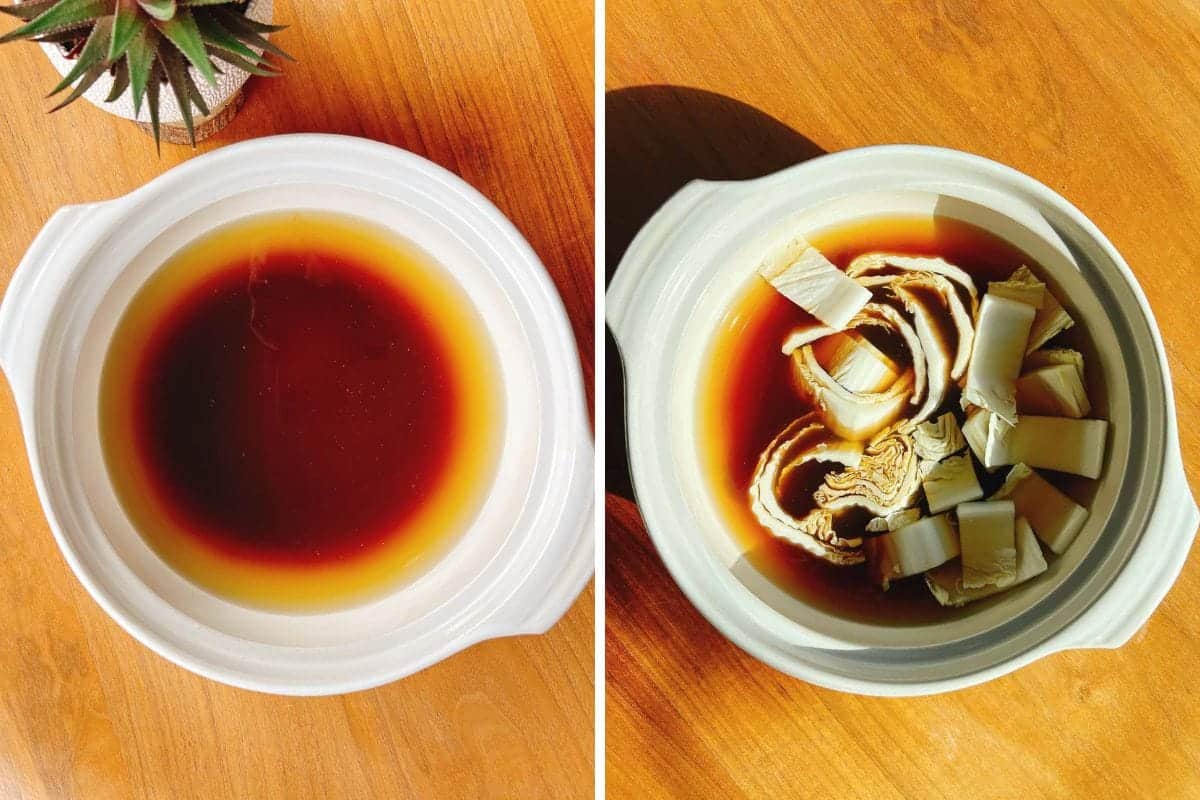
Cook the first batch of meatballs:
- Using two spoons, scoop a small portion of the chicken mixture and pass it back and forth to shape a loose 1.5-inch (3.8 cm) meatball. It doesn’t need to be perfectly round — a soft, rustic shape is perfect. Slide each meatball gently into the simmering broth as you shape it.
- If you’re using a bamboo meatball maker, fill the bamboo cylinder with the chicken mixture. Use the wooden paddle to press out a portion at the tip and slide it straight into the broth.
- Shape and add the meatballs one at a time. You’ll end up with about 6 meatballs in this first batch. They will float in about 3 minutes — cook for 1 more minute to finish.
- Transfer the cooked meatballs to a bowl and keep warm in an unheated oven. Return the remaining mixture to the fridge.
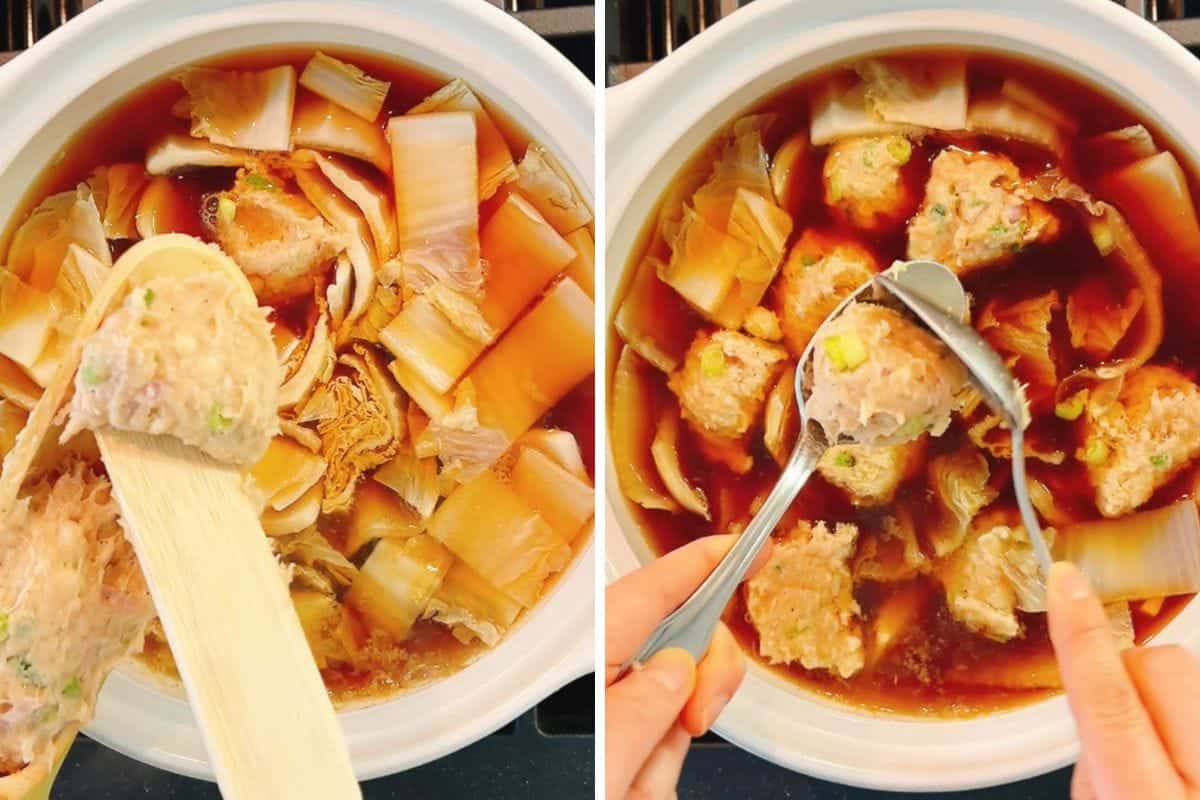
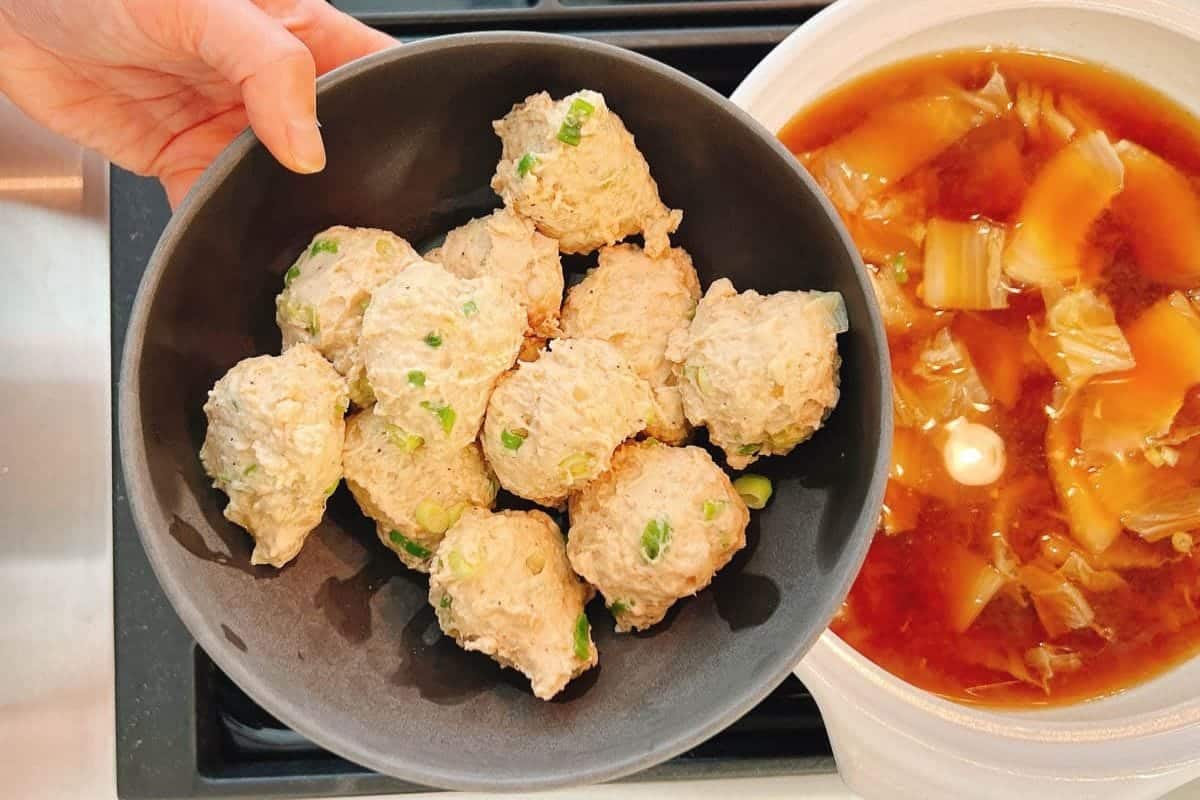
Add the heartier vegetables:
- Add vegetables that need more time or handle heat well— carrots, mushrooms, tofu, and negi/scallions.
- Place them into the pot one by one instead of dumping everything in. Keep each ingredient grouped together in its own little section, going clockwise or counterclockwise around the pot. This keeps the ingredients neat, helps them cook evenly, and makes the hot pot look beautiful on the table.

- Simmer over medium heat for 3–5 minutes until they’re almost tender.
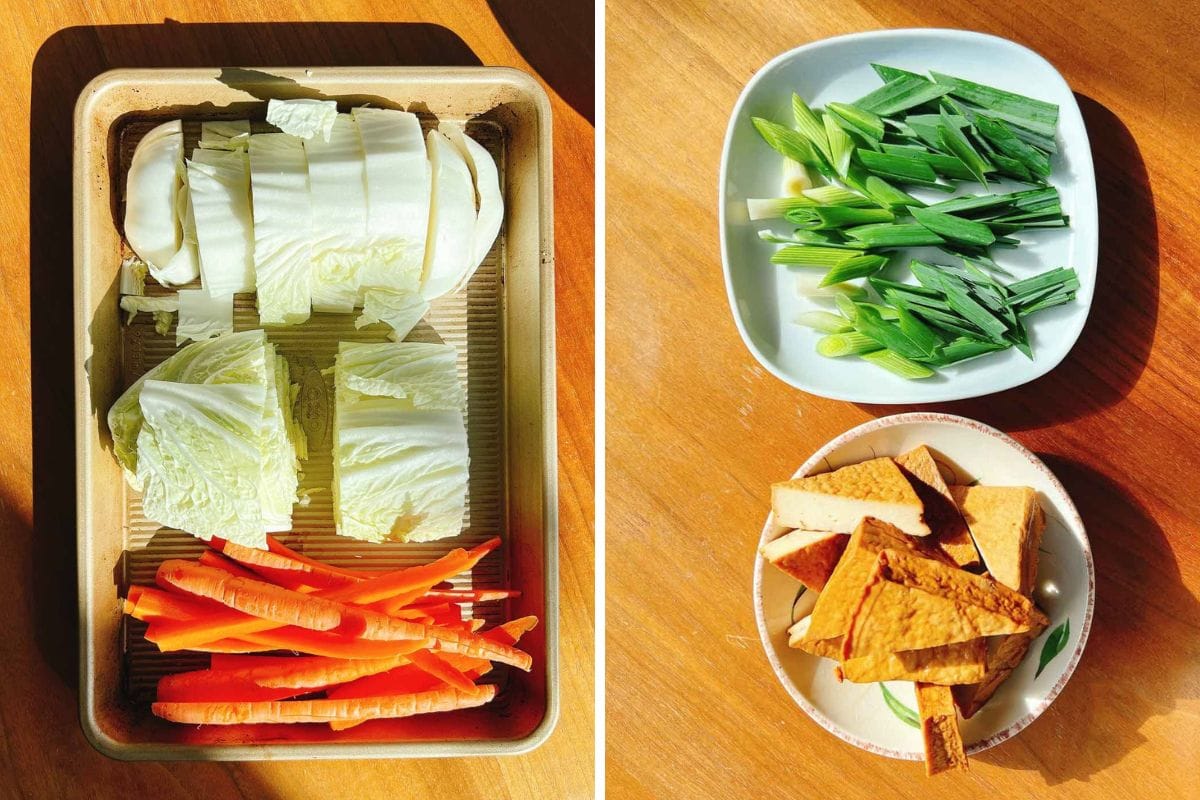
Add the tender greens:
- Add the napa cabbage leaves and mizuna or leafy greens of your choice. Simmer for 1 minute. Turn off the heat and return the cooked meatballs to the pot.
How to serve it:
- Set the pot in the center of the table. Ladle ingredients and broth into individual bowls. Serve hot with dipping sauces if using.
To continue cooking the rest:
- Add more chicken stock to bring the broth level back up. Taste and adjust with a splash of soy sauce, sake, mirin, or a pinch of dashi powder.
- Drop in a few more meatballs and refill the pot with any vegetables or tofu you want to keep cooking as you eat and chat.
Notes
- Keep the heat gentle. Avoid a hard, rolling boil so the broth stays clear and the ingredients stay tender.
- A bamboo meatball maker is a hollow bamboo tube with a small wooden paddle. You fill it with the meat mixture and press out even portions for quick, consistent meatballs. It’s also called a bamboo tsukune or bamboo zucchini maker.
- Make-ahead: Prep the vegetables up to 1 day ahead and store them separately in airtight containers. The chicken meatball mixture can be mixed the night before and kept covered in the fridge.
- Freezing: Shape the raw meatballs and freeze them on a tray until firm, then store in a freezer bag. Cook them straight from frozen — just give them an extra minute or two to finish cooking in the broth.
Nutrition
Nutrition information is automatically calculated, so should only be used as an approximation.
Made a dish and loved it? Please rate the recipe and leave a comment in the section below! It helps my blog grow organically, allowing me to continue sharing free and awesome content with you. Thank you!









Very very good recipe. The meatballs are so tender and the broth flavor is superb. We used what we had to go along with the chicken meatballs. Highly recommend it.
Thank you!