
This post may contain affiliate links. Please read our disclosure policy.
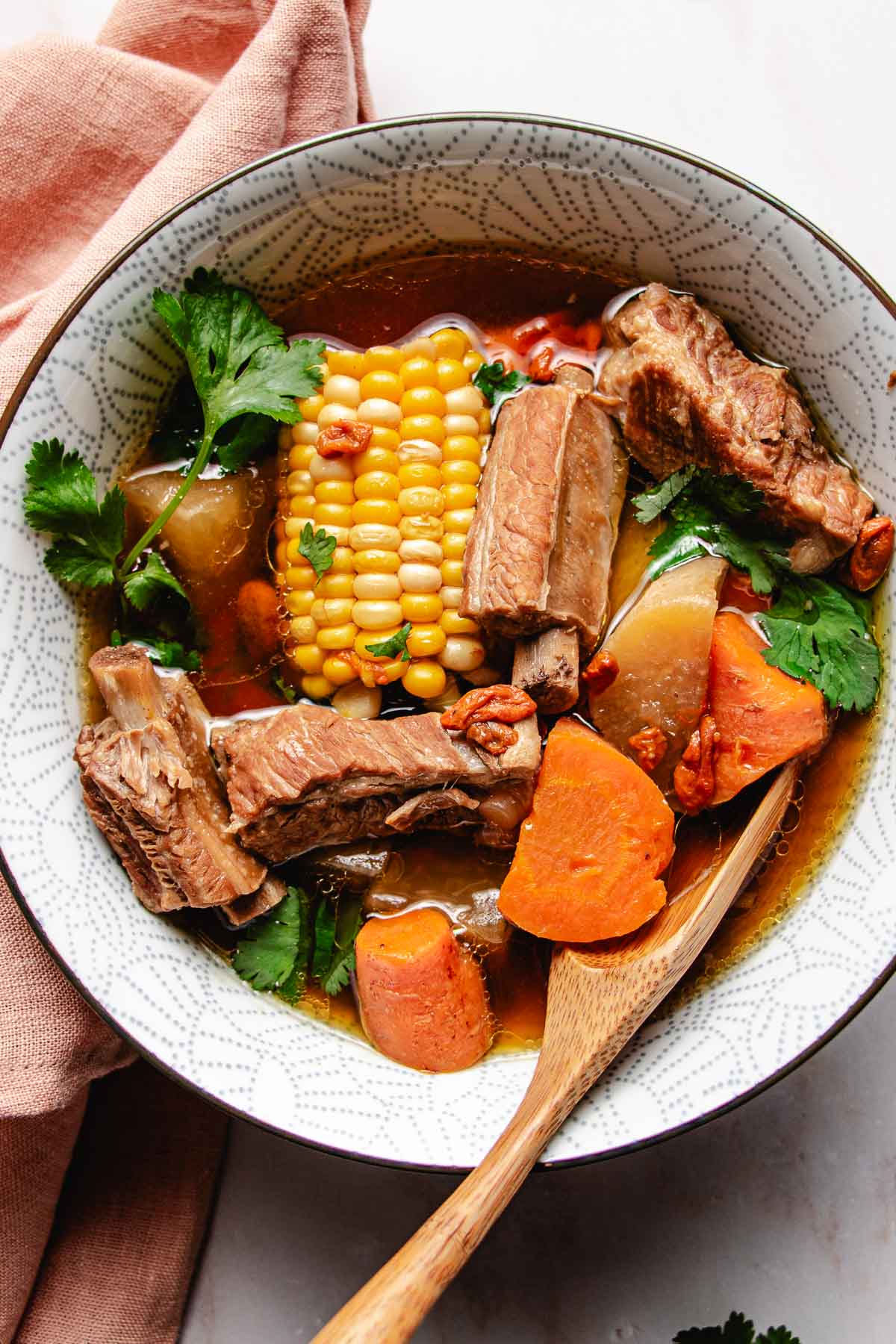
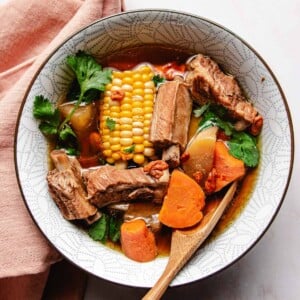
This pork rib soup with daikon (蘿蔔排骨湯) is a Taiwanese winter soup my family makes every year. My mom loves it because it is simple, nourishing, and comforting when the weather turns cold.
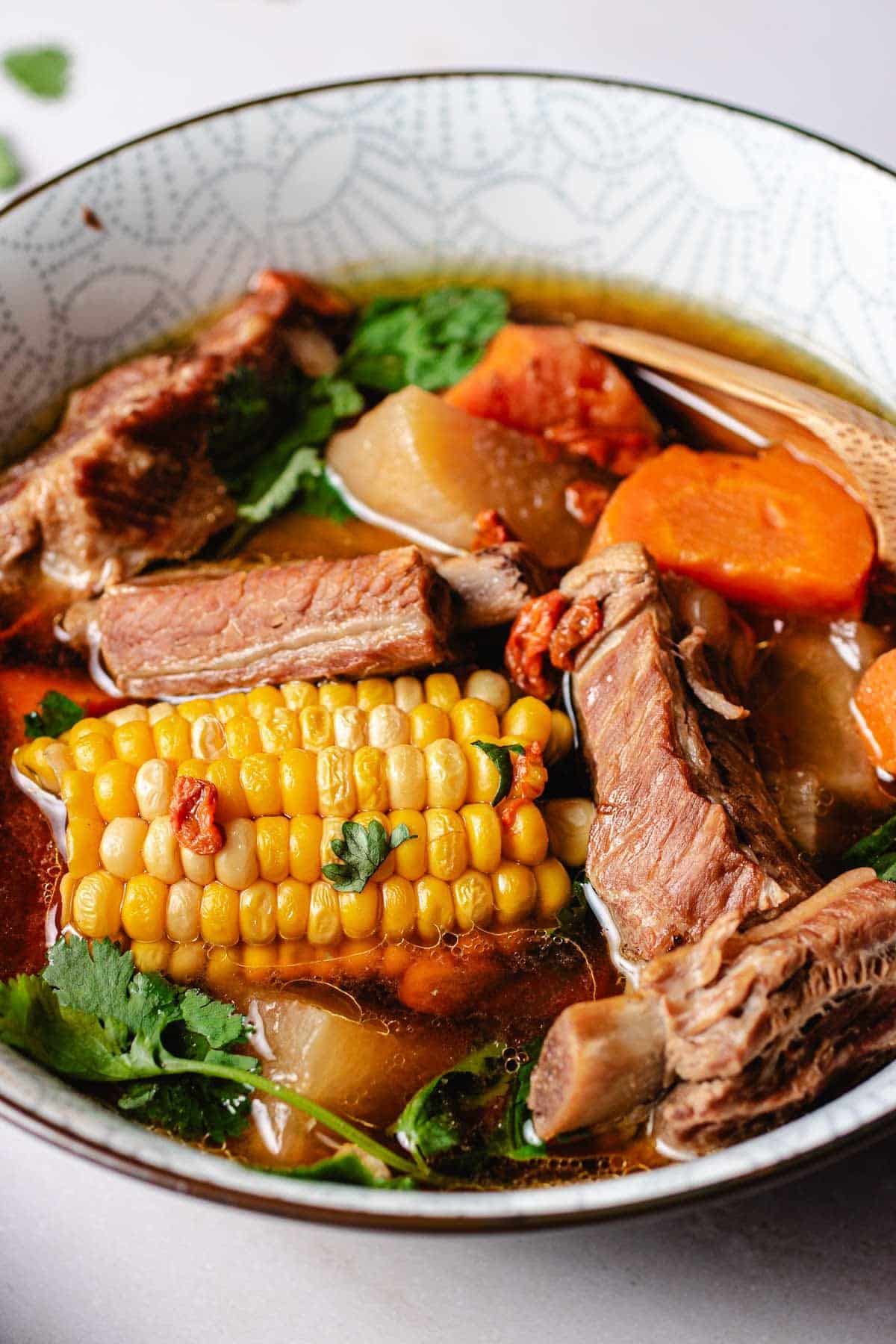
The broth is light, clear, and gently sweet, with fall-off-the-bone tender pork ribs. Make it in the Instant Pot for a quicker soup or use the slow cooker for a gentle, hands-off simmer.
Why you’ll love this pork rib soup

- Naturally sweet and savory: Daikon, carrots, sweet corn, and goji berries flavor the broth without bouillon or strong seasonings.
- Fall-off-the-bone tender ribs: Pressure cooking softens the pork ribs while the large vegetable chunks stay tender without falling apart.
- No stovetop babysitting: The sealed pressure cooker holds onto the water and steam, so there is no need to monitor the water level or keep topping it up.
- Two easy cooking options: Use the Instant Pot when you want it faster, or let the slow cooker gently cook the soup on Low for 6 to 7 hours.
How to cut pork ribs for Chinese soup
Chinese pork rib soup is usually made with short riblets rather than the full-length ribs commonly sold in U.S. grocery stores. The smaller pieces fit better in the pot, cook faster and more evenly, and are easier to serve and eat with chopsticks.

- Choose your ribs: Pork spare ribs and baby back ribs both work. Spare ribs have a little more richness, while baby back ribs are slightly leaner.
- Ask the butcher: Have the butcher cut the rack crosswise through the bones into 1.25-inch-wide strips.
- Separate the riblets: At home, slice between the bones to separate the strips into individual riblets. Each finished piece will be about 3 inches long.
- Already cut ribs: Some Asian markets sell ribs already cut into small pieces for soup. If they are close to this size, you can use them as-is.
Key ingredients and substitutions
These are the ingredients that give this pork and daikon soup its clear, naturally sweet flavor. See the recipe card for the complete ingredient list and exact amounts.
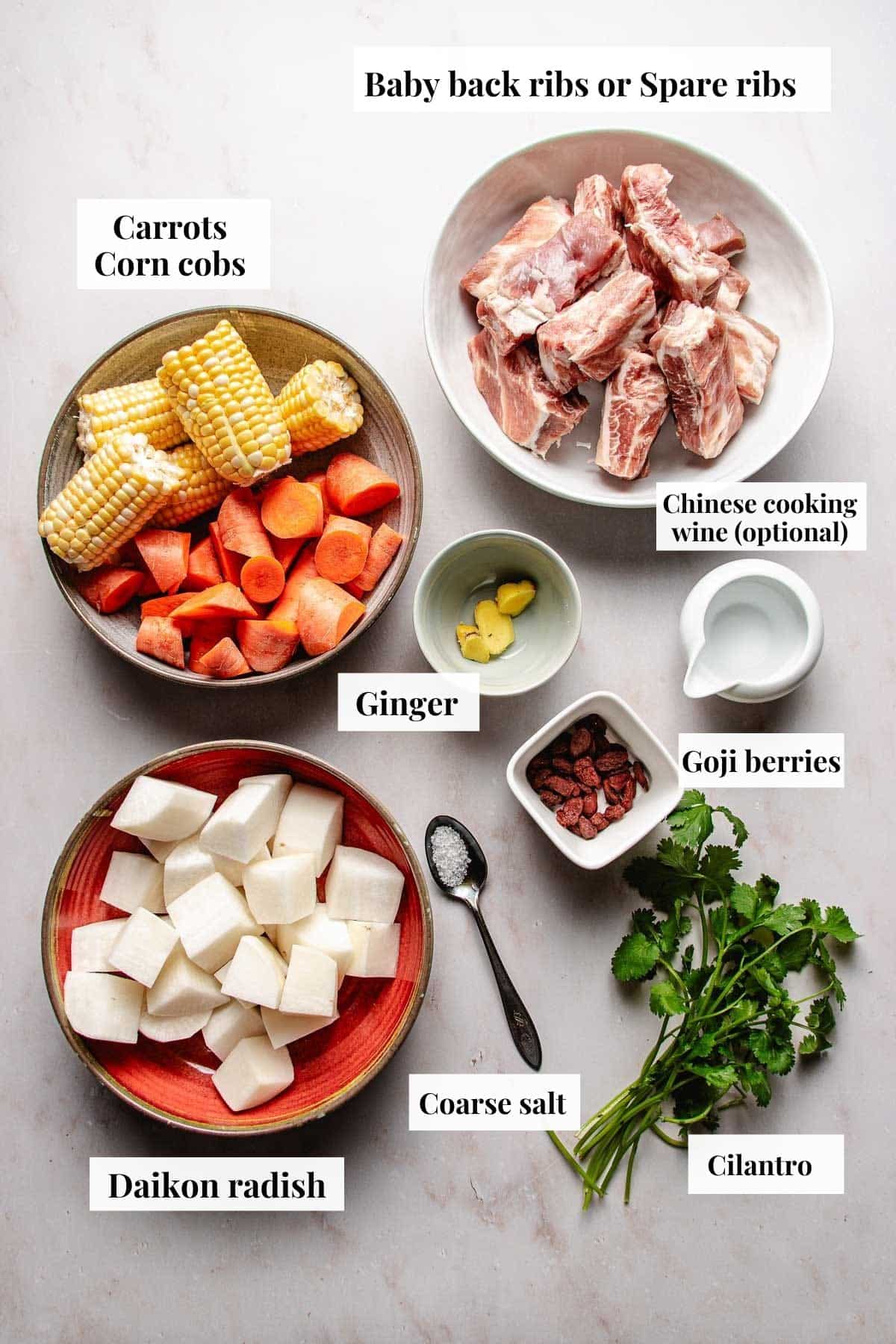
- Daikon radish: Choose a daikon that feels firm and heavy for its size, with smooth skin and no soft spots. It becomes mild, juicy, and slightly sweet after cooking.
- Carrots and sweet corn: Both add natural sweetness and color to the broth. Fresh or frozen corn on the cob will work.
- Ginger and goji berries: Ginger balances the pork aroma, while dried goji berries add a gentle sweetness and a pop of red color.
- Taiwanese michiu: This clear rice cooking wine adds aroma and balances the flavor of the pork. For a gluten-free substitute, use Japanese sake labeled gluten-free. If gluten is not a concern, Chinese Shaoxing wine also works; many common brands contain wheat.
How to make daikon pork rib soup
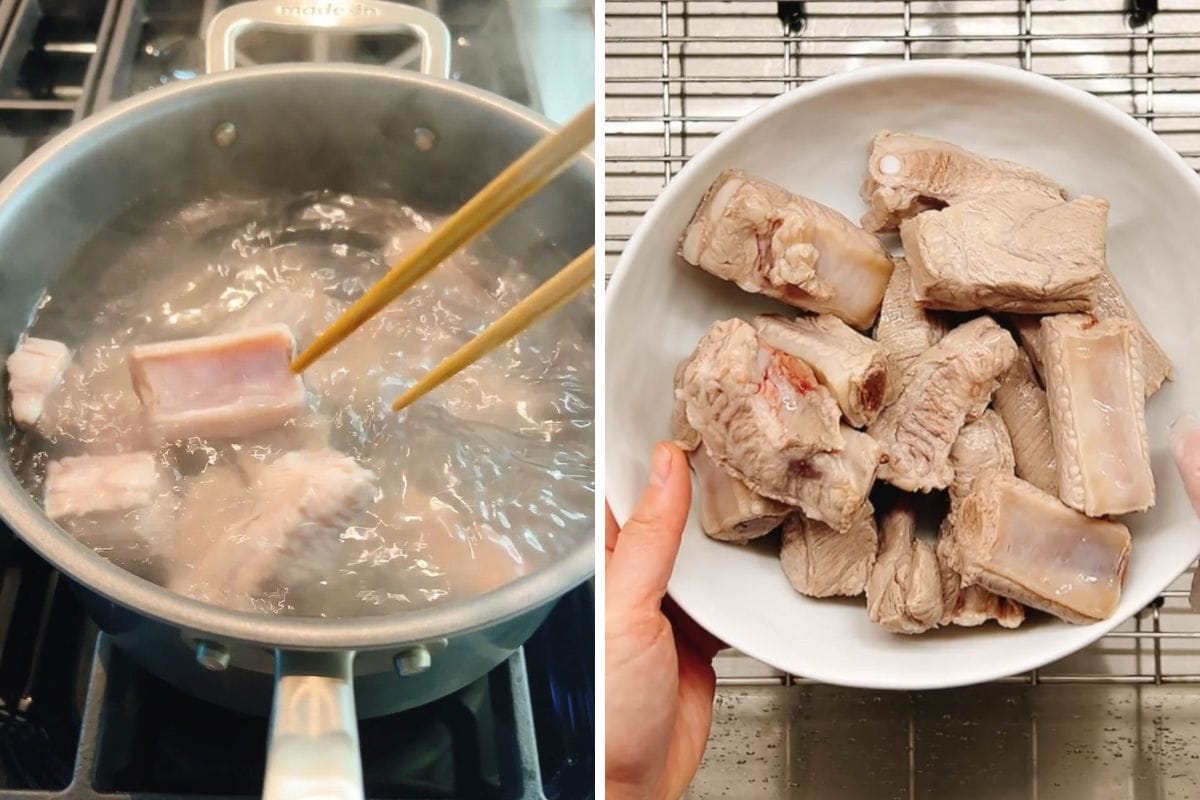
- Parboil and rinse the pork ribs. Parboiling pork ribs is a common step in Chinese soup making. The short boil releases blood, foam, and residue from the bones, giving the finished soup a clearer broth and cleaner flavor. After parboiling the ribs for 3 minutes, discard the water and rinse them for 1 minute using room-temperature water. Avoid very cold water, which can cause the meat to tighten. I made this mistake once, and the pork stayed noticeably tighter even after cooking.
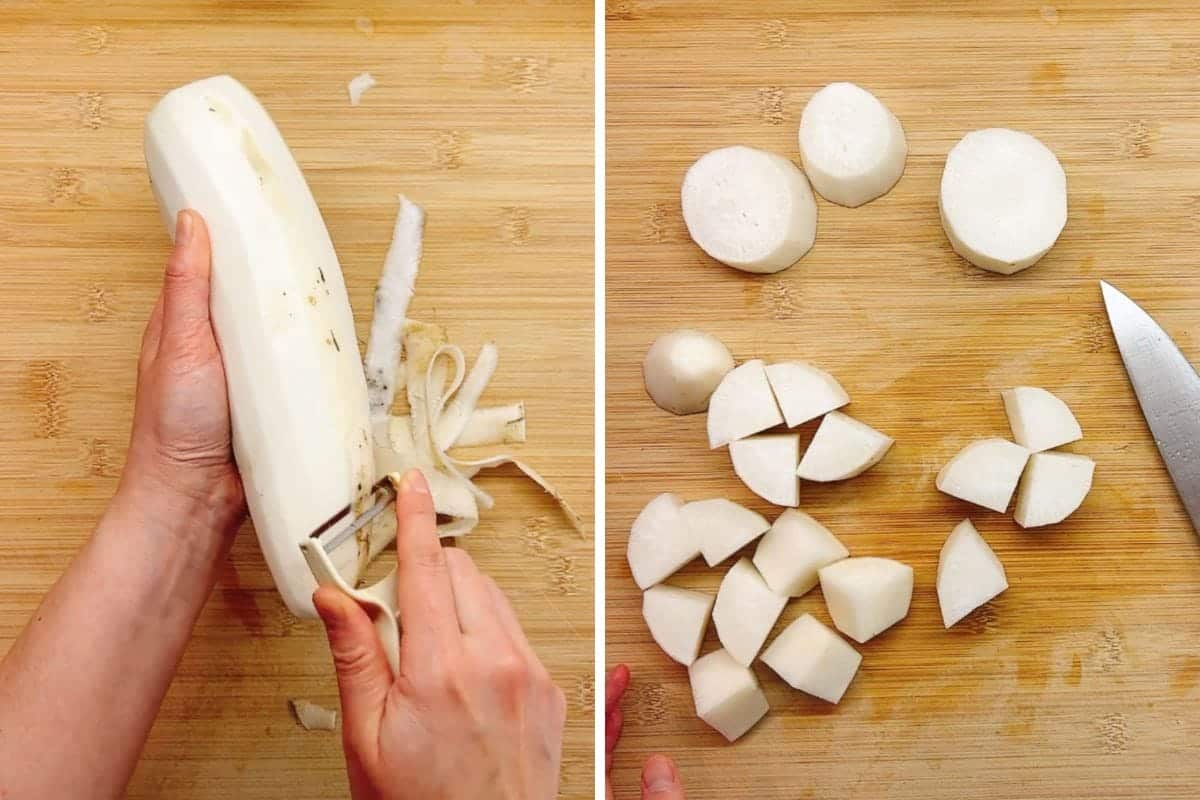
- Keep the vegetables in large chunks. Use a vegetable peeler to remove the daikon’s outer skin. Cut the daikon and carrots into 1.5- to 2-inch chunks, and cut the corn into roughly 2-inch sections. The large size is intentional. It allows the vegetables to cook under pressure until soft and tender without breaking apart or disappearing into the broth. When done, a chopstick should pass through the center easily, but the pieces should still hold their shape.
- Make the pork rib soup in the Instant Pot. Add the ribs, vegetables, ginger, goji berries, and 5 cups of water to the Instant Pot. Cook on High Pressure for 30 minutes, followed by a 15-minute natural pressure release. Because the pot is sealed, there is no need to add more water while the soup cooks.
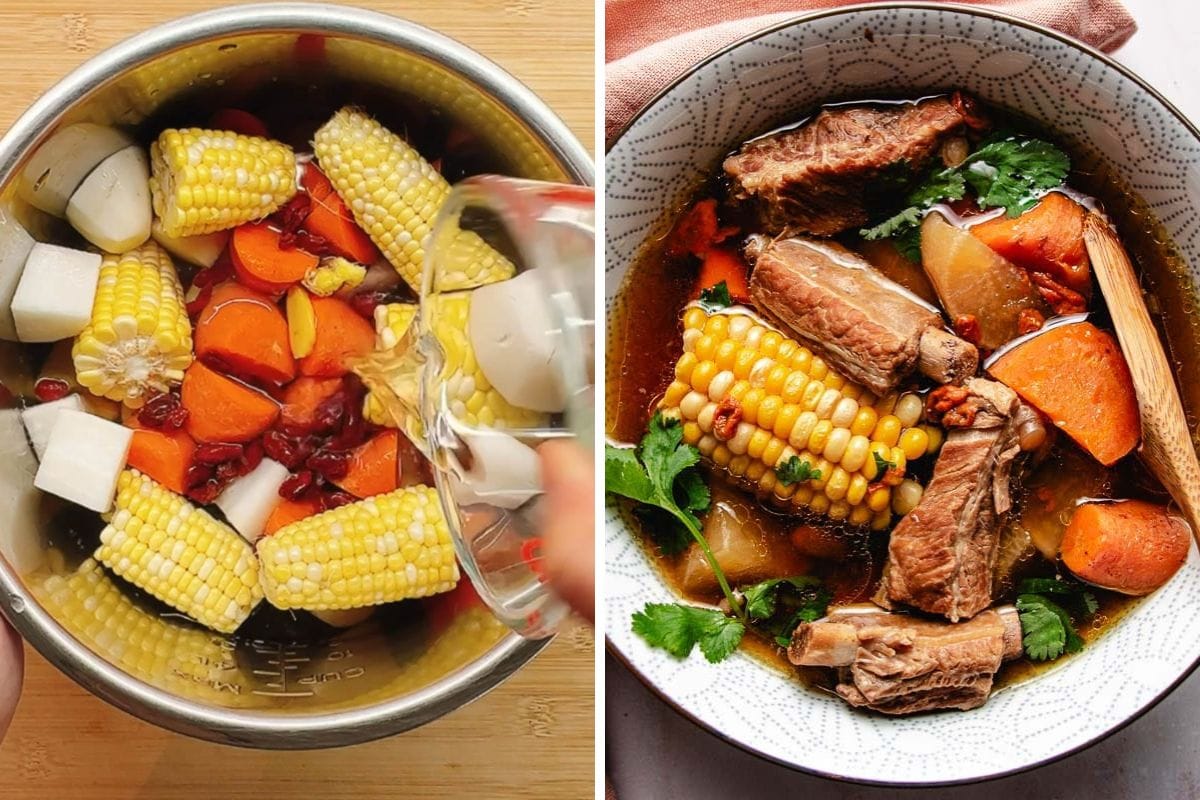
- Season and finish. Release the remaining pressure and select Sauté. Bring the soup to a gentle boil, then add salt and Taiwanese michiu, if using. Simmer for 3 minutes, turn off the heat, and garnish with cilantro or green onions.
Why I also love the slow cooker method
I use the Instant Pot when I want the soup faster, but I love the slow cooker version for its gentle heat. The ribs become tender while the large pieces of daikon and carrot remain intact. The broth also stays clean and clear instead of becoming cloudy from a strong boil.
A clear broth is especially prized in Chinese soup making. You can taste the natural sweetness of the pork, daikon, carrots, and corn without the broth feeling muddled.
After cooking on Low for 6 to 7 hours, switch the slow cooker to High. Add the salt and cooking wine, if using, and cook for about 3 minutes to cook away the raw alcohol taste. Garnish and serve.
How pork rib soup is served in Taiwanese families
In my Taiwanese family, we usually serve pork daikon soup on the side rather than as the main course. Sometimes soup is enjoyed at the beginning, but more often, we place it on the table with rice and several dishes so everyone can enjoy everything together.
- For a simple family meal: Pair it with Din Tai Fung shrimp fried rice and Chinese broccoli with oyster sauce. The fried rice makes the meal more filling, while the crisp-tender greens balance the soft daikon and carrots.
- For a larger spread: Add another meat-focused dish, such as Taiwanese braised beef shank or chicken wontons. The beef shank can be prepared ahead and served chilled, so I would keep the remaining dishes simple.
- For more vegetable variety: Add stir-fried snow pea leaves or Asian pickled cucumbers. In a Taiwanese meal, it is very common to serve one or even two vegetable dishes alongside the soup.
Pork rib soup with daikon
Video
Ingredients
- 1.5 lb pork spare ribs or baby back ribs (ask the butcher to cut the rack crosswise through the bones into 1.25-inch-wide strips)
- 1 lb daikon peeled and cut into 1.5 to 2-inch chunks
- 1 lb carrots cut into 1.5 to 2-inch chunks
- 0.25 oz ginger 2 thin slices
- 3 medium year sweet corn on the cob fresh or frozen, cut or broken into roughly 2-inch sections
- 3 tbsp goji berries
- 5 cups room temperature water
- 1.5 tsp coarse sea salt or to taste
- 2 tbsp Taiwanese michu cooking wine or Japanese mirin, optional
- Sprinkle Cilantro leaves or diced green onions
Instructions
- Cut the ribs: Ask the butcher to cut the rack crosswise through the bones, from about 2.5 inches wide to 1.25 inch- wide strips. At home, slice between the bones to separate the rack into individual riblets, about 3 inches long.
- Parboil the ribs: Bring a large pot of water to a boil. Add the ribs and parboil over medium-high heat for 3 minutes. Drain and discard the cooking water. Rinse the ribs under room temperature running water for about 1 minute to remove any loose scum, then drain well.
- Prepare the vegetables: Peel the daikon and cut it into 1.5 to 2-inch chunks. Cut the carrots into similar-sized chunks. Cut or break each ear of corn into roughly 2-inch sections.
- Pressure cook: Add the ribs, daikon, carrots, ginger, corn, goji berries, and 5 cups of water to the pressure cooker. Close the lid and set the steam-release valve to Sealing. Cook on High Pressure for 30 minutes.
- Release the pressure: When the cooking time is complete, allow the pressure to release naturally for 15 minutes. Press Cancel, then carefully turn the steam-release valve to Venting to release the remaining pressure. Open the lid after the pressure pin drops.
- Season the soup: Select Sauté and adjust to More or High. Bring the soup back to a gentle boil, about 5 minutes. Stir in the salt and cooking wine, if using. Gently simmer for 3 minutes, then press Cancel.
- Garnish and serve: Ladle the soup into serving bowls and garnish with cilantro or green onions. Serve hot or warm as a side soup.
Notes
- Slow cooker method: After parboiling and rinsing the ribs, add them to the slow cooker with the daikon, carrots, ginger, corn, goji berries, and water. Cover and cook on Low for 6 to 7 hours. The ribs should be tender, and the vegetables should be easily pierced with a chopstick while still holding their shape. Switch the slow cooker to High and cook for about 3 minutes to cook away the raw alcohol taste. Garnish with cilantro or green onions before serving.
- Make-ahead and storage: Let the soup cool, then store it in an airtight container in the refrigerator for up to 4 days. For longer storage, divide the soup into individual portions and freeze. The pork ribs, carrots, and daikon all freeze well. To reheat from frozen, transfer one portion to a saucepan and warm it over medium heat, lowering the heat once the soup begins to simmer. Heat gently until hot throughout.
Nutrition
Nutrition information is automatically calculated, so should only be used as an approximation.
More Chinese soups to try
If you enjoy this style of light, clear soup, here are three more recipes that use similar ingredients or cooking methods.
- Lotus root soup with pork ribs: This is the closest match. It uses the same parboiling and pressure-cooking method, but lotus root adds a slightly crisp texture while shiitake mushrooms and red dates deepen the broth.
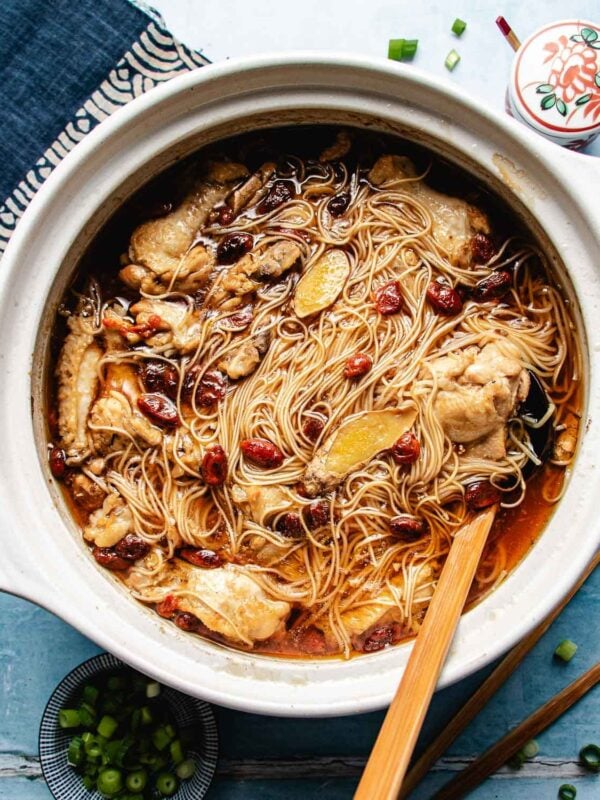
- Chinese chicken soup: This traditional winter soup uses a whole chicken and Chinese dried herbs for a light, fragrant broth. It includes Instant Pot, slow cooker, and stovetop instructions.
- Daikon soup: This quicker stovetop soup keeps daikon at the center but leaves out the pork ribs. It takes about 35 minutes and can also be made vegetarian.
Made a dish and loved it? Please rate the recipe and leave a comment in the section below! It helps my blog grow organically, allowing me to continue sharing free and awesome content with you. Thank you!









Amazing.. so easy and my picky toddler son loves this soup especially when he’s feeling under the weather. Thank you so much for sharing!
Thank you so much.
Turned out well even without ginger or goji berries. Husband and 1 year old, loved it! Thank you!
So happy to hear. Wonderful!