
This post may contain affiliate links. Please read our disclosure policy.
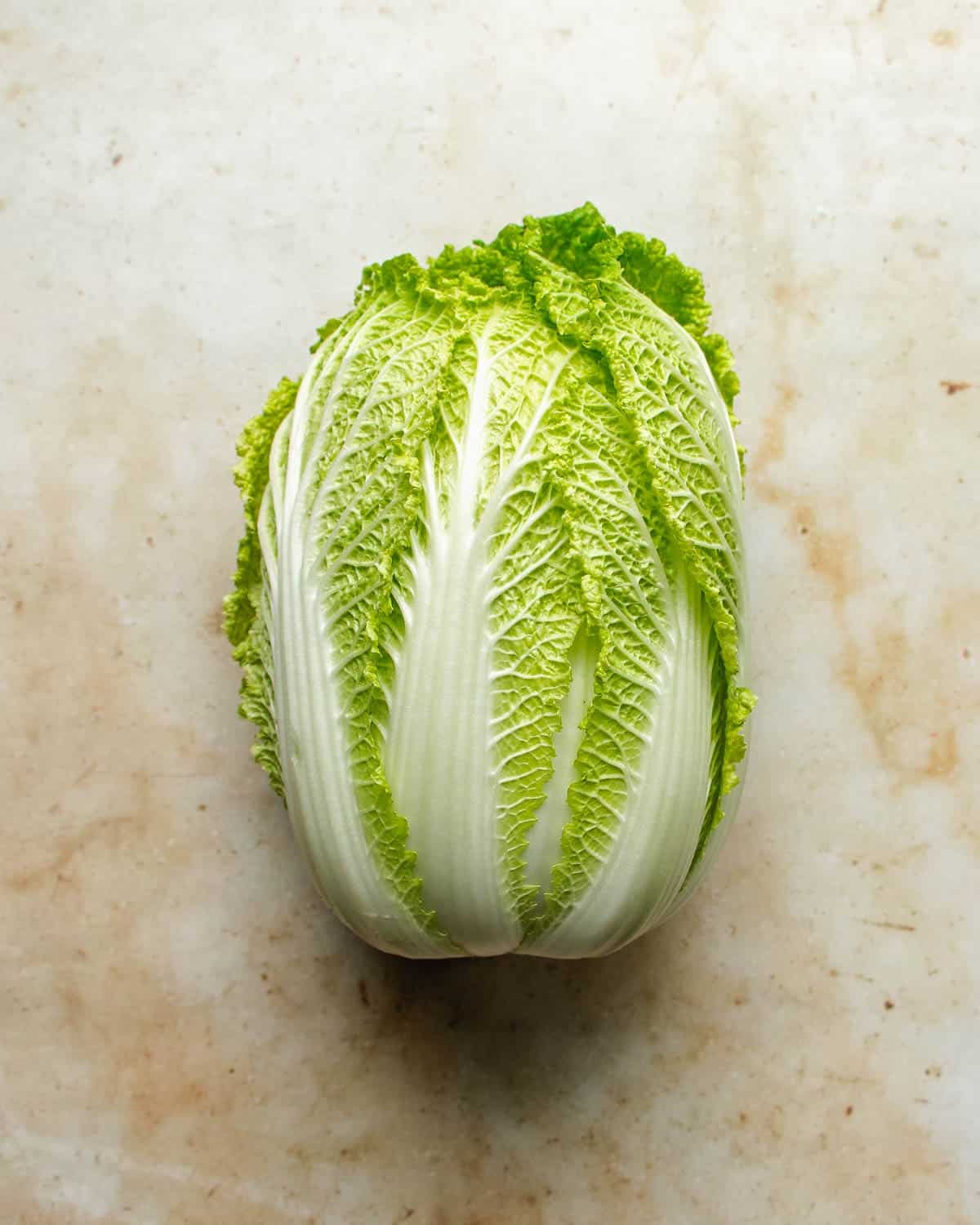
Napa cabbage is one of the most common vegetables in Asian cooking. In Taiwan, it’s available all year round and shows up in everyday dishes from stir-fries to soups and dumpling fillings.
The way you cut napa cabbage affects how it cooks and the texture you get in the final dish.
In this guide, I’ll show the main ways I cut napa cabbage when cooking Chinese and Taiwanese dishes, and which method works best depending on what you’re making.
Quick Answer: How to Cut Napa Cabbage

For most Asian dishes, napa cabbage is cut differently depending on how it is cooked.
- Stir-fries: Slice the thick stems thinner and keep the leafy parts larger so the stems soften while the leaves stay tender and don’t turn mushy.
- Soups: Cut the stems into smaller pieces and leave the leafy parts larger or whole so the stems cook in the broth while the leaves are added at the end.
- Salads or slaw: Slice the cabbage into thin shreds for a crisp texture.
- Roasting or braising: Cut the cabbage into wedges or thick slabs so the layers stay together during cooking.
- Dumplings and wontons: Chop the cabbage very finely so it blends well with the filling.
- Cabbage wraps: Separate the leaves and use them whole or in larger sections.
👉 Below, I’ll show the exact cutting methods I use for stir-fries, soups, dumplings, salads, and other napa cabbage dishes.
Table of Contents
- Quick Answer: How to Cut Napa Cabbage
- Stems vs Leaves: Why Napa Cabbage Cooks Unevenly
- Basic prep before cutting Napa cabbage
- 6 Ways to Cut Napa Cabbage (Based on the Dish)
- Cutting Napa cabbage for stir-fries
- Cutting Napa cabbage for soup
- Shredding Napa Cabbage for Salad or Slaw
- Cutting Napa Cabbage for Braising or Roasting
- Preparing Napa Cabbage for Dumplings and Wontons
- Using Whole Napa Cabbage Leaves (Hot Pot or Wraps)
- Common mistakes when cutting napa cabbage
- How to store napa cabbage
- How to cut Napa cabbage (6 ways)
- FAQ
- Napa cabbage recipes to try
Stems vs Leaves: Why Napa Cabbage Cooks Unevenly
Napa cabbage has two parts that cook very differently: the thick white stems and the soft leafy tops.
The stems are the juicy part and hold more water, so they take longer to soften and release moisture as they cook. The leafy tops are thinner and cook much faster, which is why they can turn limp if they stay in the pan too long.
Because of this difference, cooks usually treat the two parts slightly differently. The stems are often cut smaller so they cook faster, while the leafy tops are kept larger and added later so they stay tender.
Cutting napa cabbage this way helps control moisture and keeps a better balance of texture in the finished dish.
Basic prep before cutting Napa cabbage

Before cutting napa cabbage, I usually start by trimming the base.
Slice off about ½ inch (1–1.5 cm) from the bottom. This removes the toughest part of the cabbage and makes it easier to separate the leaves.
Next, peel away the outermost leaves. These are often the dirtiest and sometimes bruised since they protect the inner cabbage.
Once the base is trimmed, the leaves will naturally loosen and you can pull them apart easily.
If the cabbage looks dusty or has dirt between the layers, you can give the whole cabbage a quick rinse.
What I often do instead is rinse the cabbage after it’s cut into smaller pieces. It’s easier to clean the layers this way, and I can wash only the amount I plan to cook while keeping the remaining cabbage dry so it lasts longer.
6 Ways to Cut Napa Cabbage (Based on the Dish)
Cutting Napa cabbage for stir-fries
For stir-fries, cut the stems smaller and keep the leafy parts larger so they cook evenly.
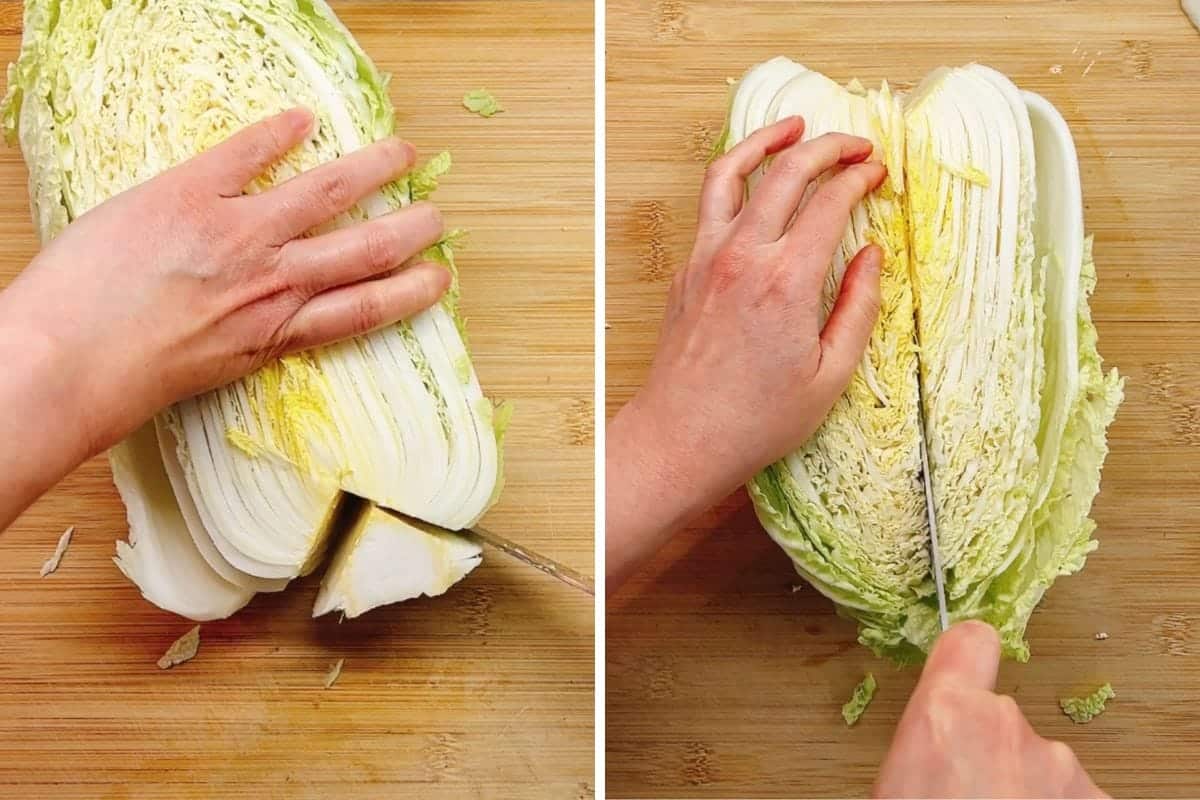
- Halve the cabbage and remove the core.
Place the napa cabbage cut-side down for stability. Slice it in half lengthwise, then cut out the hard core at the bottom. - Quarter the cabbage.
Cut each half in half again so you have quarters.This makes the cabbage easier to handle.

- Separate the stems from the leafy tops.
On each quarter, make one long cut to separate the thick white stems from the soft, crinkly leaves. - Cut stems smaller and keep leaves larger.
Dice the stems into smaller bite-size pieces, then chop the leafy parts into larger pieces.
Tip
When stir-frying, cook the stems first, then add the leaves at the end. The leaves only need a short time to soften.
This method works well for simple sautéed napa cabbage dishes where the stems stay crisp-tender and the leaves soft.
Cutting Napa cabbage for soup
For soups, cut the stems smaller and keep the leafy parts larger so they cook evenly.
If you’re cooking a big pot of soup, you can use the same cutting method shown in the stir-fry section above. But if you only need a few leaves, this smaller method is easier and wastes less cabbage.

- Separate a few cabbage leaves.
Pull off several whole napa cabbage leaves from the head. This works well when you only need a small portion. - Stack the leaves and trim the bottom tip.
Stack a few leaves together and trim off the very bottom tip of the thick stem if it looks dry or tough.
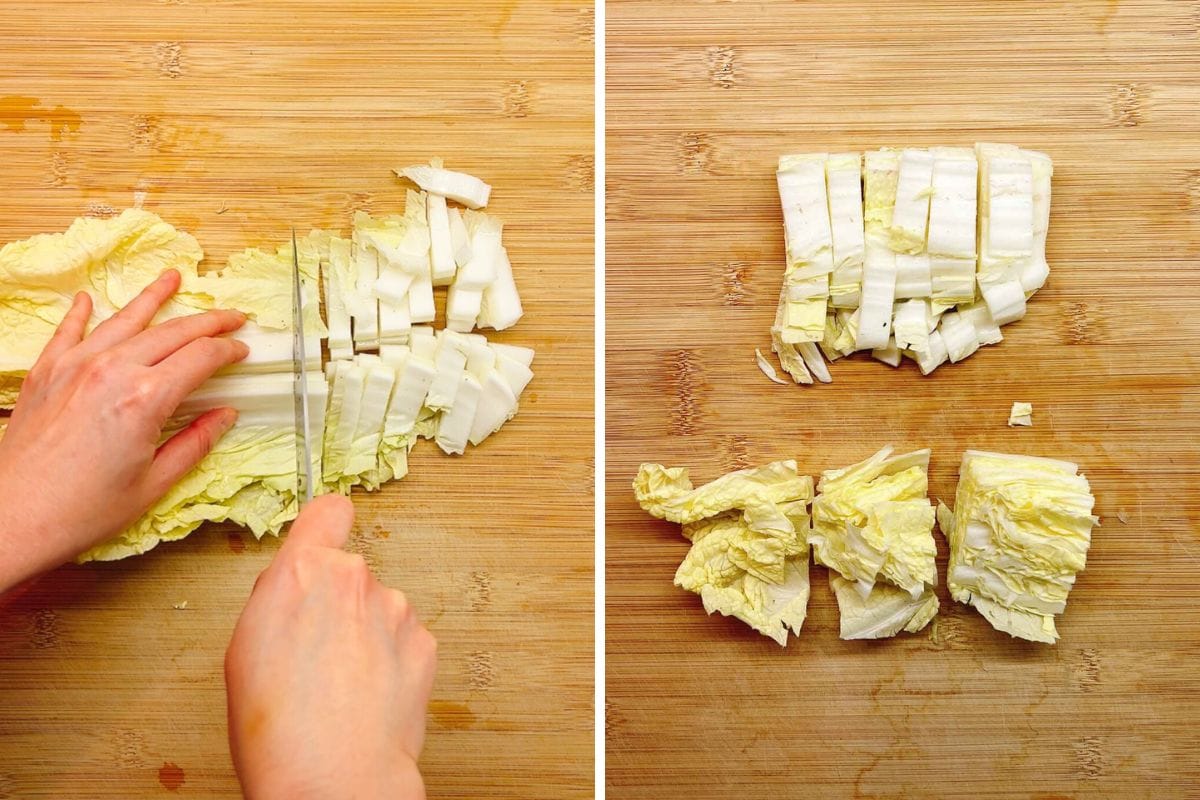
- Slice lengthwise to shorten the leaves.
Cut the stacked leaves lengthwise once so the pieces are easier to handle. - Dice the cabbage.
Cut the thick stem sections into smaller pieces and keep the leafy parts larger so they cook evenly.
Tip
When cooking soup, add the stems first and simmer until slightly tender, then add the leafy parts at the end. The leaves only need a few minutes to soften.
Shredding Napa Cabbage for Salad or Slaw
For salads and slaw, the goal is to create thin, delicate ribbons that stay crisp and easy to eat raw. Napa cabbage is naturally tender, which makes it great for this type of fine shredding.
Start by trimming off the base of the cabbage so the leaves can separate easily.
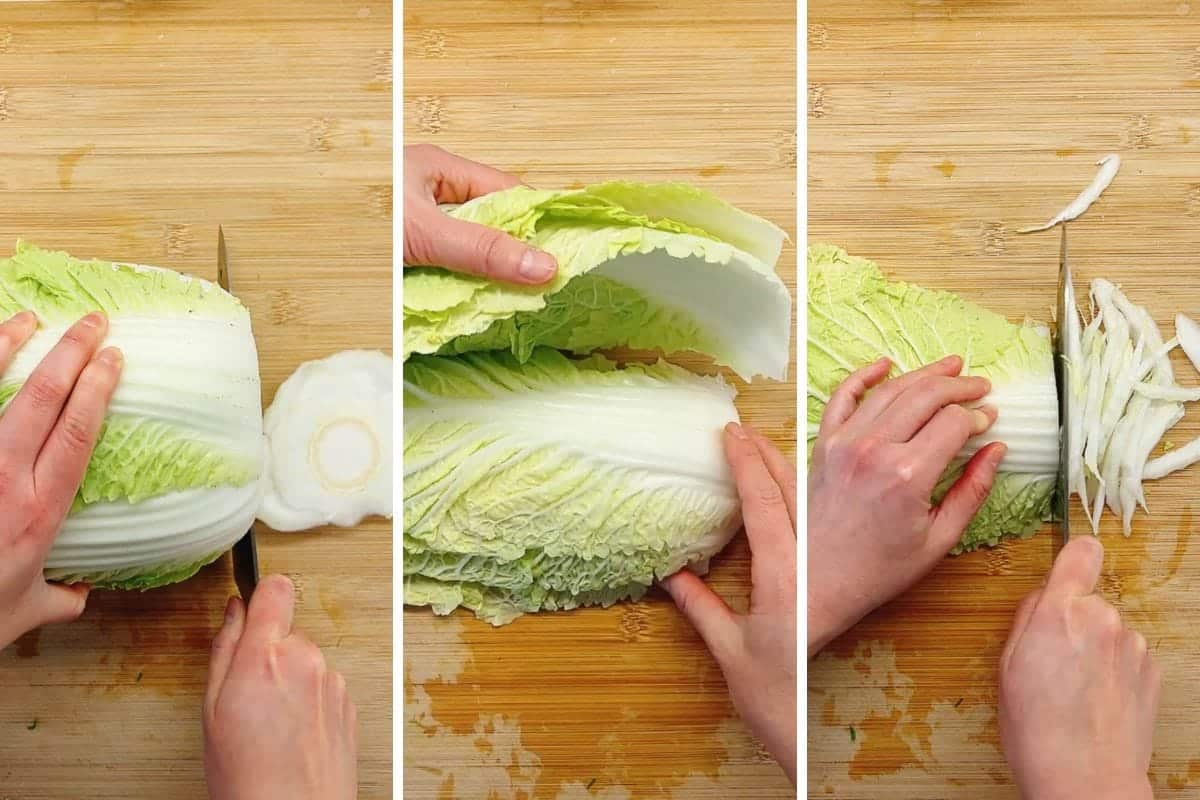
- Separate several whole cabbage leaves.
Pull off a few leaves from the head and stack them together. - Thinly slice the thick stems.
The white stem section is thicker and crunchier, so slice it very thinly into narrow strips.

- Roll the leafy tops into a bundle.
Gather the softer leafy parts and roll them loosely into a bundle so they are easier to slice. - Finely slice the leaves.
Cut across the rolled leaves into thin ribbons.
You’ll end up with finely shredded cabbage perfect for salads and slaw.
Because the cabbage is sliced thinly, it stays crisp while still tender enough to eat raw.
Cutting Napa Cabbage for Braising or Roasting
For roasting or braising, napa cabbage is usually cut into larger sections so the layers stay together during cooking. This helps the cabbage become tender and absorb flavor without falling apart.
You can cut the cabbage lengthwise into wedges or crosswise into thick slabs (sometimes called cabbage steaks). Both methods keep the layers intact and work well for slow roasting or braising.
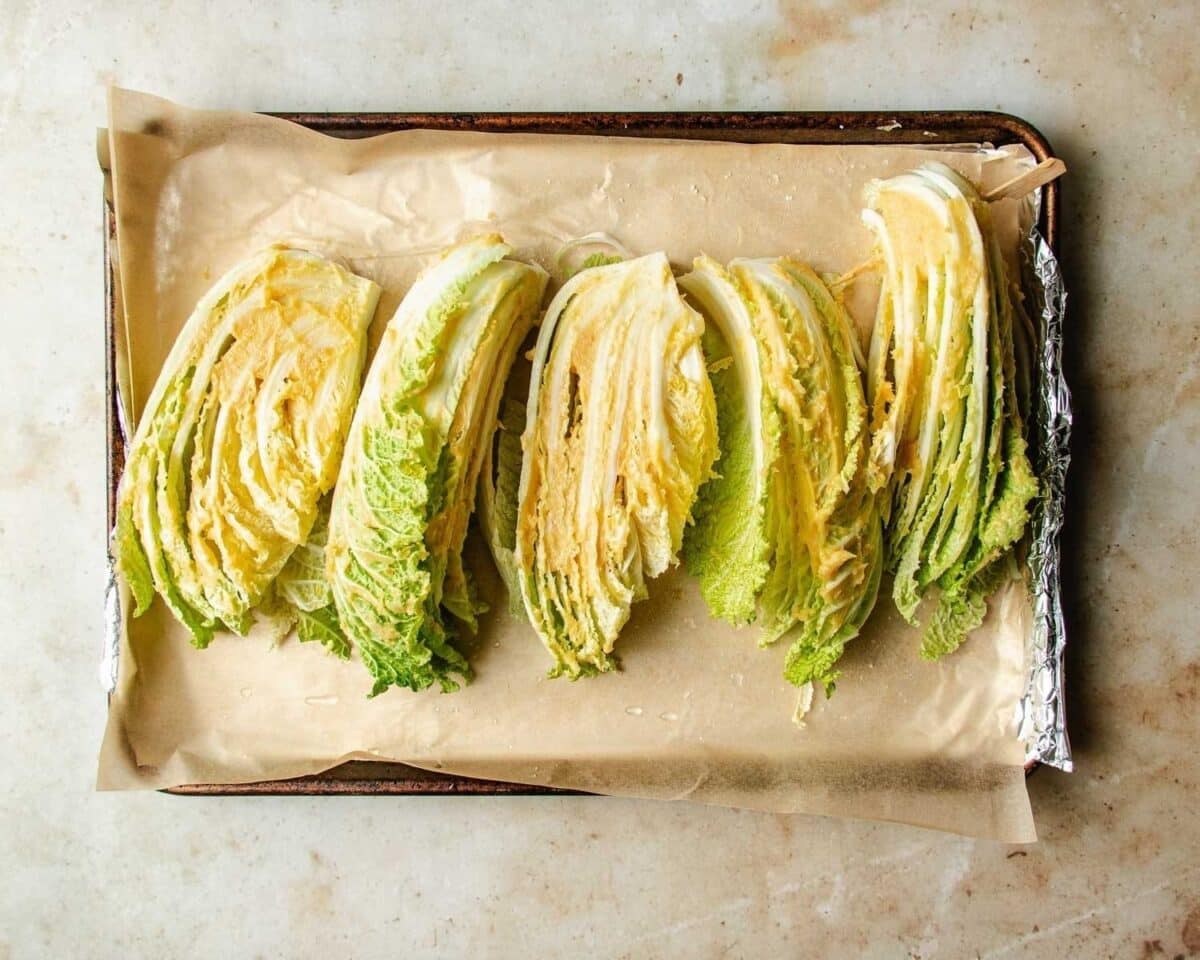
- Trim the bottom.
Slice off the very bottom of the core. - Cut into large sections.
Cut the cabbage lengthwise into halves, then quarters to create large wedges. Leave a small portion of the core attached so the layers stay together while cooking. - Season and cook.
Arrange the wedges on a sheet pan for roasting or in a pan for braising and season as your recipe calls for.
Smaller heads of napa cabbage, sometimes called baby napa cabbage (娃娃菜 / wawa choy), work especially well for braised napa cabbage. They’re more compact, so the wedges fit easily in a skillet or braising pan.
Preparing Napa Cabbage for Dumplings and Wontons
For dumplings and wontons, napa cabbage needs to be finely chopped and drained of excess moisture. This prevents the filling from turning watery.
Start by shredding the cabbage as shown in the salad section above.
- Finely chop the cabbage.
After shredding, run your knife across the cabbage several times to mince it into very small pieces.Tip: Avoid using a food processor for this step. It tends to over-process the cabbage and releases too much liquid, which can make the filling mushy.
- Salt the cabbage.
Sprinkle about ¼ to ½ teaspoon salt over the chopped cabbage. Massage the salt into the cabbage and let it sit for about 10 minutes. - Squeeze out the moisture.
The cabbage will soften and release liquid. Use your hands to squeeze out as much liquid as possible before adding it to your dumpling or wonton filling.
You can use both the stems and the leafy parts, but keep in mind that the thick stems hold more moisture and must be chopped even finer than the leaves. For easier prep, I usually recommend using mostly the leafy parts and saving the stems for soups or stir-fries.
Once squeezed dry, the cabbage is ready for fillings.
If you’re looking for filling ideas, see my Wonton Filling Ideas guide where napa cabbage is commonly used in several dumpling-style fillings.
Using Whole Napa Cabbage Leaves (Hot Pot or Wraps)
Sometimes the easiest way to prepare napa cabbage is to leave it whole. Whole leaves are great for hot pot, cabbage wraps, or quick blanching.
- Trim the bottom end.
Place the cabbage on a cutting board and slice off the very bottom of the core. This loosens the leaves so they separate easily. - Separate the leaves.
Gently pull the cabbage apart into individual leaves. If a leaf feels stuck near the base, make a small additional trim near the core to release it.
Once separated, the leaves are ready to use.
Common mistakes when cutting napa cabbage
- Cutting stems and leaves the same size
The thick stems take longer to cook than the leafy parts. If cut the same size, the leaves will overcook before the stems soften. - Cooking stems and leaves at the same time
For most dishes, cook the stems first and add the leafy parts later. - Not draining cabbage after washing
Excess water can dilute sauces and prevent proper stir-frying. - Overcooking napa cabbage
The leafy parts cook very quickly and can turn limp if left in the pan too long.
How to store napa cabbage
- Whole cabbage (uncut): Store whole napa cabbage in the refrigerator crisper drawer. Because the leaves are tightly packed, it keeps well for about 1–2 weeks when left whole.
- Cut cabbage:
Once the cabbage is cut, rinsed, and pat-dried, store it in a bag or airtight container in the refrigerator. The cabbage should not be wet. I usually place a clean paper towel on the bottom of the bag and another along the side to absorb excess moisture while still keeping a little humidity inside so the cabbage doesn’t dry out. Leave a small opening in the bag or container so moisture can vent out.If the cabbage wasn’t washed before storing, you don’t need to worry about the moisture level as much. If possible, store the stems and leafy parts separately, since they are often used and cooked differently.
For the best texture, use the cut napa cabbage within 3 days.
- Cooked napa cabbage dishes: Store cooked napa cabbage dishes in an airtight container in the refrigerator for up to 3 days. The cabbage will continue releasing some liquid and the texture will soften slightly over time, which is completely normal.
How to cut Napa cabbage (6 ways)
Ingredients
- 1 whole Napa cabbage
Equipment
- 1 chef’s knife
- 1 large cutting board
Instructions
- Prepare the cabbage: Trim about ½ inch from the bottom of the cabbage to remove the tough base. Peel away the outer leaves if they look bruised or dirty.
- Cut napa cabbage for stir-fries: Separate the thick stems from the leafy tops. Dice the stems into smaller pieces and cut the leaves into larger pieces so they cook evenly.
- Cut napa cabbage for soups: Separate a few leaves, stack them, and slice them into bite-size pieces. Keep the stems slightly smaller than the leafy parts.
- Shred napa cabbage for salads or slaw: Thinly slice the stems and roll the leafy tops into a bundle before slicing them into fine ribbons.
- Cut napa cabbage for roasting or braising: Cut the cabbage into large wedges (lengthwise) or thick slabs (crosswise), leaving part of the core attached so the layers stay together during cooking.
- Prepare napa cabbage for dumpling fillings: Finely chop the cabbage into very small pieces, salt the cabbage with ¼ to ½ teaspoon salt for 10 minutes, then squeeze out the excess moisture before adding it to the filling.
- Use whole napa cabbage leaves: Trim the base and separate the cabbage into individual leaves for hot pot, wraps, or blanching.
Notes
- Dumpling fillings: When using napa cabbage for dumplings, the thick stems contain more water than the leafy parts. Chop the stems very finely or use mostly the leaves and save the stems for stir-fries or soups.
- Washing napa cabbage: It’s often easier to rinse napa cabbage after cutting. Washing the chopped pieces helps clean between the layers more thoroughly. Drain well and pat dry before cooking.
FAQ
I usually wash it after slicing, because it’s easier to clean between the layers and I can wash only the portion I plan to cook while keeping the rest dry.
The very bottom core is usually trimmed off because it’s tough. However, when cutting wedges for roasting or braising, it’s helpful to leave a small portion of the core attached so the layers stay together during cooking.
Yes. Napa cabbage is naturally tender and slightly sweet, which makes it great for salads and slaw. When eaten raw, it’s usually thinly shredded so the texture stays crisp but easy to chew.
Fresh napa cabbage does not freeze well because it contains a lot of water. After thawing, the leaves become very soft and lose their crisp texture.
The one situation where freezing can work is in dumpling fillings. Napa cabbage used for dumplings is usually salted and squeezed to remove as much liquid as possible before mixing into the filling, which makes it more suitable for freezing.
Napa cabbage recipes to try
Once you know how to cut napa cabbage properly, you can use it in many different dishes. Here are a few recipes from my kitchen where napa cabbage plays an important role.
- Napa Cabbage Soup: A comforting Chinese-style soup where napa cabbage becomes tender and slightly sweet in the broth.
- Napa Cabbage Slaw: Thinly shredded napa cabbage tossed with an Asian dijon dressing.
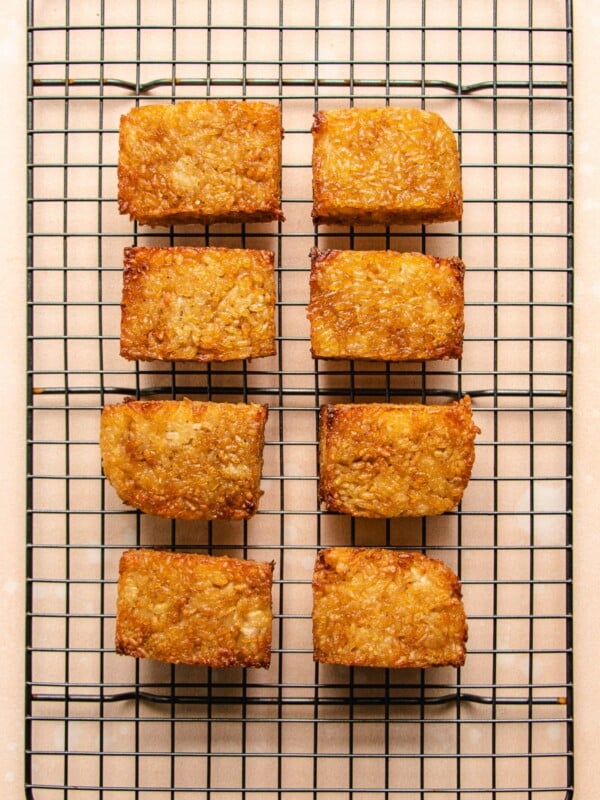
- Rice Paper Dumplings: A crispy dumpling-style recipe where you can incorporate finely chopped napa cabbage into the filling.
- Roasted Napa Cabbage: Thick wedges of napa cabbage roasted until the edges caramelize and the layers turn tender.
Made a dish and loved it? Please rate the recipe and leave a comment in the section below! It helps my blog grow organically, allowing me to continue sharing free and awesome content with you. Thank you!









Thank you so much for this valuable and comprehensive information! I love to receive your newsletters–there’s always something new to learn and wonderful recipes to try that help make me a better cook. You’re the BEST!
Thank you, Linda. You are so very welcome. I’m very happy to share what I’ve learned as a home cook with everyone and I’m glad I can be a bit helpful to you. 🙂