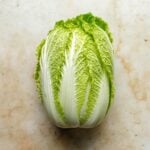
How to cut Napa cabbage (6 ways)
Learn how to cut napa cabbage the right way for stir-fries, soups, dumplings, and salads. Simple techniques that improve texture and cooking results.
Servings 6 servings
Equipment
- 1 chef’s knife
- 1 large cutting board
Instructions
- Prepare the cabbage: Trim about ½ inch from the bottom of the cabbage to remove the tough base. Peel away the outer leaves if they look bruised or dirty.
- Cut napa cabbage for stir-fries: Separate the thick stems from the leafy tops. Dice the stems into smaller pieces and cut the leaves into larger pieces so they cook evenly.
- Cut napa cabbage for soups: Separate a few leaves, stack them, and slice them into bite-size pieces. Keep the stems slightly smaller than the leafy parts.
- Shred napa cabbage for salads or slaw: Thinly slice the stems and roll the leafy tops into a bundle before slicing them into fine ribbons.
- Cut napa cabbage for roasting or braising: Cut the cabbage into large wedges (lengthwise) or thick slabs (crosswise), leaving part of the core attached so the layers stay together during cooking.
- Prepare napa cabbage for dumpling fillings: Finely chop the cabbage into very small pieces, salt the cabbage with ¼ to ½ teaspoon salt for 10 minutes, then squeeze out the excess moisture before adding it to the filling.
- Use whole napa cabbage leaves: Trim the base and separate the cabbage into individual leaves for hot pot, wraps, or blanching.
Notes
- Dumpling fillings: When using napa cabbage for dumplings, the thick stems contain more water than the leafy parts. Chop the stems very finely or use mostly the leaves and save the stems for stir-fries or soups.
- Washing napa cabbage: It’s often easier to rinse napa cabbage after cutting. Washing the chopped pieces helps clean between the layers more thoroughly. Drain well and pat dry before cooking.
