This post may contain affiliate links. Please read our disclosure policy.
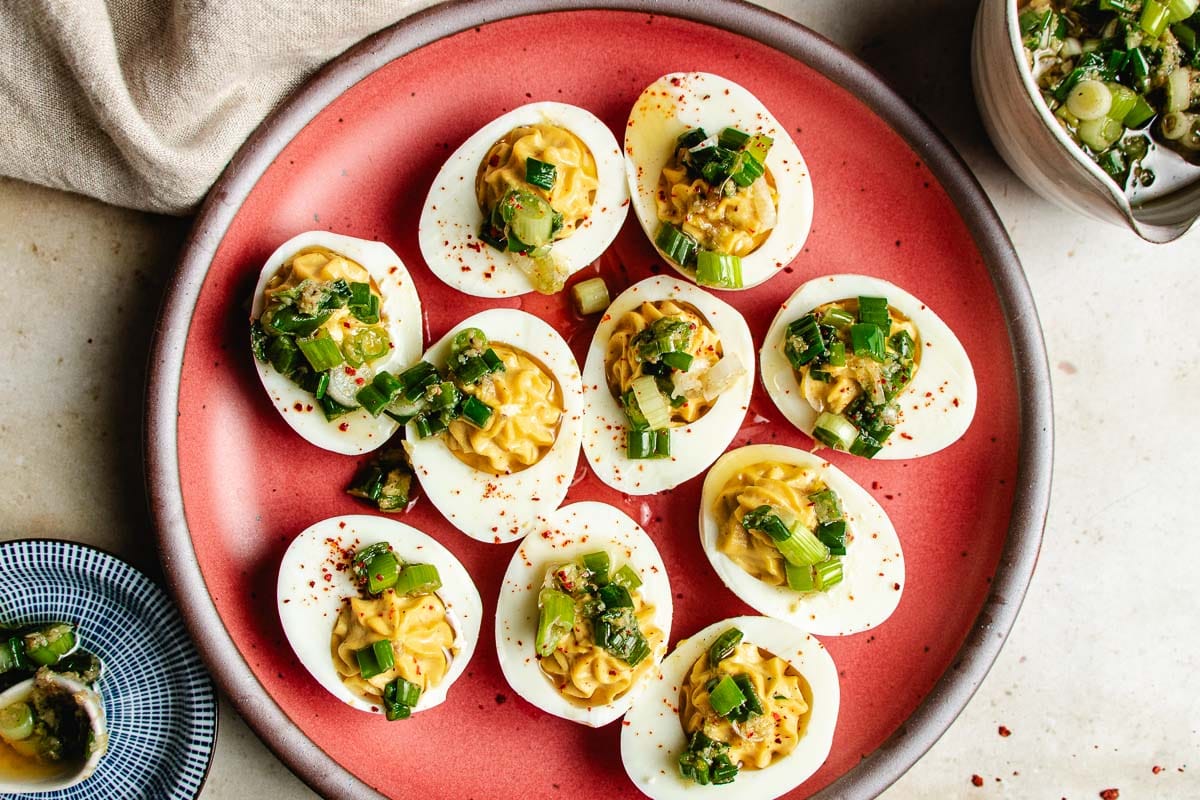
These Asian Deviled Eggs are creamy, savory, and full of punchy flavor from my homemade ginger scallion oil. They’re a fun twist on the classic appetizer — easy to make, perfectly balanced, and always a hit at parties. Perfect for Friendsgiving, Thanksgiving, or any holiday get-together, these deviled eggs always disappear fast.

A Note from ChihYu
Deviled eggs are a must at every holiday gathering in our family — they always show up at Thanksgiving and never last long. Over the years, it’s become a little tradition for me to come up with one new version each season, just to keep things fun (and because I love eggs).
This scallion-ginger version came together naturally — readers already love my ginger scallion sauce, and it turns out that same flavor is incredible with eggs. It’s simple, full of umami, and such a great way to bring something new to the table without extra effort.
Key Ingredient Notes
- Eggs: I use refrigerated large eggs. Room-temperature eggs boil more evenly, but it’s fine to use cold ones — just let them sit out for 15–20 minutes before boiling. Slightly older eggs peel easier, and starting them in cold water keeps the yolks bright and the whites tender.
- Kewpie Mayo: Kewpie is creamier and more flavorful because it’s made with egg yolks only. That’s what gives the filling a richer, deeper taste. You can use regular mayo if that’s what you have, but Kewpie really makes a difference.
- Dijon Mustard: Adds flavor and helps with texture. Like when you make a dressing, Dijon acts as an emulsifier so the yolks and mayo blend smoothly and stay creamy.
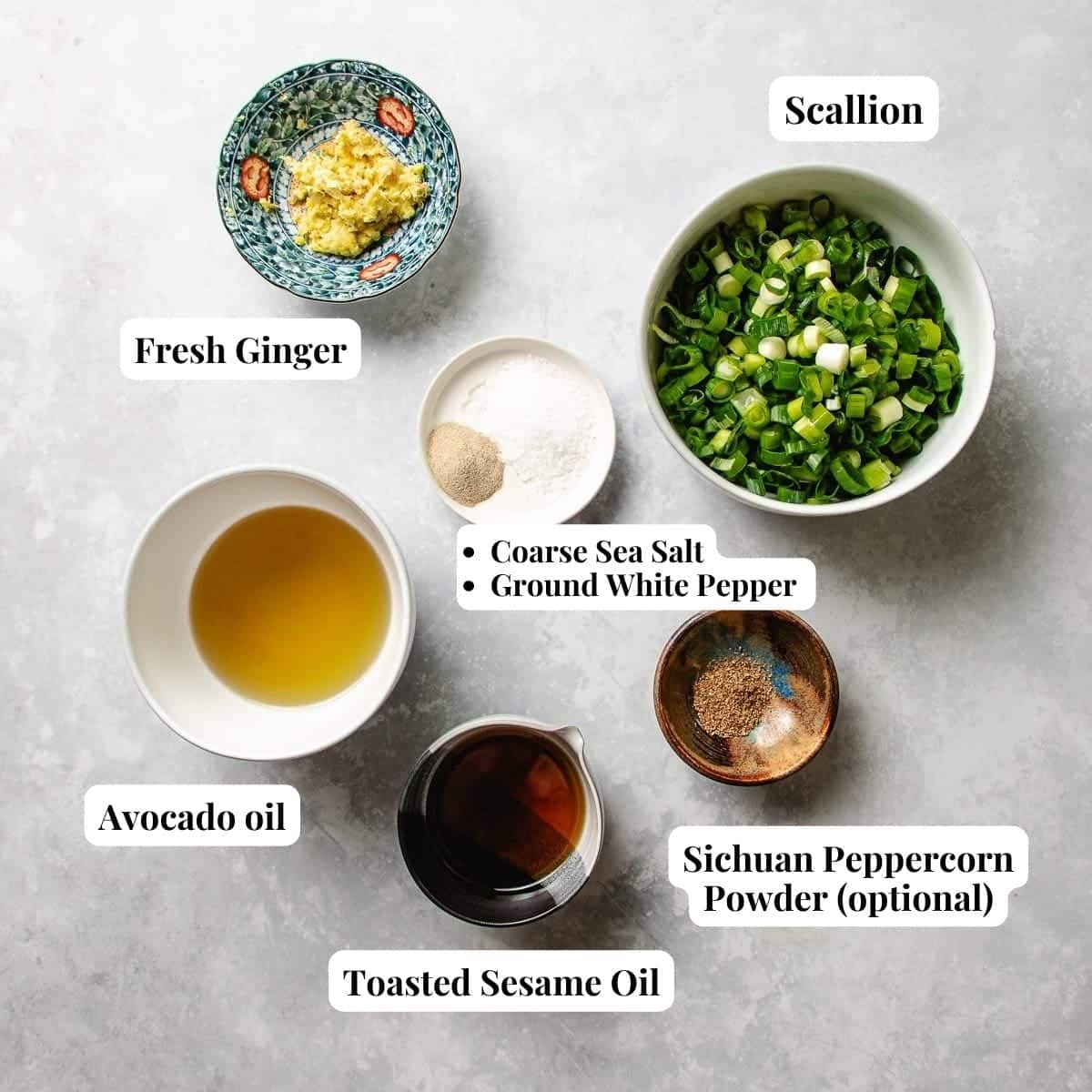
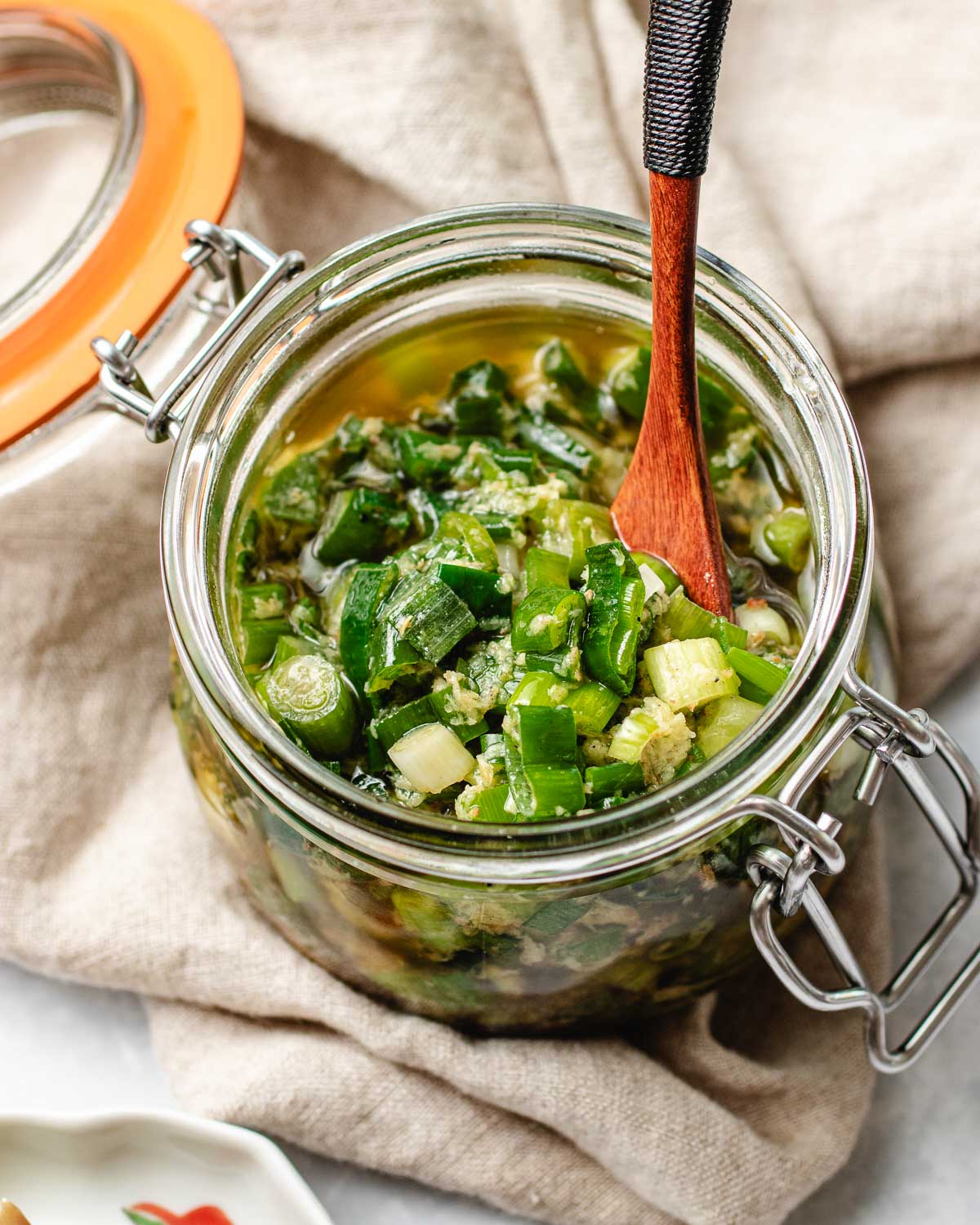
- Ginger Scallion Oil: Made with chopped scallions, grated ginger, toasted sesame oil, avocado oil, a pinch of salt, and white pepper. I use the oil part in the yolk mixture and the scallion bits as garnish on top.
- Gochugaru (or Paprika): A small sprinkle adds color and a hint of spice. Gochugaru (Korean red pepper flakes) gives a light smoky heat, while paprika keeps it classic.
How to make the best Asian deviled eggs
This recipe is simple and straightforward — you’ll hard-boil the eggs, make the ginger scallion oil, blend the yolks until smooth, then fill and garnish. Still, there are a few key details that make all the difference. Here’s what to keep in mind.
- Boil the eggs perfectly.
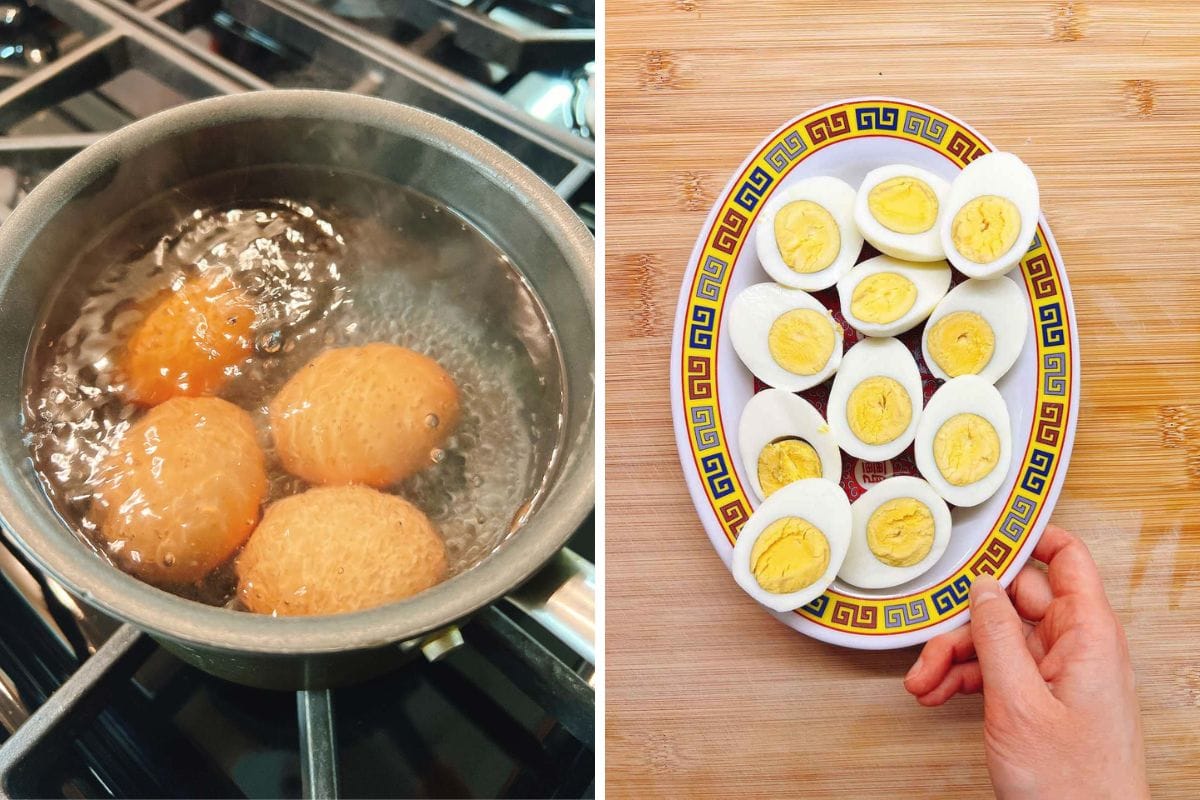
The goal is firm whites and creamy yolks, not rubbery or gray ones. Start the eggs in cold water so they heat evenly, then once it boils, cover and turn off the heat. Let them sit for about ten minutes — that’s your sweet spot. Older eggs are easier to peel than very fresh ones, so if you can, use eggs that have been in your fridge for a few days. - Peel while they’re still slightly warm.
An ice bath helps stop the cooking, but don’t wait until the eggs are fully cold — peeling while they’re still warm is much easier. As soon as they’re no longer too hot to touch, tap the dull end (where the air pocket is) and peel under running water. The shells should slip off cleanly without tearing the whites.
- Get a silky-smooth filling.
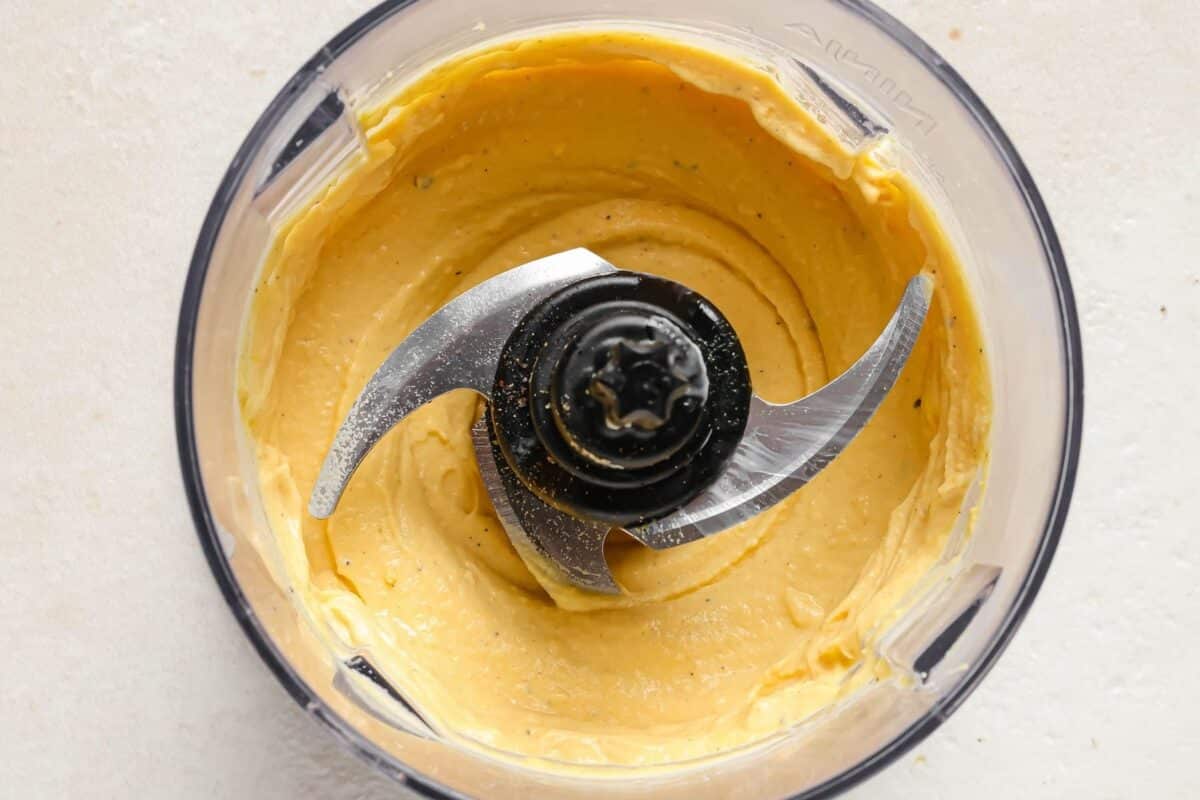
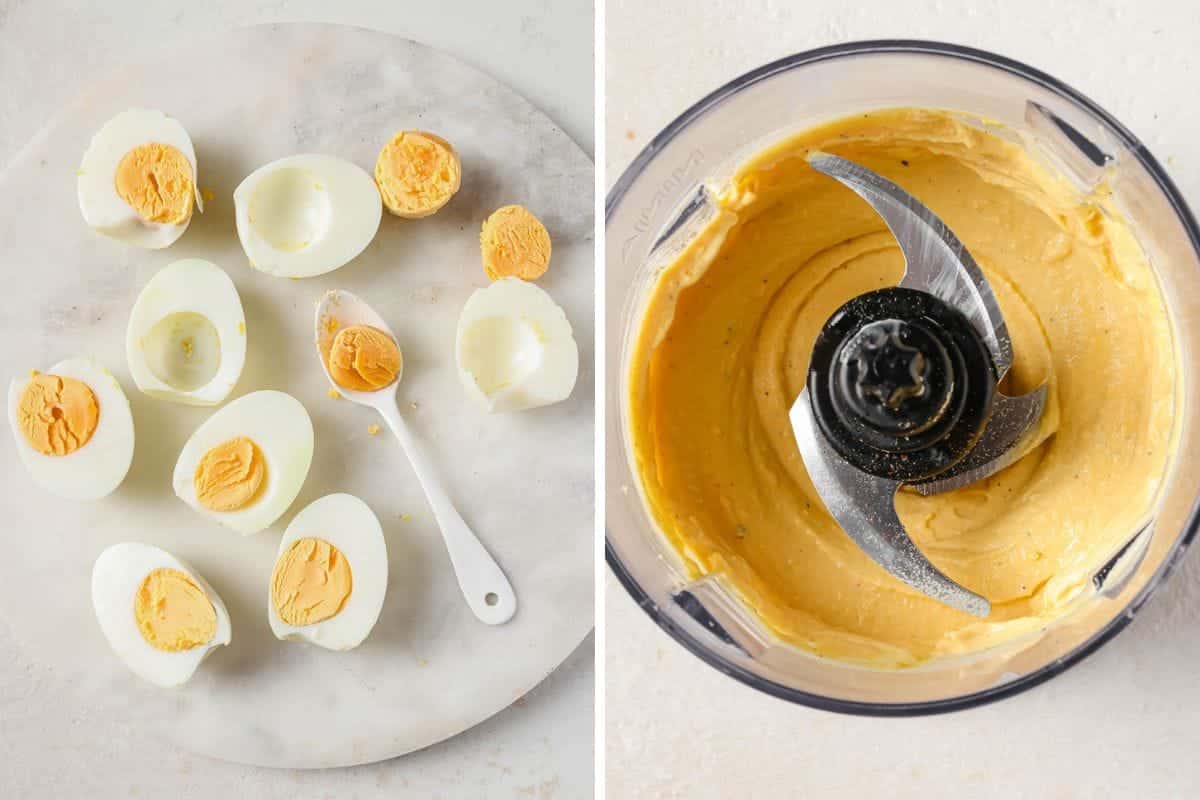
Use a small food processor or mini chopper to blend the yolks with Kewpie mayo and Dijon. It’s the easiest way to get that creamy, restaurant-style texture without lumps. My ratio of six eggs to three tablespoons of mayo keeps it rich but not greasy or runny.
- Why ginger scallion oil makes it special.
The ginger scallion oil adds both texture and flavor — a little of the oil goes into the yolk mix for that glossy, smooth finish, while the scallion and ginger bits on top add freshness and a savory punch. It deepens the flavor and makes these eggs surprisingly addictive. - Keep the presentation neat.
If you’re serving for a party, use a small piping or sandwich bag to fill the egg whites for an even look. You can also let guests add the scallion-ginger topping themselves so the plate stays clean and elegant throughout the gathering. - Make ahead like a pro.
You can hard-boil and peel the eggs a day ahead — just keep them whole in a sealed container in the fridge. The ginger scallion oil also lasts up to a week. Fill and garnish the eggs on the day you serve them so they stay fresh, glossy, and firm.
Tip
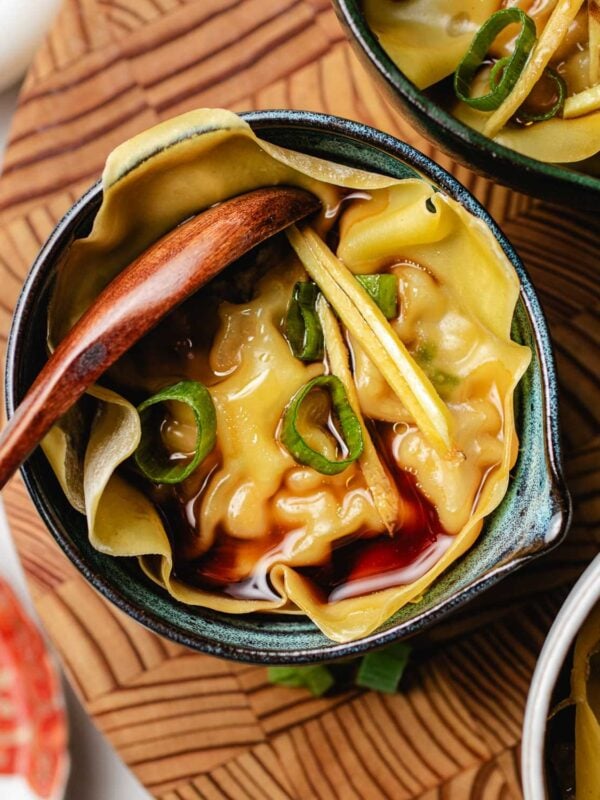
Have some extra scallion ginger sauce? It’s amazing on Crispy Scallion Chicken, Scallion Oil Noodles, Scallion chicken skewers, or spooned over Shrimp Wontons for extra flavor.
What to serve with Chinese deviled eggs
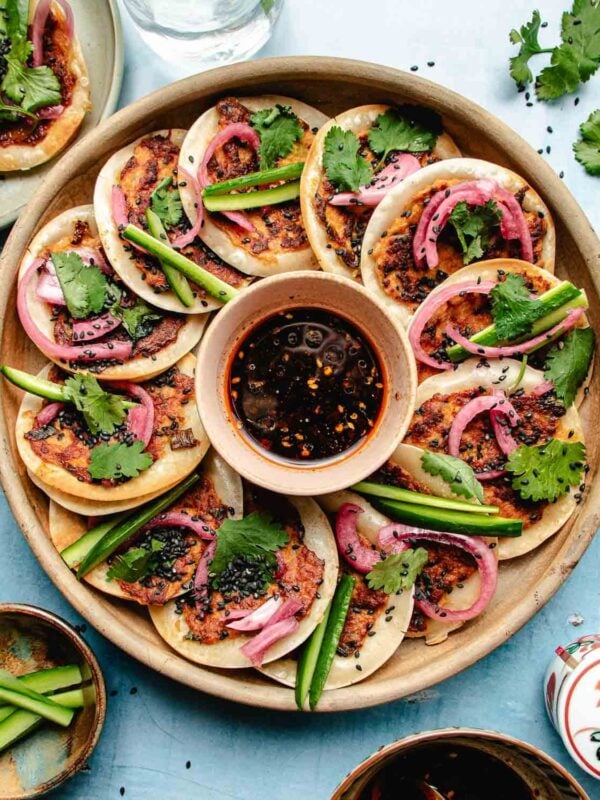
These deviled eggs make an easy, flavorful appetizer that fits right into any party spread. Pair them with Rice Paper Dumplings, Crispy Rice Sushi, Sweet and Sour Eggplant Bites, or Shrimp Summer Rolls for a colorful mix of textures and flavors. It’s a beautiful lineup for Friendsgiving, Thanksgiving, or any holiday celebration.
FAQs
Add the eggs to the pot before turning on the heat. Starting them in cold water helps them warm up gradually so the shells don’t crack. If the water heats too fast or the pot is crowded, the eggs can bump into each other and split, so give them space and bring the water to a gentle boil.
That usually happens when warm eggs are covered too soon. Let them cool completely before sealing or refrigerating. Any trapped heat turns into condensation, which can make the eggs look watery on the surface.
Try these egg appetizers next!
If you love eggs as much as I do, here are a few more reader-favorite appetizers to try:
- Air Fryer Deviled Eggs — with a classic rich and creamy garlic Dijon filling. Easy and delicious.
- Soy Sauce Eggs — a Taiwanese favorite with a sweet and savory soy marinade.
- Chinese Tea Eggs — gently simmered in spiced tea broth for a beautiful marbled look and deep flavor.
Asian deviled eggs recipe

Video
Ingredients
- 6 large eggs refrigerated
- 3 tbsp kewpie mayo or regular mayo
- 1.5 tsp Dijon mustard
- ½ tsp garlic powder
- ¼ tsp ground black pepper
- 2 to 2.5 tbsp ginger scallion oil see below
- Light sprinkle Gochugaru flakes or paprika flakes), garnish (optional)
Ginger scallion sauce (1 cup):
- 6 scallion finely diced (a little over 2 cups)
- 1 oz fresh ginger grated (about 1½ tbsp)
- 2 tbsp toasted sesame oil
- 1 tsp coarse sea salt or to taste
- ½ tsp ground white pepper
- ½ tsp Sichuan peppercorn powder optional
- ½ cup avocado oil or another neutral oil
Instructions
- Boil the eggs. Place the eggs in a saucepan and cover them with cold water by about 1 inch. Bring to a boil over medium heat, then cover, remove from heat, and let sit for 10–11 minutes. Transfer the eggs to a bowl of cold water and cool for at least 5 minutes.

- Peel and prep the eggs. Gently tap each egg on the counter and peel while still slightly warm, starting from the dull end. Slice the eggs in half lengthwise and carefully scoop out the yolks with a small spoon into a mini food processor.
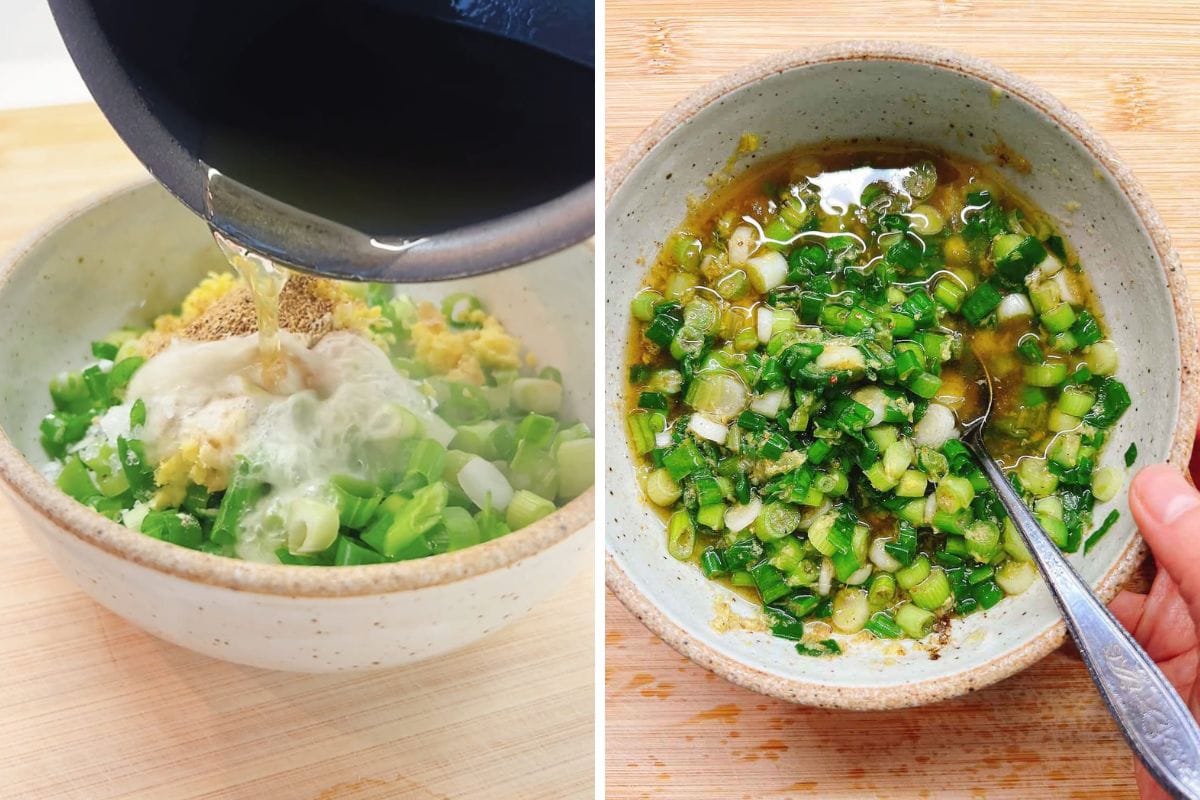
- Make the ginger scallion sauce. In a heat-proof bowl, combine diced scallions, grated ginger, sesame oil, salt, white pepper, and Sichuan peppercorn powder (if using). In a small saucepan, heat the avocado oil over medium-low heat for about 7–8 minutes, until it shimmers. Carefully pour the hot oil over the scallion mixture — it will sizzle immediately. Stir well and let it sit for a few minutes to soften.
- Make the filling. Add mayo, Dijon mustard, garlic powder, black pepper, and 2–2½ tbsp of the oil portion (not the solids) from the ginger scallion sauce. Pulse until creamy and smooth.
- Assemble and serve. Spoon or pipe the yolk mixture into the egg whites. Top each egg with a small amount of scallion ginger sauce and a sprinkle of gochugaru or paprika if using. Serve at room temperature, with extra sauce on the side.
- Tip: For a neater presentation, let guests add the sauce themselves to avoid excess oil on the plate.
Notes
- Salt: The ginger scallion sauce is naturally salty and full of umami, so there’s no need to add extra salt to the yolk mixture.
- Make ahead:
- Eggs: Hard-boil and peel, but leave them whole until ready to assemble.
- Ginger scallion sauce: Make up to 7 days ahead and store in the fridge. Bring to room temperature before using. Do not reheat the oil.
Nutrition
Nutrition information is automatically calculated, so should only be used as an approximation.
Made a dish and loved it? Please rate the recipe and leave a comment in the section below! It helps my blog grow organically, allowing me to continue sharing free and awesome content with you. Thank you!