This post may contain affiliate links. Please read our disclosure policy.
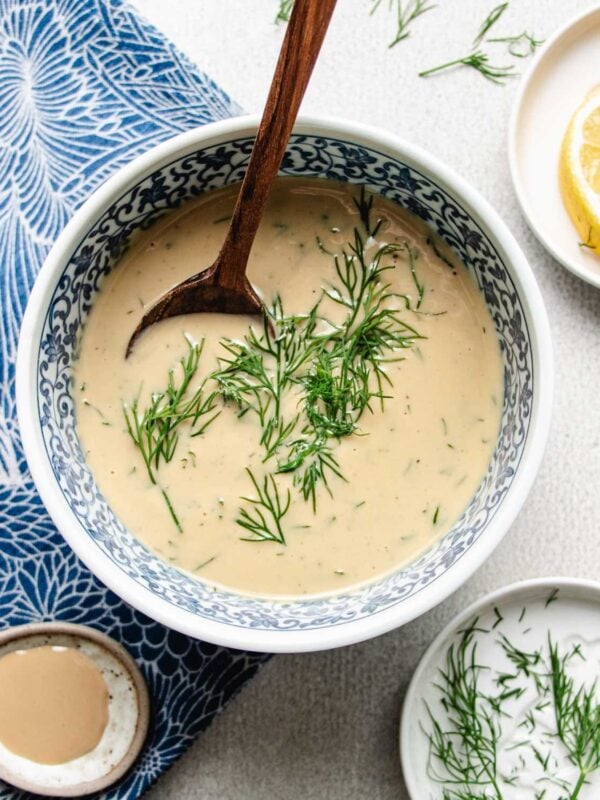
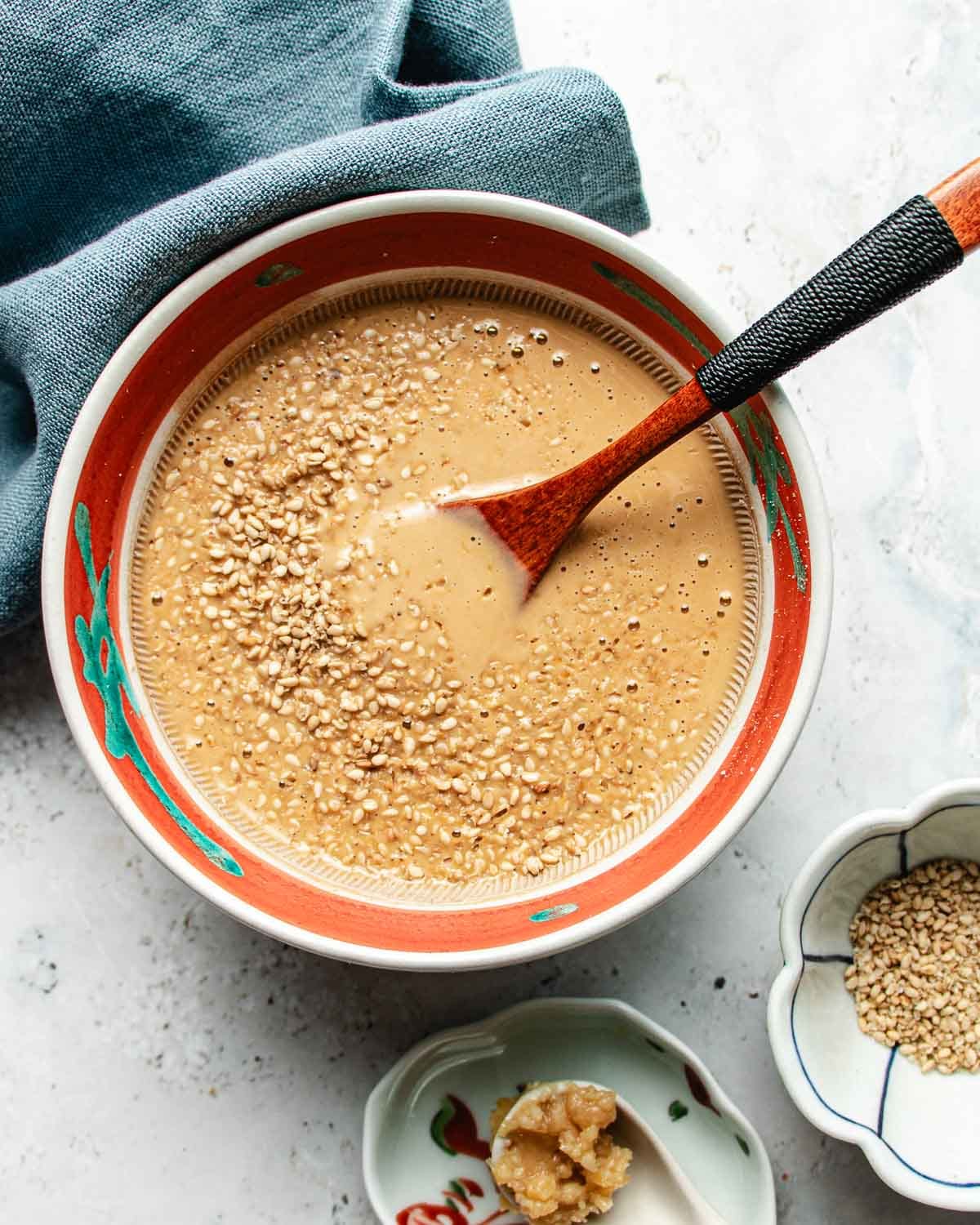
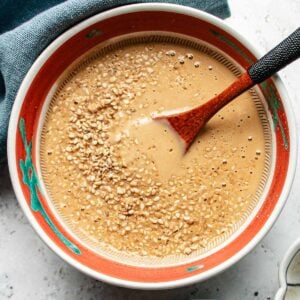
This miso sesame dressing is creamy, nutty, and savory-sweet, with white miso and toasted sesame as the main flavors. It has a rich sesame taste and enough body to cling to crunchy vegetables, so every bite tastes well seasoned.
It’s the kind of dressing that makes simple vegetables taste exciting. Try it with napa cabbage salad, cucumbers, cold noodles, rice bowls, or anything that needs a creamy, nutty boost.
Why this dressing has more flavor

A good sesame dressing should make vegetables taste exciting, not plain underneath. This version uses both toasted sesame oil and ground toasted sesame seeds for deeper flavor, but the miso, mayo, vinegar, and sugar keep it creamy, savory-sweet, and balanced.
- Ground sesame seeds add nuttiness: Lightly warming already-toasted sesame seeds wakes up their aroma. Once ground, they add body and help the sesame flavor come through.
- White miso adds savory depth: It adds depth and umami flavor without overpowering the sesame.
- Kewpie mayo gives body: Japanese mayo adds creaminess and a little extra savory flavor. If you only have regular mayo, I’ll share my tested swap below.
Ingredient notes
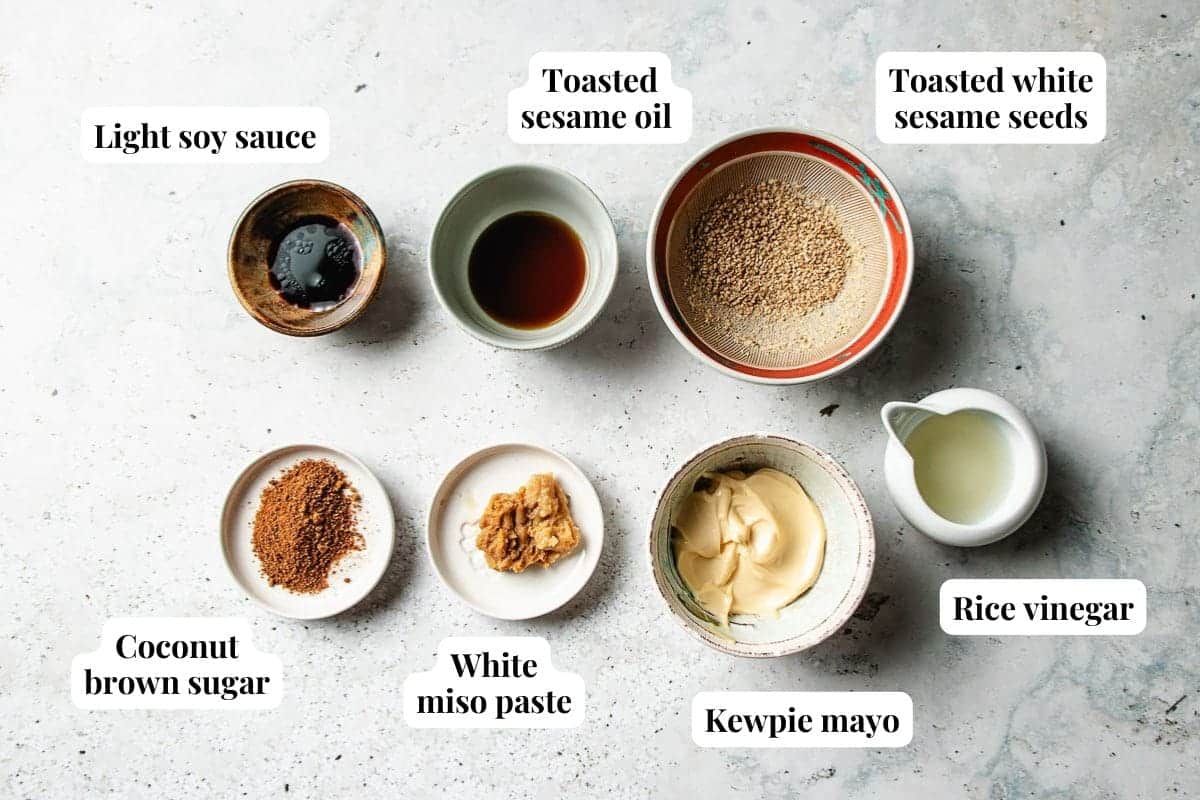
- Toasted white sesame seeds: I use already-toasted white sesame seeds because they have more aroma and flavor than raw sesame seeds. Raw white sesame seeds are much milder and don’t give the dressing the same nutty flavor.
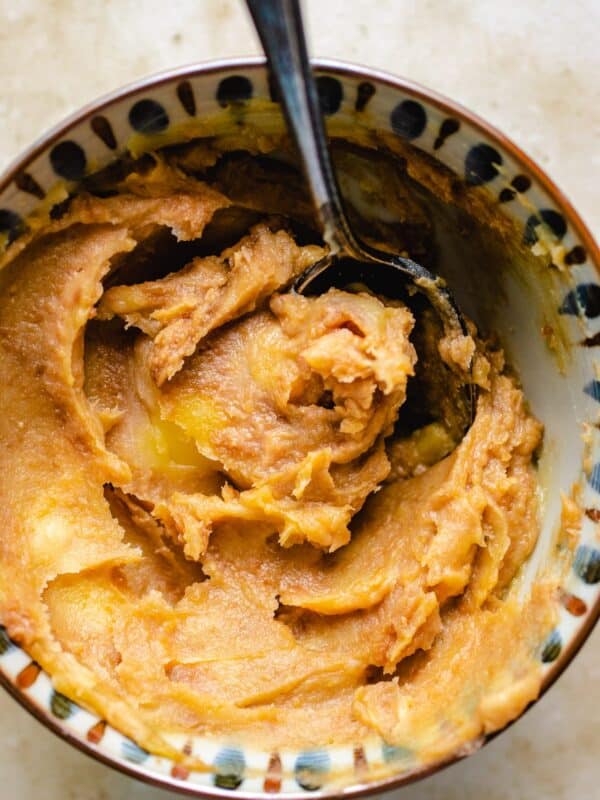
- White miso paste: White miso is the best choice for this dressing because it’s the mildest and slightly sweet. I like buying miso from Japanese or Korean grocery stores because they usually have more options, but most white miso brands will work similarly here. Look for a thick miso paste, not ready-mixed liquid miso in a squeeze pouch.
- Kewpie mayo: Kewpie is a Japanese-style mayo made with egg yolks, so it has more flavor and a richer texture than regular mayo. In this dressing, it gives a creamy body and helps the dressing coat vegetables well.
- Rice vinegar: Adds brightness and balances the richness from the mayo, miso, sesame seeds, and sesame oil.
- Toasted sesame oil: Adds warm sesame aroma, a smooth texture, and a little extra body to the dressing. It also helps the dressing taste rich without feeling too thick or dry.
- Coconut brown sugar: Rounds out the salty and tangy flavors. Regular brown sugar also works.
- Soy sauce: Adds a small savory boost and deepens the umami flavor.
Substitutions and gluten-free swaps
- Kewpie mayo: Regular mayo works in the same amount. For a closer savory flavor, add a small pinch of shiitake bouillon powder. I tested it with this dressing and prefer it over chicken bouillon.
- White miso: Yellow miso is the easiest swap. If using mixed miso, which is usually white miso plus red miso, start with half the amount first because the flavor is stronger and saltier.
- What not to use: I don’t recommend red miso because it can overpower the sesame flavor. Also skip ready-mixed liquid miso in a squeeze pouch. It’s thinner and already diluted, so it won’t give the dressing the same body or flavor.
- Gluten-free: Use gluten-free white miso and gluten-free soy sauce.
How to make miso sesame dressing
Step 1: Warm the sesame seeds In a dry cast iron skillet, add the toasted sesame seeds. Warm over low heat for about 1 to 2 minutes, shifting the skillet back and forth often so they don’t burn.
- I tested this dressing with and without warming the sesame seeds, and the flavor is noticeably different. Those 2 minutes wake up the nutty aroma so the dressing tastes richer, not muted or flat.
- A cast iron pan works well because it holds heat evenly. You’ll hear a gentle popping sound when the seeds are ready.
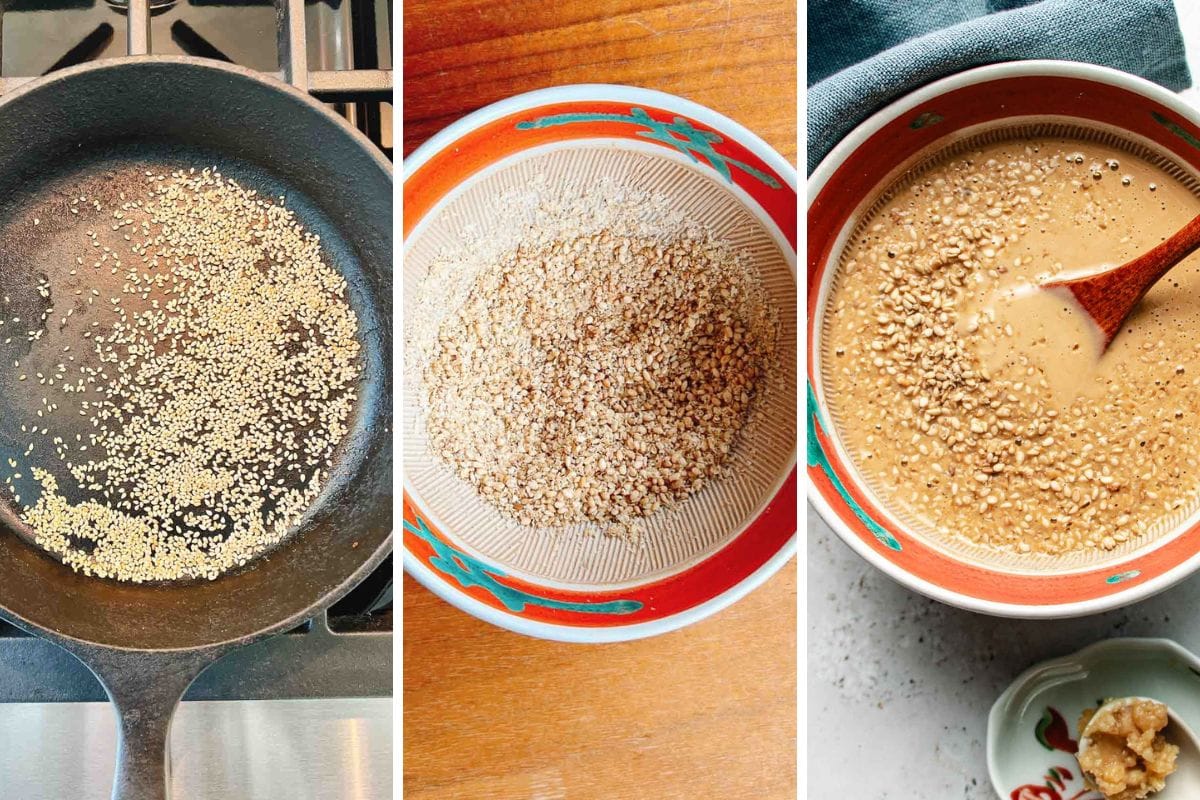
Step 2: Grind the sesame seeds Transfer the seeds to a mortar and pestle or mini food processor. Grind or pulse a few times until they turn into a coarse powder. This helps the sesame flavor mix into the dressing and adds more body.
Step 3: Mix the dressing base In a mixing cup, combine the mayo, rice vinegar, sesame oil, miso, sugar, and soy sauce. Stir or whisk until the miso and sugar dissolve and the dressing looks creamy and smooth. I like using a small whisk here because it helps break up the miso paste more easily.
Step 4: Add the sesame seeds Stir in the ground sesame seeds. The dressing may look a little loose at first, but it will thicken slightly as it sits and the sesame seeds absorb some of the liquid.
Troubleshooting
- If the dressing tastes too sharp or tangy: Add a little more mayo or a tiny pinch of sugar to round it out. The vinegar should brighten the dressing, not be the first flavor you taste.
- If the dressing tastes too salty: This usually means too much miso or soy sauce was added, or the miso paste is stronger than expected. Add a little more mayo to mellow it out. A tiny splash of water can also help loosen and soften the flavor.
- If the dressing is too thick: Stir in 1 to 2 teaspoons of water, rice vinegar, or apple juice. Water keeps the flavor neutral, rice vinegar makes it brighter, and apple juice gives it a softer sweet-tart balance.
- If the dressing is too thin: Add a little more mayo or miso to bring back the body. Just note that extra miso will also make the dressing saltier, so you may need a little more mayo to mellow it out.
- If the sesame flavor tastes flat: The sesame seeds may not have released enough aroma. Lightly warming the toasted sesame seeds first makes a big difference, so the dressing tastes nutty instead of muted.
Different ways to use the dressing
Think of this as the sauce you reach for when the food is simple but needs a little extra flavor. It’s great as a dressing, finishing sauce, or dip for crisp vegetables, noodles, bowls, and cooked proteins.
- Salads: Use it with Napa Cabbage Salad or Chopped Bok Choy Salad. The creamy texture coats crisp vegetables well and gives every bite a savory, nutty flavor.
- Bowls and noodles: Spoon it over a Spicy Tuna Bowl or toss it with Cucumber Noodles. It adds body and makes simple bowl meals taste more complete.
- Cooked proteins: Drizzle it over Air Fryer Trout, Air Fryer Chicken Leg Quarters, or Air Fryer Salmon Bites after cooking. The sesame miso flavor works especially well with rich fish and crispy chicken.
Storage
This dressing is best kept in the fridge and used within 3 to 5 days for the freshest flavor.
I don’t recommend freezing it. Because it contains mayo, the texture can separate and turn grainy after thawing. It’s better to make a small batch and enjoy it fresh.
FAQs
No. Japanese Roasted Sesame Dressing is thicker, more mayo-focused, and does not contain miso paste. This one is more miso-forward, with a nutty sesame flavor and a lighter creamy texture.
Miso sesame dressing recipe
Video
Ingredients
- 1 tbsp toasted white sesame seeds
- 4 tbsp kewpie mayo
- 2 tbsp rice vinegar
- 1.5 tbsp toasted sesame oil
- 1 tbsp white miso paste
- 1 tbsp coconut brown sugar
- 2 tsp soy sauce or gluten-free soy sauce
Instructions
- Warm the sesame seeds: In a dry cast iron skillet, add the toasted sesame seeds. Warm over low heat until fragrant, about 1 to 2 minutes. Shift the skillet back and forth often so they don’t burn.
- Grind the sesame seeds: Transfer the seeds to a mortar and pestle or a mini food processor. Grind or pulse a few times until they turn into a coarse powder.
- Make the dressing: In a mixing cup, combine the mayo, rice vinegar, sesame oil, miso, sugar, and soy sauce. Stir or whisk until the sugar dissolves and the dressing turns creamy and smooth.
- Finish: Add the ground sesame seeds and stir again. The dressing will thicken slightly and have more body as the sesame seeds soak up the liquid.
Notes
- Storage: Store the dressing in an airtight glass container in the fridge. For the best flavor and texture, use it within 3 to 5 days.
- Kewpie mayo substitute: use regular mayo and sprinkle in shiitake mushroom seasoning for a similar flavor.
Nutrition
Nutrition information is automatically calculated, so should only be used as an approximation.
More homemade dressings to try
- Miso Ginger Dressing: Tangy, zesty, and lighter, with fresh grated ginger, miso, rice vinegar, sesame oil, and avocado oil. This one is great for tender greens, baby salad greens, cold noodles, and simple vegetable salads.
- Roasted Sesame Dressing: Creamier, thicker, and richer, with a more mayo-focused texture and bold roasted sesame flavor. It’s great with cold tofu, noodle dishes, heartier vegetables, grilled meats, seafood, or as a dipping sauce.
Made a dish and loved it? Please rate the recipe and leave a comment in the section below! It helps my blog grow organically, allowing me to continue sharing free and awesome content with you. Thank you!