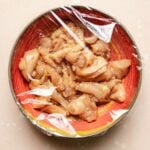
How to velvet chicken
Learn how to velvet chicken for stir-fry so it turns out tender, juicy, and silky every time. Includes methods with and without baking soda.
Servings: 4 servings
Ingredients
Method 1: With baking soda (most tender, restaurant-style)
- 1 lb chicken breast thinly sliced
- 2 tsp light soy sauce
- 1 tsp water
- ¼ tsp sugar
- ½ tsp baking soda
- ¼ tsp coarse sea salt slightly scant
- 2 tbsp olive oil
- ⅛ tsp white pepper
- 1½ tsp starch tapioca, potato starch
Method 2: Without baking soda
- 1 lb chicken breast thinly sliced
- 2 tsp light soy sauce
- 1 tbsp water
- ½ tsp sugar
- ¼ tsp coarse sea salt
- 2 tbsp olive oil
- ⅛ tsp white pepper
- 2 tsp starch
For cooking:
- 1-1.5 tbsp avocado oil or any neutral-flavored oil
Instructions
Slice the chicken:
- Hold your knife at a slight angle (about 45°) to create wider, flatter slices. Slice against the grain into thin pieces (about ⅛-inch thick).
- Transfer to a mixing bowl.
Season and tenderize:
- Add soy sauce, water, sugar, baking soda (if using), salt, oil, and white pepper.
- Gently mix and massage until the chicken absorbs the liquid and looks slightly glossy and sticky.
Add starch:
- Sprinkle in the starch and mix again until evenly coated. The chicken should feel lightly tacky, not watery.
- Let it rest for 10–15 minutes at room temperature, or refrigerate while you prep other ingredients.
Stir-fry the chicken:
- Heat a large pan or wok (12-inch) over medium heat until hot (you should feel heat when holding your hand 2–3 inches above the surface).
- Add oil and swirl to coat. The oil should shimmer but not smoke.
- Add the chicken and turn heat to medium-high. Spread into a single layer. Cook undisturbed for 2–3 minutes, until lightly golden on one side.
- Flip and cook for another 1 minute or so, until just cooked through.
Remove and use:
- Transfer out immediately. The chicken should be tender, juicy, and lightly seasoned. Ready to combine with vegetables or sauce.
Video
Notes
- Make-ahead: Velvet the chicken and store it raw in an airtight container in the fridge for up to 2 days.
- Freeze: Velvet the chicken and store it raw in a freezer-safe bag in a flat layer. Freeze for up to 2 months.
- Defrost: Thaw the chicken overnight in the refrigerator before cooking.
The version without baking soda uses a bit more water to help rehydrate the chicken, slightly more sugar to support browning, and a little extra starch to lock in that added moisture. - If using coconut aminos, here is the ratio:
- 1 lb. chicken breast, thinly sliced
- 1 tbsp coconut aminos
- ½ tsp baking soda
- ¼ tsp coarse sea salt
- 2 tbsp olive oil
- ⅛ tsp white pepper, or black pepper
- 1.5 tsp tapioca starch, or potato starch, or cornstarch
Nutrition
Serving: 0.25lb | Calories: 197kcal | Carbohydrates: 1g | Protein: 24g | Fat: 10g | Saturated Fat: 2g | Polyunsaturated Fat: 1g | Monounsaturated Fat: 6g | Trans Fat: 0.01g | Cholesterol: 73mg | Sodium: 582mg | Potassium: 426mg | Fiber: 0.1g | Sugar: 0.3g | Vitamin A: 34IU | Vitamin C: 1mg | Calcium: 7mg | Iron: 1mg
