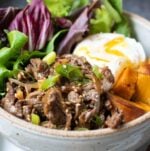
Whole30 bulgogi bowl
Healthy bulgogi beef bowl with tender beef marinated in Korean bulgogi sauce. Sweet, savory, and easy to make. Perfect for meal prep, too!
Servings: 4 servings
Ingredients
Whole30 bulgogi marinade:
- 1 lb. shaved steak or thinly sliced sirloin or ribeye
- 2.5 tbsp coconut aminos
- 2 tsp toasted sesame oil
- 3 large garlic cloves grated
- ½ tsp coarse sea salt
- 2 tbsp apple juice
- 2 large shallots thinly sliced lengthwise
- ½ tsp onion powder
- 1 tbsp olive oil
Other:
- 2 tbsp avocado oil to sear the beef
- Toasted white sesame seeds
- 1-2 scallion chopped
- Whole30 gochujang paste
Bulgogi bowl topping choices:
- Roasted butternut squash
- Soft poached eggs or soy sauce eggs
- Mixed baby leafy greens
- Cauliflower rice or cooked white rice
Instructions
Season and marinate the beef:
- In a large food storage container, add the shaved beef along with all the seasonings, from coconut aminos to olive oil. Mix well, seal, and refrigerate for at least 30 minutes, or ideally overnight.
Sear the beef:
- Preheat a large 14-inch (36 cm) skillet over medium heat until hot (it should shimmer). Add 2 tablespoons of oil and swirl to coat the pan. Add the marinated beef and quickly spread it into a single layer. Turn the heat up to medium-high—you should hear a strong sizzle. That’s how you know the pan is hot enough to sear the beef without it steaming or losing too much juice.
- Let the beef sear undisturbed for about 1 minute on the first side, then cook the flip side for about 30 seconds. If cooked too long, the beef may steam and turn tough or watery.
- Turn off the heat. Taste and adjust—if you prefer it saltier, sprinkle a bit more salt. Let the beef rest in the pan juices for a few minutes to soak up more flavor as it cools slightly.
Assemble the bulgogi bowls:
- Divide the beef into individual bowls. Garnish with sesame seeds and scallions, and a spoonful of gochujang paste. Add your choice of toppings—roasted squash, eggs, and mixed greens. To keep it Whole30-compliant, serve with cauliflower rice. If there’s any pan juice left, drizzle it over the top. Serve warm.
Notes
- Shaved steak: You can find it pre-sliced at Trader Joe’s. It’s super thin, easy to season, and cooks fast.
- If using a whole steak: Freeze it for 30 minutes first, then thinly slice it against the grain.
- Why use a large pan: A 14-inch skillet gives you more surface area, so moisture evaporates quickly. This helps mimic the Korean BBQ-style sear—hot and fast—so the beef stays juicy and flavorful.
- Why heat the pan first: A properly preheated pan helps the beef sear quickly without losing moisture. If the pan isn't hot enough, it takes longer to cook, and the beef ends up stewing instead of caramelizing. This makes the texture less flavorful and more chewy.
- Apple juice: Whole30 doesn’t allow added sugar, so we use apple juice as a natural sweetener. It balances the saltiness and adds moisture to the dish. Because of this extra liquid, it’s even more important to sear the beef correctly to avoid steaming.
- Cook in smaller batches: Don’t overcrowd the pan. If needed, divide the meat into two batches to keep the sear strong and avoid soggy beef.
- Storage: Store the cooked shaved beef in an airtight container in the fridge for up to 3 to 4 days. If you’re prepping ahead, you can marinate the raw beef up to 24 hours in advance, but don’t go beyond that or the texture might get too soft. For freezing, let the cooked beef cool completely, then freeze it in a flat layer for easy thawing. It will keep well in the freezer for up to 2 months.
- To reheat from the fridge, I recommend using a skillet over medium heat with a splash of water or broth—just until warmed through. This keeps the beef juicy and prevents overcooking. You can also microwave in short bursts with a little water, or reheat in a low oven (around 300°F / 150°C) for about 8 to 10 minutes. Avoid high heat when reheating to keep the beef tender and not chewy.
- For frozen leftovers, thaw overnight in the fridge first, then reheat using the same method as above.
Nutrition
Serving: 1serving | Calories: 373kcal | Carbohydrates: 6g | Protein: 23g | Fat: 29g | Saturated Fat: 9g | Polyunsaturated Fat: 3g | Monounsaturated Fat: 16g | Cholesterol: 69mg | Sodium: 521mg | Potassium: 373mg | Fiber: 1g | Sugar: 2g | Vitamin A: 48IU | Vitamin C: 2mg | Calcium: 21mg | Iron: 2mg
