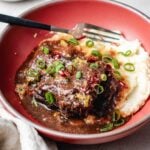
Miso ginger braised short ribs recipe
Rich, tender, and full of umami — these miso ginger braised short ribs are a make-ahead holiday favorite that’s mostly hands-off and deeply flavorful.
Servings: 4 servings
Equipment
- 1 4-quart Dutch oven or Braiser
Ingredients
- 3.5 lb bone-in beef short ribs about 5-6 pieces English short ribs
- sprinkle Coarse sea salt
- sprinkle Freshly ground black pepper
- 1 tbsp neutral oil avocado oil
Aromatics:
- 4.5 oz shallots diced (or yellow onion) (2 large)
- 2.4 oz garlic cloves smashed in whole (10 large)
- 0.85 oz fresh ginger peeled and cut into thin slices (3-inch knob)
- 3-4 scallions white parts chopped (1-inch), green parts (small rounds for garnish)
Braising liquid:
- 6 tbsp sake
- ¼ cup yellow miso paste (or white miso)
- ⅓ cup low-sodium soy sauce
- 3 tbsp mirin
- 2.5 tbsp brown sugar or coconut brown sugar
- 3-3.5 cups low-sodium beef stock
- 1 whole small star anise
To finish:
- 0.2 oz fresh ginger (optional) grated (about 1½ tsp); squeeze to extract juice for finishing the sauce
- Dry red chili pepper rings (optional)
Instructions
Before you start
- This recipe includes an important make-ahead step. After braising, you’ll need to chill the pan sauce (jus) — ideally overnight, or at least 15–20 minutes in the freezer — so the fat can solidify and be lifted off easily. This step gives you a clean, rich sauce without greasiness.
Preheat oven
- Set oven to 300°F (149°C). Place the oven rack in the middle position for even heat circulation.
Season and sear ribs
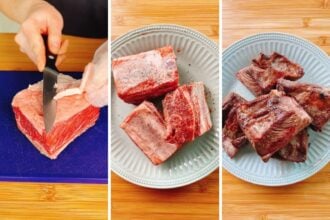
- Lightly trim the outer edges of the short ribs to remove any excess fat. Season all over with salt and pepper. Heat oil in a braiser or Dutch oven over medium-high heat until it shimmers. Add the ribs meaty-side down and sear in batches until browned on all sides, 3–4 minutes per side. You should see a light brown crust forming on the meaty side and hear a steady sizzle — that means your pan is hot enough for a good sear. Transfer the ribs to a plate, leaving the fat in the pan
Build the aromatics
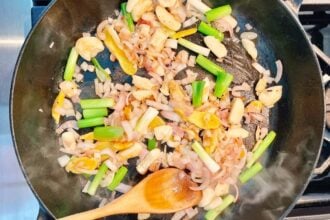
- Reduce heat to medium. Add shallots, scallion whites, ginger slices, and the smashed whole garlic cloves. Cook until fragrant and softened, 3–5 minutes.
Deglaze
- Pour in the sake and scrape up browned bits from the bottom of the pan. Reduce heat to the lowest setting.
Make the braising liquid
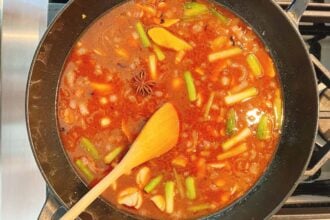
- Stir in miso paste, soy sauce, mirin, brown sugar, and beef stock. Gently stir until the miso is completely dissolved. Finally, add the star anise.
Return ribs
- Nestle ribs back into the pot. The liquid should come about three-quarter way up the sides of the meat.
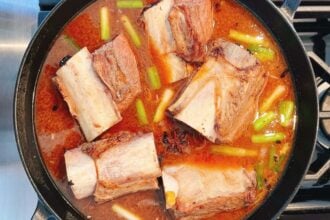
- ~ If using a shallower braiser, check that ribs are at least half-submerged. Place the ribs meaty side down, bone-side up.
- ~ if using a Dutch oven, the ribs should just be peaking up the stock. Place the ribs meaty side up, bone-side down.
- Top up with a little more stock if needed.
Simmer before the oven
- Bring the liquid to a gentle simmer on the stovetop. This helps meld flavors and avoids starting the braise cold.
Braise in the oven
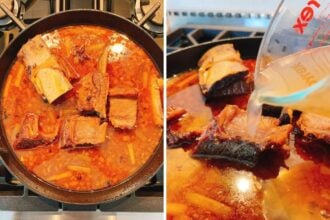
- Cover with lid and carefully transfer to the oven. Cook for 3 to 3½ hours, until the ribs are very tender. Check the ribs after the first 90 minutes to see if more liquid is needed. For reference, I added an extra half cup of warm beef stock to the braise after the first 90 minutes. I also check the meaty side to make sure they are soaked in liquid so they retain moisture as opposed to slow roasting (above the liquid) to dry. I also checked the beef at the 3 hour mark to determine if more time is needed. For reference, I slow roast mine for 3.5 hours total.
Check doneness
- The ribs are ready when a fork slips in easily and the meat is pulling away from the bone, but still holds together when lifted. Transfer the ribs to a platter and cover with foil to keep warm.

Strain the sauce
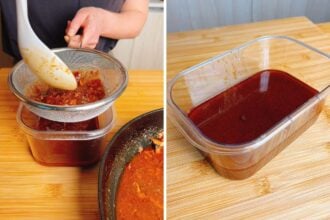
- Ladle the braising liquid through a fine-mesh sieve into a large heatproof cup. Use the back of a spoon or ladle to press gently on the garlic, ginger, and onions to release their juices, but stop before the solids pass through — this keeps the sauce smooth. Discard the spent aromatics.
Cleaner sauce
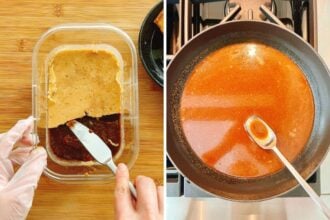
- To skim off any excess fat, chill the sauce cup in the freezer for at least 15-20 minutes. The fat will solidify on top, making it easy to lift off and leaving you with a silky, non-greasy sauce. For reference, I made this a few days ahead so I chilled the sauce in the fridge 1-2 days in advance, making it very easy to remove and separate the fat from the jus.
Finish the sauce
- Pour the jus into a braiser. Reheat it over medium to medium-low heat. It should return to a liquid state in a few seconds.
- ~ If made ahead, add the ribs meaty-side down, cover, and warm for about 10 minutes.
- ~ If serving same day, reduce the jus until it lightly coats a spoon over medium/medium-low heat (about 10 minutes). You can reduce the sauce with the ribs in the pan if you prefer.
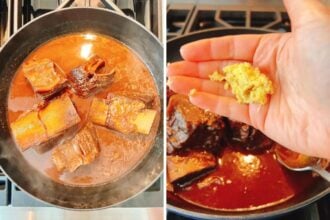
- Finally, if you prefer a pop of fresh ginger flavor, hold the grated ginger in your palm and squeeze the juice into the sauce to add a final touch and pop of flavor to brighten it up. Stir to incorporate. Turn off the heat.
Garnish and serve
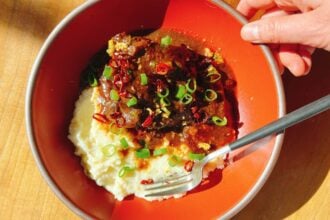
- Arrange ribs meaty-side up on a platter or in the braiser. Spoon the sauce over top, add scallion greens and grated ginger for color, and sprinkle dry chili rings if you like. Serve one rib per adult over mashed potatoes with extra sauce spooned on top.
Video
Notes
- Boneless short ribs: You can use boneless short ribs. Follow the same steps but check earlier, as they cook faster — about 2½–3 hours at 300°F. Start checking at 2 hours; the meat should shred easily but stay juicy. Keep the meat at least three-quarters submerged since boneless cuts are leaner.
- Alcohol-free: replace sake with equal amounts of beef stock.
- Staub braiser vs Dutch oven: A braiser is wider and shallower, so liquid evaporates faster. Check once or twice during baking and add warm stock if the liquid drops too low.
- Make ahead & storage: The flavor deepens overnight. After straining the sauce, store the ribs and strained sauce separately in the fridge. Once chilled, the fat will solidify on top for easy removal. Up to 2 days ahead.
- Reheat for serving after refrigeration: Skim off any fat and reheat the sauce gently until it coats a spoon. Add the ribs, ladle a bit of sauce over, cover, and warm over medium-low heat for 10–15 minutes.
- Why use warm stock when topping up: Cold liquid can drop the temperature and interrupt the slow braise. Warm stock keeps the cooking steady.
- Troubleshooting: If the strained sauce is too thick or paste-like, whisk in ½–1 cup hot beef stock to loosen, then simmer until glossy. Return the ribs and ladle the sauce over to coat.
- Meat not tender after 3 hours: Keep braising and check every 20 minutes. Different cuts vary — it’s done when a fork slides in easily and the meat pulls from the bone.
Nutrition
Serving: 1serving | Calories: 737kcal | Carbohydrates: 35g | Protein: 65g | Fat: 35g | Saturated Fat: 13g | Polyunsaturated Fat: 2g | Monounsaturated Fat: 15g | Cholesterol: 171mg | Sodium: 2060mg | Potassium: 1728mg | Fiber: 3g | Sugar: 15g | Vitamin A: 108IU | Vitamin C: 10mg | Calcium: 113mg | Iron: 8mg
